


Sunday 20th of September 2026 - Last Update: 21:57







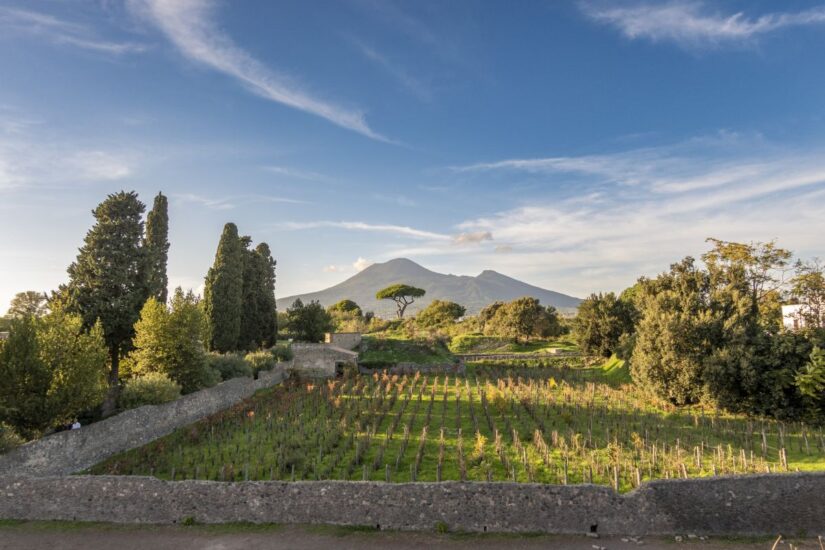
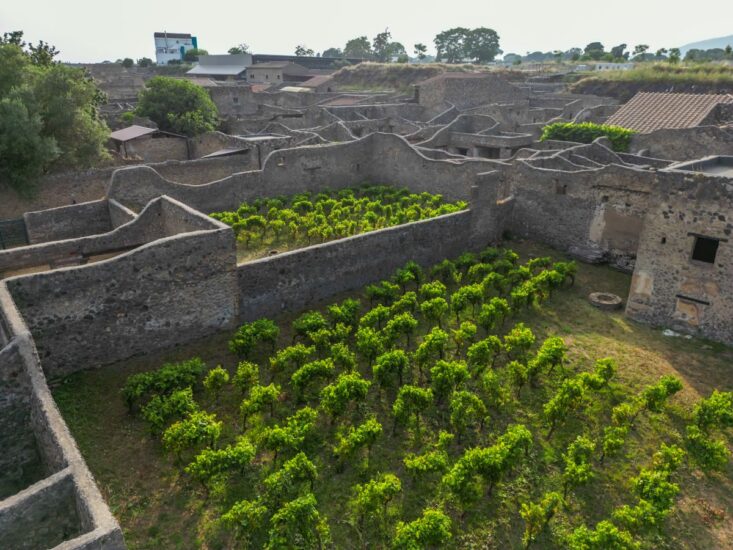
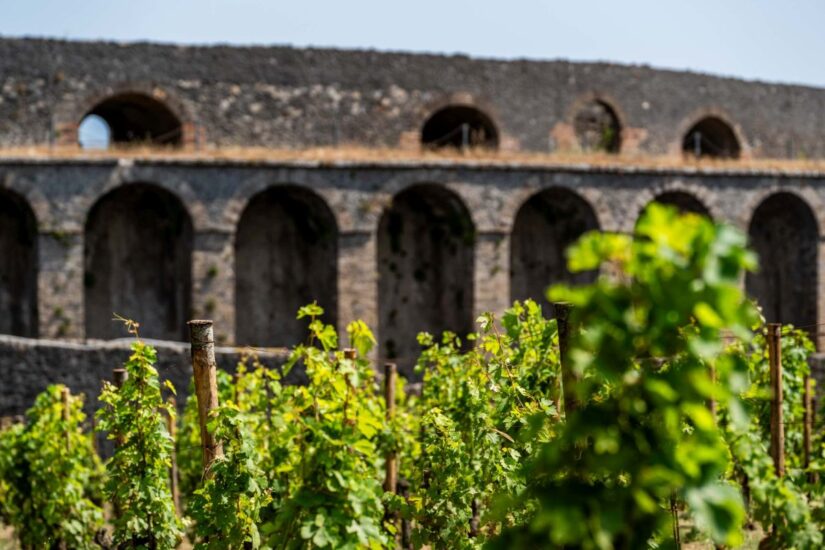

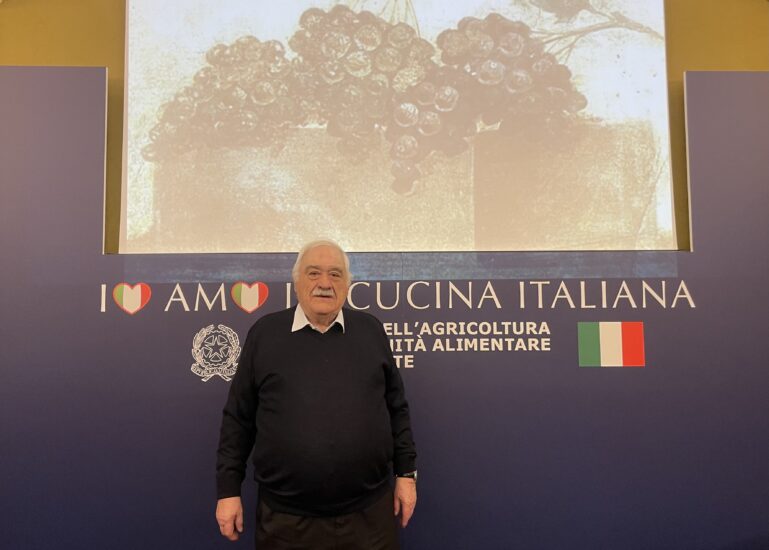

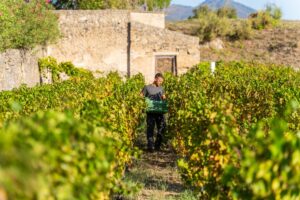
The vineyard among the ruins of the ancient city buried by the eruption of the volcano Vesuvius in 79 AD is being revived and cultivated again. The prestigious “Wine Archaeology” project, a public-private partnership between the Archaeological Park and the Tenute Capaldo Group, together with the Feudi di San Gregorio and Basilisco wineries, is creating an absolutely unique winery in Pompeii. The project was presented recently by Gabriel Zuchtriegel, Director of the Park, and Antonio Capaldo, president of Feudi di San Gregorio, at the Ministry of Agriculture in Rome, with the Agriculture Minister, Francesco Lollobrigida and Undersecretary of Culture, Gianmarco Mazzi. Daniela Scrobogna, president of the Scientific Committee of the FIS (Italian Sommelier Foundation) Higher Education School, and Bibenda, acted as moderator of the event. The aim of this project was to research local native grape varieties and how they have been cultivated over the centuries, drawing on the extraordinary agronomic expertise of Feudi di San Gregorio and its production manager as well as an internationally renowned agronomist, Pierpaolo Sirch, in collaboration with Attilio Scienza, Professor of Viticulture at the University of Milan and one of the world’s leading experts in the field. We have received and are pleased to publish his contribution, “The New Viticulture of Pompeii” in WineNews.
The project “The New Viticulture in Pompeii”
“It can be said that Pompeii and Campania offer an interpretative model for all Italian viticulture. Pompeii is an example of a social and economic reality arisen from the meeting/clash between two cultures: the Etruscan and the Greek. A similar situation developed between the Etruscan enclave of Capua (formed through the Campanian dominion within a Dodecapolis similar to that of Tuscany, including cities such as Nocera, Pontecagnano, Salerno, Noia, Acerra, Herculaneum, Pompeii, and Sorrento) and the lands of the Chalcidians of Cuma. After the Third Samnite War in 280 B.C., and especially following Hannibal defeat in the Second Punic War in 210 B.C., the Romanization of southern Italy began, though Etruscan production structures persisted, as highlighted by the traces of the limes.
What are these traces? In archaeology, findings uncovered through settlement investigations make it possible to reconstruct, through stratigraphic layers, the chronology of a place events, habits, tools, and material life. In reconstructing a region viticulture, beyond literary and historical sources, we now have knowledge of the grape varieties cultivated and the training systems used, between which a strong correlation exists, thanks to Dna analysis of grapevines still in cultivation (and some remains such as grape seeds). This has allowed us to clarify the ancient germplasm, varietal circulation, origins, and timeframes of grape appearance, often contradicting the assumptions of idealistic culture and foundational myths. The analysis of the viticultural landscape can also provide precise insight into historical vineyard models. The descriptions of Latin georgic writers (Virgil, Pliny the Elder, Columella, Varro, Cato, Martial, Isidore, and not only), along with medieval and sixteenth-century chroniclers, make it possible to accurately reconstruct vine-training systems, which represented the most significant stylistic element of the Italian agrarian landscape. Grape varieties, training systems, and literary sources thus constitute the traces of the limes through which we can faithfully reconstruct the viticulture of Pompeii”.
Literary Sources
Vesuvian wines in the Roman era
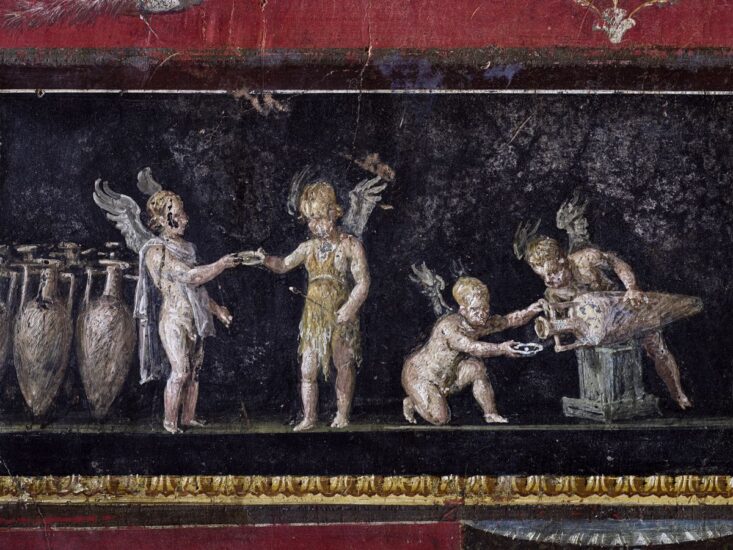
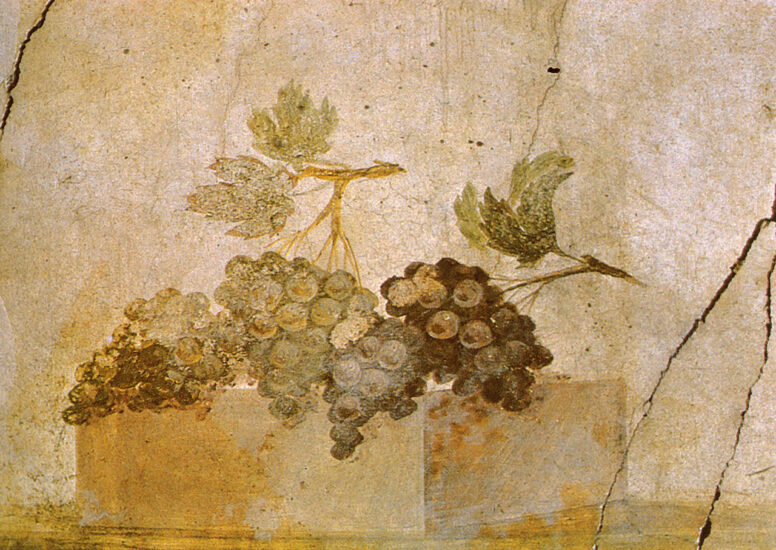
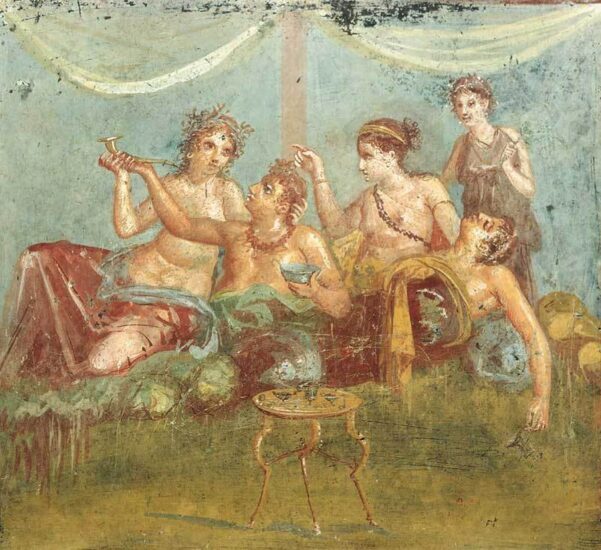
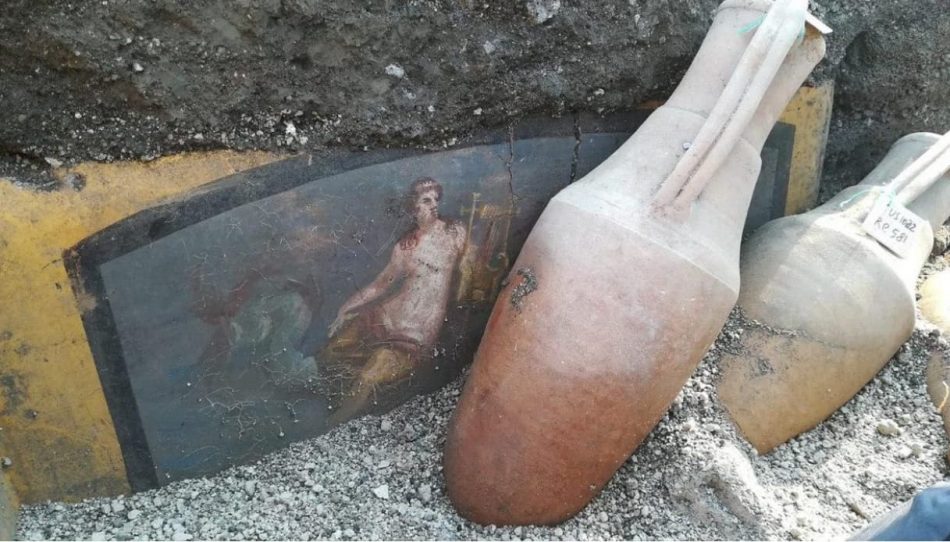
That vine cultivation and wine were central elements in the productive economy around Vesuvius is suggested by Martial insistent verses on “green vine leaves”, “precious grapes”, and “moist vats”. Added to this, there is a particular form of iconographic documentation: in the House of the Vettii, groups of cupids are depicted delighting in activities related to winemaking. Ancient toponymy in the Vesuvian area also highlights the region enological vocation. The ancient place name Oplontis derives from opulus, the hop-hornbeam or field maple, used as a support for vine training. Depictions of Bacchus and Venus in Pompeian frescoes often show images of grape clusters, which may correspond to certain varieties documented in the writings of Latin georgic authors concerning the slopes of Vesuvius: Gemina minor and Vennuncula, while in the flat and foothill areas the Holconia/Horconia and Murgentina/Pompeiana were grown. While Vennuncula was renowned for its productivity, the Gemina, an aminea, was celebrated in antiquity for producing a wine rich in alcohol. Cultivated in the Etruscan style, using the alberata technique due to its vigor, it can be identified with today Caserta Asprinio and Greco di Tufo. The wine Vesuvium, whose name is known thanks to the painted labels on amphorae from Herculaneum and Pompeii, was produced with the Murgentina, originating from Sicily, recommended for fertile soils, and with the Pompeiana variety.
Viticulture after the eruption
Following the eruption of Vesuvius in 79 A.D., the climate of Mediterranean Europe underwent a very warm phase beginning in the 2nd century A.D. and lasting about 200 years, causing the desertification of many coastal areas of southern Italy. The area of Pompeii was abandoned, and all traces of viticulture disappeared. From the 7th to the 8th century, a very rainy and cold period followed. The ripening of grape varieties from the Augustan era became difficult, and many were abandoned, reappearing only from the 10th century onward. Wines, however, were no longer identified by the names of their production areas (Falernum, Massicum, Pompeianum, Surrentinum) but grouped into two generic denominations: Latin wines, produced from lower-quality grapes, and Greek or Byzantine wines, of superior quality.
Grape varieties
Campania is one of the Italian regions with the richest vine germplasm, with 56 original molecular profiles identified. Molecular studies have grouped Campanian varieties into three categories sharing genetic affinities:
- a group of varieties from northern Campania (the ancient Etruscan Dodecapolis, current province of Caserta) with Asprinio, Pallagrello, Casavecchia, Piedirosso napoletano, Falanghina napoletana;
- a group from the eastern part of the region, toward Benevento and Irpinia with Aglianico (with 5 genetic variants also found in other parts of Campania), Piedirosso avellinese, Fiano, Falanghina beneventana.
A deeper look at Aglianico: its supposed idealistic origin ties it to the term ellenico (Hellenic), thus suggesting a Greek origin. Dna analysis, however, links it to domesticated wild vines. These findings are also supported by one of its synonyms, Anadentrite, literally meaning “vine that twists” or “vine that clings” referring to the climbing behavior typical of vines trained to trees. Semantic analysis also reveals another origin: Aglianico derives from the Spanish word llano, meaning plain, referring not to a generic name but to a specific locality in Naples called Pianura.
- The largest group, from Ischia and the Amalfi Coast with Forastera, Pepella, Cacamosca, Livella, Tintore, Coda di Pecora, Suppezza, Ginestra, Fenile, Coda di Volpe, and not only.
We can’t, however, give a modern name to a grape variety mentioned by georgic authors in Pompeii: the Murgentina, later called Pompeiana, ciarla, the “most noble” Murgentina grape from Murgenta, cultivated near Lentini (Sicily) according to Renaissance Sicilian ampelographers.
Training systems
Viticulture in Pompeii was very different from what we are accustomed to seeing in Campania today. It was promiscuous: vines were trained on trees and intercropped with other herbaceous crops. That the structural model was of Etruscan inspiration is suggested by Pliny use of the term rumpotinus.
The word rumpotinus (from rumpus, vine garland), derived from the Ligurian substrate and passed into Celtic and then Latin speech through Etruscan mediation, refers to “the tree that bears the vine garlands”. Its etymology connects rumpus (shoot) and teneo (to support). Columella also uses rumpotinus to refer to the arbustum gallicum, meaning the festoon-style training system is no longer tied to a specific type of supporting tree (elm, maple, poplar, etc.) but to a cultivation form with living supports and vine garlands. This Gallic system differed from the Italic one in vegetation arrangement: vertical in the arbustum italicum, horizontal in the Gallic. The vine garlands, formed by shoots grown on contiguous trees, were interwoven in pairs or trios.
The alberata system: of Gallic type and linked to the Etruscan germplasm of northern Campania (Aglianico, Piedirosso napoletano), featured support trees spaced 5-6 meters apart, with four rooted cuttings planted at each support, and rows spaced 6-7 meters apart. Between the rows, herbaceous crops could be cultivated such as honey plants for beekeeping or various types of shrubs, including small fruit bushes.
Raggiera: of Italic type (associated with the Etruscan germplasm of Greco di Tufo), featured supports arranged in a 4-by-4-meter grid. Four cuttings were planted at each support and trained in a cross shape, with a network of steel wires created to carry the expanding vegetation.
Spalliera (the Etruscan germplasm of Falanghina napoletana): chestnut posts (3 meters above ground) placed 5 meters apart along the row. The vines were planted at intervals of 1.5 meters, and the spacing between rows was 4.5 meters.
The low spalliera (the Neapolitan germplasm Aglianico, Piedirosso avellinese, Falanghina beneventana, Fiano), used chestnut posts (1.70 meters above ground), placed 5 meters apart. The vines were planted at intervals of 1 meter, and the spacing between rows was 2.5 meters. The wire framework consisted of 6 wires, including two arranged in pairs. For the Pergola puteolana and pompeiana, used for table grapes such as Olivella, Mennavacca, Duracina, Pizzutella, and Pergolese, wooden pergolas were constructed following the models of ancient Pompeian and Puteolan pergolas. These structures measured 7 meters, and the vines were planted 1 meter apart both between rows and along them.
Copyright © 2000/2026
Contatti: info@winenews.it
Seguici anche su Twitter: @WineNewsIt
Seguici anche su Facebook: @winenewsit
Questo articolo è tratto dall'archivio di WineNews - Tutti i diritti riservati - Copyright © 2000/2026