


Monday 14th of September 2026 - Last Update: 17:49






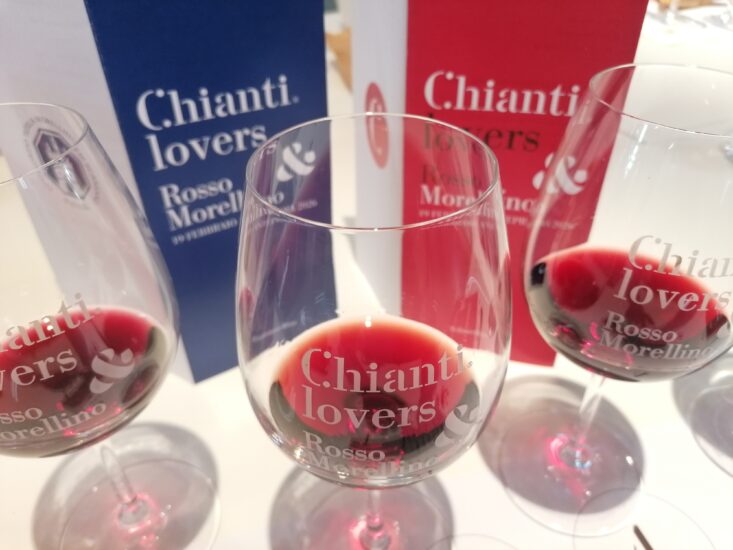
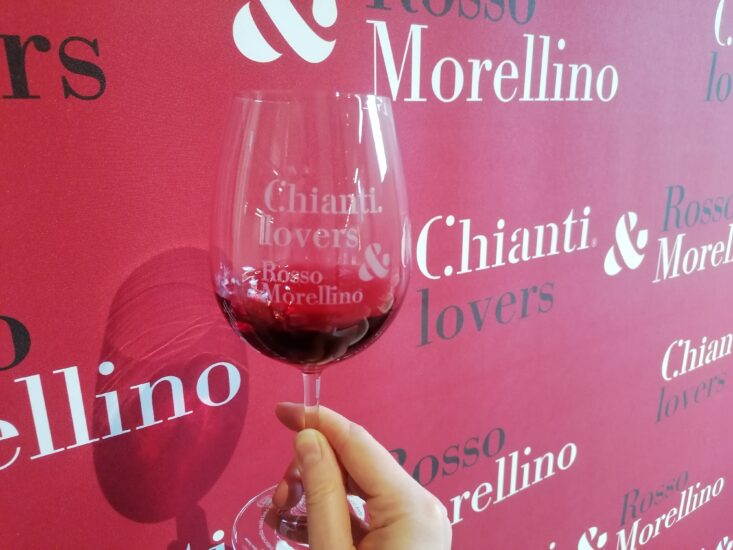
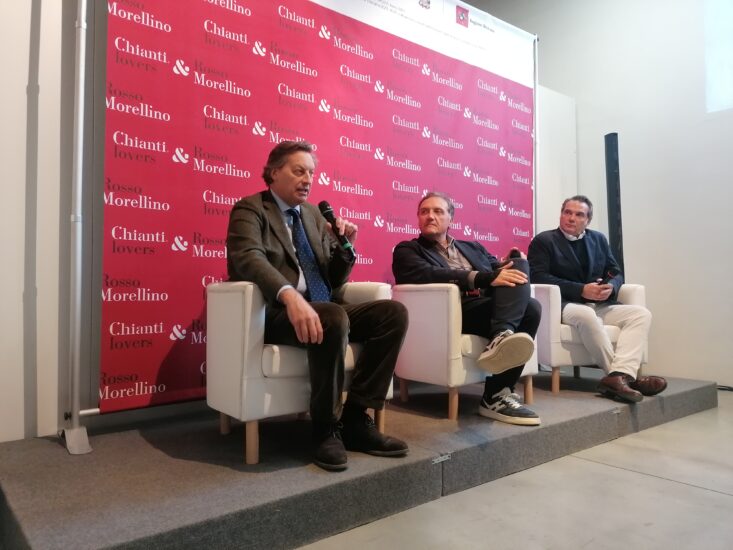
“The current political and economic situation, not to mention the drop in consumer spending, makes the search for new markets our top priority. We have been investing in Brazil for years, so Mercosur is very welcome, and we have also opened our first contacts in Africa, having recently traveled to Nigeria. In 2027, however, we will also invest in the Indian market”. This is how president of the Consorzio Vino Chianti, Giovanni Busi, announced the news at “Chianti Lovers & Rosso Morellino”, the preview event promoted by the Chianti Wine Consortium and the Morellino di Scansano Consortium, showcasing the new vintages from the two territories - mainly 2025 and 2023, both less productive than average - held in Florence as part of the 2026 Anteprime di Toscana 2026. Beside him, there was Bernardo Guicciardini Calamai, president of the Morellino di Scansano Protection Consortium, who expressed optimism about the current situation because “wine has existed for 11,000 years and has weathered many cyclical crises, always showing its ability to reinvent itself. In this sense, Morellino di Scansano has decided to focus on the Superiore category, which has just been officially approved with a change to the production regulations. Now we need to start explaining it and communicating it properly”. These strategic choices by the two Consortia were supported by the Regional Councillor for Productive Activities, Leonardo Marras, who promised continued public-sector support for such initiatives.
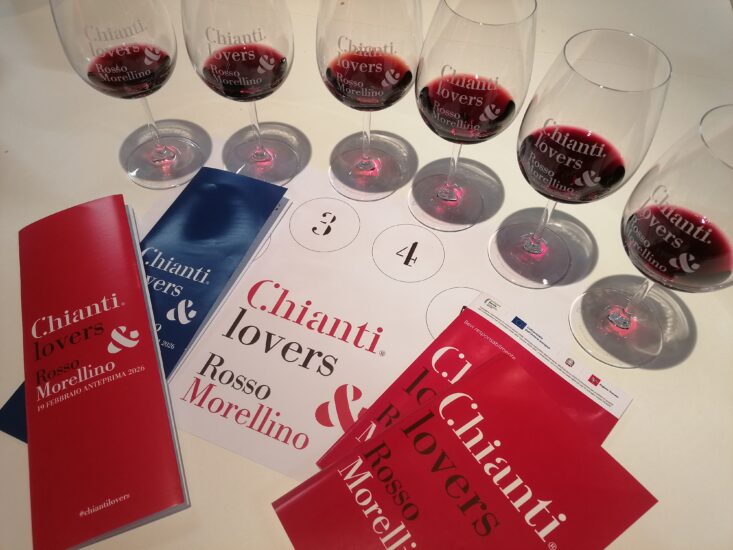
In the wine glasses, the tasting included Chianti DOCG 2025 with the additional mentions Colli Aretini and Colli Senesi; Chianti Colli Fiorentini, Montespertoli, Rùfina and Chianti Superiore, all from 2024; and finally Chianti Riserva DOCG 2023, with the additional mentions Colli Fiorentini, Colli Senesi, Montalbano, Montespertoli and Rùfina. Also the new vintages Morellino di Scansano 2025 and Riserva 2023 were presented. This year marked the final edition of the “Chianti Lovers & Rosso Morellino” format. “It has been a fruitful collaboration which has given us much satisfaction - admitted Guicciardini Calamai - but it ends in 2026 because we are exploring new synergies with other local denominations in the Maremma Toscana”. A surprising development, just as unexpected as the introduction of the Superiore category into the Morellino di Scansano regulations. Currently, the backbone of the denomination is the standard Morellino Annata: Riserva accounts for only 4% of production. “In reality, Morellino Superiore has always been produced, and it has effectively been the category which acted as ambassador for the most established producers in the area - explained Guicciardini Calamai - we expect it could reach 30% of production in the future, starting from the 2024 vintage, the first harvest eligible, provided it meets the required characteristics. The regulations set lower yields than the Annata category, require a minimum of 85% Sangiovese, and mandate market release two years after harvest, with no obligation for wood aging. We have also allowed the word “Toscana” on the label”, added Guicciardini Calamai. Concerns expressed by some about a possible weakening of the denomination with this addition were dispelled by the need to explore new markets, where the Tuscany brand is far better known than some of its individual denominations, particularly true in the U.S. market, where the Consortium has so far had little presence (despite the advantage this past year due to fluctuating tariffs under the Trump administration) but intends to invest more going forward. “In this period, when there is generally less money around, Morellino di Scansano and Chianti are more relevant than ever thanks to their unbeatable quality-to-price ratio. In our case - still added Guicciardini - this is confirmed by the constant growth in bottled production in recent years, with +4% in 2025 over 2024, despite steadily lower yields due to the climate emergency (75,000 quintals in 2025, while production can reach up to 100,000); a generally shrinking market, especially for red wine; and a consolidation of the increase in average prices achieved in recent years. We also benefit from the unique identity of the “coastal Sangiovese” of Tuscany, whose freshness aligns well with today consumer tastes”. 30% of Morellino di Scansano production is exported, according to Consortium data, with the rest consumed domestically, including locally. The goal of the Consortium and its 201 members (plus 168 non-member producers with claim rights) is to consolidate existing markets while exploring new ones, without forgetting wine tourism, essential as oxygen in this still quite isolated and therefore authentic territory, whose potential has only partially been expressed. Total production value exceeds 50 million euros, based on 1,500 hectares of vineyards (registry closed for 10 years), 30% of which are certified organic.
Chianti, on the other hand, plays in an entirely different league in terms of scale: 2,500 associated producers (they were 2,000 in 2023) and 13,100 hectares under claim (up from nearly 12,400 in 2023). In 2025, 619,000 hectoliters of wine were produced (80 million bottles produced), compared to 503,000 hectoliters in 2023 both very low yields - due to seasonal conditions - while 2024 saw significantly higher production at 805,000 hectoliters, a figure considered “normal” for Chianti. Sales value has also declined: from a peak of 95 million euros in 2021, starting in 2018, sales have not exceeded 75 million euros since 2023, with a -1% drop in 2025 compared to the previous year. “These figures seem small, but they change drastically when related to Chianti scale, around 100 million bottles per year”, commented Busi, noting the consequences of lower yields. “60%of Chianti is sold through large-scale retail, where prices are negotiated early in the year based on availability: less product means less sales. And abandoned shelf space is hard to recover even if availability returns to normal the following year”.
Hence the need to seek new markets, such as Nigeria, which was explored last month despite some skepticism from outside observers. “but if we don’t go, as Italy leading denomination, who else has the strength to do it?” - wondered Busi - there, the restaurant sector is developing, and they consume a lot of Champagne, so there is interest in wine. Of course, there are transportation and distribution issues, but still, the first pallet of wine left for Lagos a few days ago. We have planted a seed in Africa, and in 2027 we’ll go to India”, Busi announced. Investments in Brazil date back a few years, and although Busi supports Mercosur, he anticipates no immediate boost in sales after tariff reductions: “these agreements require years of negotiation: tariffs may have dropped, but meanwhile other costs and the cost of living have increased”. Chianti is already known and appreciated there, as it is in Asia, where years of education and storytelling about the territory have made China an increasingly important market, along with Vietnam, Thailand, and Japan. Seeking new markets, “without missing a single opportunity”, according to Councilor for Economic Activities Leonardo Marras, is necessary but not enough to overcome crises like today: producers must also invest in product quality to support consumption, and “share and collaborate among producers, organizations, and institutions, as these two denominations have done, an act of collective resilience. Tuscany is still capable of demonstrating this brilliantly, even beyond the region, and public policies will always support this”.
Public policies and future strategies aside, when it comes to wines with recognizable market profiles - in this case the continental Sangiovese of Chianti and the coastal Sangiovese of Scansano - climate trends of the three previewed vintages could pose challenges. According to Copernicus data, 2024 was the warmest year on record globally, followed by 2023 and then 2025. In Italy, 2024 was officially recognized as the hottest ever, at +1.33 celsius degrees (followed by 2022 and 2023), while June 2025 saw record heat. Italy experiences this warming more intensely due to temperature anomalies in the surrounding Mediterranean, which releases absorbed heat even in winter. At the net of this general consideration, in 2025, late spring rains during flowering and sporadic hailstorms contributed to a 20% production drop in Chianti compared to 2024. High summer temperatures did not cause water stress but did increase alcohol levels relative to 2024. Quality remained good thanks to a more regular autumn with the typical diurnal shifts of the Chianti hills. Scansano also saw reduced yields in 2025 after good winter and spring rainfall and a less scorching summer. These remain highly irregular seasons, challenging from a phytosanitary perspective, yet they brought healthy grapes to the cellar with balanced sugar and phenolic components. The wines show perceptible, persistent alcohol levels, tannins that are still rough, and rich, sweet aromas with some layering.
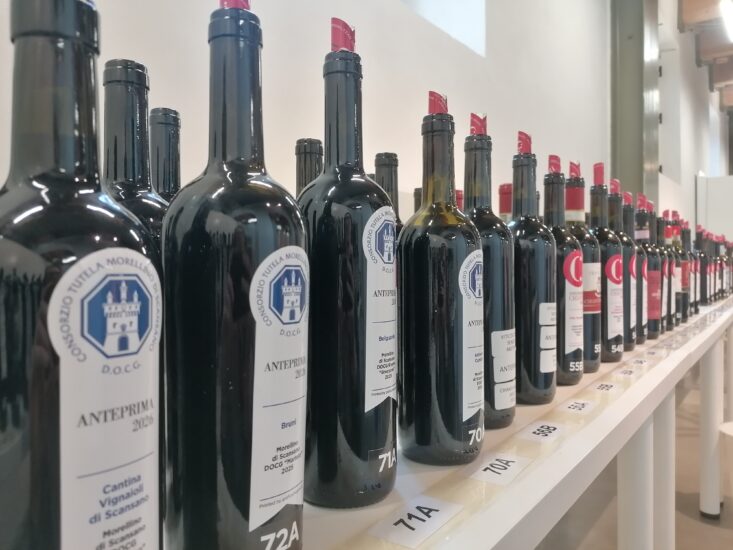
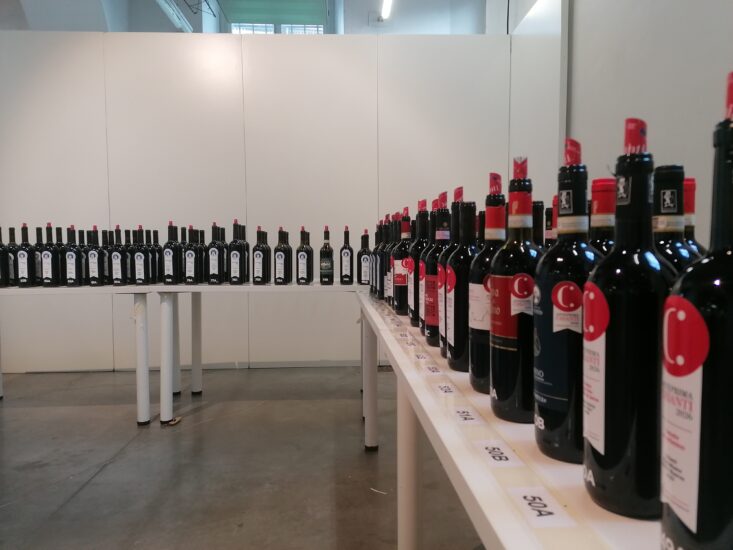
The 2024 vintage had a rainy winter and spring, replenishing water reserves depleted by the dry 2023. A cool spring preceded a summer with fewer heat spikes but “tropical” temperatures, persistent heat with nights not dropping below 20 celsius degrees. No significant water stress occurred, but rains returned between late August and mid-September, complicating harvest timing. Production in Chianti returned to average, with healthy but uneven grape clusters, and a challenging harvest for vinification choices. In Scansano, 2024 followed a mild, rainy winter and a similarly wet spring: the landscape was lush and green, with hydrated soils and healthy grapes reaching the cellar thanks to less intense rainfall, drier heat, and breezes lowering humidity. It was therefore a cooler vintage (within a generally warming climate), with lower alcohol levels but some aromatic and structural flaws caused by chronic climate irregularity. Finally, recalling the extreme heat spikes of 2023 and its prolonged drought, with monthly heat records up to December. Torrential spring rains on dry soils caused more harm than good, including widespread downy mildew across Italy. Production was lower everywhere, including Chianti and Scansano (even juice-to-skin ratios dropped), resulting in unbalanced wines with harsh alcohol and tannins, elements that time has partly softened or reintegrated. This leads to the tasting results: 14 producers of Morellino di Scansano DOCG participated, with a total of 21 labels (including 5 Riserva; nearly all samples were barrel samples), and 55 producers of Chianti DOCG, for a total of 103 labels (including 18 Superiore, 29 Riserva, and 26 already on the market).
Followingly, the best tastings by WineNews staff ...
Chianti DOCG
Leonardo da Vinci, Chianti Leonardo 2025
Sweet with sour cherry jam and raspberry candy, it is sharp and concentrated; in the mouth it remains sweet and adherent, but it is savory and has citrus and fruity acidity, closing with floral notes.
Poggiotondo di Alberto Antonini, Chianti 2025
Clear, crisp, and fleshy aromas of raspberry, cherry, and sweet violet; it is tight on the palate but then smooth and savory, tasting of violet, wisteria, camellia, and rosemary flowers, delicate but substantial.
Salcheto, Chianti Biskero 2025
Darker, bloodier, and warmer tones, defined by small berries and brambles, hints of vegetation and orange; on the palate, it is pulpy, returns to bloodiness, and closes with notes of Maremma scrubland.
Vecchia Cantina di Montepulciano, Chianti 2025
A wine that plays relentlessly between fruity sweetness and the balsamic freshness of Mediterranean scrub, on a savory tannic texture, yielding to delicate floral and citrus notes on the finish.
Paterna, Chianti Colli Aretini Paterna 2025
A wine with a sharp volatility and warmth but substantial red fruit and decisive floral notes; immediately adherent on the palate, savory in the center then floral and bloody on the finish.
Fibbiano, Chianti Superiore Casalini 2024
A riot of flowers and red fruit, but clear and fine, with the added freshness of the Maremma scrubland; on the palate, the tannins impart savory notes to the fruit and flower flavors, remaining textured.
Melini, Chianti Superiore San Lorenzo 2024 (available on the market)
Vertical and intense nose of cherry, blood orange, and aromatic herbs; in the mouth, it has a constant rhythm, between material adherence and the smoothness of red flowers and blood orange again.
Podere Ema, Chianti Superiore 2024 (available on the market)
A wine of light-dark contrasts: purple but red, dense but open, calm but crisp: the texture on the palate is orangey, then spreads savory towards a clean and vegetal finish.
Tenuta SettePonti, Chianti Superiore Vigna di Pallino 2024 (on the market)
Dark undergrowth and tar, then cherry jam and red flowers: a warm nose that anticipates an intense and peppery sip, then very sweet and very savory, textured and fresh with licorice and citrus.
Malenchini, Chianti Colli Fiorentini Vigna di Lappeggi Riserva 2023 (on the market)
Red energy of cherry, rose, plum, and orange, hints of dry leaves and earthiness; the palate is bloody, very tight but flowing laterally, towards a peppery savoriness and a fruity finish.
Pietraserena, Chianti Colli Senesi Caulio Riserva 2023 (on the market)
Blood orange juice, potpourri, woody spices, hints of bark and undergrowth: intense aromas that anticipate an initially tight sip, then fresh with fruity acidity and red pulp.
Tenuta di Artimino, Chianti Classico Montalbano Riserva 2023 (on the market)
A generous wine, broad but deep, warm and calm: blood orange, vanilla, cherries in alcohol, plum, and hints of undergrowth; in the mouth, adherence and juiciness accompany every sip.
Casa di Monte, Chianti Montespertoli Riserva 2023
A gentle breadth of chinotto, wilted flowers, dry leaves, and ripe plum, with balsamic freshness from the undergrowth and a sharp warmth: a pyramidal nose for an intense, fleshy, and persistent sip.
Morellino di Scansano DOCG
Antonio Camillo, Morellino di Scansano 2025
Still vinous, it is distinctly floral, with notes of small wild berries and catmint; the pulpy character of the sip is already perceptible, with savory tannins and a vegetal progression.
Bruni, Morellino di Scansano Marteto 2025
Aromas of cherry candy and Mediterranean scrub, blood orange and violet; dense in the tannic texture that releases cherry and violet juice, with dark hints of licorice and undergrowth.
Poggio Maestrino, Morellino di Scansano Spiaggiole 2025
Cherry and vanilla, aromatic herbs, pomegranate juice, earthy hints: a more serious nose than the others; the palate is very consistent, then fresh with blackberry and bramble, softening with notes of rose and violet.
Cantina Vignaioli di Scansano, Morellino di Scansano Roggiano Riserva 2025
Sharp and open on the nose, with aromas of cherry, sweet spices, violet, and a certain balsamic quality. On the palate, it is clear and fruity, with gentle tannins and a savory finish.
Fattoria Le Pupille, Morellino di Scansano Riserva 2025
Reserved on the nose, with cherry jam, licorice, and myrtle, with hints of blood; the palate is more balsamic and less sweet, with firm but floral tannins, leading to a clean and docile finish.
Copyright © 2000/2026
Contatti: info@winenews.it
Seguici anche su Twitter: @WineNewsIt
Seguici anche su Facebook: @winenewsit
Questo articolo è tratto dall'archivio di WineNews - Tutti i diritti riservati - Copyright © 2000/2026