


Tuesday 13th of October 2026 - Last Update: 11:08







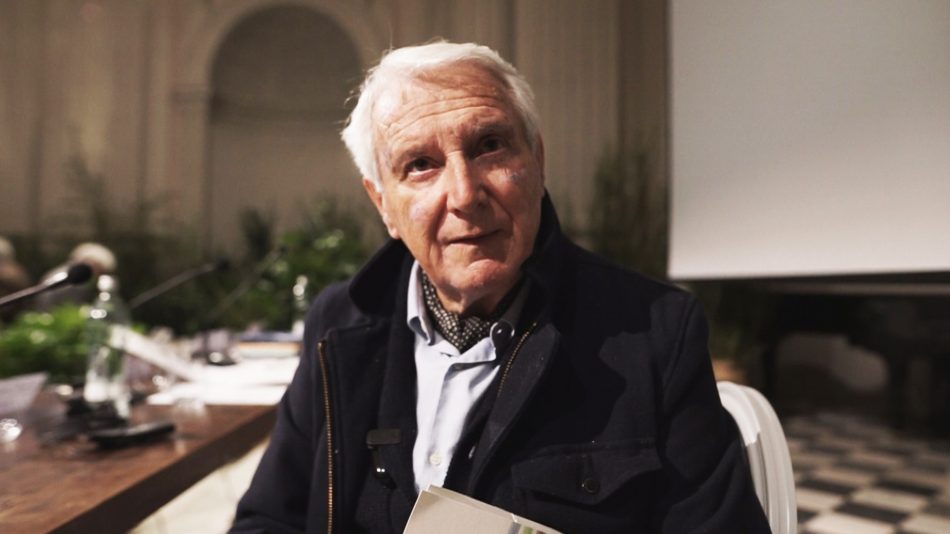
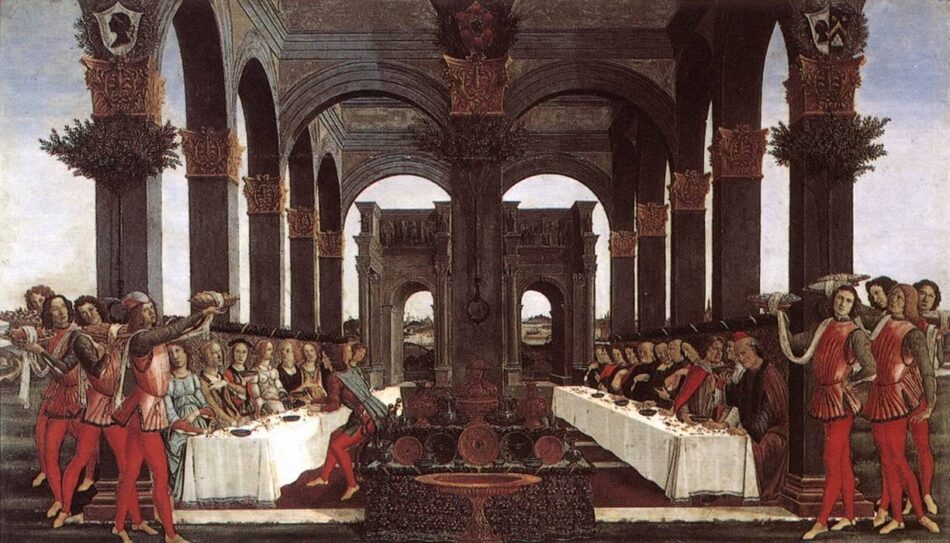
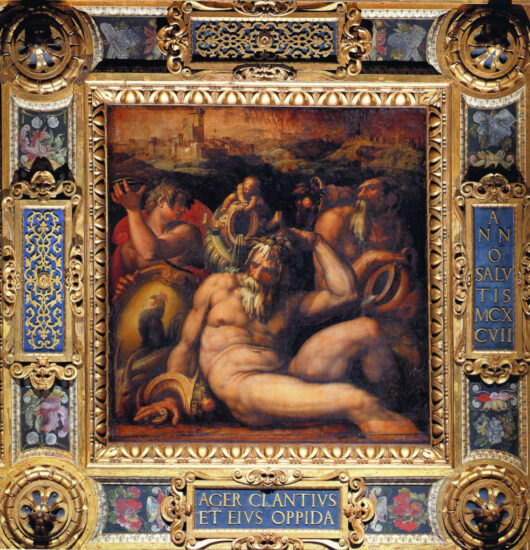
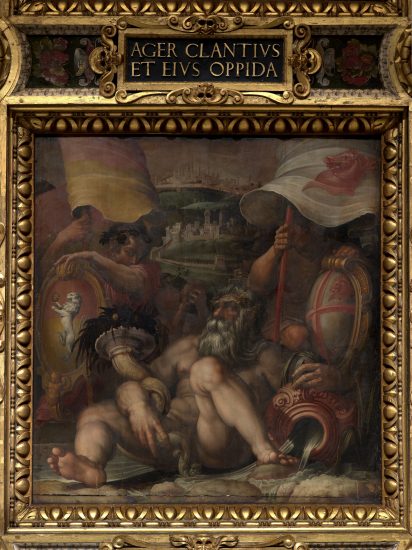
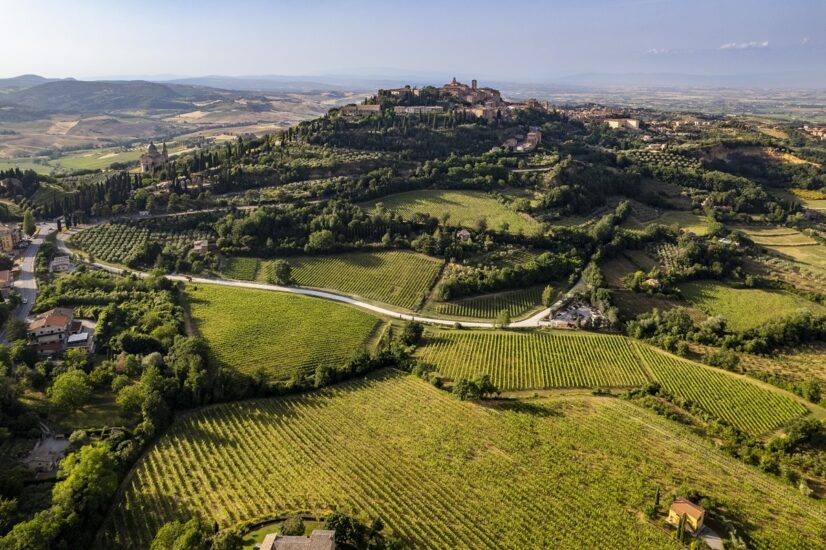

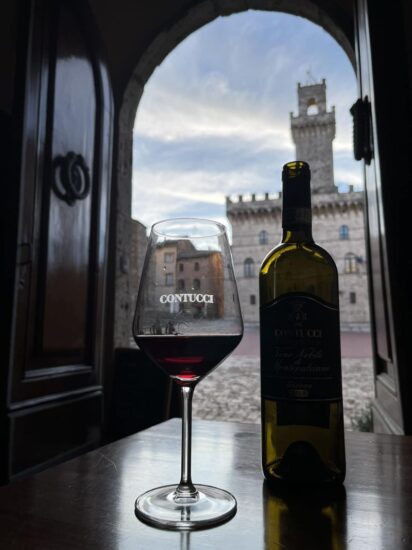
“Since the Middle Ages, wines were distinguished between higher-quality ‘pretti’ wines and more diluted wines, known as “acquati” or “vinelli”, which were consumed by farm workers and the poorer classes of the cities. During the Renaissance, when Florence became one of the most expressive urban centers of wealth and art in Europe, wine became an essential component of the culture and taste of the ruling classes. Lorenzo de’ Medici, who loved culture but also food and wine, provided an exemplary demonstration of this on the occasion of his marriage to Clarice Orsini (1469), as described in meticulous detail by Maria Luisa Incontri Lotteringhi della Stufa. Large quantities of wine arrived in the city from the surrounding countryside, along with barrels filled with Malvagia, Trebbiano, red wines, and even foreign wines. At the four corners, “in the middle of the courtyard”, cupbearers served wine and fresh water. Red and white wines accompanied Lorenzo and Clarice, as well as their guests and the people. Malvasia, which came from the Greek island of Monemvasia on the eastern coast of the Peloponnese, was served. The four hundred guests enjoyed it to their hearts content”. This is the historical excursus offered by Italian historian Zeffiro Ciuffoletti, member of the Accademia dei Georgofili, on “Il contesto della vitivinicoltura nell’età medicea e l’opera di Francesco Redi” - “The context of viticulture and winemaking in the Medici era and the work of Francesco Redi”, presented at “Quando Bacco giunse in Toscana. Francesco Redi: poesia, scienza, arte e cultura del vino nel Granducato degli ultimi Medici e nella Montepulciano medicea” - “When Bacchus came to Tuscany. Francesco Redi: poetry, science, art and wine culture in the Grand Duchy of the last Medici and in Medici Montepulciano”, the symposium dedicated to Francesco Redi, held on the anniversary No. 400 of the birth of the physician and man of letters who authored Bacco in Toscana. The event was promoted by the Vino Nobile Consortium and the Municipality of Montepulciano and took place yesterday in the hometown of Poliziano, the “pearl” of the Renaissance (and which WineNews is publishing in full. WineNews, represented by its editor Alessandro Regoli, participated in the symposium and will exhibit several original antique books by the author in the major exhibition scheduled from 2027, March 20th to June 20th, ed).
Lorenzo the Magnificent, recalled historian Ciuffoletti, was a great connoisseur who, together with his merry companions, frequented the finest taverns in Florence, especially enjoying Trebbiano and Malvasia. He even wrote about them in his poetry: “we all go toward the bridge at Rifredi, for Giannesse has tapped a little barrel. A wine that makes slow feet move swiftly. We all hurry there to drink with him. It is that wine that makes us so quick upon the road, each of us swifter than a bird”. Taverns in Florence, as is well known, bore curious names: Il Buco, Il Fico, Le Bertucce; and Lorenzo companions bore some of the most illustrious names in Florence: the Adimari, Pandolfini, Martelli, Ginori, Giuntini and Corsini families. Luigi Pulci, in his Morgante, celebrated food and wine, writing that he no longer believed ‘either in black or in blue,’ but believed ‘above all in good wine,’ in tortelli and in fegatelli. In 1476, a few years after Lorenzo the Magnificent grand wedding banquet, Benedetto Salutati hosted a memorable feast in honor of the sons of the King of Naples, Ciuffoletti explains. There were “pigeons”, “chickens”, “pheasants” and “partridges”, together with wines served cool and listed as follows: “Malvasia, Moscadello, Vernaccia, Greco, Trebbiano, Fianello, Falsamico, Bonagia di Trapani, wine from Cilento, Fassignano, Mazzacane, white Asprino and red Asprino”. The presence of so many southern Italian wines was a tribute to the sons of the Neapolitan sovereign.
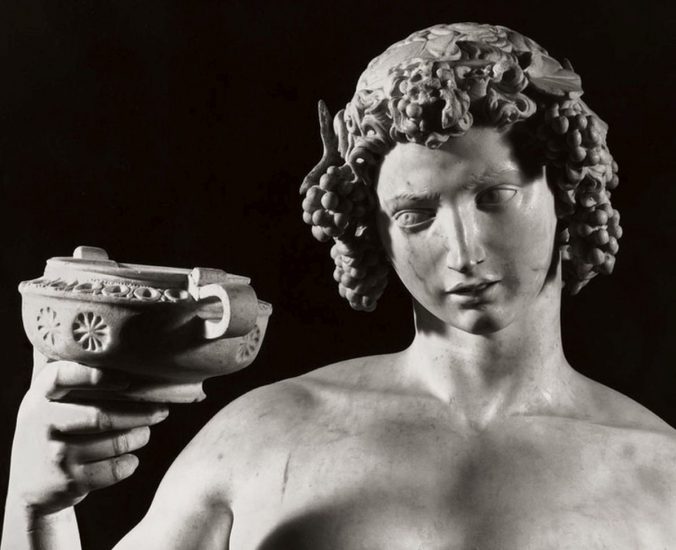
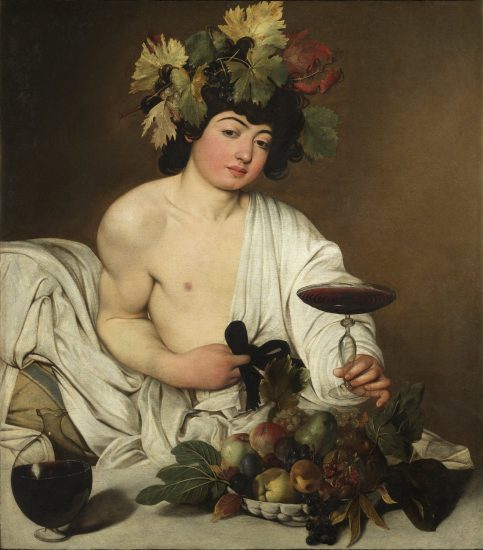
Savonarola campaign against luxury and the pleasures of the table lasted barely a decade. After two papal excommunications, however, a papal interdict was imposed on the entire city, releasing debtors from any obligation. As a result, the wealthy heirs of Florence leading families who had followed Savonarola ideals of poverty were brought back into line, and the friar ultimately ended up burned in the public square. When Giovanni, the young son of Lorenzo the Magnificent, became Pope Leo X in 1513, lavish banquets and their most sought-after wines returned in full force. In honor of the new pope, robes and money were thrown from the windows of the Medici Palace on Via Larga into the crowd, while barrels of wine were placed in the middle of the street. As Ciuffoletti notes, Bacchus had already long been celebrated in art by the very young Michelangelo Buonarroti. The sculpture can still be seen at the Bargello Museum, where visitors can also admire the Bacchus by Jacopo Tatti, known as Sansovino. Florence also boasts, among works created for the Medici, the Bacchus of Baccio Bandinelli and the magnificent Bacchus of Giambologna. Patricians and bankers celebrated themselves with sumptuous banquets in which wine played a starring role. Giulio de’ Medici, who became pope under the name Clement VII, made banquets a powerful tool of prestige. As Giovanni Cipriani recalls, the coronation of Charles V as Holy Roman Emperor in Bologna in 1530 was accompanied by an impressive feast. For the occasion, “two enormous golden lions topped by an imperial eagle poured red and white wine like fountains”.
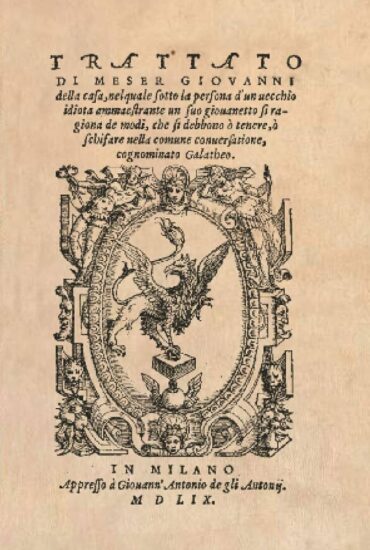
Wine, therefore, Ciuffoletti reflects, was both a symbol of prestige and a central element of courtly and patrician sociability. Giovanni della Casa codified wine service and drinking etiquette in his Galateo, explaining that everyone should drink from their own glass and not stick their nose into someone else. Luigi Alamanni even rendered good viticultural and cellar practices into verse. Cosimo I de’ Medici, usually a man of moderation, spared no expense at the wedding of his son Francesco to Joanna of Austria, and wine flowed freely in the courtyard of Palazzo Vecchio. Francesco was the opposite of his father and delighted in grand festivities. His banquets always featured Tuscan wines, but also wines from Greece and Spain, Rhine wines, the Chiarello of Cyprus and the Malvasia of Candia.
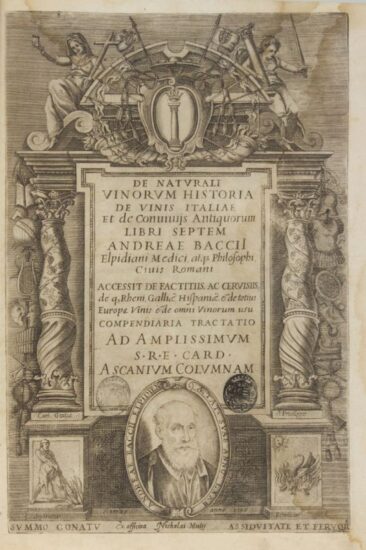
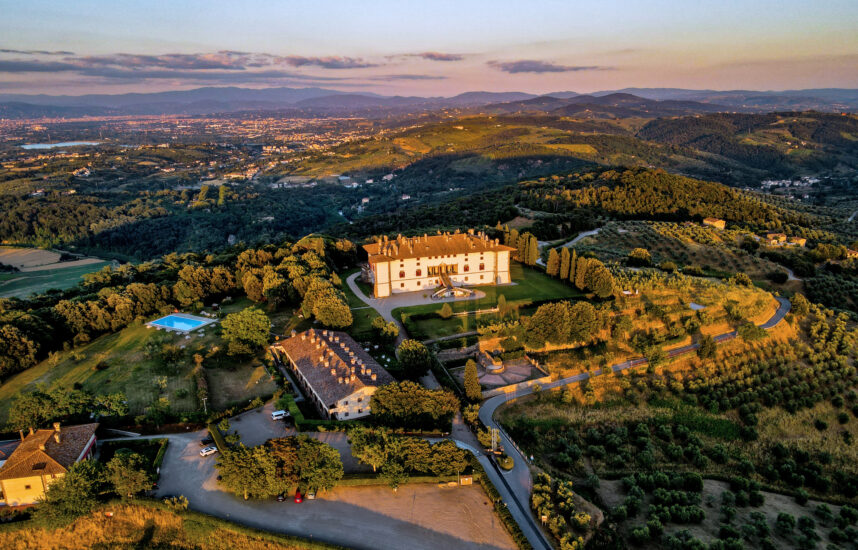
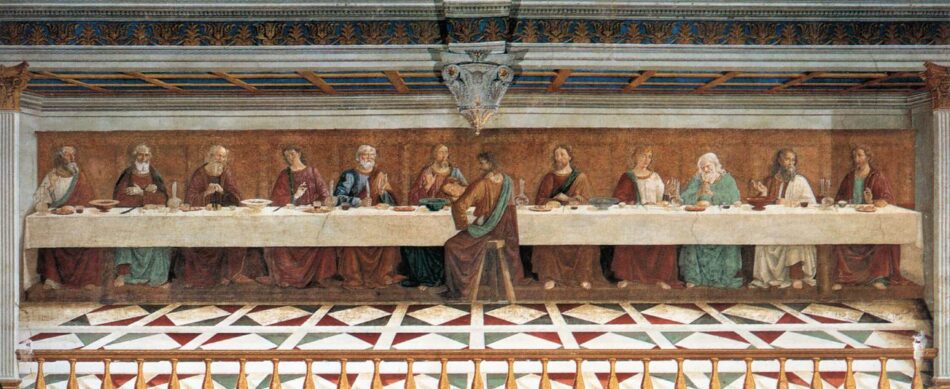
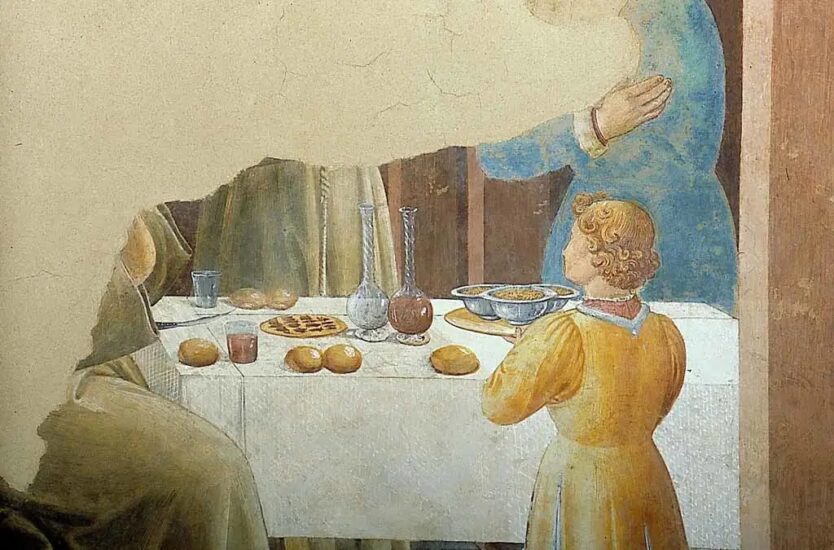
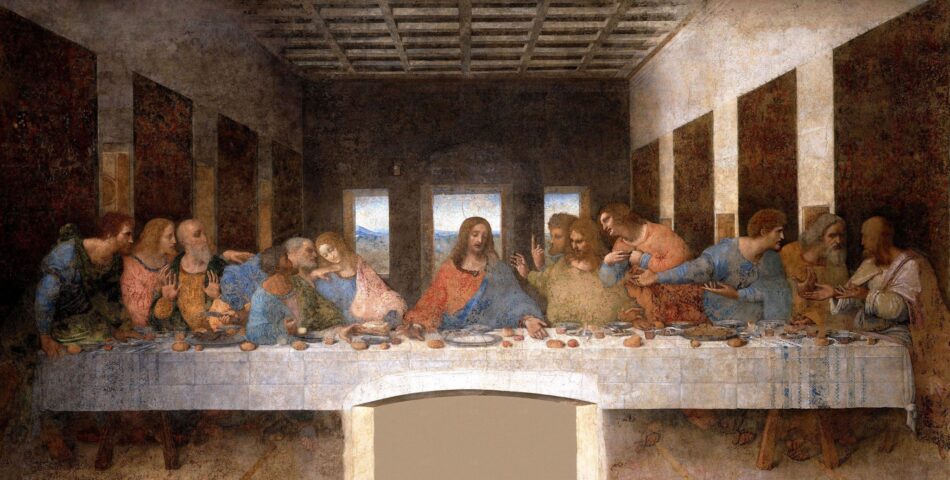
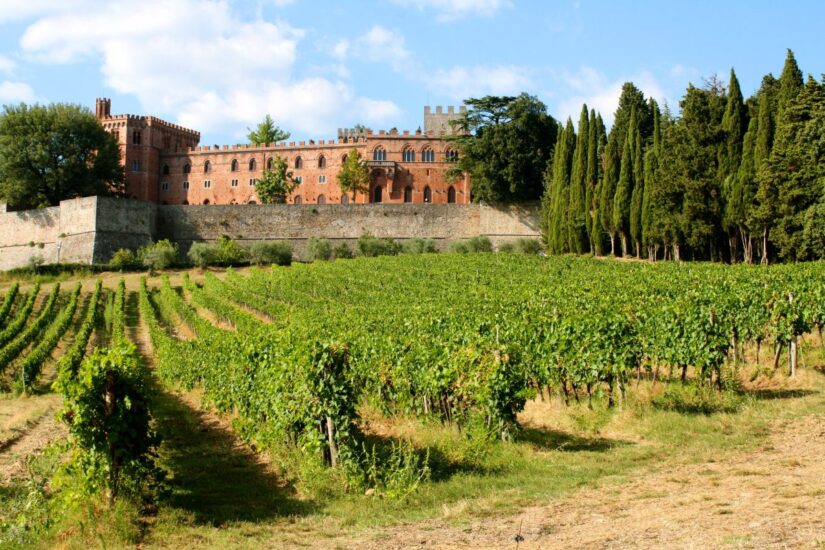
By the sixteenth and seventeenth centuries, Ciuffoletti explains, Tuscan wine production had expanded alongside the spread of sharecropping, or more precisely the farm-estate system, where the landlord share of the grapes was carefully cultivated and transformed into quality wines. The Medici, who owned around thirty estates, set the example. It is no coincidence that at the end of the sixteenth century Bernardo Davanzati wrote a treatise entitled On the Cultivation of Vines and Certain Trees (1579). Davanzati advised against harvesting grapes ‘between the two moons,’ that is, at the turn of the lunar cycle. He also recommended the practice known as governo and prolonged boiling in a cask. The “governo” method went on to become a hallmark of Tuscan winemaking. In the same years, Cristoforo Messisbugo testified that the ducal Medici cellar was always well supplied, especially with white wines (1552). The great Bolognese geographer Leandro Alberti likewise praised Tuscany most renowned wines, beginning with those of San Gimignano, Montalcino and Montepulciano, which was being mentioned with increasing frequency. The red wine of Montepulciano was judged to be of outstanding quality by the papal cupbearer Sante Lancerio. Cardinals travelling to Rome often stopped in Montepulciano and became familiar with the virtues of its wines. Meanwhile, the physician and naturalist Andrea Bacci, in his “De naturali vinorum historia” (1596), praised the wines, especially red wines, of the Chianti valleys and hills, as well as those of San Gimignano, San Casciano and the sturdier wines of Montepulciano. Around the same period, the Bolognese physician Crivellati recommended red wines for the treatment of illnesses, just as the Roman Francesco Liberaio praised Tuscan red wines, expressing a particular preference for “the red wines of Montepulciano”. It is therefore no coincidence that at the Medici estate of Artimino red wine was produced in the style of Montepulciano. Even in the early eighteenth century, the renowned grand-ducal estate manager Domenico Falchini advised making wine according to the Montepulciano tradition. The same view was shared by the celebrated agronomist Cosimo Trinci of Pistoia, who recommended producing wine “rich in color, fragrant, full-bodied, spirited and long-lasting, in the manner of Montepulciano”. Even Marsilio Ficino, advocate of refined white cuisine, and Ludovico il Moro appreciated Tuscan red wines. Likewise, great painters, especially in their depictions of the Last Supper, painted bright red wines in glasses and flasks. One need only think of Ghirlandaio, Benozzo Gozzoli and Leonardo da Vinci himself in the great representation of the Last Supper in Milan. In essence, wine in Florence was not merely an economic commodity; it was also art and culture.
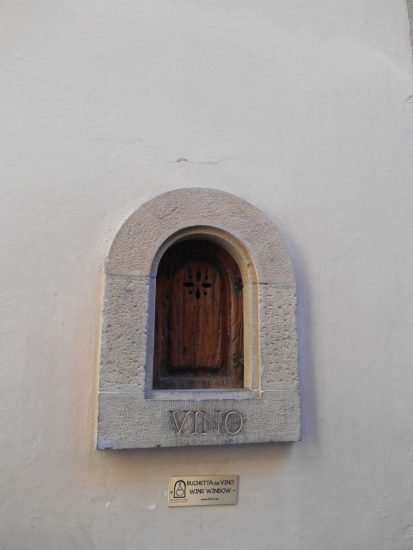
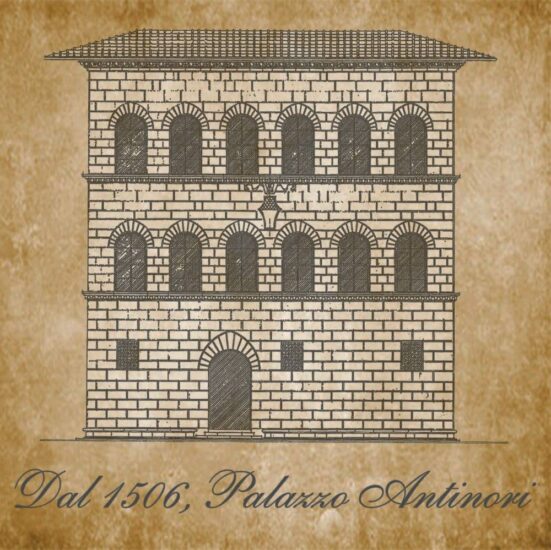
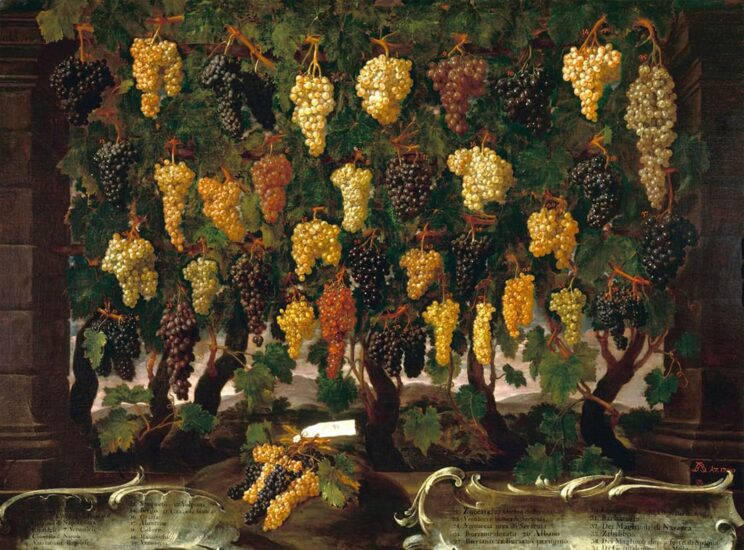
“Certainly - affirms Ciuffoletti - the substantial consumption of wine in the cities required an expansion of viticulture and the adoption of good vineyard and cellar practices to improve quality and enable producers to cope with the “perilous” transportation of wine, whether by cart or by pack animals carrying two barrels each. The wine destined for trade was primarily produced on estate farms from the landlord share of the harvest and carefully prepared to withstand journeys to markets or to the cellars of noble palaces in the cities. It was in these urban residences, especially in Florence, that the famous wine “windows” - “finestrelle” began to appear. From small openings at street level in aristocratic palaces, wine could be served directly to anyone who requested it. The finestrelle represented a unique institution that endured for centuries before disappearing during the first half of the twentieth century. In many respects, Medicean Tuscany had become one of the most distinguished expressions of wine civilization. It is worth noting that in 1595 the Dominican friar Agostino Del Riccio published a treatise on Experimental Agriculture that included one of the earliest classifications of grape varieties cultivated in Tuscany. A century later, in Florence, a pioneer of modern botany such as Pier Antonio Micheli undertook a cataloging of Tuscan vines, preserved today in the manuscript “Istoria delle viti che si coltivano in Toscana “ - “History of the vines cultivated in Tuscany”, held at the National Central Library of Florence. This “history” of vines and grapes mirrored what Bartolomeo Bimbi had achieved through painting. It was both art and science. Not surprisingly, the Accademia del Cimento, founded by Grand Duke Ferdinando II, studied the processes of wine fermentation. Francesco Redi was among its members.
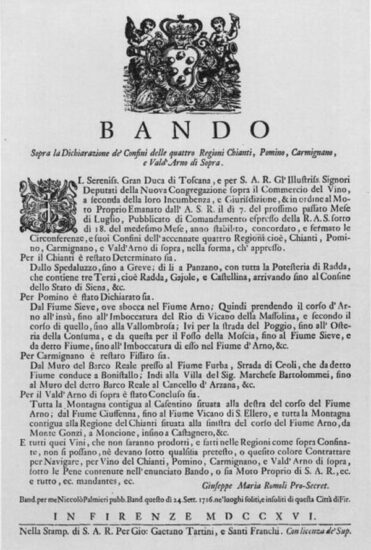
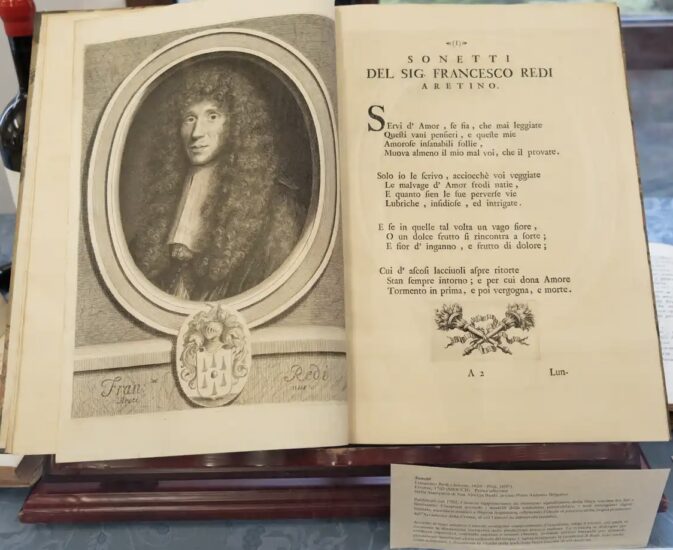
Yet, Ciuffoletti reminds us, it was at court that the convivial dimension and culture of wine were most fully celebrated. This became evident in Florence during the wedding of Maria de’ Medici and Henry of Bourbon in the autumn of 1600, when a lavish banquet was held in the Salone dei Cinquecento of Palazzo Vecchio. Princes, dignitaries, ambassadors, noblewomen and prelates attended the event, for which Bernardo Buontalenti devised elaborate table mechanisms, while Giambologna and Pietro Tacca created sculptures made of New World cane sugar. Although suffering from tuberculosis, Cosimo II de’ Medici sought distraction by organizing in Palazzo Pitti a drinking contest between Italian and German “champion drinkers”. According to contemporary accounts, ‘after much drinking, the Florentines prevailed”. Even Galileo Galilei, protected by Cosimo II, returned from Padua to Florence and passionately devoted himself to planting a vineyard and establishing a fine cellar on the hill of Arcetri overlooking the city. Increasingly, grand Florentine banquets also featured French wines. This was evident at the marriage of Cosimo III, son of Grand Duke Ferdinando II, to Marguerite Louise d’Orléans, niece of the powerful French king Louis XIV. The wedding banquet held on 1661, June 5th extended beyond the palace walls and included abundant servings of both Italian and French wines. It was Cosimo III who most vigorously promoted Tuscan wines, which became increasingly important to the economy of the Grand Duchy, now ever more dependent on agriculture. Even Florence was no longer primarily a manufacturing and textile city. Viticulture was encouraged by every possible means, culminating in the famous measures of 1716. Cosimo III commissioned Bartolomeo Bimbi to paint the approximately seventy grape varieties cultivated in Tuscany. It is within this context, Ciuffoletti explains, that the figure of Francesco Redi must be understood. Court physician and naturalist, Redi published in 1685 the celebrated dithyramb “Bacchus in Tuscany”. The work had a long and troubled gestation, as Redi was initially reluctant to undertake such a project, until the persistent encouragement of Leopoldo de’ Medici, Lorenzo Magalotti, and ultimately Grand Duke Cosimo III convinced him. The first impulse came from Leopoldo de’ Medici himself, a scholar of physics and mathematics, student of Galileo and later a cardinal, who gathered around him scientists such as Evangelista Torricelli, Vincenzo Viviani, Magalotti and Redi. It was Leopoldo who founded the Accademia del Cimento. Magalotti, a close friend of Redi, collected the most important writings of this circle of distinguished scientists, followers of the Galilean method, who made a significant contribution to the growth of a new scientific sensibility, particularly in the natural sciences, across Europe.
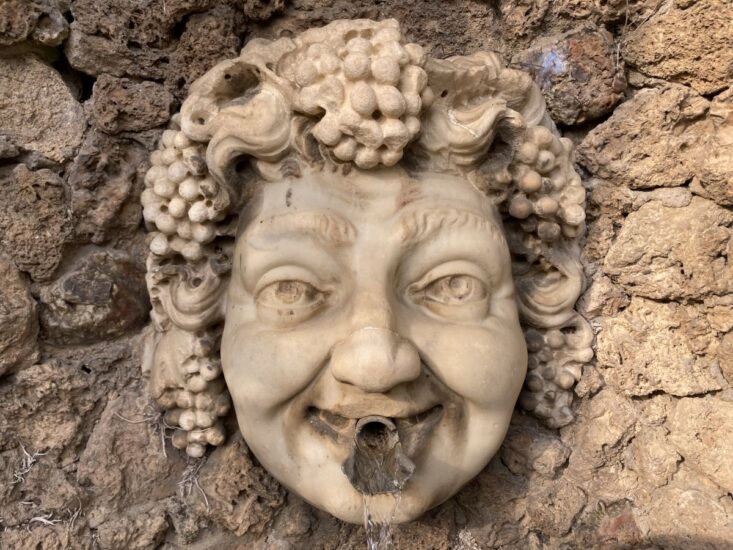
The poem depiction of Bacchus and Ariadne arriving on the banks of the Arno, followed by a procession of Bacchantes and Satyrs, celebrated the wines of Tuscany. Wine was described as the “lovable blood” of the grape, generated by the sun on Tuscan hillsides. For Redi, the pleasure of drinking was accompanied by sweet sensations and beneficial therapeutic effects. Above all, wine soothed life ailments and anxieties. It was Redi who famously declared that “Montepulciano is the king of all wines”. In truth, the wine of Montepulciano had already long been regarded as a benchmark of excellence, to the point that wines produced elsewhere were often praised as being made “in the manner of Montepulciano”. When King Frederick IV of Denmark and Norway visited the Medici court in 1709, cardinal Francesco Maria de’ Medici, brother of Cosimo III, welcomed him at the Villa of Lappeggi. In addition to an abundant feast, he arranged ‘a pyramid of straw-covered flasks from Fiesole, decorated with silk tassels and silver ornaments, containing an entire collection of Tuscan wines’. Frederick IV was evidently a knowledgeable wine lover and, according to contemporary accounts, enjoyed them in considerable quantities, remaining in Florence for about six weeks.
Nevertheless, concludes Ciuffoletti, despite the efforts of Cosimo III and the commission established to promote export-oriented Tuscan wines, which included all the leading Tuscan, or more accurately Florentine, producers, French wine dominated the market. The New Congregation for the Wine Trade included some of the most prominent names of the Florentine patriciate and court establishment, among them Lorenzo Corsini, Antonio Antinori, Niccolò Ginori, Jacopo Mannelli, and Vincenzo Contucci, and so on. Alongside producers and merchants sat the highest-ranking officials of the Medici state’s financial and fiscal administration, a clear indication of the importance wine had assumed under Cosimo III. Yet the challenge posed by French wines was formidable. French producers, particularly from Médoc and Bordeaux, had already gained dominance in international markets, meaning above all England, its empire, and the Americas, where elites increasingly preferred the great French table wines. In England, sparkling Champagne enjoyed extraordinary success and became known as “the wine of seduction”. Even innovations in packaging contributed to the triumph of French wine: dark Bordeaux bottles securely sealed with corks, and thicker dark-glass Champagne bottles capable of containing sparkling wines. Despite Cosimo III extraordinary efforts, Tuscan wines could no longer compete with French wines, whose bottles reduced the risk of counterfeiting and withstood long-distance travel. It was no coincidence that Bordeaux became the principal hub for exporting French wine around the world. It would take time, and the efforts of enlightened landowners such as Bettino Ricasoli and Vittorio degli Albizzi, for Italian wines to regain momentum and begin their ascent on the world stage.
Copyright © 2000/2026
Contatti: info@winenews.it
Seguici anche su Twitter: @WineNewsIt
Seguici anche su Facebook: @winenewsit
Questo articolo è tratto dall'archivio di WineNews - Tutti i diritti riservati - Copyright © 2000/2026