






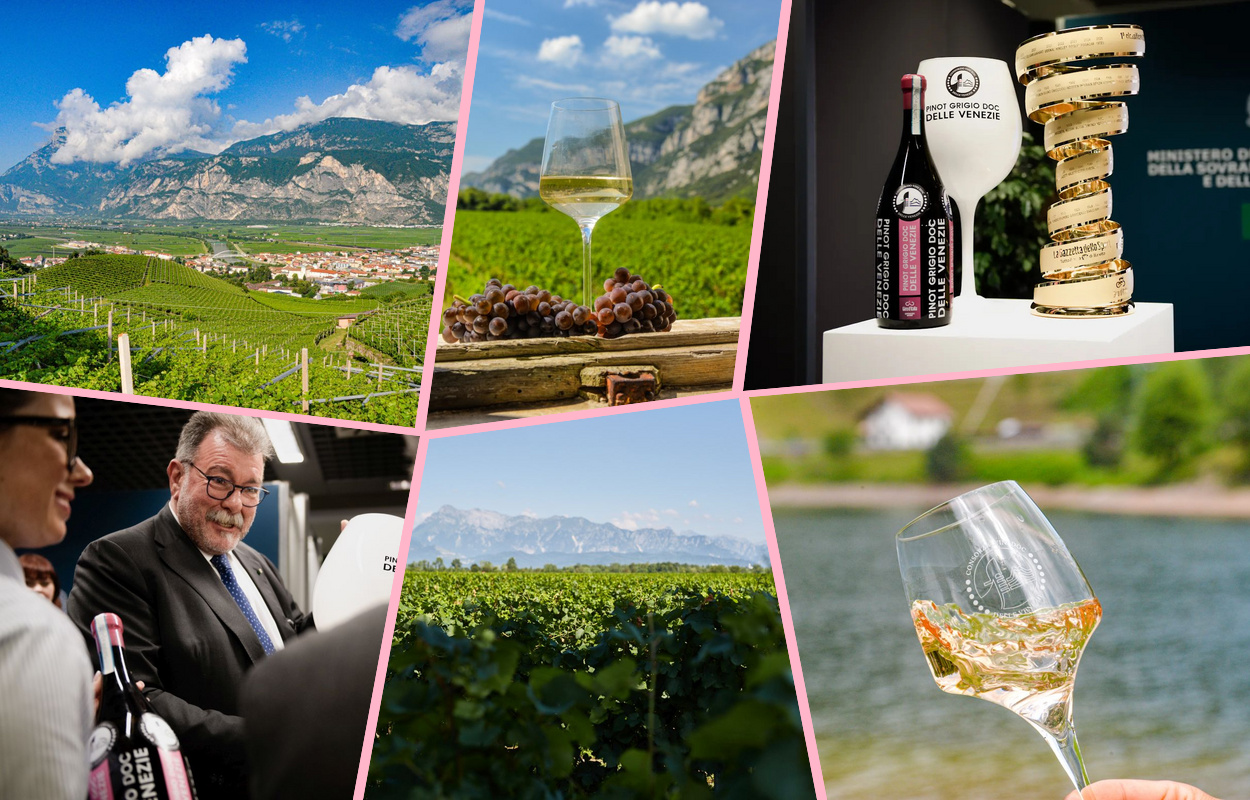
Wine tourism, now fully promoted as a key component of tourism with a capital “T”, is considered one of the sector most promising opportunities. Its greatest potential, however, lies in its ability to generate value for entire territories, going beyond the more limited returns for the wine production chain alone. This is not a new concept, as the “PDO economy” has been a reality for some time. What is new is the evolving legislative landscape. Regulation (EU) 2024/1143, which expands the role of tourism services in promoting Geographical Indications (GIs), recently transposed through the decree on wine protection consortia, together with the ColtivaItalia Decree, which supports them through financial and operational instruments, represent a powerful catalyst for greater organization and a qualitative leap that consortia must quickly embrace in order to assume the role which rightfully belongs to them. If managed effectively, this transition could become a major driver of territorial development. This is a particularly timely issue, given that Italian wine tourism still faces challenges in digitization, data collection and analysis, and collaboration with tourism operators. Significantly, Consorzio Doc Delle Venezie dedicated its Annual Congress to this topic, held in recent days at Villa dei Vescovi in Luvigliano di Torreglia (Padua), a property of the FAI (Italian Environmental Fund), with which the consortium established a partnership in 2025. This initiative positions the consortium as a laboratory and reference point for other wine consortia, with which it can share its experience. Its perspective is especially valuable given the interregional nature of Delle Venezie Pinot Grigio DOC, which spans Veneto, Friuli Venezia Giulia and the Autonomous Province of Trento.
“GIs in a New Territorial Ecosystem: Wine Tourism, New Expertise and Development Pathways for the Destination Economy” was the title of the Congress, which explored through two roundtable discussions how to transform a wine international reputation into a development opportunity for its production area, overcome the fragmentation of Italy wine tourism offering, establish itself as a system of organized, recognizable and competitive destinations, and understand the role that Geographical Indications can play in this process while respecting the competencies of the various territorial stakeholders.
“The reputation of wine, an extraordinary cultural and identity heritage, is not enough on its own to make a territory a tourist destination - underined Luca Rigotti, president of Consorzio Doc Delle Venezie - as an interregional denomination, we have both the opportunity and the responsibility to promote a form of enhancement that goes beyond the product itself, fostering connections between the wine and tourism sectors. Our objective is to strengthen the identity and prestige of the Delle Venezie DOC and raise awareness of a territory encompassing 27,000 hectares of vineyards, also through major events and strategic partnerships, such as the one launched in 2026 with the Giro d’Italia. But turning this visibility into tangible opportunities requires a genuine territorial pact based on collaboration among institutions, consortia, tourism operators and businesses, both large and small. This process demands expertise, digital investment and shared governance, in which every stakeholder operates according to its responsibilities without overlap. The role of the Consortium is to help build these synergies, also through dialogue with institutions and regional coordination bodies, such as the Pinot Grigio working group, so that wine promotion becomes part of a broader and more structured territorial development strategy”. The potential of wine tourism is confirmed by Enit data for 2025, highlighting a 176% increase in international wine tourism stays in Italy over less than a decade, generating 2.4 million overnight stays and an economic value of 396 million euros. These figures were mentioned by Minister of Tourism Gianmarco Mazzi in a video message, in which he described the Delle Venezie DOC production chain as a collective heritage asset.
However, as Roberta Garibaldi, professor at the University of Bergamo and one of Italy leading wine tourism experts, has repeatedly pointed out, Geographical Indications can become a distinguishing element of a destination identity and attractiveness only if integrated into a sustainable, comprehensive strategy. In this framework, protection consortia can play a strategic role by working alongside tourism organizations and contributing to the creation of shared governance capable of connecting businesses and institutions. “The priorities -specified Garibaldi - are digitization, to improve the visibility of destinations and competitiveness in the age of Artificial Intelligence, and, in order to fully implement the new mandate, the inclusion within consortium structures of professionals with specific tourism expertise. The focus must shift from simply increasing visitor numbers to creating and distributing value, measuring not only arrivals but also visitor spending, economic impact and benefits for local communities”.
Fabio Renzi, secretary general of the Symbola Foundation for Italian Quality (of which WineNews is also a member, ed), highlighted the merit of denominations in transforming geographical origin into economic value. To extend this process across entire territories, he suggested that consortia should forge alliances with other sectors that enrich local areas through history, creativity, research and tourism, acting as promoters of territorial partnerships.
Thanks to the “PDO economy”, as explained by Geronimo Nerli of the Qualivita Foundation, the value generated by Geographical Indications no longer remains confined to the production chain but extends to landscape, culture and hospitality. In 2025, the Qualivita Observatory on PDO Tourism recorded 667 activities promoted by 367 consortia and associations of producers, primarily in the wine sector, involving nearly 500 local institutions and organizations working directly with consortia. “However, although the transition from protecting a name to governing a place is now recognized by EU Regulation 2024/1143,” Nerli observed, “the system is still moving at two different speeds. The differences are largely linked to the governance capacity of consortia, which requires stronger strategic planning, specialized expertise and greater collaboration among local stakeholders”.
A survey carried out across a number of Geographical Indications reveals that 76% of visitors regard consortia as a guarantee of the authenticity of the experience, as well as of the reputation of the products themselves. This highlights the need to strengthen the role of protection consortia as coordinators of these ecosystems. “And to preserve the quality and biodiversity of Italian viticulture and winemaking - underlined Rosario Di Lorenzo, president of the Italian Academy of Vine and Wine - while addressing the challenges of climate change, evolving consumption patterns and sustainability requirements, investment in scientific research is crucial”.
The reflections and initiatives undertaken by the Delle Venezie DOC are relevant to the entire Italian GI system, which is being called upon to assume new responsibilities and identify collaborative tools and models capable of meeting the challenges of ongoing transformation.
“As for the institutional role of protection consortia in wine tourism - summarized Stefano Sequino, director of the Consorzio Doc Delle Venezie - I envision a multi-level governance model based on coordination among different stakeholders and areas of expertise, in which businesses retain their operational autonomy while consortia help create the conditions and opportunities that support their development, never with the aim of replacing the functions of other territorial bodies. The challenge is to shape a wine tourism system that is increasingly structured, including from an institutional perspective, and capable of integrating protection, promotion and enhancement of denominations within a broader framework of cooperation among consortia, institutions and operators. This is a path that requires coordination, a sense of responsibility and, especially in a constantly evolving market, the courage to experiment with new promotional approaches, moving beyond traditional models and strengthening the ability of denominations to communicate their identity and establish themselves in international markets”.
The path outlined by the Delle Venezie Pinot Grigio Consortium is one that should be pursued in order to answer positively the question posed during the Congress second session: “Dal prodotto al territorio: siamo davvero una wine destination?” - “From product to territory: are we really a wine destination?”. “The mere presence of wineries is not enough to transform a wine-producing area into a true wine destination - warned Josep Ejarque, an internationally recognized authority in destination management and marketing - an integrated offering must be developed, including suitable accommodation facilities, qualified guides, high-quality restaurants and staff capable of promoting both local wines and attractions. In this process, the consortium can play a catalytic role. Effective coordination is therefore essential to connect the various operators, overcome fragmentation of the tourism offer and encourage dialogue between the wine and tourism sectors. Targeted B2B and B2C promotion across different markets is just as strategic as visitor segmentation in generating value”.
“Visitors are not purchasing a tasting; they are seeking an experience, human connection, organizational efficiency and consistency between expectations and the service received - observed Denis Seghetti of Winedering - weekend closures, tours offered only in Italian and slow response times are among the main critical issues”. This is demonstrated by an analysis of 12,500 reviews collected by the Winedering platform: in nearly eight out of ten reviews, visitors describe the person who welcomed them, while in less than 3% of cases the evaluation focuses exclusively on the wine itself. The gap between tourism demand and the organization of supply is evident, suggesting that shared denomination-level, and even national, guidelines for coordinating stakeholders and standards, such as updating calendars and pricing, digitization, multilingual services and other operational aspects, could significantly improve accessibility and competitiveness. Major sporting events are also proving to be effective tools for territorial promotion. One example is the Giro d’Italia, for which the Delle Venezie DOC served as Official Wine this year. In 2027, that sponsorship will evolve into a partnership aimed at promoting the wine heritage of Veneto, Friuli Venezia Giulia and Trentino. Italy most prestigious cycling race, by combining sport, landscape and culture, “offers extraordinary international visibility to the territories it passes through, generating a direct economic impact of approximately 700 million euros - explained Paolo Bellino, ceo of Rcs Sports & Events - the impact continues over the following 18 months, encouraging visitors to return to the race locations, with benefits also extending to gastronomy and local hospitality. However, media exposure alone is not enough to generate lasting results. Adequate services, accessible information and, above all, a shared strategy among organizers, institutions and local operators are required. Most importantly, the fragmentation of the offer must be overcome and efforts must focus on enhancing the overall quality of the tourism experience”. For that purpose, wine and wineries alone are not enough.
Copyright © 2000/2026
Contatti: info@winenews.it
Seguici anche su Twitter: @WineNewsIt
Seguici anche su Facebook: @winenewsit
Questo articolo è tratto dall'archivio di WineNews - Tutti i diritti riservati - Copyright © 2000/2026