


Thursday 26th of November 2026 - Last Update: 10:26






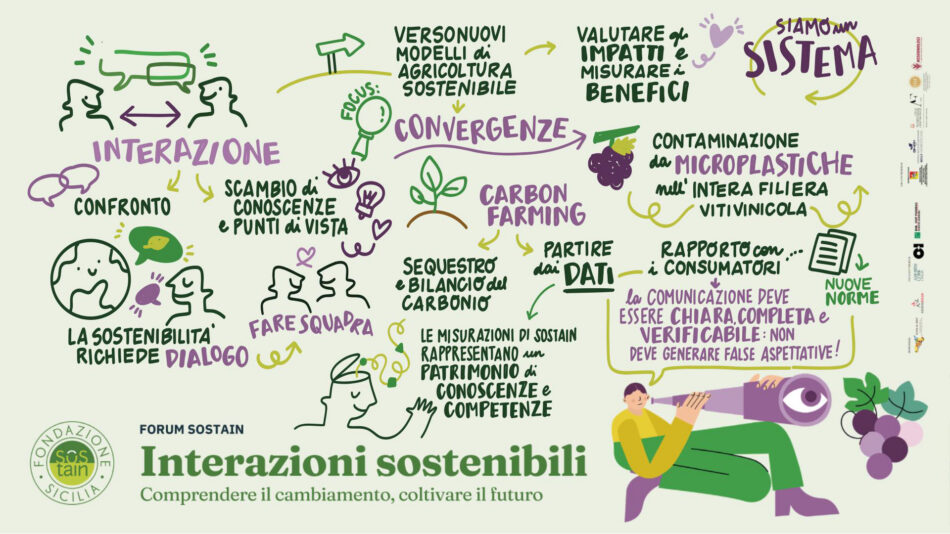
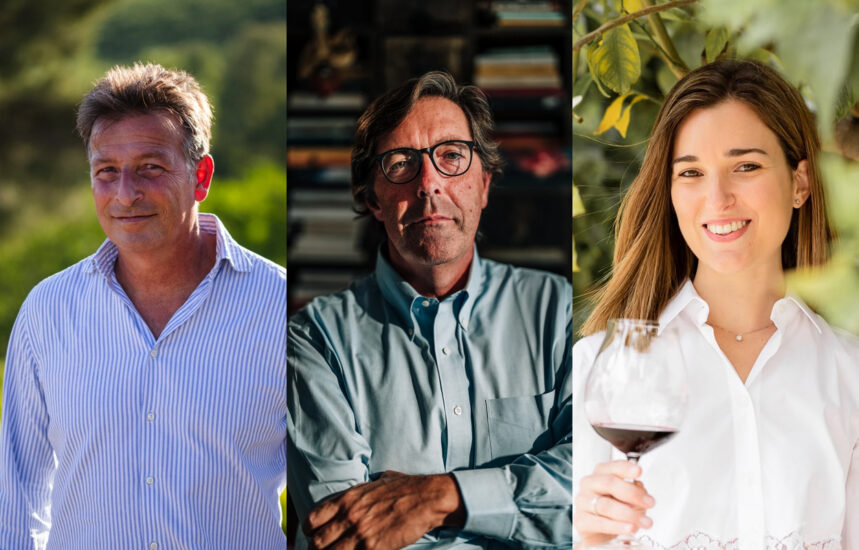
“Sustainability is not something you declare, it is something you measure and build together. Global challenges require local responses. SosTain Sicilia demonstrates that working as a system is the way to transform climate, environmental, economic and demographic challenges into an opportunity to rethink the future of viticulture, starting from the specific characteristics of the territory”. This was the message delivered by Alberto Tasca, president of the SosTain Sicilia Foundation, one of the most pioneering and advanced territorial sustainability projects developed in Sicily. The initiative has gained the support and participation of the leading organizations representing the wine sector, from the Sicilia DOC Consortium, now chaired by Alessio Planeta, to Assovini Sicilia, led by Gabriella Favara (Donnafugata), as well as numerous wineries among the island most prominent names, including Tasca d’Almerita, Donnafugata, Planeta, Cusumano, Cottanera, Settesoli, Girolamo Russo, Graci, Occhipinti, Palmento Costanzo, Pellegrino, Rapitalà, Pietradolce, Baglio del Cristo di Campobello, Feudo Maccari and Zisola, to name just a few. It is yet further evidence of a Sicilian wine industry genuinely capable of working together on multiple fronts. Yesterday, in Palermo, this collaborative spirit took centre stage at the SosTain Forum, “Sustainable Interactions: Understanding Change, Cultivating the Future”, organized by the SosTain Sicilia Foundation with the support of the Sicilia DOC Consortium, Assovini Sicilia and the Sicilian Regional Government, bringing together producers, researchers and other stakeholders. At the heart of the forum was a crucial question: how can the wine sector address the transformations reshaping the industry and turn them into opportunities for growth? It is a challenge that calls for a change in perspective, one that Sicily has embraced decisively in just a few years. In 2025, Sicily produced approximately 2.6 million hectoliters of wine, confirming its position as Italy fourth-largest wine-producing region. Of its 97,000 hectares of vineyards, 80% of production falls under PDO and PGI categories. As speakers explained, the sector is moving beyond a model focused on large volumes and towards one centered on quality, appellations, indigenous grape varieties and territorial identity. The challenge is no longer to produce more, but to generate greater value. In this context, sustainability plays a decisive role, not only as a response to environmental challenges, but as a prerequisite for protecting Sicily vineyard heritage, strengthening business resilience and creating a lasting competitive advantage.
In this journey, the SosTain Sicilia Foundation represents a concrete model of collaboration and innovation. “More than a sustainability program, it is a shared system that guides wine companies along a path of continuous improvement through a scientific protocol and verifiable indicators”, explains the Foundation. The goal is to transform environmental, social and economic responsibility into measurable practices, promoting resource efficiency, reducing impacts and protecting the territory”. The figures for 2025 reflect the scale of the initiative: 45 member companies, 6,350 hectares of vineyards involved and more than 20 million SosTain-certified bottles. These numbers highlight the scale of a collective commitment and demonstrate how sustainability can translate into tangible, measurable and shared results. Today, the SosTain model is evolving towards new frontiers, beginning with regenerative agriculture, with growing attention to soil health, biodiversity and the capacity of agricultural ecosystems to respond to climate change. This transition is being supported by the launch of the new SosTain portal, a tool designed to collect company consumption data, build Foundation-wide indicators, monitor progress and identify new opportunities for improvement”.
The forum also provided an opportunity to review a year of new projects launched across the territory, including the “CentoPerCento Sicilia” bottle initiative developed together with glass manufacturer O-I. The project focuses on reducing bottle weight and improving logistics to make wine packaging more sustainable through bottles produced with very high percentages of glass collected and recycled in Sicily, lighter bottle designs and a short supply-chain production model. “Since the project began in 2023, 15 million bottles have been produced, gradually reduced in weight from 410 grams to 360 grams, representing an 18% reduction compared with the market average and an estimated saving of 500 tonnes of CO₂. A further 300 tonnes have been saved through local production, which reduces transport distances and associated emissions, according to calculations carried out using the Greenrouter Tool. The overall balance amounts to 800 tonnes of Co₂ saved, demonstrating how innovation, circular economy principles and short supply chains can generate measurable environmental benefits through seemingly small production choices that can have a significant impact when adopted on a large scale”, still explains the SosTain Sicilia Foundation.
The Foundation, through its president Alberto Tasca, also delivered a clear message: “no company can face the transition alone. Sharing goals, expertise and best practices strengthens the entire sector. Today SosTain is taking a further step forward: with the new portal and our focus on regenerative agriculture, we are reinforcing a model based on data, impact measurement and the ability to turn knowledge into action. Because sustainability is not something you declare: it is something you measure, practice and build together”.
As recalled by Luca Sammartino, Sicily Regional Councillor for Agriculture, “Sicily has tackled the sustainability challenge with outstanding results. Above all, we are Italy leading region in terms of organically farmed vineyard area. In recent years, the regional government has addressed the scourge of drought by investing significant resources in integrated water systems, on-farm reservoirs, storage basins and small desalination plants. But the real weapon against climate change is our biodiversity, which makes our territories true strongholds of resilience, as our farmers know well and demonstrate every day through the production of high-quality products”.
“The challenge is to enhance the identity and extraordinary diversity of Sicily wine heritage, overcoming stereotypes and finding new ways to make it increasingly recognizable and competitive internationally. Territory, culture, innovation, sustainability and the ability to work collectively therefore become fundamental elements in building a contemporary narrative of Sicily, one that looks to the future without losing touch with its roots”, recalled Gabriella Favara, president of Assovini Sicilia.
A challenge which, as Alessio Planeta, president of the Sicilia DOC Consortium, underlined, is truly enormous, because what Sicily, and indeed the entire wine world and beyond, is facing is not “simply” climate change, but rather “a broader environmental crisis involving the climate, natural resources, and the way we produce, consume and live on this planet. In such a difficult context, we are all called upon to respond by taking our share of a collective responsibility. Wine producers, as farmers, can contribute to adapting to and mitigating the climate crisis by adopting sustainable agricultural models and practices that promote the responsible use of natural resources. “Sicilian agriculture - still said Planeta - is now evolving through the introduction of important innovations. These include moving vineyards to higher altitudes, while making room for drought-resistant crops such as olive trees, almonds and pistachios; choosing grape varieties capable of withstanding high temperatures, such as Inzolia, Zibibbo, Frappato and Nero d’Avola; and caring for soils and landscapes through green manure cover crops, kaolin applications and new tree plantings which help lower temperatures and maintain healthy soils. Since 2020, the SosTain protocol has already identified and promoted sustainability tools and practices that respond to these needs, offering farmers a shared method for measuring and improving their work in the vineyard. SosTain also plays an important role as an ambassador for an agricultural model that does not deplete natural resources but instead protects and preserves them in good condition. Our agronomic knowledge has ancient roots inherited from Arabs, Greeks and Carthaginians, but in today context SosTain can act as a spokesperson for a model of agriculture that benefits not only the farming sector itself, but also the landscape and the region tourism economy”, concluded Planeta.
Among the forum key themes, particularly noteworthy contributions focused on regenerative agriculture. “Talking about regenerative agricultures, in the plural, means moving beyond the idea of a single method - underlined Adriano Zago, one of Italy most respected agronomists in the field - and recognizing the value of different approaches united by the shared goal of regenerating soil fertility and the vitality of agroecosystems. Organic farming, biodynamic agriculture, agroecology and regenerative practices all converge toward a vision that places biodiversity, resilience and quality at its center. Regeneration is not simply a collection of practices, but a shift in the way vineyards are observed, managed and interpreted. The ultimate objective is to give voice to the identity of the terroir, creating the conditions for each wine to express the uniqueness of the place from which it originates”. “Contemporary agriculture must reconcile productivity, efficient resource use, environmental protection, and economic and social sustainability. In response to these needs - explained Ettore Capri of the Opera Research Centre and DiSTAS at the Catholic University of the Sacred Heart in Piacenza, together with colleague Lucrezia Lamastra, who also coordinates the Scientific and Technical Committee of the SosTain Foundation - a number of paradigms have emerged, including organic, integrated, sustainable and regenerative agriculture, which are often presented as alternatives. “The four approaches don’t operate on the same conceptual plane. Organic farming defines a regulated production system; integrated farming focuses on optimizing inputs; sustainable agriculture simultaneously considers environmental, economic and social dimensions; while regenerative agriculture is geared towards restoring soil health and ecosystem functions. Significant convergence exists in terms of practices. Cover cropping, organic matter management, reduced soil disturbance and biodiversity protection recur across several paradigms. In input management, strategies aimed at reducing dependence on external resources coexist with optimization techniques, including those enabled by precision agriculture. Regarding water, shared objectives such as infiltration, quality improvement and landscape protection are pursued through different mechanisms. However, the effectiveness of these practices is not automatic. It depends on the combinations adopted, on soil and climatic conditions, and on the specific context of each farm. Furthermore, the uneven geographical distribution of scientific evidence limits the broad transferability of results. The main differences instead concern objectives and governance. Organic agriculture is supported by established rules and certification systems; integrated farming combines regulatory requirements with voluntary schemes; while sustainability and regeneration standards remain more heterogeneous. The regenerative perspective emphasizes not only the reduction of environmental pressures but also the enhancement of natural capital. Yet this ambition requires clear baseline conditions, reliable indicators and long-term monitoring capable of distinguishing between the adoption of practices and the benefits actually achieved, while also recognizing possible trade-offs between environmental, productive, economic and social performance. In conclusion, regenerative agriculture can be viewed as an evolutionary extension of sustainability rather than as a necessarily alternative model. The decisive shift is from approaches primarily based on declared practices to evaluations grounded in measurable and verifiable outcomes. The quality of agricultural systems - concluded Capri and Lamastra - depends on the coherent integration of techniques and the demonstration of their effects, not on the label under which they are classified”.
Copyright © 2000/2026
Contatti: info@winenews.it
Seguici anche su Twitter: @WineNewsIt
Seguici anche su Facebook: @winenewsit
Questo articolo è tratto dall'archivio di WineNews - Tutti i diritti riservati - Copyright © 2000/2026