


Tuesday 27th of October 2026 - Last Update: 13:15







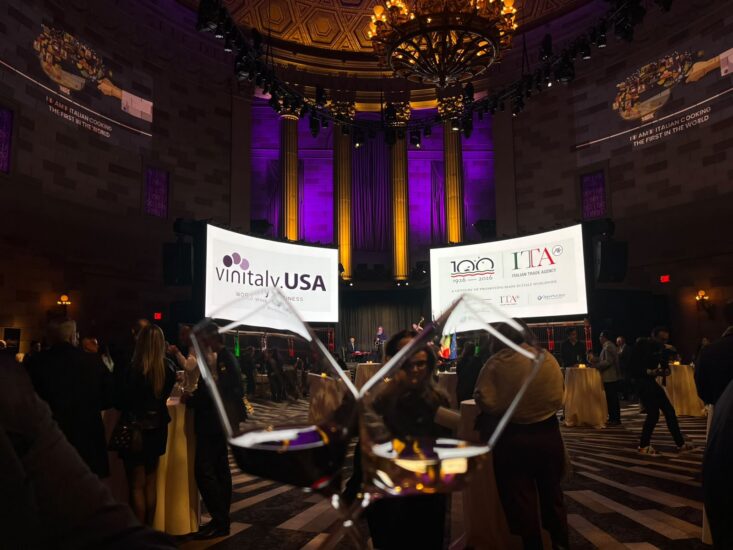
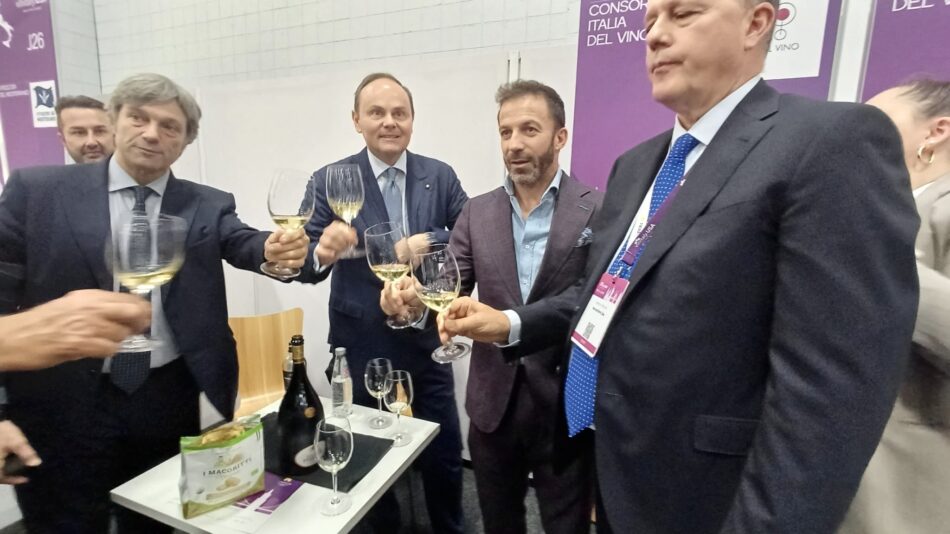
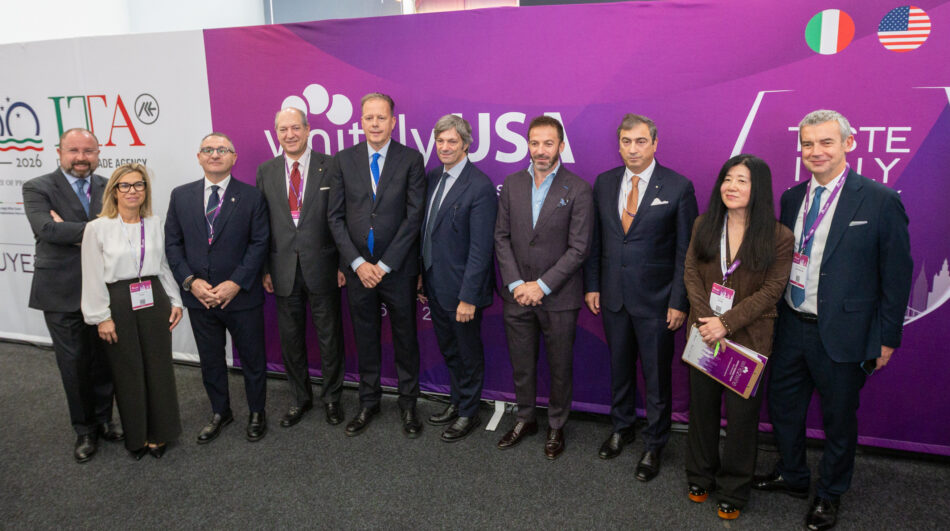

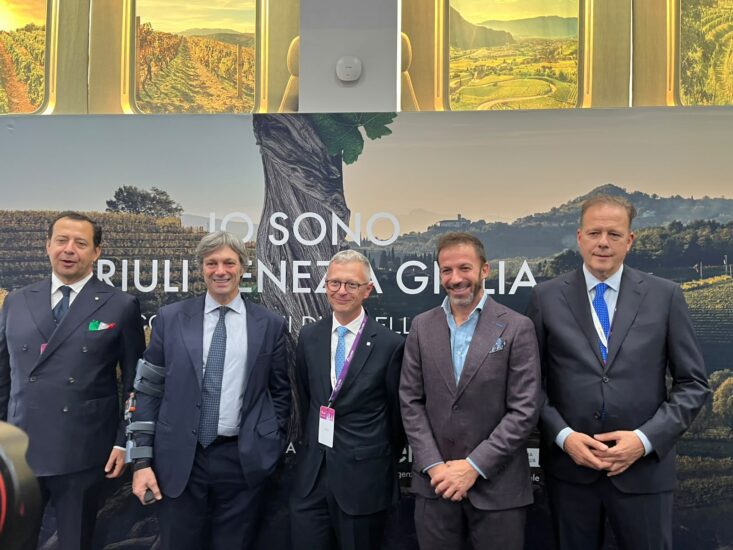
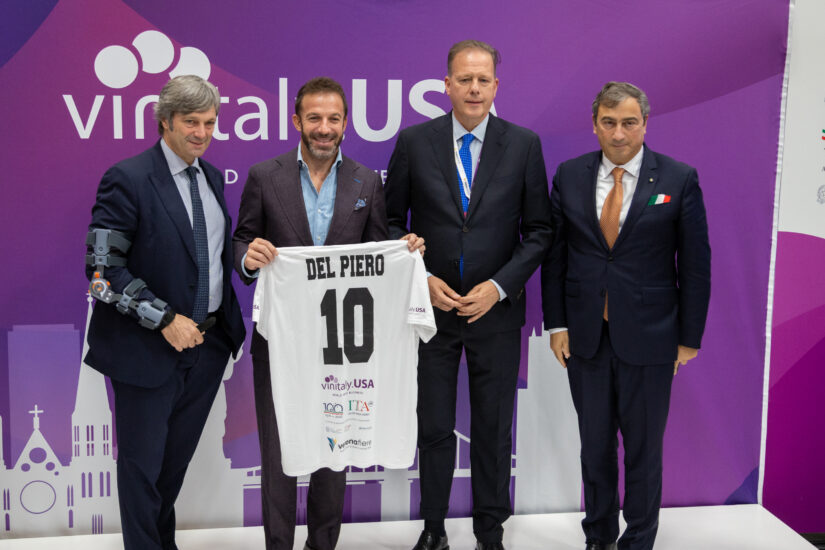


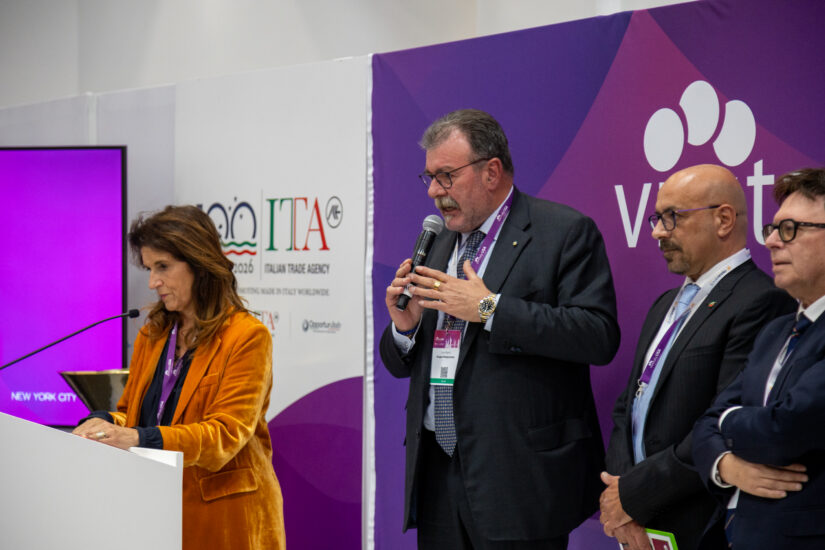
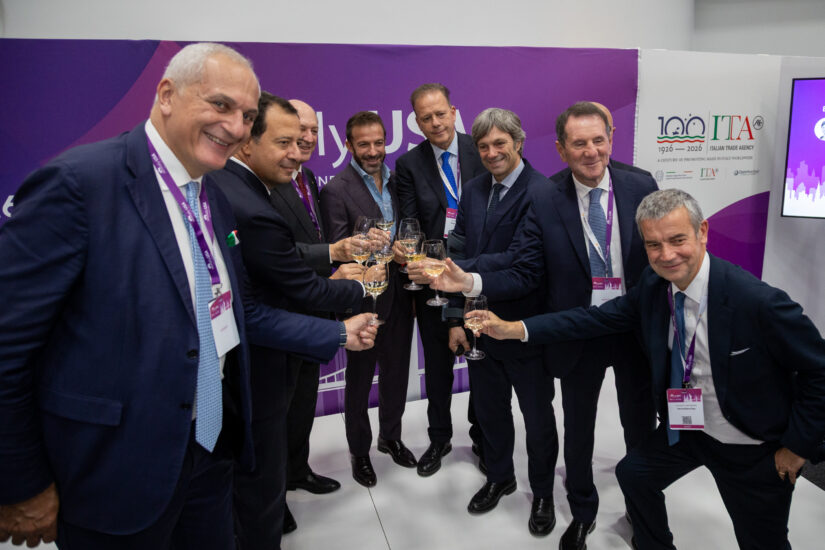
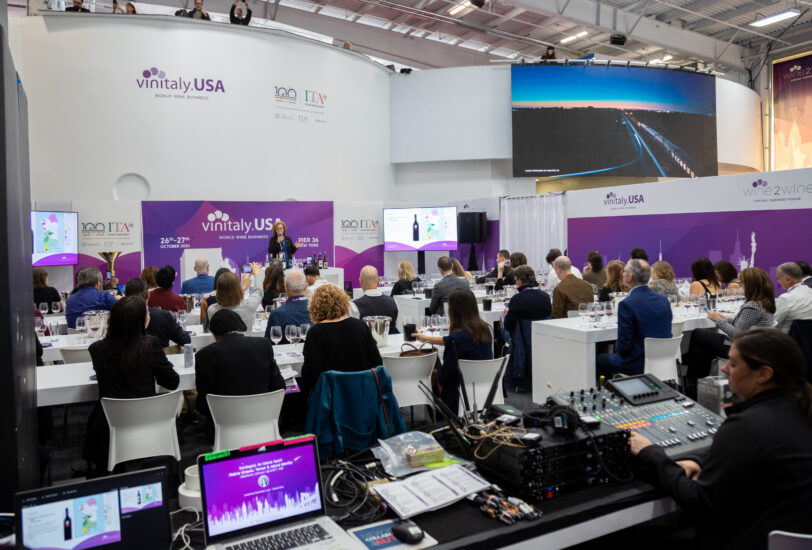

To help Italian wine return to growth in the U.S., its leading market, and beyond, working together is essential. It applies in sport as much as it does in business and promotion. This message was echoed by all the “top players” involved in promoting Italian wine, from Vinitaly and the Italian Trade Agency (ITA/ICE) to institutional and industry representatives, producers, and even a very special champion: Alessandro Del Piero, a member of Italy 2006 FIFA World Cup-winning squad, long-time captain of Juventus, and now restaurateur of N.10 in Los Angeles. Perhaps one day, like many former footballers, he may also become a wine producer, possibly in his native Conegliano, home to Prosecco DOCG. Del Piero was among the leading figures at the opening of the edition No. 3 of Vinitaly.USA, which, after two editions in Chicago, is being held at New York Pier 36 on October 26th and 27th. Featuring 300 wine companies, including 100 brought by ICE Agency, and 2,500 Italian labels, Vinitaly debut in the Big Apple reflects Italy determination to further expand its presence across the American market.
“The United States is the primary target market for Veronafiere and for Italian wine, and it still offers enormous potential that requires ongoing investment and continuity of action - declared Federico Bricolo, president of Veronafiere - at this complex stage, despite encouraging signs, collaboration between businesses and institutions is crucial to supporting the competitiveness of our wineries and helping them reach new consumers and unexplored markets”.
A commitment shared by Matteo Zoppas, president of the Italian Trade Agency (ITA/ICE), who stressed that “more than ever, it is essential to act as a coordinated system in support of the Italian wine sector, in line with the attention the Government is dedicating to the industry, from the working group launched at Palazzo Chigi by Prime Minister Giorgia Meloni to the efforts of the Ministry of Agriculture and the growth diplomacy promoted by the Foreign Ministry. New York is a strategic gateway to the entire U.S. market, and Vinitaly.USA continues to prove itself a concrete tool for commercial development. Institutions, as ICE does, must stand alongside businesses in times of difficulty, not only when opportunities arise”. Among the messages delivered, there was also that of Agriculture Minister Francesco Lollobrigida: “Vinitaly.USA offers our wineries a concrete opportunity to strengthen Italy presence in the United States, which remains the leading non-EU market for our wine. In 2025, the wine sector made an extraordinary contribution to the growth of Italian agrifood exports, reaching a record 7.8 billion euros. Wine is an undisputed ambassador of Italian excellence around the world and a cornerstone of made in Italy identity, further strengthened by the recognition of Italian Cuisine as a Unesco Heritage asset and by its increasingly close connection with wine tourism. As a Government, we remain fully committed to supporting the international promotion of the sector in order to enhance the reputation of our vineyards and the global competitiveness of our territories”.
“Vinitaly arrival in New York is a major milestone with strong symbolic value. It is an achievement that fills us with pride and one that both the Government and I have strongly supported - wrote Foreign Minister Antonio Tajani in a letter - I would like to thank Veronafiere president Federico Bricolo, ICE Agency, and all the partners who believed in this ambitious project and made it a reality. Bringing 100 Italian wine companies to America iconic city is tangible proof that interest in and demand for Italian wine remain strong. Italian wine is much more than a product of excellence. It represents our identity, the richness of our territories, and a productive culture that combines tradition, innovation, and entrepreneurial spirit. It is also an expression of the Italian lifestyle. These are the values we are bringing to New York. “The United States remains the leading destination for our wine exports, and we will continue to devote the utmost attention to this important market. Italy is always at the forefront of fostering strong commercial ties between the two sides of the Atlantic. On this occasion, I would also like to recall the strength of Italian wine: Italy is the world second-largest wine exporter. With 8 billion euros in exports in 2025, we account for 23% of global wine sales. All our territories, from North to South and across Central Italy, contribute to our great winemaking tradition”.
According to Giovanni Sacripante, director general of Veronafiere, “Italian wine owns the quality, diversity, and territorial heritage needed to win over new consumers in the United States. The challenge is to understand how demand is evolving and to adapt commercial strategies accordingly, engaging different audiences, from fine dining establishments to emerging consumption occasions, while maintaining a strong sense of identity”. The need to “act as a system” and work as a team was also reiterated by, among others, Luca Rigotti, head of Confcooperative wine division and Copa-Cogeca and a leading executive at Mezzacorona, as well as Filippo Polegato, head of Astoria Vini and representative of Unione Italiana Vini (Uiv).
“The U.S. market is number one, and events like these are essential, as is the strong collaboration between ICE, Vinitaly and the relevant ministries, because enhancing the value of Italian wine requires businesses and institutions to work together. We tend to view the United States as a single market - pointed out Luca Rigotti - but in reality it is made up of many different markets, and we need a more dynamic approach. My dream is to create a national brand which makes Italian wine instantly recognizable as a symbol of quality and sustainability, under which we can tell the story of our tradition, sustainability and wine culture”. “We need to keep promoting our wines. We must work hard to increase the value of Italian wine, and we should thank Veronafiere and ICE for the work they do to strengthen our presence in the market and help it grow further. This Wednesday we will meet Italy Ambassador to the United States, Marco Peronaci, in Washington. Tariffs will be on the agenda, also in light of the conclusion of the “overcapacity” investigations. On the EU side, we are encouraged by the statements of Commissioner Šefčovič, who only a few days ago indicated tariff exemptions for wines and spirits as the top priority in the negotiations”, said Filippo Polegato. But, as noted, for Italy to return to growth, in addition to working as a team, it must remain humble and continue working hard, just as a football team, or any sporting team, would. This was the message delivered by Alessandro Del Piero, acting as an ambassador for Lega Serie A, during a conversation with journalist and Mediaset U.S. correspondent Maria Luisa Rossi Hawkins. “Every time we celebrate something, we open a bottle of wine. There is a special connection between wine and sport. Wine is part of culture, not only in Italy. Sharing a glass of wine during a meal means a great deal to us. Teamwork is essential - said Alessandro Del Piero - in wine just as in sport. As the Football League, we want our collaboration with Vinitaly and ICE to continue. We bring Serie A to 100 countries around the world. Our football is not currently at the level it once was, and we need to do something different from what we have done so far. Perhaps the same applies to wine, even though it is already among the world leaders. But, as I said, we need to work as a team, as we do in sport. Sometimes we must be humble and recognize that others may do certain things better than we do, while remaining proud of what we achieve. If we work in this way, football too will return to the top of the world game, just as wine already is, including here in the United States”. And indeed, in a market which generated 1.7 billion euros for Italian wineries in 2025, and 997 million euros in the first 7 months of 2026, despite an 11% decline compared with the same period in 2024, opportunities remain abundant. According to the Uiv-Vinitaly Observatory, there are 35 million consumers of Italian wine in the United States, a record among importing countries that highlights significant room for growth. Out of nearly 90 million regular wine drinkers in the U.S., more than 50 million represent a pool of consumers potentially interested in made in Italy products. The challenge for Italian wine is therefore to bridge this gap, consolidating its current position while expanding the market by attracting new audiences, younger generations and new consumption occasions.
The “phase 2” strategy for strengthening Italy presence in the world largest wine market, which imported 4.4 billion euros worth of wine from the European Union alone in 2025, is based on the awareness that consumer targets must increasingly be segmented by age, ethnicity and geography of demand. According to the study carried out for Vinitaly.USA, one competitive advantage enjoyed by Italian wines lies in their stronger penetration among younger consumers compared with domestic producers. While Californian wines are heavily concentrated among older age groups, with more than 70% of sales volumes attributable to consumers aged 55 and over, Italian wines display a more balanced distribution across generations, showing greater appeal among younger drinkers as well. Another major challenge, the Uiv-Vinitaly Observatory notes, emerges from a recent Wine Market Council survey on the consumption habits of new American wine drinkers. In a period marked by unprecedented change, not only are consumption occasions evolving, but so are the ways in which wine itself is consumed. While wine is still most commonly enjoyed on its own (67%) or with meals (63%), new trends are emerging, particularly among younger consumers. These include wine used in cocktails (34%), served chilled over ice (30%), or mixed with other non-alcoholic beverages. Overall, 75% of regular wine consumers drink wine in ways which differ from traditional consumption, influenced by family habits (60%), observations in bars and restaurants (50%), and social media (30%).
The future of the U.S. wine market was explored further by several key figures from both the American wine business and Italian production. According to Bill Terlato, head of Terlato Wine Group, one of the most important wine players in the United States and a partner of Italian brands including Cecchi, Cusumano, Feudi di San Gregorio, Nino Franco and Nonino, and not only, “at this moment, what we need is calm. The United States is a wine-producing country, but it is also a market where wines from all over the world are available, and there is no other market quite like it. Success is not built overnight. Successful brands have been working consistently for 10 or 20 years. It takes persistence, focus and passion. There are many outstanding wines that are still unknown. There is also an important difference between a good wine and a great wine. A good wine is made in the cellar: it is technically sound, clean and well-crafted, but often has little story to tell. A great wine is made in the vineyard. It expresses a territory, a soil, and is produced exclusively from grapes grown by the producer. That is fundamental in answering the question: ‘Why should someone choose this wine among the thousands available?”
And we should not be intimidated by the success of ready-to-drink products or other trends. We need to stay calm, hold our position and remember that wine has always been consumed and always will be”. That view is echoed, in her own way, by Alison Napjus, senior editor and Italy editor for “Wine Spectator”: “American consumers are increasingly curious about Italian wine. They want to understand the differences, the territories and denominations. They want to know what a Chianti Classico or a Cartizze is. More and more, they are looking for information about the regions and places behind the wines. The key is consumer education”.
Education is also essential for preserving identity while at the same time listening to what consumers are asking for, as Matteo Lunelli, chairman of the Lunelli Group, which includes Ferrari Trento, one of Trentodoc leading houses, and Bisol1542, among others, also emphasized.
“I believe American consumers are looking for authenticity, for wines with a strong identity. Above all, each of our wines expresses the Italian lifestyle, and then a specific territory and culture. Estate wines are what consumers want because they tell a story. Italy greatest strength is its diversity, and our task is to guide consumers through that diversity. For example, in the sparkling wine category, we are working to explain why Trentodoc, Prosecco DOC, Prosecco DOCG, Franciacorta, Alta Langa, Oltrepò and others are all different. Diversity is what makes us unique among wine-producing countries, and we need to focus on value. While Italian wines in general are exported at roughly half the price of French wines, in sparkling wines we export at about a quarter of the price, and we must work on increasing value because that is where the future lies. And we have a great ally in tourism”, he said. Tourism will be among the key themes of tomorrow program at Vinitaly.USA, whose opening ceremony was also attended by a number of institutional representatives, including Riccardo Guariglia, secretary general of the Italian Ministry of Foreign Affairs; Marco Peronaci, Italy Ambassador to the United States; Gianluca Caramanna, adviser to the Ministry of Tourism for institutional relations; Marco Rago, legal adviser to the Minister of Foreign Affairs for economic and development diplomacy; and Nicola Caputo, adviser to the Foreign Minister on export promotion and the internationalization of the agrifood supply chain.
Also present were Giuseppe Pastorelli, Consul General of Italy in New York, together with regional agriculture councillors: Alessio Mammi of Emilia-Romagna, Giancarlo Righini of Lazio, Stefano Zannier of the Autonomous Region of Friuli Venezia Giulia, and Carmine Cicala of Basilicata.
Representatives of industry organizations also attended, including Giovanni Bernardini, vicepresident of Copagri; Sandro Gambuzza, vicepresident of Confagricoltura; Luigi Pio Scordamaglia, ceo of Filiera Italia; Filippo Polegato, vicepresident of Unione Italiana Vini (Uiv); and Luca Rigotti, president of the Copa-Cogeca Wine Working Party. Together, they represented an Italian wine sector increasingly determined to work as one team, with the goal of returning to sustained growth in international markets.
Copyright © 2000/2026
Contatti: info@winenews.it
Seguici anche su Twitter: @WineNewsIt
Seguici anche su Facebook: @winenewsit
Questo articolo è tratto dall'archivio di WineNews - Tutti i diritti riservati - Copyright © 2000/2026