


Monday 21st of September 2026 - Last Update: 12:40




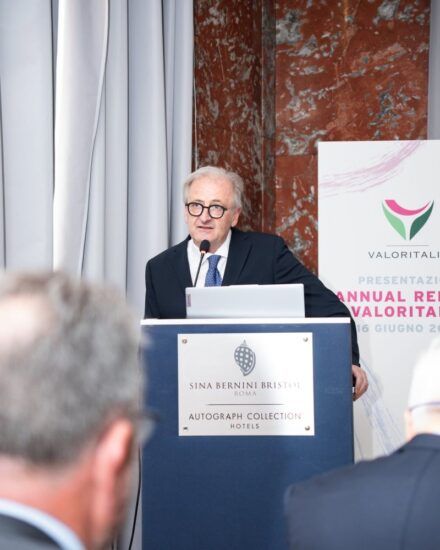
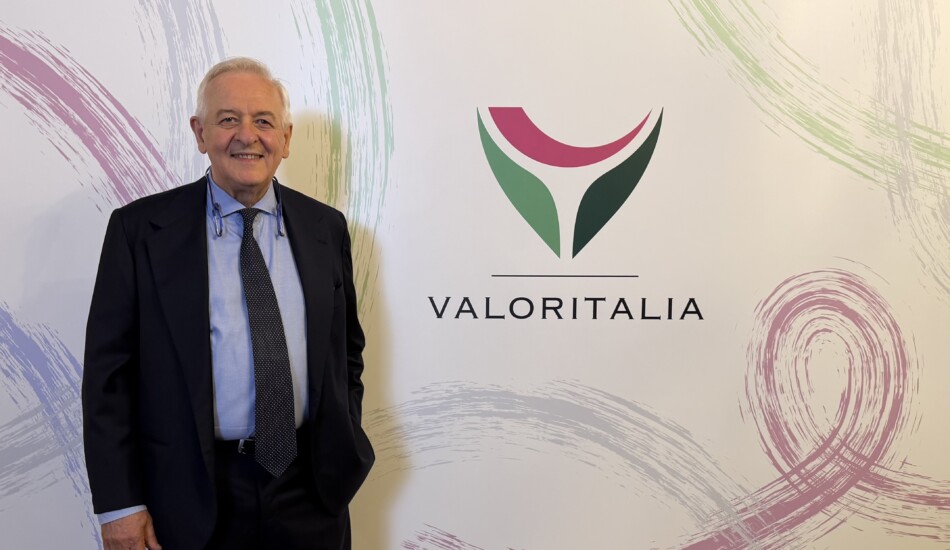
A sharp drop in bottlings for PGI and red wines, while PDO wines, white and sparkling wines are holding up better; a supply chain increasingly more concentrated at the top (in terms of companies or producer groups, but also of denominations capable of generating significant volumes), alongside a highly fragmented network of micro-companies and micro zones or denominations; and sustainability, in its various forms (environmental, economic, social), which is increasingly seen as a value to invest in rather than a cost to bear, becoming a key competitive factor in an increasingly complex and contracting market scenario: this is the “snapshot” of the Italian wine sector in 2026 Annual Report by Valoritalia, the largest Italian certification body - which, with 219 certified denominations of origin and a network of 37 operational offices across the country, covers over 60% of quality wine produced in Italy - presented yesterday in Rome “by the only certification body (headed by president Francesco Liantonio, interviewed by WineNews, and ceo Giuseppe Liberatore) which each year provides companies, consortia, institutions and the media with a comprehensive and reliable picture of Italian quality wine”.
Particularly, Valoritalia analysis highlights and confirms a very delicate phase for Italian wine, reflecting a clear drop in demand in the main international markets. After the years of post-pandemic growth, bottlings in 2025 (historically a reliable indicator of the market, ed) recorded an overall contraction of -2.1% compared to 2024, followed by a further decline of -5.4% in the first 5 months of 2026. However, data also shows differing trends depending on product types and the size of denominations of origin. In 2025, higher value wines, DOC and DOCG, recorded average growth of around 1%; by contrast, IGT wines fell by -11%, a trend opposite to that seen in 2024, as noted by Valoritalia president Francesco Liantonio. Also in 2025, positive trends continued for sparkling wines (+1.7%), rosé wines (+5.7%) and still white wines (+6.3%), while red wines recorded a contraction of over -13%.
Data also confirms certain structural characteristics which directly affect the performance of the national wine supply chain. Medium-to-large denominations show a greater capacity to withstand more complex market phases, posting less pronounced variations compared to the overall average. By contrast, micro-denominations are more exposed to fluctuations in demand. This dynamic is also confirmed when looking at the size of protection consortia: as marketed volumes and supply chain representation increase, so do the responsiveness and overall performance of consortium organizations. From these findings, Valoritalia identifies some strategic priorities for the future of Italian viticulture: strengthening and aggregating protection consortia, the need to differentiate public policies based on company characteristics, and the ability to respond to evolving consumption patterns without compromising the identity and values of Italian wine.
According to Liantonio, particular attention must be paid to certain key aspects, such as the strong concentration of the supply chain: the top 15 denominations account for 81% of certified volumes, while the top 14 protection consortia cover 83%. A similar dynamic is seen among bottling companies, where the top 5 account for nearly 19% of total volumes and the top 40 exceed 55%. Alongside this concentration, however, there is marked production fragmentation: over 75% of companies bottle less than 500 hectoliters per year, confirming the fundamental role of small and medium-sized enterprises in preserving the richness, diversity and territorial roots that characterize Italian wine heritage.
“In a time of major challenges and strong instability, we must pause, analyze changes and learn from past mistakes - underlined Liantonio - sustainability is taking on an increasingly more central role, becoming a decisive factor both for the competitiveness of companies and for the access to international markets. At the same time, we must act on two fronts: on the one hand, we need to make the supply chain more competitive with policies better equipped to capture the undeniable diversity that runs through it, and thus able to interpret the different needs of companies and territories; on the other hand, we must find the right ways to rebalance the distribution of economic margins, especially along the distribution chain, and boldly address the issue of overproduction capacity, a consequence of declining consumption that has been evident globally for decades. By working with the data we have, a vast amount, monitoring tens of thousands of records and millions of movements in real time, which are essential for making the structural decisions which are now more urgent than ever for the supply chain, and which we will make available to producers, institutions and communicators”.
For Valoritalia ceo Giuseppe Liberatore, the sector is undergoing a phase of deep transition. “If in 2025 bottlings recorded a contraction of -2.1%, provisional data for the first 5 months of 2026 indicate a further decline of -5.4%, highlighting structural fragility especially among smaller entities. That this is an objectively delicate moment is confirmed by all the indicators we examined - from the number of samples sent to laboratories to bottled volumes - which don’t point to a rapid reversal of the trend. However, thanks to technology, consortia now have the opportunity to adopt timely measures to regulate supply, without the delays in information availability that until recently limited their effectiveness”. Among these, there is, for example, “Tessa”, the platform developed in collaboration with Microsoft and Eos, which integrates advanced Business Intelligence tools capable of processing millions of pieces of information in real time from certification processes, and which, Liberatore said, will soon also be able to generate predictive models.
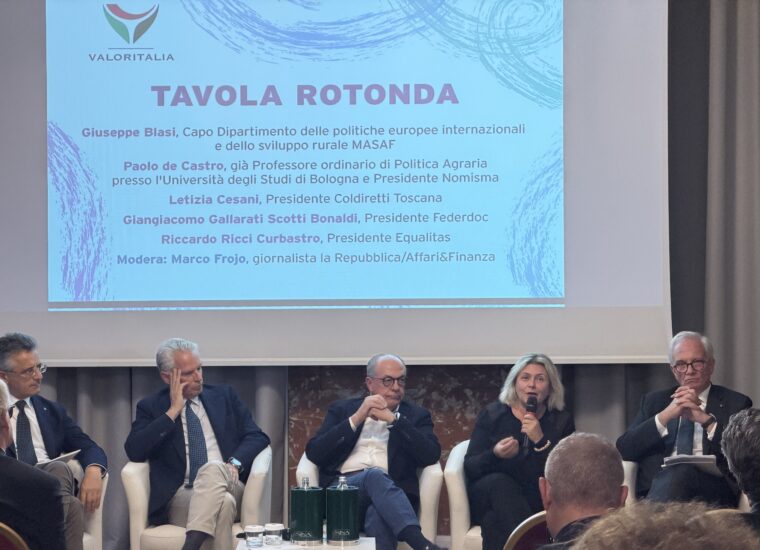
But also, or above all, with the wine market in difficulty, every element of competitiveness can become decisive. And among these, increasingly, there is sustainability, according to Nomisma Wine Monitor study “Scenario di mercato e ruolo della sostenibilità per la crescita del vino italiano” - “Market scenario and the role of sustainability for the growth of Italian wine” presented by its head, Denis Pantini. He highlighted how sustainability is playing an increasingly more important role in consumer choices and in the strategies of protection consortia, also in light of the new European regulatory framework that recognizes it as an integral element of PDO and PGI denominations. “In a wine market scenario dominated by uncertainty, consumer attention to sustainability remains high, both with regard to the product, the company, and the production territory. It is a value that is also sought in areas directly connected to wine, such as wine tourism, so much so that 2 out of 3 Italians consider it important even when choosing their holiday destination, confirming once again the strategic role that sustainability can play for the entire Italian wine supply chain”, commented Pantini. His study also found that protection consortia could play a more proactive role, both as key actors in promoting territories and in supporting companies in their sustainability paths. “In a difficult phase like this, price is the primary purchasing criterion, at 83%; 100% Italian ranks at 74%, while sustainability is third at 68%, up 13 points compared to 2020. And, there is still wide room for growth, because while 90% of consumers know what DOC, DOCG, IGT and organic mean, fewer than 1 in 2 - underlines Pantini - are familiar with any specific certification. And while consumers are willing to pay a higher price for sustainable wine compared to conventional wine, respect for the environment, attention to the territory, safety and controls are values more strongly associated with sustainable wine. For consumers, this primarily means a product that doesn’t use or limits agrochemicals; for companies, it means reducing waste and consumption, as well as ensuring workplace safety; and for territories, it means protecting nature, reducing agrochemical use, and lowering water consumption”. As for which actors guarantee the reliability and credibility of certification, consortia and certification bodies rank highest among consumers.
“Sustainability can represent a driver of growth for high-quality Italian wine. The new European Regulation on Geographical Indications provides voluntary tools that allow denominations to communicate and enhance the good practices already widespread within our wine supply chains. Certifying these processes means offering greater transparency to consumers and strengthening the competitive positioning of certified products on global markets - said Nomisma chairman, former member of the European Parliament and former Minister of Agricultural Policies, Paolo De Castro.
“The Italian Geographical Indications system is undergoing a phase of deep evolution. New responsibilities are being entrusted to protection consortia - added president of Federdoc, Giangiacomo Gallarati Scotti Bonaldi - ranging from supply management to sustainability, from digitalization to wine tourism. To effectively carry out these functions, adequate tools are required: greater cooperation among consortia, sharing of expertise and specialized services, investment in digitization and dedicated resources. At the same time, it is necessary to recognize the heterogeneity of the Italian wine supply chain. Alongside large exporting companies, thousands of small and medium-sized enterprises operate, representing the economic and cultural backbone of local territories. For this reason, uniform solutions aren’t needed, but rather a national strategy that is shared in its objectives and flexible in its instruments. The competitiveness of Italian wine is based on the enhancement of its differences. Protection consortia are an essential element of this governance and must be placed in a position to continue performing their role of protecting, developing, and sustainably growing denominations and territories. At this stage, the supply chain must send strong signals, such as suspending authorizations for new plantings, because 1% per year means 6-7,000 hectares annually which don’t currently seem necessary. Let us see how the market evolves and then decide, and no one more than well-functioning consortia has both the ability and the duty to make such decisions. But rationalization is needed: out of the 529 denominations we have, we must acknowledge that not all of them make sense, and the same applies to consortia. Aggregation, cooperation and greater efficiency are required, because we can’t afford to waste resources. To rebalance demand, France has invested significant public resources in vineyard removal. We are not very favorable to this approach, especially if such resources were diverted from areas like promotion or investments”.
These efforts also involve sustainability certification, an area in which the Equalitas protocol has become a benchmark, as explained by its president Riccardo Ricci Curbastro, who noted that “its success has been built on three key elements: the supply chain approach, scientific rigor, and international reliability. Developed within the wine sector, the standard was designed to involve all actors in the supply chain, from winegrowers to protection consortia, fostering a shared path towards sustainability. Its value has also been recognized at the institutional level: it was the only private protocol involved in defining the public sustainability standard for wine, contributing requirements that were later incorporated into national legislation. Its credibility has been further strengthened by independent international benchmarks and studies, which place it among the most reliable systems worldwide. Thanks to this recognition, Equalitas is now accepted and valued by major international retailers and by monopolies in Northern Europe and Canada, offering companies tangible advantages such as easier market access, participation in international tenders, and reduced audits. The figures confirm this growth: around 500 companies are already certified and over 300 are in the certification process, representing about 20% of Italian wine production. The model is also expanding beyond national borders, with companies already certified in Spain and Northern Europe, confirming Equalitas international vocation as a benchmark for the sustainable wine of the future. However, we must look beyond environmental sustainability: social and labor sustainability will become increasingly important”.
Sustainability, in fact, as Liantonio also reiterated, must address all aspects. “Environmental sustainability is now taken for granted, one can’t produce a bottle of wine and at the same time destroy the territory; it would make no sense. Economic sustainability is, of course, fundamental. But social sustainability, which means respect for labor and the fair distribution of income across the entire supply chain, rather than having one part profit while another suffers is becoming increasingly more important, and wine must lead the way in this, as it has always done. The crisis is real, but it can only be overcome by investing in human dignity and by working together”.
And, in this context, “certifications of sustainable tourism or of sustainable communities and territories could certainly be an effective tool to increase turnover for agricultural businesses - added Letizia Cesani, director of Coldiretti Toscana and former president of the Vernaccia di San Gimignano Consortium, one of Italy most visited wine and art destinations - but what is truly lacking in certifications, which often end up being bureaucratic burdens for companies without adequate economic recognition, is proper promotion of the certifications themselves and their labels to consumers, so that they can make informed choices and recognize the added value of companies that have chosen to become certified. These are important promotional initiatives that require substantial investment, which should also be supported by local institutions”.
Giuseppe Blasi, head of the Department for European, International and Rural Development Policies at the Ministry of Agriculture, emphasized the importance of investing in communication: “because we must communicate that Italian wine is the most sustainable in the world. However, there is still a lack of a single certification system, on which we have worked extensively, but for which we may now be significantly behind, as various certification schemes have meanwhile taken hold. We continue to work on this, as we do in other sectors which are even more complex in this respect. To unify the system, each of us must make a sacrifice and make choices”- All with the aim of a wine supply chain which is increasingly more sustainable, certified, and therefore more competitive.v
Copyright © 2000/2026
Contatti: info@winenews.it
Seguici anche su Twitter: @WineNewsIt
Seguici anche su Facebook: @winenewsit
Questo articolo è tratto dall'archivio di WineNews - Tutti i diritti riservati - Copyright © 2000/2026