


Wednesday 28th of October 2026 - Last Update: 17:39






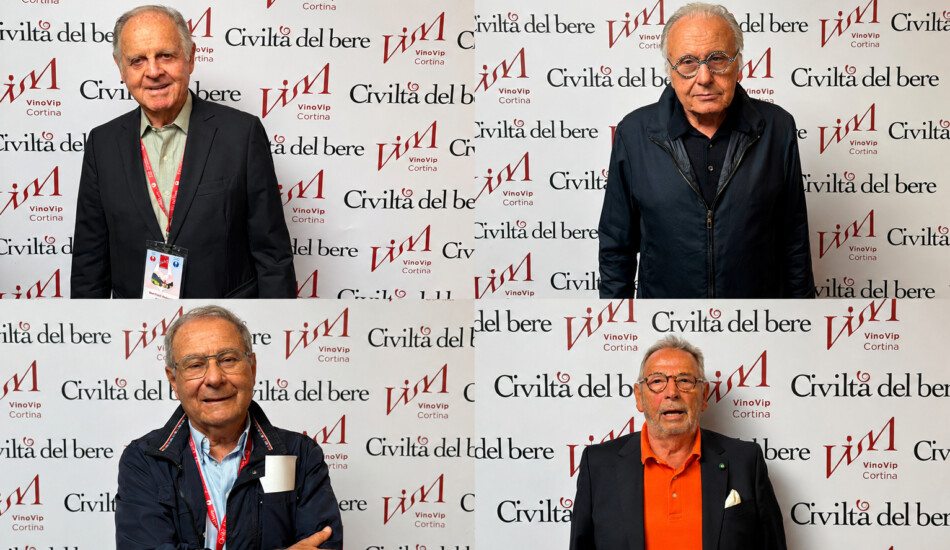
Pieto Antinori, Angelo Gaja, Sandro Boscaini, Fausto Maculan
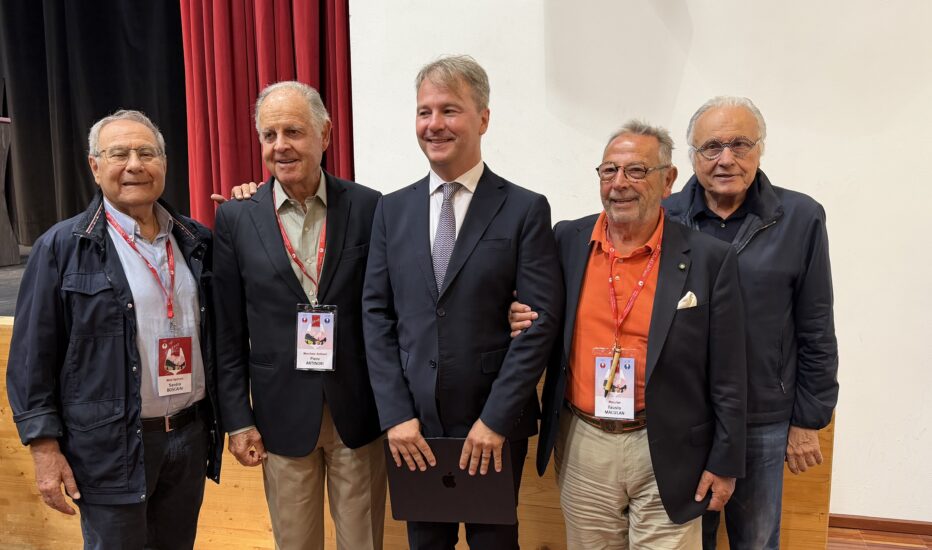
Pieto Antinori, Angelo Gaja, Sandro Boscaini, Fausto Maculan
Pieto Antinori, Angelo Gaja, Sandro Boscaini, Fausto Maculan
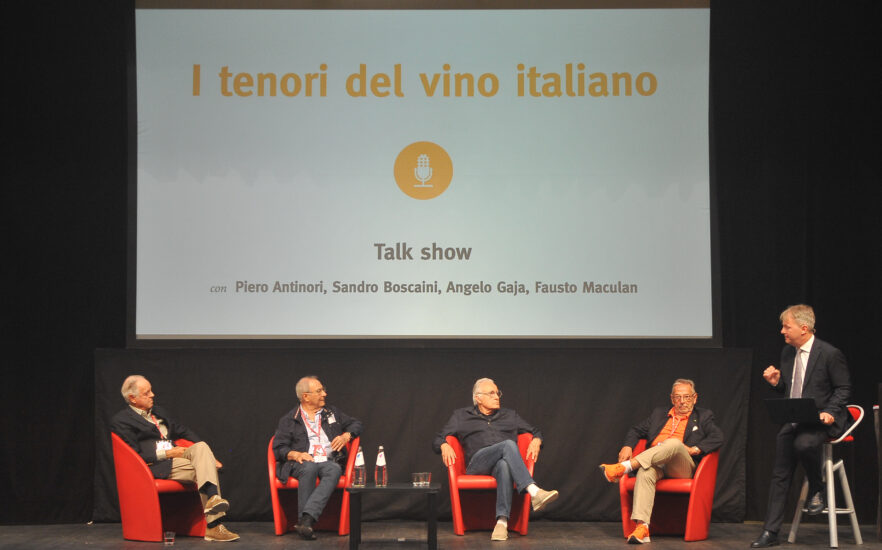
Working seriously but with enjoyment, because the wine sector, despite the countless difficulties of the present, still allows for that; moving quickly, but “with calm”, and leaving the industry if you don’t truly love it, because the “wine profession” can only be practiced with passion; trusting young people, giving them advice but letting them make their own way, because they are better prepared and are starting from a situation that is, in any case, better than that of the wine world half a century ago; continuing to do well what has been done up to now, while keeping a close eye on the broader economic landscape as well as company finances: this is the “symphony” performed today at “VinoVip Cortina 2026”, organized by “Civiltà del Bere” (taking place today and tomorrow in the “pearl of the Dolomites”), by four “tenors” of Italian wine. Piero Antinori, the man who transformed Marchesi Antinori, a centuries-old Tuscan winery, now with estates throughout Italy and in California as well into one of the strongest, most respected, and most prestigious brands of Italian wine in the world; Angelo Gaja, one of the industry most authoritative producers and an icon of the Langhe region and beyond; Sandro Boscaini, known as Mr. Amarone, heading one of Valpolicella most important wineries, Masi Agricola; and Fausto Maculan, the visionary producer from Breganze, renowned for his interpretation of the Vespaiola grape and Torcolato wine. These four great patriarchs of the Italian wine renaissance are personalities whose talent and entrepreneurial vision, together with only a handful of others, have left an indelible mark on the rebirth of Italian wine. Business leaders who, at the head of their family companies, have lived through many phases of modern wine history: from the global rise of Italian wine, driven by investments in quality and identity, at a time when in the 1970s and 1980s Italian wine was still regarded as “cheap and low-quality” to its current status as a product admired and respected worldwide; from the sector recovery after the methanol scandal exactly 40 years ago, in 1986, to the periods of great expansion and the economic and geopolitical crises which have shaped history from the late twentieth century to the first quarter of the twenty-first. The four men exchanged views, memories, and ideas in an attempt to envision the future of wine, starting from what they believe are today greatest threats. And, for Piero Antinori, the number one concern is the issue of “alcohol and health”: “one of the greatest dangers is this tendency to equate wine with other alcoholic beverages: they are completely different things. We need communication that explains the values of wine, this millennia-old tradition which has always accompanied us and still has enormous potential. Wine is something that accompanies the table, encourages conviviality, and carries social and well-being values when consumed responsibly. We need to tell its story better and invest more in communication. Today, 30 billion bottles of wine are produced worldwide every year. If every producer contributed just a few cents per bottle, we could create a major communication budget, tell wine story more effectively, and launch a global educational campaign”.
“We have experienced both good and difficult times; we have been successful, just as wine has been and will continue to be despite the changes we are experiencing. However - said Sandro Boscaini - we must be self-critical. As a “wine system”, we have been too inward-looking. We failed to recognize the pace of change in culture and social life; people still talk about wine the way they did forty years ago. Enough self-congratulation, enough egocentrism. We need to approach wine through today’s lens, with greater lightness”. “What worries me most is climate change and its effects - said Angelo Gaja - but I remain optimistic about the future. We must firmly state that wine is good for those who know how to drink it, not in the sense of moderation, a word I don’t like, but in the sense of measure, culture, and values. Nor should we worry too much about declining consumption. Consumption may continue to fall in traditional markets, but only because it is still relatively high. Looking back to a time when people drank 110 liters per capita makes no sense, that was a different world. We must explore other markets, particularly in Asia and Africa, where consumers may currently drink stronger alcoholic beverages, and promote the value of wine”.
“We have fallen below 50 liters per capita in Italy, which can be alarming. But in the meantime, we have reinvented wine - said Fausto Maculan - focusing on quality and premium bottles. Much of today wine crisis originates in Bordeaux, where vineyards are being uprooted, with consequences for global wine trade. In Italy, however, the situation is not so bad; many things are still working. Those who have focused on quality, built a strong image, and worked well are doing fine. Climate change is what truly worries me. But if the market today demands more white wines, more sparkling wines, and lighter styles, we will follow the market, as we always have. We survived the methanol crisis and many others; we will overcome this one as well”.
After all, these are producers looking toward the future who have witnessed a wine world very different, and much poorer, than today, while overcoming countless challenges.
“I remember when, after the war, I was six years old and my father Niccolò - narrates Piero Antinori - was urgently called to the cellar because the retreating German troops had machine-gunned the wine casks and we lost everything. Starting over from scratch after the war was difficult, but we succeeded. We transformed the sector: within just a few years, we shifted from producing quantity to producing quality, through an almost complete renewal of the Italian vineyard, experimentation, investments, and mistakes. We modernized wineries, and it required enormous effort. We invented wine tourism. Today we take for granted everything we accomplished during that period, but it was hard, involving significant investment and risk. We did it because we believed in that transition and renewal. And we must continue to believe in it”.
“In Valpolicella, after the mid-1950s, there was a debate between those who wanted to keep producing large quantities of wine, devaluing the work of growers through low prices, and those who wanted to focus on quality. I belonged to the latter group - recalled Sandro Boscaini - it was difficult to change people mentality, and at one point I even wanted to leave the profession. Then, I met many cultured and inspiring people who changed my mind, and it was also to promote the cultural dimension of wine that the Masi Prize was created”.
“I have a poor memory and tend to forget unpleasant things - said Angelo Gaja - and I prefer to look to the future. Reading today wine world is not easy; there are many shadows, but we can do better. This is the time to produce less, but produce better. We must also restore dignity to table wine, which is not a by-product but a product with its own place in the market. Wine is the undisputed champion of Made in Italy, because it is the only product that is made throughout the entire country and cannot be relocated. We must assert its strength and its value”.
“We must believe in wine. I did not start in Tuscany, Valpolicella, or the Langhe. I started in Breganze, and it took great effort to put that name on the world wine map. It was extremely difficult. I remember that at our first Vinitaly, in 1975, we received three orders: one from the hotel where I was staying, one from the restaurant where I ate every day, and one, by chance, at the stand. It was not easy to get started. Then, through discussions with various figures, including Luigi Veronelli, the journey truly began, and here we are. You must never give up”.
And that is precisely because, despite one of the most challenging contexts the sector has faced since the beginning of the century, there is still much that is positive and encouraging in today wine world.
“There is always something new to invent in wine. Great technological progress has been made both in the vineyard and in the cellar - said Antinori - and the wines we make today are certainly better than those of the past. We can improve even further, but what excites me most about the present is what I expect from the markets. There are many areas of the world where wine has, in effect, not been truly discovered yet. We need to look toward these emerging markets, which I am convinced will open up: India, South America, and others. These are markets that will develop, and that should reassure us. Especially considering that no beverage accompanies food as well as wine does”.
“Wine must practice humility, return to substance, and market itself for what it truly is, at every level, from the most basic to the most prestigious. The problem is that everyone tries to sell their wine as if it were Gaja wine, when obviously that is not the case”, said Sandro Boscaini.
“In the mid-1970s, in New York - explained Angelo Gaja - wine merchants told me that, for Italian wine to sell, it had to be priced below the cheapest French wine. Then, we made enormous strides, both in wine and in food. Just think about what Parmigiano Reggiano has achieved. We should be proud of it. We had to build a market that did not exist. Today we have many well-trained young people, university graduates who speak languages and understand technology. We must give them room to grow, offer them advice, and allow them not to follow it. Let us trust them”. “Over the years, we have achieved a great deal of innovation and gathered a wealth of knowledge that we can now pass on to the younger generations. We must continue striving for even higher quality and learn to communicate it more effectively”, concluded Fausto Maculan.
Thus end the solo performances of a chorus of great tenors of Italian wine, leaving behind a message of optimism and hope for the future of an industry that is currently facing significant challenges, yet must keep looking ahead, as it has always done throughout its millennia-long history.
Copyright © 2000/2026
Contatti: info@winenews.it
Seguici anche su Twitter: @WineNewsIt
Seguici anche su Facebook: @winenewsit
Questo articolo è tratto dall'archivio di WineNews - Tutti i diritti riservati - Copyright © 2000/2026