

Wednesday 14th of October 2026 - Last Update: 19:01




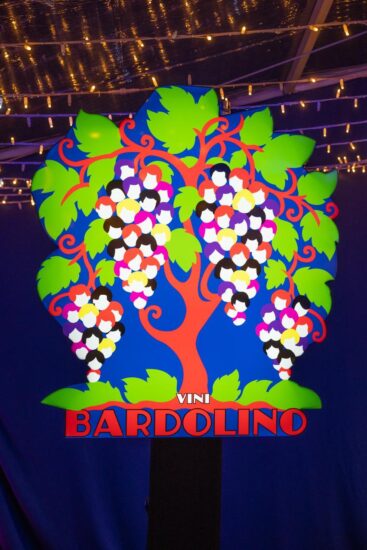
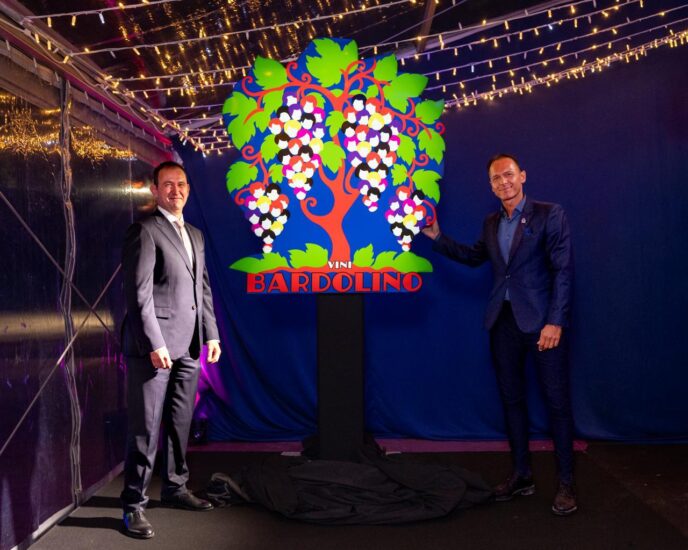

“Pop art has the ability to transform everyday consumer products through an ironic and immediately accessible visual language. With Bardolino, we want to do the same, talking to an ever wider audience, starting with the tourists we already welcome in our territory. This is an added value that we intend to build loyalty around through a development program focused on both supply and demand, beginning as early as the end of October”. This was the clear vision outlined by Fabio Dei Micheli, president of the Bardolino Wine Consortium, as the organization celebrated its centenary. Founded in 1926, the Consortium marked the milestone by involving the public during the weekend of October 10-11th through the “Bardolino Pop Garden” event at the Villa Carrara Bottagisio Park in Bardolino, where wine, art and entertainment came together, quite literally illuminated thanks to a partnership between the Consortium and ArtVerona, the modern and contemporary art fair organized by Veronafiere. The event featured luminous works by artist Marco Lodola, a leading figure of Italian contemporary pop art and an exponent of the Italian “Nouveau Réalisme” movement, who also created a special piece celebrating the anniversary No. 100 of the Consortium.
Today, it is the work of Andy Warhol that inspires the image of the wines of this unique territory, shaped by the mosaic of climates between Lake Garda and the slopes of Mount Baldo. Warhol first captured reality as it was, from Campbell’s Soup cans to portraits of Marilyn Monroe - before reinterpreting it through the many shades of his iconic prints. In a similar way, Bardolino and Chiaretto di Bardolino, respectively the red and rosé wines of the denomination, both based on Corvina Veronese, the area signature grape variety, are expressing their own contemporary identity. The 817 members of Consortium cultivate 2,400 hectares of vineyards, including 600 winegrowers, producing nearly 20 million bottles in 2026, evenly divided between Bardolino and Chiaretto. Exports account for 60% of total turnover and are directed mainly to the home countries of the millions of tourists who visit the Verona shore of Lake Garda every year: Germany, the Netherlands, France, the United Kingdom, Scandinavia, the United States, Canada and Japan.
Making wine more accessible, more “pop”, without sacrificing the depth and authenticity that define it; freeing it from the perception that it is reserved for experts alone; making it engaging and telling its story in a simple yet compelling way: these have long been identified by many observers as key responses to the downturn in wine consumption, though few concrete initiatives have followed. It is almost as if freeing wine from self-referentiality and elite language, two among the factors driving consumers away from it, were a mission impossible. The Bardolino Wine Consortium, however, has chosen to rise to the challenge. Continuing its work on the identity of Chiaretto and Bardolino and emphasizing their inherently “pop” character, it has sought inspiration from successful experiences in other sectors. “A key aspect of our project is the concept of “pop wine” - continued Dei Micheli - but it is far from the only one. We are carrying out several research projects, including a study on the impact of climate change on our denomination, based on a historical archive of ripening curves covering as many as 36 years. The project involves some of the sector leading experts under the guidance of professor Attilio Scienza. Even more importantly, we have developed forecasting models outlining likely climatic trends over the next 30 years. This is data of fundamental importance and will be made public by the end of the year. Furthermore, analyses of the various microclimates, the changes that have occurred over time, and the ripening curves have confirmed the existence of the three sub-zones identified years ago at the top of Bardolino quality pyramid: Montebaldo, La Rocca and Sommacampagna. We are also continuing research with Maurizio Ugliano of the University of Verona on Chiaretto susceptibility to light, a crucial issue for ensuring the wine consistent quality, given that Chiaretto is Italy leading rosé denomination. Another study will follow to determine which shade of pink, within the color spectrum already defined years ago, best represents the quintessential expression of Chiaretto”.
The development and refinement of wine tourism are certain to be part of Bardolino future. However, this must be achieved by moving beyond the narrow boundaries of the wine sector itself and connecting with the wider tourism economy of Lake Garda, which attracts around 15 million visitor stays each year. These visitors are drawn by a highly diversified offering, reflecting the equally diverse profiles of the people Bardolino wines could potentially reach. Such a future also requires a different allocation of resources by local municipalities, investing not only in tourism services, as it is largely the case today, but also in agriculture and especially viticulture, which represents both an important economic activity and a safeguard against environmental and landscape degradation. A Consortium study is currently monitoring the state of winery hospitality facilities in order to provide concrete development projects and strategies aimed at offering experiences capable of building long-term consumer loyalty, particularly among foreign visitors. These initiatives can also rely on the energy of a new generation: the Association of Young Producers counts 40 members under the age of 40, natural ambassadors of the “pop” image of Bardolino wines, further supported by training programs specifically designed for them by the Consortium.
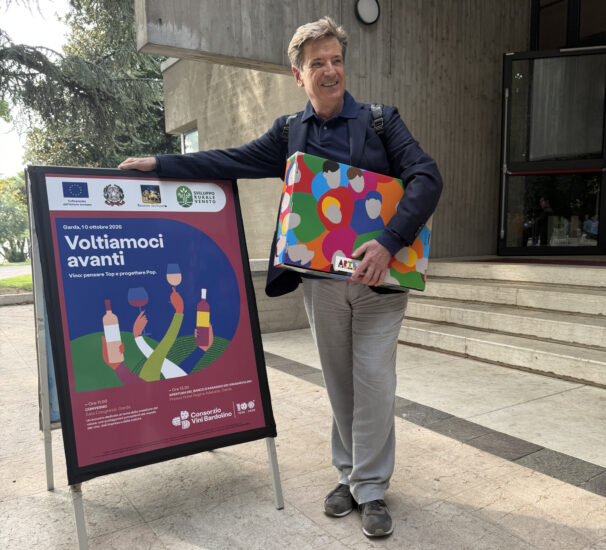
The course charted by the Consortium closely aligns with the conclusions of an analysis presented by Carlo Flamini, Head of the Wine Observatory of Unione Italiana Vini (Uiv), during the conference dedicated to the future of Bardolino wines, entitled “Voltiamoci avanti - Vino: pensare Top e progettare Pop” - “Looking forward - Wine, thinking top and designing Pop.” The title, coined by journalist and wine industry analyst Giacomo Mojoli, reflects ideas he has advocated for years through his concept of the “pop-ification” of wine. “The challenge today is not necessarily to change the product or even the language - underlined Flamini - but to identify new consumer needs and make wine visible wherever and whenever those needs arise. For Bardolino, the first opportunity lies precisely in its territory and its substantial tourist flows. It is essential to strengthen the presence of wine in restaurants and social venues, invest in the training of hospitality operators, and turn every consumption occasion into an opportunity to introduce wine and build loyalty among new consumers”.
On the stage of the Garda Congress Center, Giacomo Mojoli moderated and connected the reflections of Renato Bosco (Pizzeria Renato Bosco), Margherita Tovo (Meracinque), Rai radio host Andrea Amadei, Andrea Pernigo (Pernigo Group), and Diego Rossi (Trattoria Trippa, Milan). “Thinking Top and Designing Pop - explained Mojoli - doesn’t mean choosing between excellence and accessibility. It means ensuring that excellence can be understood, shared and experienced. For the Bardolino Wine Consortium, celebrating one hundred years is not only about remembering an important history, but also about asking what story should be written next. Wine certainly needs quality, but it also needs culture, creativity, “thoughtful lightness”, collaboration and new languages. It needs new paradigms and an authentic relationship with people and with a society that is constantly evolving”.
Drawing inspiration from different, even adjacent, experiences is a way of broadening perspectives, particularly when it comes to building connections between wine, hospitality and tourism, so that genuine synergies can emerge. “Pizza is democratic because it is accessible to everyone, and that is its greatest strength,” observed Renato Bosco, master pizzaiolo and entrepreneur, who has transformed a popular dish into a symbol of quality and innovation. He has even created pizza-making classes for children, recognizing the importance of educating taste from an early age. “The wine world must learn the same lesson: it needs to be inclusive, creating experiences that are easy to understand and engaging through simplicity and consistency. One final push is needed to bring wine into pizzerias, places where families share meaningful moments together. This means accessible wine lists and greater expertise among those recommending them”.
“Our project arose from an obsession with quality, explained Margherita Tovo of Meracinque, where the name refers to the five sisters who have continued the family business for over fifty years and transformed Carnaroli rice into a globally recognized premium product. “We focus on research, innovation, precision agriculture, respect for the soil and the quality of our product, as well as on telling its story in a way that inspires wonder and, if possible, even excitement. People who discover and appreciate it become its ambassadors”.
“We need to talk about wine in a simple and truthful way, without making it seem inaccessible. We must focus on substance - urged Andrea Amadei, radio host and wine communicator - wine is a special beverage because it conveys a territory, a grape variety and the expertise of those who produce it, all within a single glass. This complexity can either lead consumers to reject it, thinking, “I don’t understand any of this, you talk about it among yourselves,’ or it can spark curiosity about everything that wine represents: the places, the people and the stories behind it. Consumers want to know and understand when we talk about wine, but they do not want to be made to feel stupid”.
A similar perspective was offered by Andrea Pernigo, a diversified entrepreneur who more recently entered the agri-food and wine sectors with Ripa della Volta, his family winery in Valpantena. “Along our journey - explained Pernigo - we used words such as territory, passion and tradition, the same words everyone else uses. Then we asked ourselves whether we should carve out our own space in an increasingly crowded market and find our own identity. That is why, at the beginning of this year, we opened a trattoria inside the winery. It allows us to tell our story in a contemporary way, using new and authentic forms of communication. Pop culture is built on faces and signatures, not on empty labels. Our strength lies in a concrete identity that translates into a direct experience for consumers”.
“My experience - recalled Diego Rossi, chef and owner of Milan Trattoria Trippa - began with the need for an authentic place to eat at a time when the word ‘trattoria’ had become merely synonymous with simple, inexpensive food. To rebuild the trattoria popular soul, sincerity is the essential starting point. Offer and identity must drive the proposition: we need to look within ourselves, not only at the market. Wine, like cuisine, must be authentic and easy to read”.
The connection between “Slow and Design”, the development of a “Tailored Mindset” capable of interpreting the complexities of contemporary life, and the “pop-ification” of wine has been at the center of Giacomo Mojoli work for years. “These are three paths which may appear different - he commented - but they are united by the same conviction: quality alone is not enough. It must be able to meet people, speak the language of the present and become part of everyday life. Slow + Design means designing with awareness, respecting time, places and relationships. Pop-ifying wine means bringing it closer to society without trivializing it; overcoming the barriers created by specialist language and exclusive rituals without sacrificing expertise or cultural depth. The Tailored Mindset adds another dimension: the ability to recompose differences, bringing together tradition and innovation, local identity and global vision. It means not applying the same models to everyone, but recognizing specific characteristics and building new relationships each time”.
Copyright © 2000/2026
Contatti: info@winenews.it
Seguici anche su Twitter: @WineNewsIt
Seguici anche su Facebook: @winenewsit
Questo articolo è tratto dall'archivio di WineNews - Tutti i diritti riservati - Copyright © 2000/2026