


Monday 19th of October 2026 - Last Update: 19:03






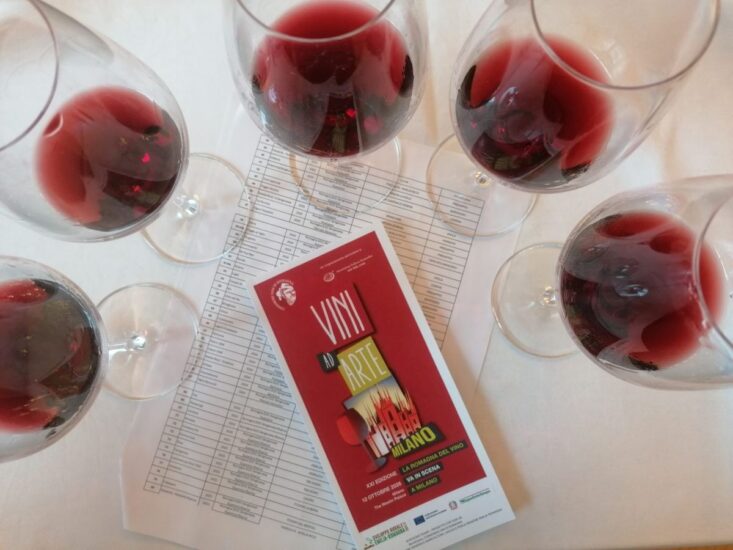
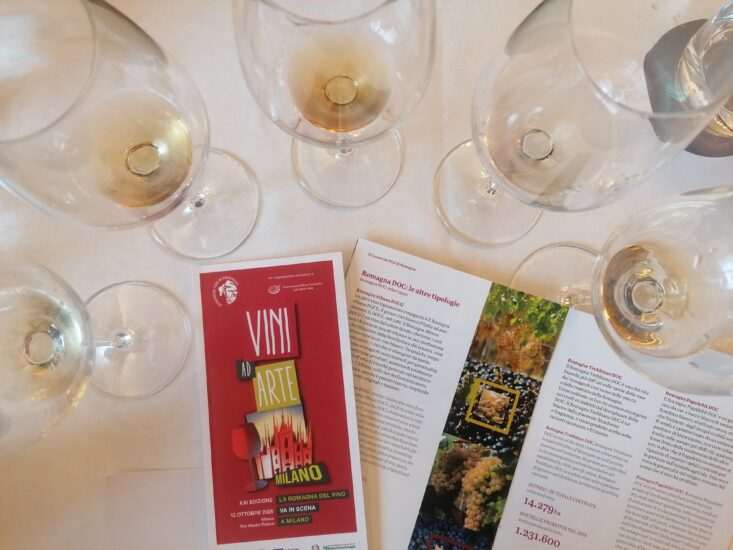
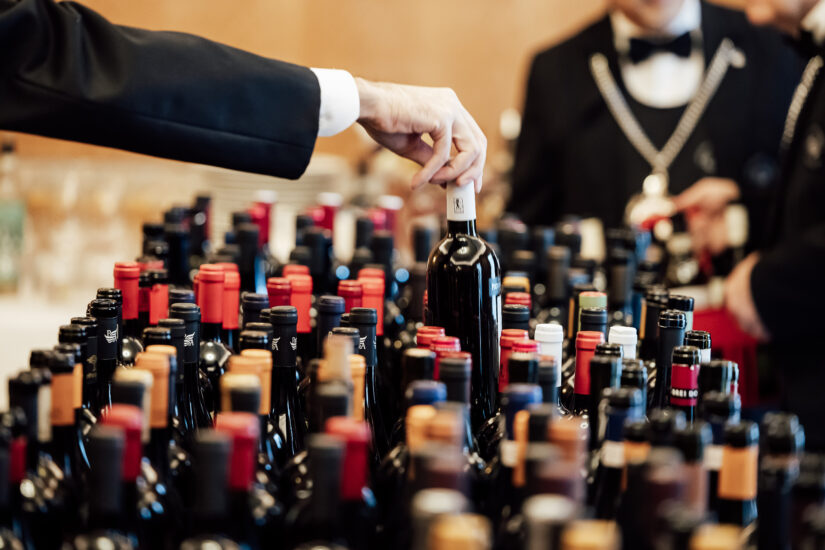

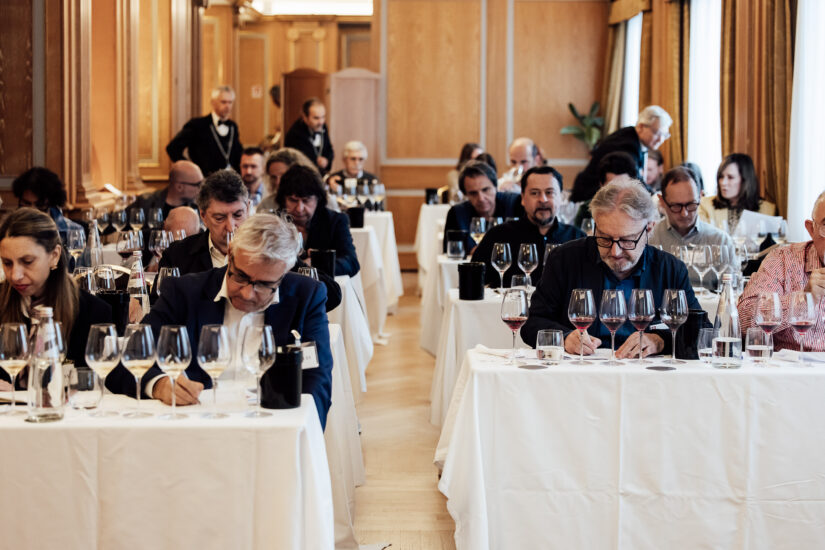
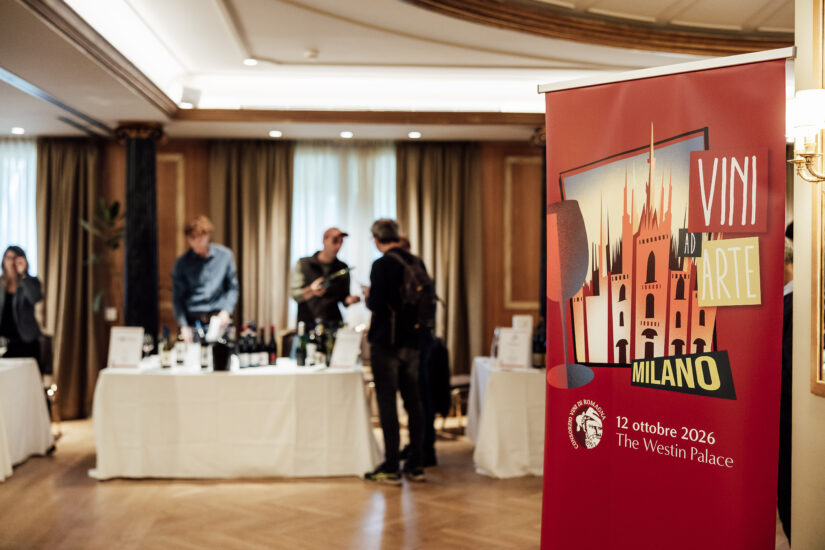
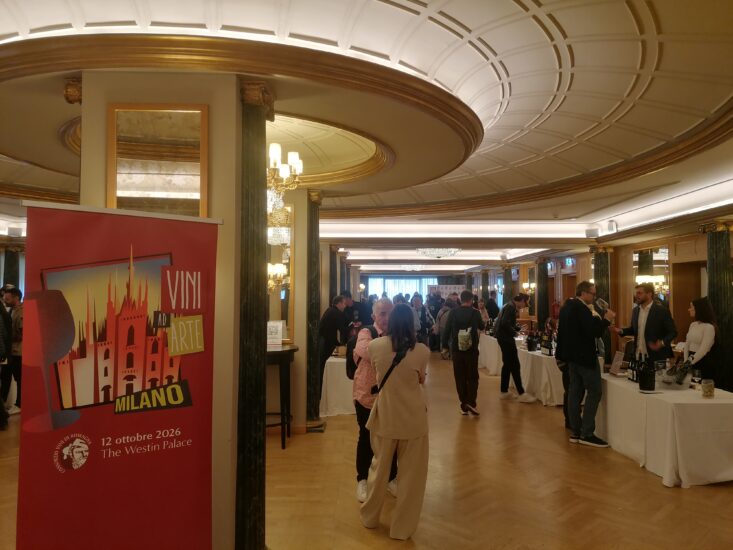

While the world is grappling with the issues we all know too well, market stagnation, wars, the seemingly irreversible climate crisis, the rising cost of living (including crude oil prices), and changing consumer lifestyles and tastes, “Vini ad Arte” has chosen to be bold, step outside its comfort zone, and move to Milan. Following the success of its edition No. 20 in 2025, and already looking ahead to the celebrations planned for 2027, marking the anniversary No. 40 of Albana Docg and the anniversary No. 60 of Sangiovese Doc, the Consorzio Vini di Romagna has decided, for the first time, to relocate its flagship institutional event to its main domestic market after its home region. It did so by bringing together restaurateurs, wine merchants, distributors, and journalists in Italy business capital on October 12th and 13th for two days of tastings and in-depth discussions aimed at reaffirming the importance of the Subzones in enhancing the value of such a vast and highly heterogeneous territory, both geographically and in terms of soil and climate conditions, producers, grape varieties, wines, and markets, and therefore particularly challenging to communicate. The 2025 production figures offer clear evidence of this. In a year marked by a significant decline in bottles of Romagna Sangiovese Doc, down by one million compared to 2024 (8 million instead of 9 million, also as a result of declassifications), production under the Subzone designation increased from 518,933 to 647,733 bottles. This 25% growth reflects both higher production volumes among wineries already making Subzone wines and a growing number of producers entering the category. While this increase doesn’t offset the overall decline, it demonstrates that producers have recognized the importance of crafting wines with a strong territorial identity: because it enhances quality, increases value, and provides a framework for storytelling, and therefore for creating lasting memories.
Returning to the theme of scale, Romagna is a large territory, effectively summarized by the Consortium motto, “a mosaic of life”. Its 638,000 hectares stretch from the Adriatic coast to the Tuscan-Emilian Apennines, and from the Sillaro River in the north to the Marche border in the south. Within this area lies the Romagna Doc, covering 295,000 hectares, of which 14,000 are planted with vineyards. Yet there are several other denominations as well: Albana Docg; the Colli d’Imola, Colli di Faenza, Colli di Romagna Centrale, and Colli di Rimini Docs; and finally the four IGTs of Rubicone, Forlì, Ravenna, and Sillaro. Among these denominations, Rubicone IGT is the largest, encompassing the entire Romagna territory. Bottlings in 2025 amounted to 86,618,800 bottles, remaining broadly stable, with only slight fluctuations since 2022. It is followed by Romagna Trebbiano Doc, which extends across the hills of Romagna and part of the plains north of the Via Emilia. Production has remained consistently just above one million bottles since 2022, slipping slightly in 2025 (1.03 million bottles) compared to 2024 (1.2 million). The pinnacle of Romagna wine production, however, lies with Albana Docg and Romagna Sangiovese Doc. Albana Docg now covers 768 hectares and produced 918,267 bottles in 2025, essentially stable on 2024 and slightly down compared with previous years, though +12% compared with the very recent 2026 harvest. “A grape which was extremely widespread in the post-war period, reaching 7,418 hectares under vine in 1970, before undergoing continuous uprooting and only regaining appreciation over the last decade - explained Consortium Director Filiberto Mazzanti - has been experiencing steady growth both in vineyard area and in bottle value, which often exceeds 10 euros on retail shelves”. Romagna Sangiovese Doc, by contrast, covers approximately 5,890 hectares of vineyards and is bottled according to the quality pyramid introduced in the production regulations in 2011: Romagna Sangiovese at the base, followed by Romagna Sangiovese Superiore (and Riserva), with Romagna Sangiovese Subzones (and Riserva) at the top.
To this viticultural complexity, the complexity of the production landscape itself must be added. The Consortium currently includes 8 cooperative wineries, 110 producer-winemakers, and 4 bottlers, representing around 5,200 wine-growing businesses with vineyards registered under the Doc and Docg systems. Cooperatives operate primarily in the plains north of the Via Emilia and often differ significantly from small and medium-sized estates in terms of grape-growing practices, winemaking approaches, and market access. Smaller producers, generally based in the hills, increasingly seek solutions by forming associations outside the Consortium itself. According to the Consortium, these agricultural, wine, and commercial differences generate distinct and often conflicting needs. More importantly, they slow down decision-making within the Consortium, which must continuously reconcile opposing interests in order to preserve that “mosaic of life”, often through major compromises. This helps explain a range of challenges that have either emerged or persisted in recent years, compounded by the wider economic and market difficulties affecting both Italy and the global wine sector.
One such challenge is the rise in wine quality, which, however, could be progressing more rapidly. The creation of the Subzones has undoubtedly fostered healthy internal debate and provided the region with a framework for research, discussion, and storytelling, increasing producers’ awareness of their vineyards and wines. Yet the differing priorities among Consortium members have slowed this process, and the level of quality Romagna wines could potentially achieve has not yet been realized in a widespread, consistent, and homogeneous manner. Another major issue, the Consortium notes, is the gradual shift of vineyards down into the valleys. Market contraction driven by changing consumer habits and tastes, together with a narrowing global commercial horizon and the strategic delays mentioned earlier, has made hillside viticulture, which is more demanding and costly than vineyard farming on the plains, increasingly less profitable. As a result, some growers are abandoning the high-quality viticulture enabled by their hillside vineyards, thanks to their favorable soil and climatic conditions, in favor of easier, more productive, and more profitable lowland viticulture. Yet this comes at the expense of quality, both because of less favorable terroir conditions and the impact of global warming, while also forfeiting access to the quality pyramid that the Subzones make possible.
Both are challenges that the Consorzio Vini di Romagna views with concern and is actively seeking to address by focusing its efforts on strengthening the identity and recognition of the region Subzones. This strategy targets producers of all sizes, from small family wineries to large enterprises, as well as international markets and consumers, through a wide range of dedicated initiatives that also involve the restaurant sector, particularly along the Romagna coast, where local establishments still tend to underrepresent the wines produced in the hills behind them. The underlying idea is that the Subzones can drive a broader reinterpretation of the territory, fostering a more widespread culture of quality and bringing along Superiore and Riserva categories, which, for various reasons, can’t claim a Subzone designation and still account for the core of sales in most markets. The domestic market remains the primary outlet for Romagna wines, while around 35% of production is exported, mainly to the United States, the Scandinavian countries (where demand is growing), Germany (still an important market, though in decline), and Japan (a smaller but stable destination).
Meanwhile, the new wines are being released. The vintage presented is 2025, "the fourth warmest year since 1961, after 2024, 2023, and 2022 - commented the Consortium viticulturist, Marisa Fontana - it is yet further proof of global warming, which the 2026 season has once again confirmed”. Thermal anomalies were concentrated primarily in minimum temperatures, which remained above average for extended periods. As a result, budbreak occurred early, by now a recurring pattern, although cooler temperatures in late April and May slowed development. This false start, combined with abundant winter and spring water reserves, encouraged vigorous vine growth, which was managed through timely canopy trimming just ahead of June first heatwave. Some clusters were lost to sunburn, though fungal diseases such as downy mildew and powdery mildew were much less problematic in 2025. Overall, the phenological stages occurred earlier than average, similarly to 2024, but above all they were compressed: flowering lasted only a week, and bunch closure took place within a matter of days.
Harvest timing was broadly in line with 2024 for early-ripening white varieties, with international grapes being picked around mid-August, followed by Pignoletto, Merlot, Cagnina, and Sangiovese among the reds. Other white varieties, including Albana, Famoso, and Trebbiano, together with Sangiovese, were harvested four to five days earlier than the previous year, entering wineries around mid-September. Late-ripening red varieties such as Cabernet, Uva Longanesi, and Fortana successfully weathered the mid-September rains and benefited from favorable day-night temperature fluctuations, achieving optimal phenolic ripeness before harvest at the end of the month.
Total production reached 5.4 million hectoliters, down 23.8% compared to 2024. Registered grape production amounted to 7,879,974 quintals, representing a 13% decline compared to 2024 and an 8% decrease relative to the 2020-2024 average of 8,601,962 quintals. Nationally, 66,794,000 quintals of grapes were harvested, up 1% on 2024 but 4% below the 2020-2024 average of 69,328,352 quintals. As noted earlier, the 2025 decline was caused less by downy mildew and powdery mildew than by sunburn damage, Esca disease, and apoplectic vine collapse triggered by the August 10 heat spike, when temperatures reached 38.3 Celsius degrees. In addition, the unusually early heat in June led vines to produce smaller-than-average clusters, which nonetheless arrived at the winery in excellent sanitary condition and with good compositional balance.
Of the 111 wines presented in the technical tasting from around fifty producers participating in the preview event, 33 were Romagna Albana Doc and 7 Romagna Passito Doc. Albana, Romagna flagship native white grape, offers good structure and remarkable versatility and has shown strong resilience to climate change. The wines were generally well executed, although they tended to reflect the style of individual producers more than the specific characteristics of the territory and its valleys. The remaining 71 samples were Romagna Sangiovese Doc wines, including 30 Riservas. Roughly half were labeled with a Subzone designation, one of the denomination 16 officially recognized Subzones: Imola and Serra in the Imola area; Brisighella, Marzeno, Modigliana, Oriolo and Serra in the Faenza district; Bertinoro, Castrocaro, Meldola and Predappio in the Forlì area; Cesena, Longiano and Mercato Saraceno in the Cesena district; and Coriano, San Clemente and Verucchio in the Rimini area. This reflects the denomination extensive research work, which has strengthened territorial storytelling, improved wine quality, and increased product value (with price premiums of up to 3 euros per bottle compared to equivalent wines without a Subzone claim).
It should be noted that, for the second consecutive year, most producers from Modigliana were absent. Among the first groups of growers to establish a shared narrative of their valley through an independent association, they have successfully translated their geography and history into a coherent and recognizable wine identity. Their contribution represents an important and visionary piece of the wider mosaic, precisely in line with the direction encouraged by the Consortium. Yet, because of the compromises and challenges mentioned above, their absence is a significant loss for an event that remains essential for understanding the overall state of Romagna wine today.
Here, then, the top Romagna Albana and Romagna Sangiovese tastings selected by the WineNews staff at “Vini ad Arte” 2026:
Podere La Berta, Romagna Albana Secco DOC 2025
Bright and expressive, it offers hints of iodine and white fruit pulp, with a savory palate.
Umberto Cesari, DOC Romagna Albana Secco 2025
Mineral and citrusy, it has body on the palate and the juiciness of a Williams pear.
Tre Monti, DOC Romagna Albana Secco Vigna Rocca 2025
A balanced and complex macerated wine, full-bodied and balsamic, with a flavorful finish.
Marta Valpiani, DOC Romagna Albana Secco Delyus 2025
Intense yet elegant, it has a light texture that releases fragrant freshness and savory notes.
Tenuta La Viola, DOC Romagna Albana Secco InTerra 2025
A golden, extremely complex wine that is unobtrusive.
Podere La Grotta, DOC Romagna Albana Secco Damadora 2025
An Albana with light tones, complemented by spicy notes and a buttery texture.
Poderi Dal Nespoli, DOC Romagna Albana Secco Scanadè 2024
Sharp, yet earthy on the nose, it offers lively contrasts on the palate as well.
Giovanna Madonia, DOC Romagna Albana Secco Trapunta 2024
Colors and aromas reminiscent of a sunset, with the same gentle evolution on the palate.
Tenuta Uccellina, DOC Romagna Albana Passito Soprano 2024 (Brisighella)
The complexity of a passito, woven into a subtle and refreshing texture.
Podere Morini, DOC Romagna Albana Passito Innamorato 2024 (Oriolo)
A full-bodied, complex, and rich passito, with balsamic notes forming its backbone.
Fattoria Zerbina, DOC Romagna Sangiovese Marzeno Poggio Vicchio 2025
A Sangiovese rich in fruit and with a play of light and dark tones, leaving the palate fresh and clean.
Pandolfa-Noelia Ricci, DOC Romagna Sangiovese Predappio Il Sangiovese 2025
With dark, black aromatic notes, it remains light and lively on the palate.
Tenuta Casali, DOC Romagna Sangiovese Mercato Saraceno Vigna Palazzina 2025
Open and airy on the nose and palate, it features citrus and floral aromas.
Celli, DOC Romagna Sangiovese Bertinoro Grillaie 2024
Light and gentle, it promises sweetness while maintaining freshness and purity.
San Patrignano, DOC Romagna Sangiovese Superiore Ora 2023 (Coriano)
It has the intensity of the undergrowth, including fruit, flowers, brambles, and pinecones, with a hint of spice.
Drei Donà, DOC Romagna Predappio Madonna del Pruno 2023
A hint of bloodiness complements the trio of fruit, flowers, and balsamic notes, softening the texture.
Leonardo da Vinci 1502, DOC Romagna Sangiovese Superiore Riserva 2023 (Faenza)
A complex, concentrated, and dense Riserva that remains pleasant on the palate.
Fattoria Nicolucci, DOC Romagna Sangiovese Superiore Vigna del Generale Riserva 2023 (Predappio)
A must-try Sangiovese, layered and refined, leaving the palate with a spicy, fresh, and fruity finish.
Lu. Va, DOC Romagna Sangiovese Modigliana Cucco Nero Riserva 2023
A wild and earthy yet equally balsamic wine, with citrus and ripe fruit adding juiciness.
Podere dell’Angelo, DOC Romagna Sangiovese Verrucchio Riserva Luis 2023
A textural wine with the elegance of violets, the juiciness of citrus, and the freshness of aromatic herbs.
Copyright © 2000/2026
Contatti: info@winenews.it
Seguici anche su Twitter: @WineNewsIt
Seguici anche su Facebook: @winenewsit
Questo articolo è tratto dall'archivio di WineNews - Tutti i diritti riservati - Copyright © 2000/2026