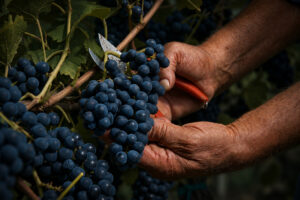








Official data from some countries is still missing, but according to the preliminary estimates of the Oiv - International Organization of Vine and Wine, global wine production in 2026 is expected to be in line with 2025 levels, at between 220 and 230 million hectoliters. If confirmed, this would mark the fourth consecutive year of below-average production, reflecting both the effects of climate change and the slowdown in wine markets, which has led to the uprooting of tens of thousands of hectares of vineyards in countries such as France, the United States (particularly California), Australia, and not only. In particular, the Oiv (which will update the figures in May 2027, ed) notes that wine production in the Northern hemisphere in 2026 followed differing trends, influenced by varying climatic conditions. In Europe, production is estimated at 137 million hectoliters, with significant recoveries in several countries, notably Spain, Portugal, and Romania. Overall, production in the European Union remains 6% below the five-year average owing to difficult weather conditions, including exceptional heatwaves. Similarly diverse trends were observed across the rest of the Northern Hemisphere. Despite these fluctuations, the ranking of the world 4 largest wine-producing countries remains unchanged: Italy, France, Spain, and the United States. Meanwhile, in the Southern hemisphere, wine production accounted for a slightly smaller share of global output, reaching 47 million hectoliters, corresponding to 21% of all wine produced in the 2026 vintage. With 11.3 million hectoliters, South Africa recorded its most abundant harvest in the past decade and surpassed Argentina and Australia, which reported smaller crops, becoming the leading producer in the hemisphere and the fifth-largest wine producer in the world.
Beyond the conditions of the individual vintage, the Oiv also points to longer-term changes affecting production. “Since 2020, the global vineyard area has declined by approximately 4.8%. This reduction reflects the wine sector adaptation to market demand, which is evolving alongside consumption habits, lifestyles, and consumer preferences”.
Looking in greater detail at the European Union, total wine production in 2026 is estimated at around 137 million hectoliters, up 1% from 2025 but about 6% below the five-year average. If confirmed, this would represent the third consecutive year of historically low production, with the 2024-2026 vintages becoming the three least productive years of the twenty-first century. Nevertheless, the EU would still account for approximately 61% of global wine production in 2026.
In particular, Italy is expected to remain the world largest wine producer in 2026, with production estimated at 41 million hectoliters, down 3.4 million hectoliters (-8%) from 2025 and 10% below the five-year average. This would be the second-smallest harvest since 2000, only 7% above the record low registered in 2023. Summer heat and prolonged drought accelerated ripening and brought forward the harvest to an unusual extent, generally limiting yields.
France, the world second-largest wine producer, is expected to reach 36.5 million hectolitres in 2026, up 2% on 2025 but still 10% below the five-year average. This would be the third consecutive year of relatively low production. Heat and drought significantly reduced yields across much of the country, while frost damage further affected certain regions. Late-summer rainfall supported a partial recovery, though not enough to offset the effects of water shortages during the growing season.
Spain remains the world third-largest wine producer, with output estimated at 32.6 million hectoliters, up by 3.8 million hectoliters (+13%) compared with 2025 and 2% above the five-year average. The increase follows three years of reduced production caused by drought, although volumes remain below historical levels. Repeated heatwaves contributed to one of the earliest harvests ever recorded in the country. Several other EU countries, notes the Oiv, also recorded increases in production, although volumes remained slightly below recent averages. Wine production in Germany is estimated at 8 million hectoliters, up 6% on 2025 but 3% below the five-year average. Heat and drought during the growing season accelerated ripening and limited berry development, resulting in an exceptionally early harvest. In Portugal, estimated production of 6.7 million hectoliters represents a 12% increase over 2025 but remains 4% below the five-year average. Winter rainfall replenished soil water reserves and supported vine development, while subsequent heat and water stress limited yields in several wine-growing regions. In Greece, production is estimated at 1.7 million hectoliters, up 1% from 2025 and continuing the recovery following the reduced harvests of 2023 and 2024. Spring frosts and localized hailstorms constrained yields, and production remains 7% below the five-year average.
In Central Europe and Southeastern Europe, the outcome of the 2026 harvest varied considerably, with strong recoveries in some countries and significant losses linked to weather conditions in others. Romania stands out, with production estimated at 4.6 million hectoliters, up 40% on 2025 and 19% above the five-year average. Rainfall between late spring and early summer helped replenish soil water reserves in key wine-growing areas, supporting the recovery. Production is also expected to increase in Bulgaria, to 0.7 million hectoliters (+17%), and in Slovenia, to 0.5 million hectoliters (+5%). In several other countries in the region, however, harvests are expected to remain below normal levels. In Hungary, production is estimated at 1.8 million hectoliters, down 31% from 2025, following spring frosts and an exceptionally hot and dry summer. In Austria, production is also estimated at 1.8 million hectoliters, down 30%. Severe drought and heat limited berry growth and juice yields, particularly in the eastern wine regions. Smaller harvests are also expected in Croatia, at 0.6 million hectoliters (-29%), the Czech Republic, at 0.5 million hectoliters (-24%), and Slovakia, at 0.2 million hectoliters (-33%). Heat and water shortages affected wine-growing areas across these countries, keeping production volumes below average.
Looking more broadly at the Northern Hemisphere, the United States remains the world fourth-largest wine producer, with production estimated at 19 million hectoliters, down 5% from 2025 and 18% below the five-year average. This marks the third consecutive year of low production. In California, the country leading wine-producing state, mild temperatures in early spring accelerated vine development before rain and strong winds disrupted flowering and fruit set. These seasonal conditions, together with changes in grape purchasing and harvest decisions, contributed to the smaller crop.
Wine production in Russia is estimated at 5.4 million hectoliters, down 6% from 2025 but still 10% above the five-year average. Despite differing growing conditions across producing regions, the national grape harvest is expected to remain broadly in line with the previous year. In Georgia, wine production is estimated at 2.5 million hectoliters, a volume close to the high level recorded in 2025 and 17% above the five-year average. Production remains strong compared with recent years, although weather conditions delayed ripening in some key wine-growing areas. In Moldova, production is estimated at 1.9 million hectoliters, up 9% on 2025 and 29% above the five-year average. If confirmed, this would be the country second-highest production volume of the last twenty years, surpassed only by the 2.6 million hectoliters recorded in 2013. In Switzerland, wine production is estimated at 0.8 million hectoliters, broadly in line with both 2025 levels and the five-year average. Summer heat and water shortages accelerated ripening and brought forward harvest dates in several important wine-producing regions.
In the Southern hemisphere, where harvesting is completed during the first half of the year, preliminary estimates for 2026 point to a slight decline in production, to around 47 million hectoliters, equal to about 21% of global wine output. This volume is 3% lower than in 2025 and 7% below the five-year average. Lower production in major producers such as Australia, Argentina, and Chile kept total Southern hemisphere output below average, despite increases in several other producing countries. Weather conditions varied widely, while production and harvest decisions also influenced outcomes at the country level.
In 2026, however, South Africa is the largest wine producer in the Southern hemisphere, with production estimated at 11.3 million hectoliters, up 10% on 2025 and 14% above the five-year average. Favorable early-season conditions, followed by February rainfall that eased water stress in several regions, supported the country highest production in the last decade.
In South America, Argentina remains the leading wine producer, with production estimated at 9.7 million hectoliters, down 10% on 2025 and 11% below the five-year average. Frost and hail in Mendoza, the country main wine-producing region, contributed to lower grape harvests and reduced wine production. In Chile, wine production is estimated at 9.5 million hectoliters, recovering by 13% from the low 2025 level, although still 13% below the five-year average. Heat and persistent water shortages once again limited yields in 2026, contributing to a third consecutive year of relatively low production. In Brazil, wine production is estimated at 3.1 million hectoliters, up 10% on 2025 and 22% above the five-year average. In Rio Grande do Sul, the country main wine-producing state, the recovery continued thanks to adequate winter chilling, generally favorable spring conditions, and a low incidence of disease. In Uruguay, wine production is estimated at 0.7 million hectoliters, up 13% on 2025 and 7% above the five-year average. Good vegetative growth in spring and dry weather during flowering supported the crop. Timely rainfall in January alleviated water stress and promoted berry development, while the low incidence of disease helped preserve the harvest through to picking.
In Australia, wine production is estimated at 9.1 million hectoliters, down 19% on 2025 and 23% below the five-year average. The country therefore ranks fourth among Southern Hemisphere producers. Rainfall deficits, late-spring frosts, heatwaves, and localized flooding affected growing conditions, while market factors also appear to have influenced harvest decisions. Crushed grape volumes declined across the main wine-producing states, with particularly sharp percentage decreases in Victoria and New South Wales compared with South Australia. In New Zealand, production is estimated at 3.2 million hectoliters, down 15% from the abundant 2025 vintage and 5% below the five-year average. Lower volumes also reflect production adjustments following recent large harvests and have helped bring output back into line with market demand.
Copyright © 2000/2026
Contatti: info@winenews.it
Seguici anche su Twitter: @WineNewsIt
Seguici anche su Facebook: @winenewsit
Questo articolo è tratto dall'archivio di WineNews - Tutti i diritti riservati - Copyright © 2000/2026