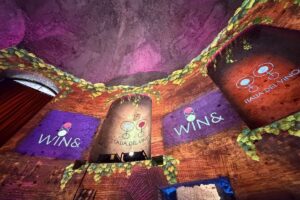








Investing in young people and nurturing the wine industry managers of tomorrow, while at the same time learning from them which language should be used to capture the interest of younger generations in the world of wine. These were among the objectives which led Consorzio Italia del Vino, which brings together 24 prestigious wine companies, to launch the advanced training project “Wine Business Program” two years ago in partnership with Luiss Business School. The initiative has delivered “excellent results”, recalled Roberta Corrà, president of the Consortium, opening the workshop “I nuovi manager del vino: Tra vigneto ed algoritmo” - “The new wine managers: Between vineyard and algorithm” at WIN& - Italian Wine Culture Exhibition, held yesterday and today at the Horti Sallustiani in Rome. The event brought together businesses, institutions, academia, and the research community to discuss topics such as sustainability, market evolution, and managerial education. The initiative was coordinated by the Consortium, whose members include Angelini Wine & Estates, Banfi, Bisol1524, Ca’ Maiol, Cantina Mesa, Cantine Lunae Bosoni, Collis Heritage, Di Majo Norante, Diesel Farm, Donnachiara, Drei Donà, Duca di Salaparuta, Ferrari, Gruppo Italiano Vini (GIV), Gruppo Marchesi di Barolo, Mezzacorona, Herita Marzotto Wine Estates, Le Monde, Librandi Antonio e Nicodemo, Medici Ermete & Figli, Oniwines, Terre de La Custodia, Torrevento, and Zonin 1821. Together, these companies generate more than 1.5 billion euros in revenue and account for 15% of Italian wine exports.
“Luiss and the Consortium immediately found common ground on how to develop this educational initiative, which is intended not only for young people but also for ourselves and the future of our companies - observed Roberta Corrà, president of Consorzio Italia del Vino - the most difficult task was selecting the participants. Last year there were 18 students, and by the end of the course seven had been hired. This year, 16 students are attending the program”.
“We welcomed this demand for managerial training coming from the wine sector - said Rita Carisano, director general of Luiss University - for 50 years we have maintained a strong relationship with businesses, and this means having a clear understanding of their training needs”. “Our role is to stay close to businesses and, above all, understand what companies need - observed Raffaele Oriani, Dean of Luiss Business School, during his workshop address - it is also our responsibility to connect individual talent with the business world, and we are proud to help train these young professionals”. Inspired by the Erasmus model, the training program also includes periods of study abroad. “This international experience enriches students education by exposing them to different cultural contexts - underlined Luca Pirolo, professor of Management at Luiss Business School - as for Artificial Intelligence, we strive to use it in the right way, remembering that AI gives us its best answers when we use it properly. I would also like to thank the students from the first edition of the course,” he added. “The interaction was excellent. When participants already possess strong technical expertise and you add managerial skills to that foundation, well, you’ve hit the jackpot”.
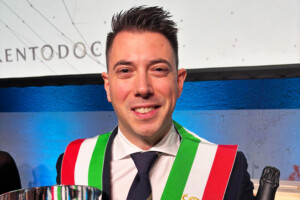
The workshop also featured the experience of Wine Business Academy students, represented by Riccardo Bertagnin. “I graduated in Oenology - he said - and I realized that I needed to expand my skill set, gain a broader understanding of all aspects of a company, and learn to adapt to different situations. Today, businesses are increasingly driven by data, making managerial preparation essential. The wine market - added the young enologist - is constantly evolving, and we must learn to adapt and measure ourselves against these changes if we want to remain competitive. Young managerial figures can certainly help companies meet this challenge”.
Giuliano Trenti, president of NeurExplore, a neuromarketing and strategic consulting firm, noted that “these are challenging times, and companies would benefit from making greater use of specific studies on consumers’ implicit and unconscious behaviors before launching products on the market. Such preliminary research could significantly contribute to the success of commercial initiatives”. Finally, Giuseppe Francesco Italiano, vicerector for Artificial Intelligence at Luiss, focused on the role of AI: “technology - he said - has always been part of vineyard and winery operations,” he said. “It certainly helps, including through the services it can provide to businesses. Consider a small company that wants to enter distant markets: AI can assist with language and help businesses understand how to present themselves within different cultural environments. This is why training that includes technological skills is so important”. At the same time, Italiano emphasized that within wine companies “a gap is emerging between senior professionals, with their experience and wisdom, and junior professionals, who increasingly rely on AI. It is therefore our responsibility to create opportunities for that experience and wisdom to be passed on. This is not the role of Artificial Intelligence”. Especially in a sector that remains deeply rooted in human interaction, personal relationships, and conviviality, such as the world of wine.
Copyright © 2000/2026
Contatti: info@winenews.it
Seguici anche su Twitter: @WineNewsIt
Seguici anche su Facebook: @winenewsit
Questo articolo è tratto dall'archivio di WineNews - Tutti i diritti riservati - Copyright © 2000/2026