


Friday 25th of September 2026 - Last Update: 17:54






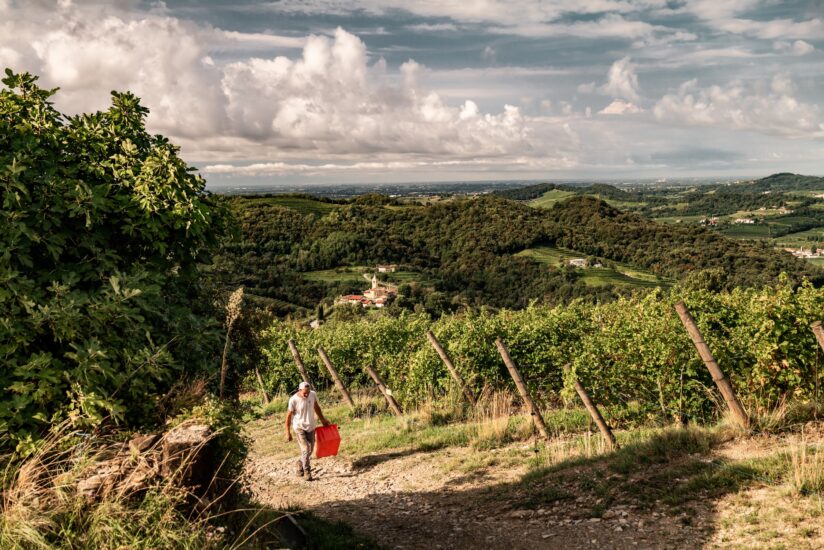
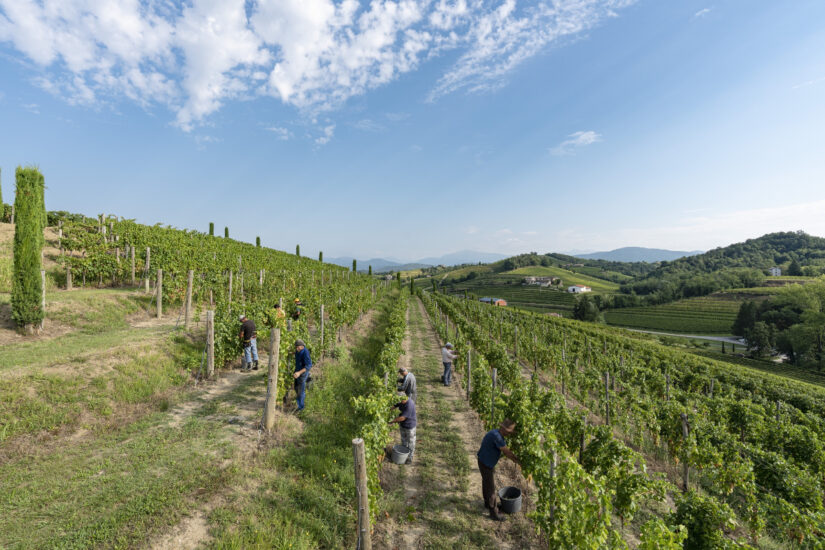
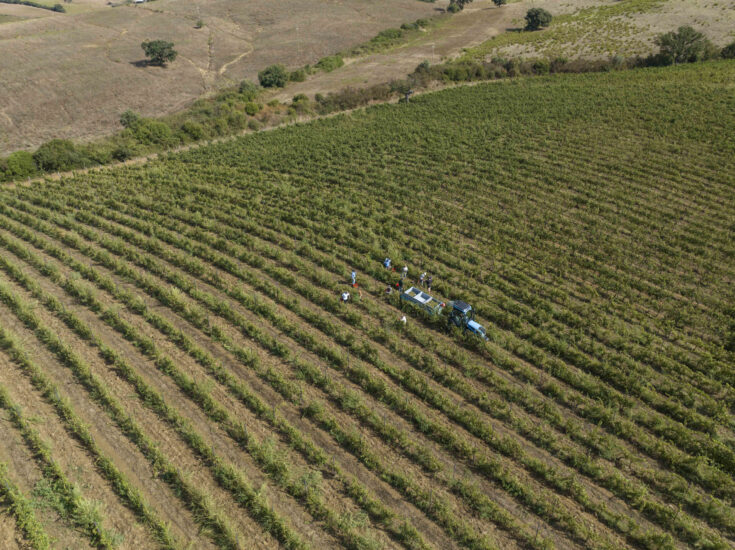
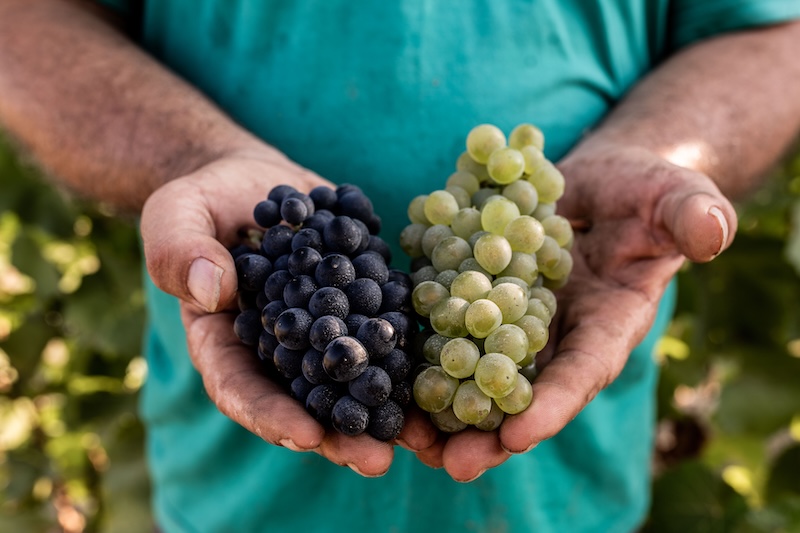
The 2026 Italian grape harvest is taking shape and, in many regions, is being considered one of the earliest ever recorded. However, the picture varies considerably from North to South, with the climate-vineyard combination, as it often happens, leading to adjustments here and there in forecasts (this year, up today, only “qualitative” and “timing-related” forecasts are being made, since, as is well known, the traditional estimates released at the beginning of September will not be provided. Instead, the sector will wait for the final figures, as reported here).
In this way, while in recent days the harvest officially began, at a territorial level, in Sicily (where it will last almost 100 days from the western part of the island to Mount Etna), in Franciacorta, and in Oltrepò Pavese, two iconic territories for Italian sparkling wine production, harvesting operations have also started in another “enclave” of Metodo Classico sparkling wines, Alta Langa. According to the Consortium, expectations are for a “very positive” harvest, thanks to a growing season characterized by a rainy autumn and a mild spring, with some advancement in budbreak, flowering, and vegetative growth. As a result, harvesting has started early, beginning with Pinot Noir and continuing with Chardonnay. The grapes are described as “healthy, characterized by good acidity balance, adequate technological ripeness, and great quality potential”, conditions that “suggest a harvest of outstanding quality, particularly favorable for the production of sparkling wine base wines marked by freshness, finesse, and elegance”.
As mentioned, in recent days many wineries and consortia across Italy, from South Tyrol to Puglia, along with communications agencies covering the sector, have been reporting on what is happening in the country vineyards during a particularly hot summer, while avoiding overly ambitious forecasts and estimates. In South Tyrol, for example, Cantina Terlano and Cantina Andriano, two prestigious wineries located on opposite banks of the Adige River, report that the season started early, with budbreak occurring between March and April and flowering already underway by mid-May. Rainfall arrived at the right time, supporting leaf canopy development and ensuring adequate water availability even during heat waves. “To protect the grape clusters from the sun and preserve their aromatic freshness - explains enologist Rudy Kofler - we reduced leaf removal to a minimum: the grapes remained protected by the canopy and are healthy, with a uniform crop load”. Harvesting is expected to begin around August 20th, and expectations are very positive, “thanks to a uniform grape load and impeccable sanitary conditions”, he concludes.
In Piedmont, and particularly in the Langhe area, insight comes from two leading wineries, Fontanafredda and Pio Cesare. “The 2026 harvest at Fontanafredda is expected to begin approximately 7 to 10 days earlier than last year. The abundant winter and spring rainfall supported strong vegetative growth and regular fruit set, while the high temperatures of recent months accelerated ripening. Harvesting has just begun with grapes destined for Alta Langa sparkling wine bases - affirms Giorgio Lavagna, Fontanafredda enologist - from a quantitative standpoint, much will depend on weather conditions in August: if the current pattern continues, production could be below average, whereas some rainfall would support further berry development. Quality prospects, on the other hand, are positive, thanks to the excellent sanitary condition of the grapes and the good balance of the vines”.
According to Federica Boffa, the fifth generation of the family leading Pio Cesare, “the starting point was a winter with average temperatures slightly lower than in 2025 and a total of 560 millimeters of rainfall accumulated gradually between December and May. Subsequently, heat waves accelerated the vegetative cycle, to the extent that the first berries showing véraison were observed as early as the beginning of July. Thanks, however, to the water reserves built up over the winter, soil management practices, green manure cover crops, and the proper addition of organic matter, the vineyards have coped well with high temperatures and the scarcity of summer rainfall. Today, the vines are in good health, with clusters of regular size. The white grapes may be harvested by mid-August, while Nebbiolo is expected to be harvested in the second half of September”.
Moving down to Liguria, Diego Bosoni, head of Cantine Lvnae, one of the region most prominent wineries, describes a fairly regular growing season. “In July, we recorded temperatures above our average levels, but without extremes. Here, the sea and the proximity of the mountains help us greatly, ensuring good ventilation and keeping the climate relatively mild”. Rainfall over recent weeks has also supported the vines during the ripening phase. “At present, the quality potential is high both for Vermentino and for our other grape varieties, and one of the finest harvests of recent years is in prospect. We hope nature continues to assist us”. Harvesting will begin in the week following Ferragosto with grapes intended for Traditional Method sparkling wines. For the other varieties, picking will start between the end of August and the beginning of September. “Most likely about a week earlier than usual, but not much more than that”, concludes the producer.
In Trentino, harvesting begins with grapes destined for the sparkling wine bases used to produce Trentodoc, the region renowned “mountain bubbles”. Ferrari Trento, the benchmark winery of the denomination, officially started operations today, August 10th, “with the harvesting of the first Chardonnay grapes destined for Trentodoc production. An excellent-quality harvest is expected, thanks to the outstanding health of the grapes”, a result also supported by Ferrari Trento continuous agronomic monitoring and sustainable viticulture practices. The winery describes this as a particularly early harvest, with advanced ripening representing “the main challenge of this growing season. In a year like this, mountain viticulture makes an even greater difference, preserving the acidity and verticality that define the stylistic signature of Trentodoc wines. It will be crucial, even more than in other vintages, to identify the perfect harvest moment for each vineyard, achieving the ideal balance between aromatic maturity and freshness. For this reason, the harvest will be especially dynamic and concentrated: weather conditions permitting, operations should be completed within three to four weeks”. Marcello Lunelli, vicepresident of Ferrari Trento, comments: “we are about to begin the harvest with great confidence, thanks to grapes which are healthy and of high quality. The early start to harvesting confirms how climate change is reshaping the timing of viticulture and making the role of the mountains increasingly more important. This year, it will be even more critical to choose the ideal harvest time for each vineyard, making the most of the extraordinary variety of altitudes and exposures our territory offers. This is how we preserve freshness and verticality, the distinctive traits that have always defined the identity of our Trentodoc wines”.
At Maso Martis, a boutique Trentodoc winery, harvesting is expected to begin around the same period, as confirmed by winemaker Matteo Ferrari: “budbreak occurred about ten days earlier than in 2025, beginning in the last weeks of March, and this lead continued through full flowering in the final week of May and into the pre-closing stage of the bunches. This initially suggested a significantly earlier harvest, with forecasts pointing to a start around August 10th. However, the high temperatures of June and July changed the situation. Drought and heat caused the vines to slow down, reducing photosynthesis and consequently the accumulation of sugars and the ripening process. The temperature fluctuations of recent weeks allowed the vines to resume their ripening cycle, and véraison began between July 20th and 25th”. It has been a difficult vintage to interpret because of highly variable weather conditions, “but we expect to begin harvesting around August 18th, with grapes of excellent quality”.
At Tenuta San Leonardo, in the Vallagarina valley, the positive factor has been cold weather, a valuable ally of nature. “This winter, temperatures fell to as low as -8 Celsius degrees - recalls Anselmo Guerrieri Gonzaga - the start of the growing season was then accompanied by rainfall that enabled the soils to build up valuable water reserves, while balanced light conditions and moderate temperatures promoted harmonious vegetative growth”. Today, the estate reports a generous crop load and excellent grape health. All vineyard rows are grass-covered, and “while one row is mowed, the neighboring one is left tall, always providing a refuge for beneficial insects.” This management approach supports the balance between vine, soil, and biodiversity. Not surprisingly, San Leonardo has achieved the Platinum level of Biodiversity Friend certification. Prospects are encouraging, although the producer remains cautious: “the conditions are promising, but it is still too early to express a definitive judgment on the quality of the vintage”.
As mentioned, in Lombardy, particularly in Franciacorta, harvesting has already been underway for several days. This is demonstrated by the experience of Mosnel, which highlights how the same vintage can vary significantly even over short distances. Here, growers have faced a complex climatic season that required considerable effort in the vineyard throughout the vegetative cycle. Several hailstorms in mid-May caused localized damage in some parcels of the estate 41-hectare vineyard area. “Fortunately, in the unaffected areas - explains Giulio Barzanò - the grape clusters are beautiful and healthy, and after a hot, dry July, harvesting began on August 3rd, earlier than ever before in the company history, with excellent quality prospects”.
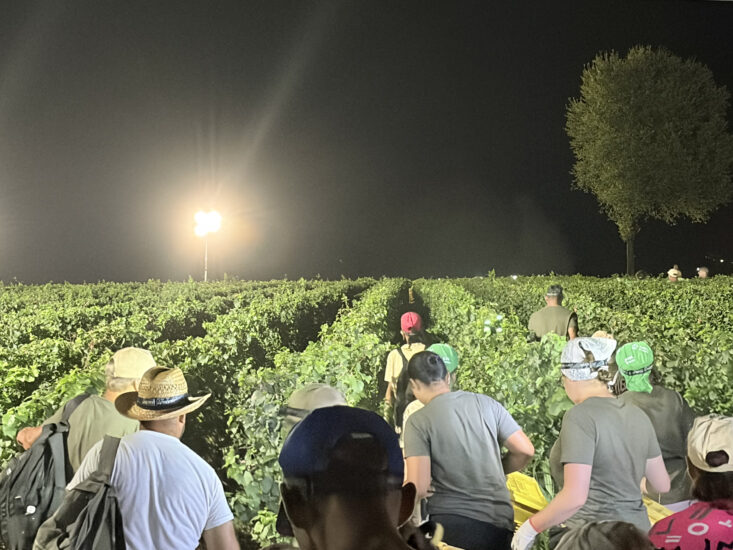
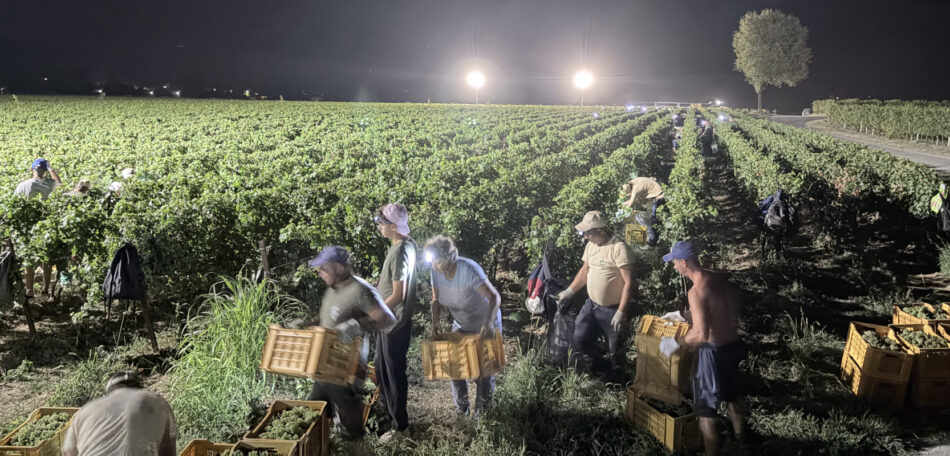
There are also producers such as Berlucchi, owned by the Ziliani family, the winery where Franciacorta was born, that have successfully experimented, for the first time in the Lombardy region, with a practice already widespread in Italy warmer southern areas: night harvesting. Harvest operations begin at around 4 a.m., benefiting both vineyard workers, who can work in greater comfort and safety at lower temperatures, and the grapes themselves, which, being picked in cooler conditions, retain greater integrity, freshness, and quality. “For us, innovation means caring: for the grapes, for the wine, but first and foremost for people and for the territory. We chose to start harvesting during the coolest hours of the day to provide better working conditions for our employees and to bring fresher, better-preserved grapes into the winery. It is a practical gesture - explains Arturo Ziliani, ceo and winemaker of the company - but also a symbolic one. Being custodians of Franciacorta also means being able to understand change and take responsibility for opening up new paths. The territory is not just a geographical place: it is a community, a culture, a landscape, and an environmental and human heritage that must be protected every day”.
Moving eastward, to Friuli-Venezia Giulia, “the 2026 growing season for Le Monde, in the Grave area, and La Ponca, in Collio, has been characterized by high temperatures and slightly advanced vegetative development. At Le Monde, several hailstorms reduced production potential, while at La Ponca, where no hail events occurred, the particular composition of the soils mitigated the effects of heat and drought, ensuring an adequate water supply for the vines - confirms Giovanni Ruzzene, winemaker at Le Monde and La Ponca - the harvest is expected to begin in the third week of August, in line with previous vintages. Quality prospects are very positive for both estates: the grapes are healthy, balanced, and characterized by a good relationship between sugar ripeness, acidity, and aromatic expression. At Le Monde, production is expected to be lower, but capable of yielding wines with great character and personality, while at La Ponca, the vineyard soil conditions suggest another year of excellent-quality fruit”.
And in Friuli, there are also those who will see the 2026 harvest coincide with an important anniversary, marking a renewed image relaunch and brand repositioning. One such example is Cantina Rauscedo, a cooperative which brings together 2,000 hectares of vineyards in the Grave area, cultivated by 300 winegrowing families, and which is celebrating its anniversary No. 75. “The 2026 harvest is expected to begin earlier than usual - explains general manager Flavio Geretto - it will be crucial to identify the optimal harvesting period, which could fall either before or after Ferragosto, depending on weather developments over the coming weeks. Our goal is to preserve the right level of acidity in the grapes, an essential factor in producing fresh, balanced wines that fully express our territory. The lack of rainfall has contributed to excellent vineyard health and represents a positive premise from a quality standpoint. It will be important to assess the full impact of high temperatures on ripening, but the initial indications are encouraging. We approach this harvest with confidence, aware that careful management of harvest timing will be decisive in maximizing the vintage potential”.
Between Friuli and Veneto, across the various Prosecco-producing areas, “the 2026 harvest is showing positive prospects: the quality of Glera grapes is expected to be good, thanks in part to this variety’s remarkable ability to adapt to changing climatic conditions. At present, no early harvest is anticipated, and the sector continues to invest in increasingly advanced technological solutions, which are essential in the era of climate change”, says Giancarlo Moretti Polegato, head of Villa Sandi, one of the leading producers in the Prosecco world, spanning from the Cartizze hills to Conegliano Valdobbiadene Prosecco Superiore DOCG and Prosecco DOC. Among other initiatives, the company is investing heavily in the technological management of its vineyards, accelerating the adoption of precision viticulture and transforming “its vineyards into an intelligent ecosystem, where a widespread network of sensors, satellite imagery, drones, and decision-support systems work together to make every intervention more targeted and sustainable, while helping agronomists identify the ideal harvest timing. This evolution involves all of the Group’s estates and aims to reduce water consumption, increase resilience to climate change, and preserve grape quality. It is the result of a process launched more than two years ago, which today connects over 200 hectares of company-owned vineyards across Veneto and Friuli Venezia Giulia through a single digital platform capable of collecting and interpreting agronomic and climatic data in real time”.
Remaining in Veneto, the harvest also gets underway today, August 10th, in the Euganean Hills, “around one week earlier than last year. Harvesting will begin with the earliest-ripening varieties, such as Pinot Bianco and Chardonnay, as well as grapes from vineyards in their first year of production. Serprino and the other grapes destined for sparkling wine bases will follow. As for the black-berried Bordeaux varieties intended for the prestigious Colli Euganei DOC wines, harvesting will have to wait until late August or early September. Vineyard health is currently excellent, and quality is good”, explains the Consortium, led by Gianluca Carraro. So far, he describes the outlook as “a more than positive vintage, both in terms of quantity, which is in line with the best years, and quality. The heat has helped keep vine diseases such as downy mildew and powdery mildew at bay”. In this area, the Consortium adds, the main challenge is not the climate but rather the damage caused by wild boars.
Providing a broader overview of the region that serves as the driving force of Italy wine economy, Veneto Agricoltura reports that harvests across the region are generally running 8 to 10 days ahead of normal, with “regional production expected to be in line with 2025 levels and with good grape quality, despite widespread water shortages.” There is, however, some uncertainty regarding volumes: “compared with 2025, when 14.7 million quintals of grapes were harvested, regional production is expected to remain stable or decline slightly”. But in its assessment of the Northeast “wine-growing trio”. Veneto Agricoltura also looks at the other regions of the area, “where production increases appear to be a consistent feature of the upcoming harvest season: gains of between 5% and 10% for irrigated vineyards in Friuli-Venezia Giulia, between 7% and 8% in Trentino, and between 6% and 7% in the Autonomous Province of Bolzano”.
Moving to Tuscany, the homeland of Sangiovese above all, some advancement of the harvest compared to normal is being recorded, though not as significantly, or not as widely, as initially expected. In fact, in Bibbona, just a short distance from Bolgheri, there is no sign of an unusually early harvest. “For the past few years, by early August we have all been poised at the starting line, convinced that the harvest will be exceptionally early, partly because we are inevitably influenced by what we read - explains Niccolò Marzichi Lenzi, ceo of Tenuta di Biserno, Tenuta Campo di Sasso and Le Crocine - yet, in our case, we usually end up harvesting more or less on the traditional dates. Based on how things look today, this will certainly be a sunny vintage. However, it is still far too early to make judgments about grape quality or the style of the wines. The course of the coming weeks and the harvest itself will reveal the true character of this vintage”.
But from the Bolgheri coast, it only takes a short drive inland to reach the Tuscan Maremma, where the harvest is already well underway, running about two weeks ahead of average. This is “the result of a growing season characterized by a winter and spring which were favorable to vine development, followed by a summer dominated by high temperatures. The first harvests of early-ripening white varieties and grapes destined for sparkling wine bases have already begun, while in the coming weeks the early harvest trend could extend to some red varieties as well, starting with Ciliegiolo, for which several wineries are considering bringing forward the start of harvest”, explains Consorzio Vini della Maremma Toscana, headed by Francesco Mazzei. According to Mazzei, “despite the persistent heat, the overall quality outlook remains very positive. The grapes are in excellent health and condition, thanks in part to the rainfall during winter and spring, which replenished soil water reserves, as well as the absence of significant phytosanitary issues. Unless substantial rainfall occurs in the coming weeks, the harvest is expected to be smaller than average due to the lower weight of the grape clusters”. The current challenge, he adds, lies in managing water stress. “An earlier harvest is now a reality and, at least in the short term - comments Francesco Mazzei - weather forecasts don’t indicate any significant change in climatic conditions. Growers are facing this vintage with expertise and remarkable adaptability, adopting the best agronomic practices to preserve vine balance and grape quality. From crop-load management to cluster shading, every intervention is aimed at mitigating the effects of high temperatures. The grapes are exceptionally healthy, and the quality prospects are highly encouraging. In the hilly areas where water availability is more limited, vine stress is being closely monitored and, for this reason, some producers are considering bringing forward the harvest of Sangiovese as well. Today we can say that the Tuscan Maremma is demonstrating an increasing ability to adapt to a changing climate, thanks to the experience of its winegrowers and increasingly advanced vineyard management practices”.
From Montalcino, home of Brunello, comes the perspective of Carlo Ferrini and his daughter Bianca, who head Giodo. According to them, “winter rainfall provided a valuable water reserve. Spring encouraged healthy vegetative growth and uniform fruit set, while the temperature fluctuations at the beginning of summer allowed the vines to adapt gradually to the arrival of hotter weather”. “Targeted canopy management practices and, above all, soil management strategies have been designed to preserve vine balance and guide the grapes toward a ripening process capable of combining structure and elegance. Harvest is still some way off, so it is difficult to make predictions at this stage”, explains Giodo technical director Riccardo Ferrari.
The situation is more varied across the larger Chianti Classico denomination. At Isole e Olena (part of the Epi Group owned by the Descours family, which also owns Biondi-Santi in Montalcino), located on the western side of the denomination in Barberino Tavarnelle, the 2026 growing season has, from a meteorological standpoint, been warmer and drier than 2025. Rainfall was concentrated mainly in March and May, creating favorable conditions for flowering and subsequent fruit set. The following two months, however, were also characterized by high temperatures. Enologist Emanuele Reolon explains: “the health status of the grapes is excellent and, if some rain arrives during these first days of August, we can certainly expect a harvest of very high quality. We anticipate the harvest will begin around 10 days earlier than usual. This lead was already evident during budbreak, and the subsequent climatic conditions throughout the season have confirmed it”.
“The 2026 harvest at Colombaio di Cencio is expected to be slightly earlier than usual, with véraison beginning approximately 7 to 10 days ahead of the average. Despite a hot and relatively dry summer, the water reserves accumulated during the spring have prevented situations of vine stress - says Michele Contartese, ceo of Colombaio di Cencio in Gaiole in Chianti - from a quantitative standpoint, we expect production to be in line with recent vintages, while from a qualitative perspective the outlook is medium to high, although the coming weeks will provide a more precise picture of the character of the harvest”.
From Tuscany we move to the “green heart of Italy”, Umbria, where the first grape clusters will be harvested within the next few days, as confirmed by Marco Caprai, president and ceo of Arnaldo Caprai Winery (which is preparing for its first harvest since the majority stake came under the ownership of Angelini Wines & Estates Group, ed): “as far as harvest timing is concerned, we will need to wait just a few more days for the sparkling wine bases and particularly early-ripening varieties. That is, provided we do not receive the much hoped-for rainfall. The situation, while still running somewhat ahead of schedule, could yet shift by a few days”. Production, according to the “King of Sagrantino”, will be slightly below average due to drought conditions, but this may not necessarily be negative for Umbria: “current temperatures and drought conditions will likely result in yields below average, around 5-10% lower than normal, but they should also lead to better wines. This will not be detrimental to the quality of Umbrian wines, which is not expected to suffer. Considering the challenges currently facing the market, it may actually be preferable to have somewhat lower production volumes to sell, while being able to enhance their value even further”. Caprai also reflects on environmental and climate-related issues: “these agronomic challenges should, however, encourage us to rethink vineyard renewal and the need to equip new plantings with irrigation systems. Water availability is one of the key factors determining the competitiveness of agricultural businesses. In the Umbrian Valley, the recently completed pipeline, together with the final works for the distribution of water from the Valfabbrica reservoir, offers our territory a long-term competitive advantage for those wishing to invest and produce here, as well as an important guarantee of water resources. Water will inevitably become increasingly scarce, at least over the coming centuries, if not sooner”.
Moving even farther south, a report comes from Puglia, specifically from Tenuta Liliana in Salento, where “winter passed without surprises: mild temperatures, well-distributed rainfall, and no episodes of late frost. The vines entered the growing season in excellent condition. Particularly important were the abundant rains in March and those brought by Cyclone Erminio in early April, which enabled the soils to build up significant water reserves that the vines were able to draw upon during the dry period that began in May. Our vineyards are in excellent shape: balanced vigor, outstanding plant health, and no major issues. The vines have been able to make full use of the reserves accumulated during the spring”, explains winemaker Andrea Fattizzo. The condition of Cabernet Sauvignon, the winery flagship variety, suggests grapes with an excellent balance of sugars, acidity, and aromatic complexity. “We expect to begin harvesting a few days earlier than usual, with moderate yields and a quality level that looks set to be excellent, fully consistent with our philosophy of always prioritizing quality over quantity”.
Copyright © 2000/2026
Contatti: info@winenews.it
Seguici anche su Twitter: @WineNewsIt
Seguici anche su Facebook: @winenewsit
Questo articolo è tratto dall'archivio di WineNews - Tutti i diritti riservati - Copyright © 2000/2026