


Monday 2nd of November 2026 - Last Update: 11:03





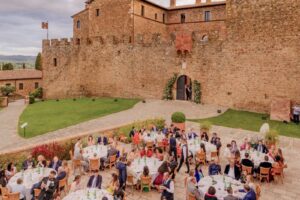
“The demand is there, but time is short. Organizing tourism today means creating value tomorrow. We cannot afford to spend another twenty-five years turning potential into a structured system. We need to make experiences visible and bookable, coordinate governance, and measure the value tourism generates for businesses, communities and local areas”. With these words, Roberta Garibaldi, professor at the University of Bergamo and president of the Italian Food and Wine Tourism Association (Aite), outlines the roadmap for developing a modern Italian wine tourism offering, capable of reaching not only tourists but also “travellers” who look for experiences in which wine is just one element among many, while meeting their broader expectations. Wine tourism, currently worth 3 billion euros in Italy, is increasingly strategic for the sector, particularly in light of declining wine consumption, which is prompting wineries to diversify their activities and broaden their target audience. At the same time, many industry voices stress that wine production remains the core business of companies. These were among the key takeaways from “Fine Italy 2026”, held in recent days as part of the Fine #WineTourism Marketplace Italy, organized by Riva del Garda Fierecongressi in collaboration with Feria de Valladolid. The event brought together 100 producers (up 30% from the first edition), including Italian wineries from 14 regions as well as participants from Spain, Germany and Slovenia, alongside 90 professional buyers, selected from tour operators, travel agencies and destination management companies from 26 countries (30% Italian and 70% international, including 56% from non-EU countries, 7% from South America and 5% from North America). Complementing the business meetings between supply and demand, there were five familiarisation “fam trips” for buyers: two in Trentino, two in the Verona area, and one in Sardinia. Designed to combine commercial networking with first-hand experience of the destinations and wine tourism offerings, these visits aimed to foster new opportunities for collaboration between wineries and tourism operators.
“Fine Italy is a concrete platform for creating new business opportunities in wine tourism - Alessandra Albarelli, Managing Director of Riva del Garda Fierecongressi, told WineNews - we also organize another event, Hospitality, a trade fair dedicated to HoReCa professionals, and we believe that transferring expertise from the hospitality sector to wineries can accelerate their positioning in the tourism market. Professional skills and expertise are needed in designing tourism offerings, as well as relationships with tour operators and travel agencies, which act as intermediaries between supply and demand and can also help wineries adapt their offerings to evolving consumer trends”.
“The quality of hospitality and the authenticity of a destination are fundamental, but they are not enough - Mario Vercesi, ceo of Gattinoni Travel, a group that over more than forty years has successfully interpreted changes in the tourism industry and strengthened its market presence, underlined - to develop their market, wineries need to offer experiences that are distinctive, customizable, and easily bookable through organized tourism channels. Today, we no longer talk about tourists, but travelers: people who are no longer satisfied with simply getting to know a destination, but want to have meaningful experiences, meet local people, understand their identity, and find high-quality offerings, ideally tailored to their needs and backed by the guarantees provided by travel agencies. Thanks to their strong identity and specialization, wineries have a competitive advantage, but they need to build offerings for different audiences, distinguishing between local wine enthusiasts and travelers who undertake longer journeys and require more comprehensive services. This should be done in collaboration with travel agencies and tour operators, which are able to make these experiences accessible and marketable through channels that already capture tourism demand”. It seems, however, that most wineries involved in hospitality activities are still unaware of the need to complete the commercial cycle. This is one of the key findings of the study “Italian Travel Agencies and Wine Tourism”, conducted by Winedering (the Italian platform that sells winery experiences online across Europe and manages logistical, operational, and strategic destination services for intermediaries interested in including winery experiences in their catalogues) together with Wine Meridian (and Wine Tourism Hub) on behalf of Fine Italy 2026.
Although based on a sample that is not statistically representative of the entire sector, the research highlights a paradox: travel agencies have customers interested in wine tourism, but wineries often lack price lists, fixed pricing, dedicated products, or systems designed for resellers. In many cases, they even sell experiences online at prices lower than those offered to intermediaries. 75% of the operators surveyed (through a 47-question online questionnaire administered between September 3 and October 27, 2026) received wine-related enquiries over the past year, while 78% prepared at least one quotation including wine tourism experiences. However, only 61% completed at least one sale. The gap widens when looking at volumes: 43% receive at least three enquiries per year, but only 20% achieve the same number of sales. The main challenge lies in the commercialization of the offer. 67% of respondents are able to confidently recommend no more than five Italian wineries, with clear pricing and booking procedures, or are unable to quantify them at all. According to travel agencies, the most significant obstacles are direct prices lower than those offered to intermediaries (64%), the lack of updated availability and online booking systems (60%), and the absence of dedicated trade price lists (59%). For 71%, obtaining information on net rates or commissions is difficult or very difficult. The issue is not primarily one of margins. 78% consider a commission of up to 20% on the experience price to be sustainable. Rather, agencies are asking for clear commercial rules: stable public prices, fair remuneration for intermediaries, defined invoicing and cancellation policies, comprehensive product information sheets, and rapid booking confirmations. The product with the greatest potential is the short-stay wine estate package, comprising one or two nights accommodation, tastings, dinner, and a winery tour included in a single price. 70% of operators say they are highly interested in offering such packages. Group travel also represents a significant opportunity, with 54% of agencies already organizing Italian itineraries into which a winery visit could be incorporated. 43% expect wine tourism to account for a larger share of their sales over the next two years, yet 60% have not planned any concrete initiatives to capitalize on this trend. The study therefore portrays a distribution channel that is interested but, so far, only partially activated: unlocking its full potential will require structured offerings and collaboration frameworks compatible with the needs of organized tourism.
The weak link between wineries and organized tourism becomes even more limiting in light of the findings of the “Dach Market Report (Germany, Austria and Switzerland)”, edited by Roberta Garibaldi and produced in collaboration with Fine #WineTourism Marketplace Italy and Sansonina Winery of Nadia Zenato. The report was enriched by contributions from The Data Appeal Company - Almaviva Group, Gergely Szolnoki (Hochschule Geisenheim University), Yann Stucki (Lausanne Great Wine Capitals), and with the involvement of Agata Marchetti, Director of the German National Tourist Board in Italy. The analysis of spending habits, expectations and travel behaviour among visitors from the DACH region highlights that Italian wine remains a strong attraction for tourists from one of Italy most important inbound tourism markets. However, a simple wine tasting is no longer enough to attract visitors. What travellers increasingly seek are stunning landscapes, authentic experiences, local gastronomy and opportunities to meet producers in person.
According to the survey, familiarity with wine tourism is particularly high: 73% of Dach respondents reported having taken part in at least one wine tourism experience over the past three years, while 59% had enjoyed more than one. Wine tasting is the most common activity, mentioned by 54% of wine tourists, followed by guided winery tours (41%), wine-themed routes and itineraries (21%), and cultural experiences (19%).
Interest extends well beyond tasting alone. 27% visited family-run wineries, 25% chose wineries with on-site restaurants for lunch or dinner, and an identical proportion purchased wine directly from producers at prices they considered attractive. This confirms the winery role not only as a place for tastings, but also as a venue for social interaction, dining and direct sales. Wine-focused holidays also tend to be of significant duration: 72% of Dach travelers who took overnight trips to explore wine regions stayed for at least four days, while 36% remained between five and seven days. 59% visited one or two wineries during their stay, confirming that wine is often part of a broader holiday experience that includes other tourism activities. One of the report most significant findings concerns spending intentions. For a guided winery tour including a tasting, 61% of Dach wine tourists indicated a budget of no more than 40 euros: 27% were willing to spend less than 20 euros, while 34% were comfortable with a price ranging between 21 and 40 euros. A further 23% fell into the 41-60 bracket.
Price sensitivity is even more pronounced when it comes to harvest experiences. 40% of respondents stated they would spend less than 20 euros, while 25% indicated a budget between 21 and 40 euros.
Currently, when evaluating their wine tourism offering, most wineries focus on the necessary investments in energy, infrastructure and, above all, staffing costs, often seeing little return. In doing so, they frequently overlook, and sometimes completely ignore, the opportunity to open up tourism distribution channels, which represent a tangible way of reaching customers they would otherwise struggle to attract on their own. Moreover, there is no single model of wine tourism. The hospitality approach and experiences offered by each winery reflect the specific characteristics and distinctive features of its territory. These differences will shape the future of the sector, and understanding them is essential for developing actions tailored to each destination and capable of transforming wine into an experience that goes far beyond tasting. These are the issues explored in a study conducted by Ceseo (the Wine and Olive Oil Tourism Research Centre) at Lumsa University of Rome, focusing on wineries belonging to Movimento Turismo del Vino in Tuscany and Sicily.
“The study shows that one of the key challenges for the future is increasing the value generated by each visit - underlined Violante Gardini Cinelli Colombini, president of Movimento Turismo del Vino - this means moving beyond a model based solely on visitor numbers and instead developing complementary vineyard and winery experiences which encourage guests to stay longer and build a lasting relationship with the winery. Comparing the two regions provides useful insights for developing operational solutions that can be adapted and replicated across different territories, covering every stage of the visitor journey, from arrival and stay to purchasing and return visits, thereby helping wineries adopt hospitality models that are both functional and aligned with their scale and potential. The study highlights two complementary trajectories: while Tuscany represents a mature destination with substantial visitor flows, Sicilian wineries stand out for the particular dynamism of their offerings”.
Another structural weakness of the system, highlighted by Roberta Garibaldi, is the sheer number of stakeholders involved, which often fragments tourism initiatives and prevents the emergence of a strong, shared strategy.
“France offers a very different model - she illustrated - there, the system is far more structured: 78% of wineries work closely with public institutions and 72% collaborate with specialized tourism operators. In Italy, the situation is much more fragmented. For example, in Friuli Venezia Giulia, all Wine Routes have been coordinated by the regional body, the DMO (Destination Management Organization), for the past 8 to 10 years. In most other regions, however, initiatives remain fragmented and genuine convergence among stakeholders is lacking. And that is a missed opportunity. Given the continued growth in tourism flows, we need to start thinking in a more coordinated way. We can no longer focus solely on arrivals and overnight stays; we must measure the real value tourism brings to local communities. How much employment does it generate? How many traditional food specialties does it help sustain? Do local artisans benefit? Are local residents satisfied? We can only achieve meaningful results and develop a strategic vision by working together under effective governance. Greece, for example, through its national Dmo for gastronomic tourism and its adoption of a Destination Stewardship approach, has moved beyond destination marketing alone. It acts as the coordinator of the territorial system, focusing on strategy, analysis, goal-setting and collaborative action. New opportunities are also emerging. The Ministry of Tourism upcoming supply-chain contracts will provide significant funding opportunities for business networks. In addition, the new wine tourism decree issued by the Ministry of Agriculture (No. 483420 of September 18th, 2026) allocates funding primarily to consortia, producer organizations and other collective structures within the wine sector. It is therefore crucial to coordinate with those who have traditionally managed tourism development; otherwise, we risk adding further complexity to an already highly fragmented system”.
Encouragingly, some initiatives are already moving in the direction of stronger networks and partnerships. One notable example is the Italian Signature Wines Academy (Iswa), a strategic alliance that now brings together nine historic family-owned wine estates, each representing a leading wine region across Italy: Allegrini (Valpolicella), Bellavista (Franciacorta), Fontanafredda (Langhe and Piedmont), Frescobaldi (Tuscany), Villa Sandi (the Prosecco area), Arnaldo Caprai (Montefalco), Masciarelli (Abruzzo), Feudi di San Gregorio (Campania) and Planeta (Sicily).
Founded to strengthen cooperation in international markets, enhance the visibility of member brands and share expertise and know-how, the alliance is now trying to expand its role by developing a common wine tourism offering. “Iswa has existed for 14 years, and in 12 years of operational activity we have achieved significant goals both nationally and internationally - explained Francesca Planeta, president of Planeta Estate - at major international trade fairs we have represented Italy before buyers and consumers, while building partnerships with the travel industry through agreements that have enabled us to enter key tourism distribution channels in Italy and abroad. This network-based approach has been an invaluable internal exercise: meetings, exchanges of experience, shared growth and specialized working groups focused on areas such as exports, the domestic market and hospitality. Each of us has developed hospitality activities to varying degrees, including wineries, accommodation facilities and tourism experiences.
Today, our ambition is to extend this collaboration to tourism through Iswa Collection (scheduled to launch in spring 2027, ed), offering a unified travel proposition that tells the story of Italy from north to south. The idea is not to present nine individual wineries, but an Italy to be experienced and discovered through its wines, territories, landscapes, culture and gastronomy. Working together also makes it easier to access funding, participate in trade fairs, organize workshops and present a coordinated offer to both tour operators and individual travelers. In short, we want people who have enjoyed our wines around the world to come and visit us in our own homes, experiencing everything that stands behind the bottle”.
Copyright © 2000/2026
Contatti: info@winenews.it
Seguici anche su Twitter: @WineNewsIt
Seguici anche su Facebook: @winenewsit
Questo articolo è tratto dall'archivio di WineNews - Tutti i diritti riservati - Copyright © 2000/2026