






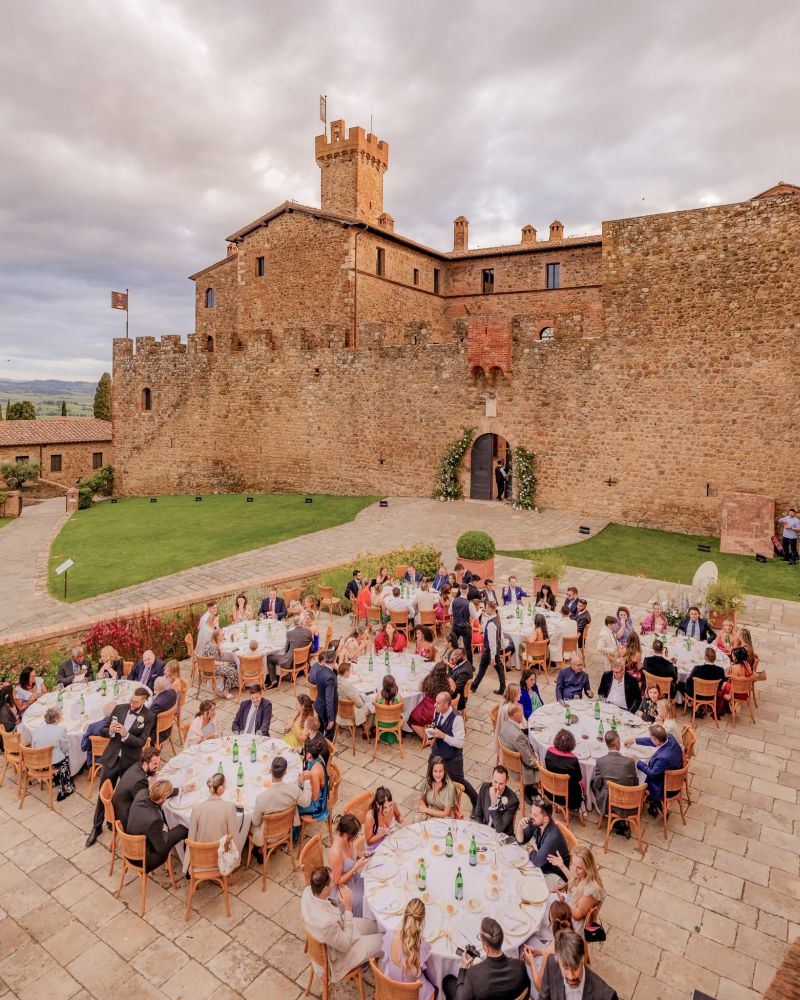
In the first 8 months of 2026, foreign tourists spent 16.2 billion euros in Italy, +5% compared to the same period in 2025, according to the Nexi Tourism Spending Report, based on transactions made in person at Italian retail outlets using foreign payment cards. The United States retained its position as the leading source market, accounting for 2.55 billion euros in spending and recording growth of 7.3%. These figures underscore the importance of American tourism for Italy, particularly when it comes to wine tourism, which is becoming an increasingly significant driver for U.S. travelers looking to venture beyond the country classic destinations, such as its great art cities. American visitors are primarily seeking authentic experiences, and largely finding them. According to the report “Il mercato Usa e l’enoturismo” - “The U.S. market and wine tourism”, produced by Aite - Italian Association for Food and Wine Tourism, chaired by Roberta Garibaldi, professor at the University of Bergamo and one of the sector leading experts, for Vinitaly Tourism, 79% of surveyed Americans view Italy as a destination capable of offering authentic food-and-wine experiences. Moreover, 47% consider a trip to Italy including at least one wine tourism experience desirable within the next 24 months. Sicily (82%) and Tuscany (81%), followed by Piedmont (56%), rank as the most attractive regions. In these destinations, wine serves as a gateway to the territory, culture, landscape and local identities. The risk to avoid, however, is treating the winery visit as an end in itself. This message was repeatedly reinforced by market operators at Vinitaly.USA 2026, which concluded yesterday in New York. Among those discussing the topic were Susan Kostrzewa, former editor-in-chief of “Wine Enthusiast” and now columnist for Resplendent Ink; Cristina Mariani-May, owner and ceo of Banfi, one of the benchmark wineries of Montalcino, Italian wine and wine tourism; journalist and author Fred Plotkin, known among other works for Italy for the Gourmet Traveler; lifestyle and travel journalist Sara Magro; Phillip Peña, head of the luxury travel network Virtuoso; and Mattia Moliterni of Roscioli New York, who has built a Wine Club with 2,000 members. One word recurred throughout the discussions: “authenticity”. The belief that wine can be a powerful attraction was equally shared, but not a sufficient one on its own to make a destination successful. Hospitality built around wine is a much broader concept and an area where considerable work still needs to be done.
“The key - said Sara Magro - is to connect the appeal of wine with that of the destination, but that alone is not enough. Infrastructure, transportation links, accessibility, cultural integration, easy booking systems and many other factors are also essential”. “There is a deep connection between great wines and luxury tourism - added Phillip Peña - a remarkable bottle of wine can create meaningful connections and greatly personalize the hospitality experience, which extends far beyond wine tasting. Wineries need to build relationships with the high-end hospitality sector, with those who recommend activities, with luxury travel advisors and destination managers, because that is extremely important. At the same time, it must be remembered that wine is an attraction, but hospitality is a much broader concept encompassing many different elements. One thing Americans in particular are looking for is customization: simple but tailor-made itineraries, personalized services and private visits. They need to trust the operators. Wine generates appeal, but what ultimately matters is the overall hospitality experience”. Provided everything remains authentic, as Susan Kostrzewa emphasized: “most Americans genuinely want to experience something they could not find elsewhere, something authentic, and fortunately Italy offers countless extraordinary experiences of exactly the kind Americans are seeking. That is the key point. These experiences should not revolve solely around wine, but also culture, sports, history and art. Everything must be connected. In the end, it is about telling the story of the people behind a winery, a business or a family”.
Yet this is a story that many Italian wineries are still not telling sufficiently, or not telling effectively. “The focus should be on education rather than marketing - said Fred Plotkin - because more and more Americans want to visit Italy and return home having learned something about your culture and history. If you take them to a winery, they are looking for experiences, not marketing, something that engages all the senses. Before introducing them to the wine, take them into the vineyard, tell them about the local food, then prepare a meal for them and pair it with your wines. In this way you create a memory of your unique local traditions. People want to take home what might be called a sense of belonging, of having become part of a story different from their own. And that is the story they will share”. This emotional approach is the one embraced by the Roscioli Italian Wine Club New York, as Mattia Moliterni explained: “part of our staff work is traveling through Italy, building relationships with wineries and people we enjoy promoting, creating these connections and transferring them to our clients. This is very different from marketing. It is about building relationships. In this sense, the Wine Club acts as a cultural bridge, capable of creating new destinations through wine, especially for New Yorkers, by highlighting regions that may be less well known today but are rapidly growing in popularity”.
But who better than an American leading one of Italy most important wineries, in one of the country most visited territories, and long committed to high-end hospitality through Castello Banfi Il Borgo Relais & Châteaux in Montalcino, such as Cristina Mariani-May, president and ceo of Banfi, to explain what fascinates Americans about Italian wine and its territories? “There is a great love story between Italy and America - she told WineNews - I believe one of the reasons is that here in America we have many wonderful Italian communities, each with its own culture. We are here in Manhattan, in Little Italy. Every city preserves the heritage and culture of its Italian community. And we carry with us, just as my grandfather did a hundred years ago right here in Little Italy, New York, a passion and love not only for food, naturally, but also for people and places. And for wine. Whenever we sell a bottle of wine or welcome someone to our winery, we are selling an image of Italy, and in our particular case an image of Montalcino, Brunello and Banfi. It is crucial to focus on the message we convey, so that consumers continue to see Italy as an accessible luxury experience, one to live and love”.
Copyright © 2000/2026
Contatti: info@winenews.it
Seguici anche su Twitter: @WineNewsIt
Seguici anche su Facebook: @winenewsit
Questo articolo è tratto dall'archivio di WineNews - Tutti i diritti riservati - Copyright © 2000/2026