


Wednesday 7th of October 2026 - Last Update: 13:36



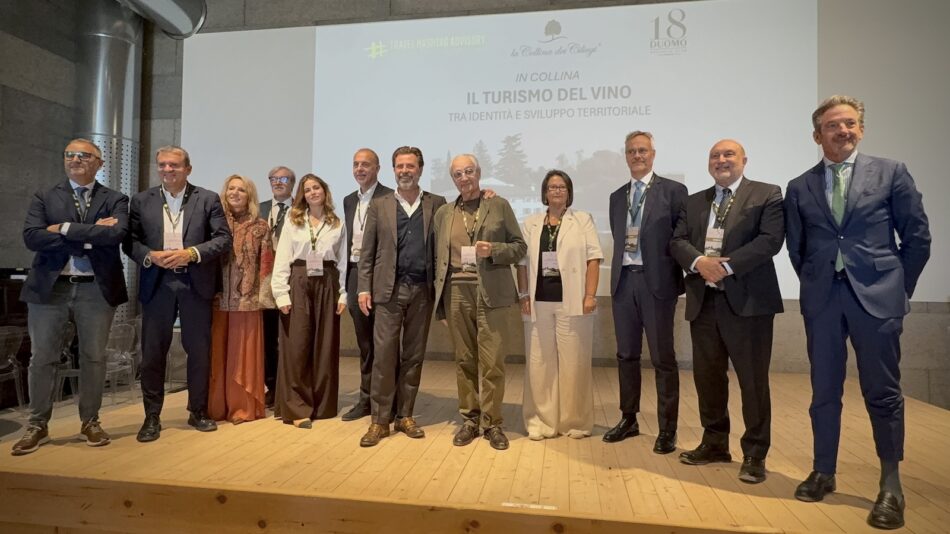
How can wine help build a destination, rather than simply a product to sell? As wine tourism evolves, institutions are increasingly more viewing it as a driver of territorial development rather than merely a tool for promoting wineries. Demand, meanwhile, has already changed: in 2026, 18 million Italians took part in experiences linked to wine, 4.5 million more than in 2024. Perhaps the most significant figure, however, concerns the way consumers engage with wine. For the first time, visiting a family-run winery, chosen by 27% of wine tourists, has overtaken purchasing wine at attractive prices, which stands at 25%. The relationship with producers is thus becoming a central part of the experience. Moreover, just days ago, the Ministry of Agriculture announced the signing of a decree dedicated to promoting wine tourism in production regions, with the aim of supporting initiatives which enhance awareness and the reputation of Italian vineyards. Trends, new traveler expectations, hospitality, and the ability to build networks were among the key themes discussed at the “In Collina” conference hosted by La Collina dei Ciliegi, a wine estate in Valpantena headed by Massimo Gianolli. The event recently brought together institutions, businesses, consortia, and tourism operators, alongside data presented by Roberta Garibaldi, one of Italy leading experts in food and wine tourism.
People no longer travel solely for a geographical destination, but for needs, emotions, and the opportunity to spend time in places that inspire and move them. “Tourism is perhaps the only sector capable of redistributing value across different supply chains, bringing together stakeholders who would otherwise rarely interact”, declared Nicola Romanelli, founder of Travel Hashtag Advisory, highlighting the shift in travel motivations, noting that tourism is no longer defined solely by geography, but by motivations, emotions, and the time people choose to dedicate to a place.
The changing nature of demand was illustrated by Roberta Garibaldi, professor of Tourism Management & Marketing at the University of Bergamo and president of Aite-the Italian Association of Food and Wine Tourism, who presented the latest data on the evolution of wine tourism. According to Garibaldi, food and wine experiences are naturally one of the main reasons international tourists choose to visit Italy. Interest in food and wine experiences in the country reaches 56% among Germans, 59% among Britons, 57% among Americans, 70% among the French, and 81% among Austrians and Swiss travellers. Veneto ranks fifth among Italy most popular regions, with an average interest level of 42%, while Tuscany, Sicily, and Sardinia occupy the top positions. Most notably, the relationship with producers clearly reflects changing consumer preferences. After a decade in which buying winery wines at attractive prices was the top experience sought by Italian wine tourists, it has now dropped to second place at 25%, while visiting a family-run winery has risen to first place at 27%. A further 24% cite the opportunity to visit a winery restaurant for lunch or dinner among the experiences they are most interested in.
“For the first time - commented Garibaldi - a visit to a family-run winery ranks first among the wine tourism experiences preferred by Italians, ahead of purchasing wine at discounted prices. This is an important signal: the value of personal relationships, meeting the producer, and experiencing the place where the product originates is increasing”.
Demand is growing, but supply has yet to fully adapt. Among the sample of 200 Italian wineries most active in wine tourism analysed by Garibaldi, international visitors account for 30% of guests, compared with an average of 40% abroad. Some 35% of wineries still provide websites or information exclusively in Italian, only 25% are present on dedicated experience-booking platforms, and just 8% have a presence on TikTok. Furthermore, 38% of international tourists book experiences through specialized platforms, while only 25% of the most organized wineries are active on these channels. The challenge, therefore, is not only to increase the range of experiences on offer, but also to make them discoverable, understandable, and bookable, particularly for smaller businesses. According to Garibaldi, this will be crucial to ensuring that the growth of wine tourism does not become concentrated solely in the best-known destinations.
As demand evolves, so too must the way the offer is developed. This is where the role of the territory becomes essential, together with the need to create networks and governance systems capable of connecting different stakeholders. According to Stefano Sisto, director of Tourism and Territorial Marketing for the Veneto Region, wine tourism forms part of a broader strategy to diversify the region tourism offering. Veneto records more than 74 million tourist stays, around 80% of which are concentrated in just 20 destinations. Diversification therefore means promoting attractions and territories beyond the main tourism hotspots. “Wine is an element of identity, a territorial brand which can create a connection between local communities, products, experiences, and places. It is essential to build a network of businesses working in different sectors, whether marble, culture, wine, or olive oil, and to establish multi-level governance which enables the Region, organised destinations, and businesses to work together”.
A point echoed by Luca Carnesecchi, an expert in international inbound tourism and wine tourism at Italy Highlights, who brought the discussion back to the practical realities of the visitor experience. A destination may offer compelling attractions, but without adequate services and infrastructure, from parking facilities to the ease of stopping and exploring a historic village, it becomes difficult to make that offer truly accessible and enjoyable.
Beatrice Benoni, Event Manager at Destination Verona Garda, shared the Foundation experience in fostering connections among tourism operators, consortia, and institutions with the goal of building a shared territorial offering.
The theme of collaboration among stakeholders was also emphasized by Christian Marchesini, president of the Valpolicella Wine Consortium, who brought the perspective of a territory that includes 2,240 growers and 360 wine companies and which, through coordinated action, can create opportunities even for smaller businesses. “There is no single driver in the offer - said Marchesini during his speech - rather, there are multiple opportunities. A consortium role is also to help companies understand them by connecting different skills and proposals and by working in a coordinated way to promote the territory”.
The necessity for greater coordination and clearer points of reference for those investing in the sector was at the heart of the speech by senator Gian Marco Centinaio, vicepresident of the Italian Senate, who highlighted the diversity of Italy tourism offering: “Italy is the country of tourisms, not of tourism. The strength of agrifood-related tourism lies precisely in people travelling the world in search of something different, an emotion. We are not only producers of wine, but producers of emotions and hospitality, ambassadors of our territories. And when entrepreneurs, institutions, and people who care about a place work together, they move faster and go further”. The relationship between wine, wine tourism, and economic development was addressed by Gianni Bruno, dg of Veronafiere, who underlined the role of winery visits not only as experiences but also as opportunities for direct engagement and sales at a time when the wine market is facing a challenging phase. According to Igor Boccardo, vicepresident of Rete Valpantena, the starting point is the need to overcome the separation between the product and the place where it originates: “Valpantena has a strong historical identity and everything required from a tourism perspective: a city, a territory, and products. It must become an amplifier of what the territory expresses. That is why Rete Valpantena was created: to build a shared destination and offer visitors experiences to live, see, and remember”. The issue of positioning was also addressed by Massimo Bullo, ceo of Duomo18 and cmo of La Collina dei Ciliegi, who stressed that the memorability of an experience is the only real factor capable of creating perceived value and distinctiveness for guests: “There is one thing that works across all markets: how well a brand creates a memory. You may have tasted a wine of incredible sophistication, but if you don’t remember it, what is the point? What you remember is that dinner, the people you shared it with, the atmosphere you experienced. Working in this market means creating that dimension of memorable experiences”. In the case of La Collina dei Ciliegi, this concept is directly linked to building an identity that is not merely declared, but recognizable throughout the destination and in every detail of the visitor experience.
The case study of La Collina dei Ciliegi winery was at the center of a presentation by Massimo Gianolli, one of Italy leading figures in finance and president of La Collina dei Ciliegi, who, in conversation with Daniela Ballarini, described how the project was developed through listening to the territory and drawing on external expertise.
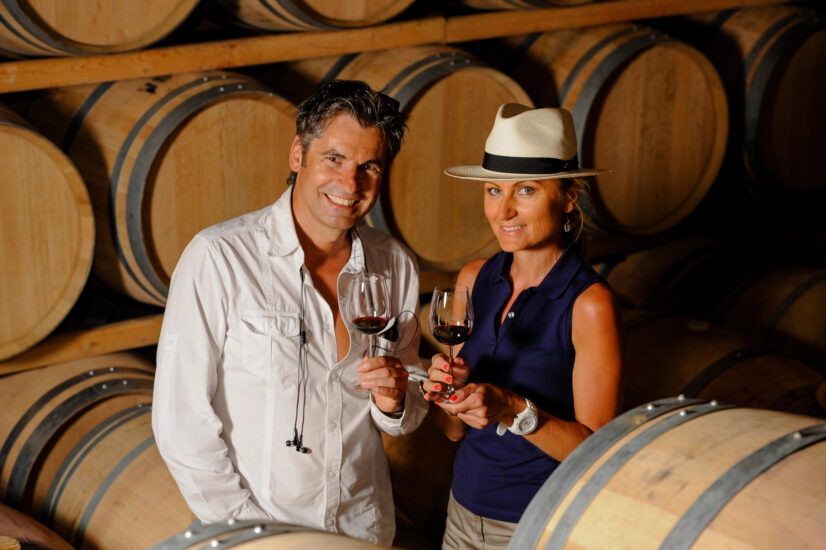
“An entrepreneur task - declared Gianolli - is to surround himself with great talent, trust it, and listen to it, creating the conditions for people to give their very best. I moved from the land to finance, and then from finance back to the land. Being born and raised as a farmer means having the ability to see projects over the very long term and the patience to wait”. This approach also led to a choice that was far from obvious for a company located in the heart of Valpolicella: rather than reproducing the traditional terraced vineyard landscape, the project was shaped by a careful study of the territory itself. Collaboration with Lydia and Claude Bourguignon, together with detailed soil analysis, resulted in several strategic decisions, including the enhancement of high-altitude Garganega vineyards and the creation of Prea. Today, these elements form part of a landscape where agriculture, wine production, hospitality, and food service coexist. “When I met the Bourguignons - recalled Gianolli - they told me that building a great project requires three things: the eyes to observe, the heart to feel, and the determination to act. That is where we started”. This vision also extends to the broader territory. Wine, olive oil, stone, culture, villas, restaurants, and hotels are all components of the same ecosystem. The challenge is to connect them and transform the sum of individual experiences into a recognizable territorial identity, as Rete Valpantena is seeking to do.
The “In Collina” conference ultimately brought wine tourism back to its broader dimension: not as an isolated sector, but as a point of connection between businesses, communities, institutions, and visitors. The challenge is not simply to bring tourists into wineries, but to make wineries one of the gateways through which visitors can enter a territory, discover it, experience it, and find a reason to return.
Copyright © 2000/2026
Contatti: info@winenews.it
Seguici anche su Twitter: @WineNewsIt
Seguici anche su Facebook: @winenewsit
Questo articolo è tratto dall'archivio di WineNews - Tutti i diritti riservati - Copyright © 2000/2026