


Wednesday 4th of March 2026 - Last Update: 18:41






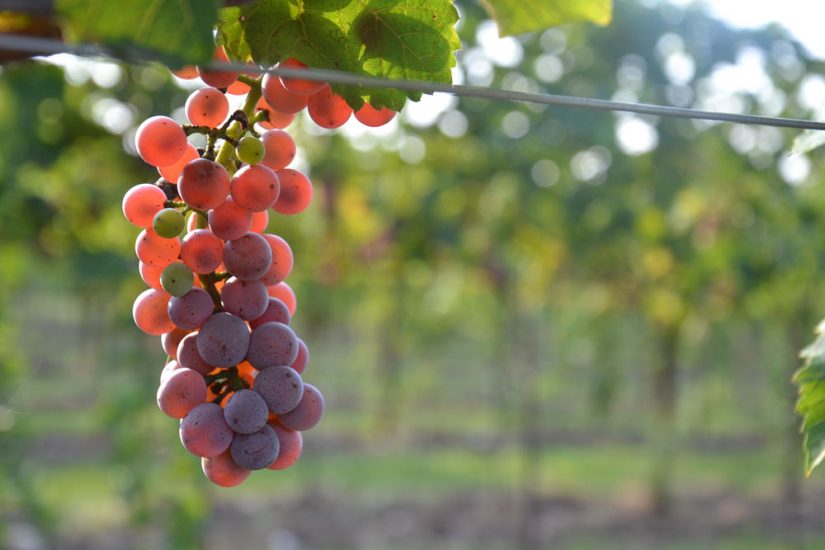

Institutions, consortia, and producers are called upon to address developments and emergencies affecting the sector, among which there is the urgent need for vineyards which are more resistant to fungal diseases and pests, as well as to abiotic events caused by climate change which intersect with the pursuit of greater environmental sustainability and consumer choice criteria. In this context, the introduction of resistant grape varieties into denominations of origin - foreseen by the EU but currently not allowed under our Consolidated Wine Law (Article 33, paragraph 6, Law 238/2016), which permits their use only in IGT wines - could play an important role, though it faces obstacles which were discussed during the round table “I nuovi disciplinari, vigneti resistenti: sì o no” - “New procedural guidelines, resistant vineyards: yes or no”, organized by Assoenologi at Rive-Rassegna Internazionale Viticoltura Enologia - Rive-International Exhibition of Viticulture and Enology, a biennial event dedicated to the vine and wine supply chain, held at the Pordenone Fair, in last days.
Although Piwi varieties are authorized in several regions (Trentino-Alto Adige, Veneto, Friuli-Venezia Giulia, Lombardy, Emilia-Romagna, Marche, the Abruzzi, and Piedmont), their spread is limited, concentrated mainly in the Northeast, where about 2,000 hectares are planted. Lifting the ban in denomins of origin could significantly increase their use, as Prosecco DOC and Pinot Grigio delle Venezie, developed on large areas, could include them among complementary varieties (15% and 10%, respectively).
Eugenio Pomarici, from the University of Padua and vicedirector of Cirve, identified the reasons for the limited diffusion of Piwi varieties: “historically, many central and southern regions did not consider Piwi due to low disease pressure from downy and powdery mildew, although recent issues are expanding the affected areas - he explained - another reason lies in the registration of most vineyards under denominations of origin, so switching to IGT would mean reducing their land value. To this, the lack of interest from cooperatives and the inexplicable ban on their use in organic farming are added”.
Moreover - added Riccardo Velasco, director of the Viticulture and Enology Research Center (Crea-Ve) - another obstacle adds, i.e. is the opposition from many regions which see them as alien to wine authenticity, a hurdle which could be overcome by using local native varieties as noble parents in breeding. Today, resistant varieties offer real opportunities that consortia, entrusted with safeguarding the characteristics of their wines, have the duty and right to evaluate”.
Regarding DOC wines, except for those strictly single-variety, most regulations would allow their introduction within the 15% complementary quota. Cirva surveys presented by Pomarici show that consumers perceive them positively, associating them with sustainability, and are willing to buy and pay more for everyday consumption. Producers report cost reductions, easier vineyard and winemaking management, and Piwi wines can even command premium prices.
In his overview of the state of the art on the research about resistant varieties, Velasco highlighted that Piwi grapes, thanks to “pyramiding” techniques, carry multiple resistance mechanisms that make them almost “impregnable” to downy and powdery mildew. “The likelihood of pathogens mutating to overcome all these mechanisms is extremely low - explained Velasco - which ensures the certainty of resistance durability. For varieties obtained through Assisted Evolution Techniques (Tea), achieving a single genetic “mechanism” of tolerance/resistance takes about five years, so creating varieties with unbeatable resistance requires many years, effort, and work. However, they offer the advantage of being clones of the original parent varieties, representing additional opportunities when available, even for single-variety denominations. Today, Piwi varieties are already available, and we are well advanced in introducing multiple resistance mechanisms into noble varieties. Resistant grapes not only produce excellent wines on their own or blended but, in my opinion, deserve recognition by major consortia”.
Michele Zanardo, president of Comitato Nazionale Vini Dop e Igp - the National Committee for PDO and PGI Wines, agrees, and clearly stated he has no objections to introducing Piwi into denominations of origin, emphasizing the need for experimentation, where consortia play a key role in advocating regulatory changes. He also pointed to the “French model” as virtuous and worth adopting. Although Italy began Piwi research earlier, France is now ahead. After an intensive genetic improvement program starting in 2014, the French introduced Piwi varieties into Aoc Bordeaux and Champagne. “The French - deepened Zanardo - tested their resistant varieties in different AOCs, microvinifying and tasting them pure and blended over a ten-year process with concrete results, giving producers the chance to understand the potential of these varieties and decide whether to use them. I believe we need to start from here”.
Consortia positions on the issue vary due to objective differences related to whether resistant varieties can be included in the complementary quota of other grapes, as allowed by some regulations, but impossible in denominations based on a single grape at 100%, such as Nebbiolo for Barolo. The Prosecco DOC Consortium has been working for years on varietal innovation, balancing sustainability needs with preserving product identity, mindful of current legal limits imposed by the Consolidated Wine Law and the new opportunities offered by resistant varieties in anticipation of regulatory evolution. “Resistant varieties are already an opportunity for the wine system for IGP and generic wines - stressed Andrea Battistella, director of the Prosecco DOC Consortium - if placed in sensitive areas, they can avoid conflicts with residents and nearby activities. The essential condition is maintaining product characteristics, so introducing a new grape into the regulations must be managed with full awareness to safeguard the denomination, which is shaped by environmental, human, and historical factors within its territories. Experimentation is therefore fundamental, enabling the supply chain to assess the opportunity to expand the ampelographic base”. The Consortium has launched several research projects with scientific and institutional partners, aiming to reduce chemical inputs and improve sustainability: from the Gleres project to obtain resistant “children of Glera” with the same sensory profile, to applying Assisted Evolution Techniques to Glera, and the Ampelopros program to test numerous Italian grape varieties and new resistant ones in two areas of the denomination.
“In our production area - explained Stefano Sequino, director of the Pinot Grigio delle Venezie Consortium - grapes from resistant varieties have long been used for IGP wines, and there is already a wealth of knowledge and experience allowing us to take a step forward in environmental sustainability and cost reduction for businesses. We are pursuing this path with a technical and scientific approach to evaluate together with our technicians, enologists, and producers, the contribution of wines from resistant varieties to the Pinot Grigio organoleptic profile”. Microvinification trials and technical tastings are underway on Pinot Grigio samples blended with wines from resistant varieties, particularly those with a parent already included in the complementary quota of the production regulations, such as Pinot Bianco, Friulano, and Chardonnay. “The results of technical tastings - explained Sequino - are very interesting and will allow us to make informed choices while respecting the Pinot Grigio profile. Meanwhile, we closely follow parliamentary work on Senate Bill 1152, which, in line with EU Regulation 2021/2117, aims to include resistant varieties in the ampelographic base of denomiantion wines, as already done in France, a possibility currently not allowed by the Consolidated Wine Law”.
Openly opposing the introduction of Piwi - calling himself a “contrarian” - for historical and cultural reasons and in line with the regulations of the denominations represented by his consortium (Barolo Barbaresco Alba Langhe and Dogliani, accounting for 65 million bottles and about 12,000 hectares), there was Sergio Germano. “It is thanks to the most historic denominations, based on 100% of a single grape, that our wines, like Barolo and Barbaresco, have become established - explained Germano - I recall that after the methanol scandal, there was discussion about adding other grapes to Nebbiolo to “strengthen” its color, a proposal wisely rejected, which led to its success. Nebbiolo sensitivity to soil and territory, even within a few meters, is our strength, so there is no interest in introducing other grapes to protect the identity, history, and established reputation of these wines. Instead, we support research into resistant native varieties obtained through Tea, which is also being applied to Nebbiolo”. This stance, legitimate as it is, closes the door to Piwi for now, though they could one day be considered for the more recent Langhe DOC, introduced 25 years ago, which has complementary quotas, or for a possible regional IGT to promote greater environmental sustainability in sensitive areas.
“The supply chain, with the support of sector policy - said Eugenio Pomarici at the round table - must continue research and experimentation in different production contexts of denominations. Policy should encourage trials of Piwi varieties derived from grapes of interest to verify their adaptation (following the “French approach”: 5% surface; 10% blending; 10 years of testing), involving producers in the process. The amendment of the Consolidated Wine Law to allow their use would be an important signal, as well as promoting regional authorization. Finally, it is essential to communicate all available information to producers so they can make choices, which inevitably remain their responsibility”.
Copyright © 2000/2026
Contatti: info@winenews.it
Seguici anche su Twitter: @WineNewsIt
Seguici anche su Facebook: @winenewsit
Questo articolo è tratto dall'archivio di WineNews - Tutti i diritti riservati - Copyright © 2000/2026