








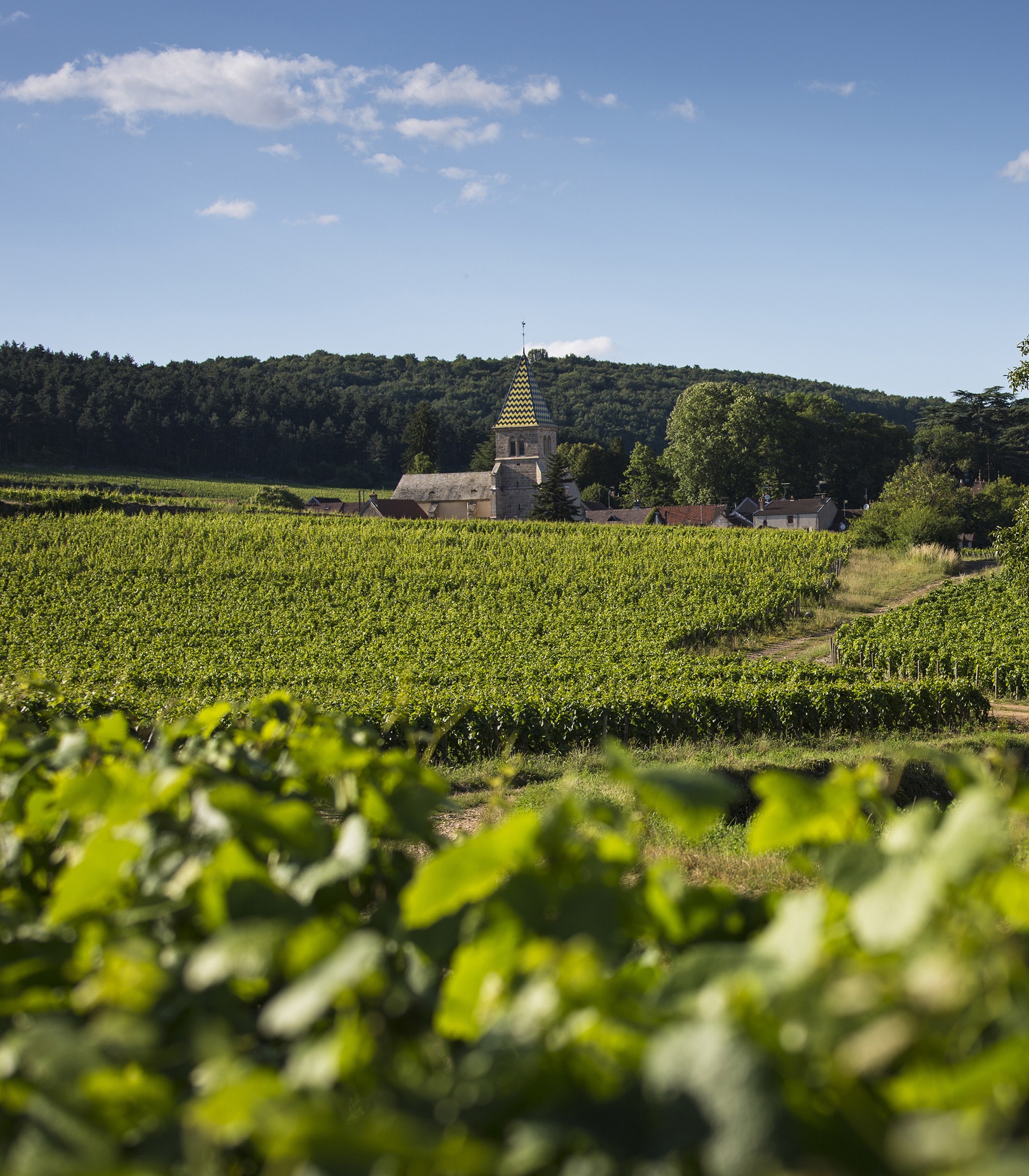
There is an “invisible” market: that of Europe most sought-after vineyards and wineries, one of the most exclusive markets in the world, where transactions take place through private connections rather than through traditional channels, where a seller simply lists a property on a platform or through a real estate agency and connects with a potential buyer. In this market, what is being acquired is not merely land, let alone buildings, but also intangible assets such as reputation or the right to produce wine under a particular denomination. This logic increasingly applies to many Italian terroirs as well: in the Langhe and in Montalcino, for example, the most coveted vineyard parcels change hands with the same level of discretion, and their value is measured more by their history than by their acreage. This is the view shared with WineNews by Philippe Petit, founder of Vitaceae Transactions, an independent brokerage and advisory firm specializing in premium wine-sector transactions in Champagne and Burgundy.
Petit emphasizes that his observations describe market dynamics and practices seen in Champagne and Burgundy and should be regarded as market analysis rather than investment, legal, or tax advice. His discussion begins with a basic premise: a bottle of Champagne from a great maison can be enjoyed anywhere, but owning even a single row of its vines is almost impossible. Setting aside, for a moment, the financial aspect (which remains significant and well beyond the reach of most buyers, considering that a hectare in a Grand Cru vineyard of the Côte des Blancs can approach 2 million euros, ed), he explains the difficulties of gaining access to this market. None of the world leading domaines are ever displayed with a “for sale” sign, as might happen with a house or a commercial property. Instead, they are transferred privately within close circles of people who already know one another. “There is no public listing - affirms Petit - there is only a limited circulation of information. Confidentiality is not a commercial posture; it is a prerequisite for making a transaction possible. Rumors that an estate may be sold can destabilize the workforce, unsettle grape suppliers, alert banks, drive up expectations and, within a family, trigger conflicts that did not exist the day before”.
As a result, sellers have a clear interest in maintaining silence and depart from it only with a very small number of interlocutors, often found among notaries, accountants, brokers, bankers and a handful of specialized intermediaries. “The job is not to identify available assets, but to understand situations: an approaching succession, the absence of a family successor, diverging shareholders, a poorly structured investment, or a generational transition. These signals cannot be detected over the course of a few weeks. A transaction file often begins long before the seller is actually a seller”. And, above all, buyers are not simply purchasing the wine produced by a maison or the land on which it is made. According to Petit, much more is at stake: “what is being acquired is a right: the right to produce a wine from a denomination whose boundaries are fixed and can never be expanded”.
In this case, the reference is to Champagne, but the same principle applies to many other terroirs in France, Italy, and around the world. “What is acquired in Champagne or Burgundy is not strictly a farming business: but rather a combination of rights, contracts, and constraints”. Petit, who is trained as an enologist, comes from a Champagne winegrowing family stretching back ten generations, worked for several Champagne houses, and later became a courtier assermenté (sworn broker) before founding his firm. He describes it as a “market which is not visited, but decoded”.
So what exactly needs to be deciphered? “First and foremost, the vineyard holdings themselves. It is not the number of hectares that matters most, but their location parcel by parcel: classification, municipality, exposure, age, and condition of the vineyard. Given the same surface area, location carries more weight than acreage itself”. Then, there is the tenure structure. Beyond ownership, France has two specific legal frameworks governing agricultural land: fermage (agricultural tenancy) and métayage (sharecropping). Petit notes that “it is common for an estate to cultivate vineyards it does not own, and French agricultural tenancy law provides strong protection for tenants. “Cultivated area” and “transferable area” are therefore two distinct concepts”. Another element which must be understood is supply contracts and grape flows: their duration, reversibility, and degree of dependency. Then there are inventory stocks: “In Champagne, wines that are still in the production process represent a fully fledged asset class, sometimes a decisive one, with valuation issues of their own”. The brand and its distribution network must also be carefully assessed. “Sometimes they are worth far less than the seller imagines because they are built on personal relationships which can’t be transferred”.
Finally, there is the regulatory framework: ranging from Safer pre-emption rights (the French body that regulates the agricultural and rural land market) to controls over agricultural structures and company share transfers, all of which “determine whether a transaction is even feasible, before any question of price arises”. The price of Europe most sought-after vineyards is therefore far from fixed. Instead, it is shaped by numerous factors. As Petit explains: “it can’t be derived from a simple per-hectare comparison. It is the result of a sum of different components, adjusted according to the asset’s actual liquidity and, above all, the number of buyers genuinely capable of completing the acquisition”, says Petit.
Do the factors emphasized by a seller, such as hectares, denomination, production, and reputation, always correspond to what a buyer is looking for? “Rarely - admits Petit - and that is precisely where the essence of the job lies. The seller values their history, their work, and their local reputation. The buyer, on the other hand, is purchasing a future. The gap between the two perspectives is structural. The seller talks about total vineyard area; the buyer focuses on the proportion that is actually owned and its classification. The seller highlights a brand built over thirty years; the buyer sees that it depends on relationships which can’t be handed over. Conversely, and this happens frequently, sellers underestimate what truly creates value: a long-term supply contract, a stable technical team, a well-sized winemaking facility, or an established export presence”. There are also different categories of buyers, who are themselves far from homogeneous. “A Champagne house seeks secure access to raw materials. A family office looks for a tangible, rare, low-correlation asset that can be managed by others. A geographically neighboring estate seeks operational continuity and economies of scale. A brand-focused buyer seeks recognition and distribution”. These are 4 distinct buyer profiles, and they don’t pay the same price for the same asset. According to Petit, this is precisely where value is created: “not through competitive bidding, but by identifying the buyer for whom the asset fulfills a specific need. A well-managed transaction consists of translating what the seller owns into the language of the person who needs it most”.
Like many other sectors, this market is influenced by major brands. In this case, however, the influence is “decisive, but indirect and highly uneven depending on the terroir”. As Petit explains, “In Champagne, the major houses and groups do not set land prices through their acquisitions. Their influence is exerted through grape prices and through securing supply in an economy that is largely contract-based”. It is also important to distinguish between market segments. Grand Cru and Premier Cru vineyards do not follow the broader economic cycle. “Those who own them rarely have any need to sell, and during downturns these terroirs don’t decline in value; they simply stop appreciating”. As a result, what adjusts is often not price but rather the number of transactions and the time required to complete them. Sellers prefer to wait rather than accept lower offers. “When price adjustments do occur - says Petit - they are generally seen in lower-quality segments, where the buyer is a winegrower whose investment capacity depends directly on economic conditions”.
There is also a second effect: “luxury groups have helped establish the idea that an exceptional vineyard is a heritage asset. This has attracted capital from outside the wine sector to a pool of available properties that is not growing. As a result, these buyers do not sell during downturns in the cycle. Quite the opposite. Their presence further reinforces the price plateau”.
The third effect, according to Petit, is even more counterintuitive: “many families refuse to sell to a large group out of attachment to their heritage, respect for their employees, and also because they do not want to see their name absorbed into a larger corporate identity. This creates a genuine opportunity for private buyers, who may sometimes be less competitive financially but more convincing in terms of their vision and project. Today, major brands shape this market more than they actually occupy it”.
Petit concludes with a candid observation that offers a revealing snapshot of the wine sector: a world and a marketplace in which industry insiders often behave “like members of a club” where the prices of country estates frequently surpass those of prime urban properties, and where a few rows of Grand Cru vines have become the ultimate trophy asset, more coveted than a yacht and more enduring than a painting by a renowned international artist.
At the same time, however, this world is made possible only by what Petit describes as “the agriculture of craftsmen”, people who literally get their hands dirty working the land. Here, his closing remark: “to properly assess a Domaine or a Maison means identifying its risks and its true value, not celebrating the euphoria surrounding it”.
Copyright © 2000/2026
Contatti: info@winenews.it
Seguici anche su Twitter: @WineNewsIt
Seguici anche su Facebook: @winenewsit
Questo articolo è tratto dall'archivio di WineNews - Tutti i diritti riservati - Copyright © 2000/2026