




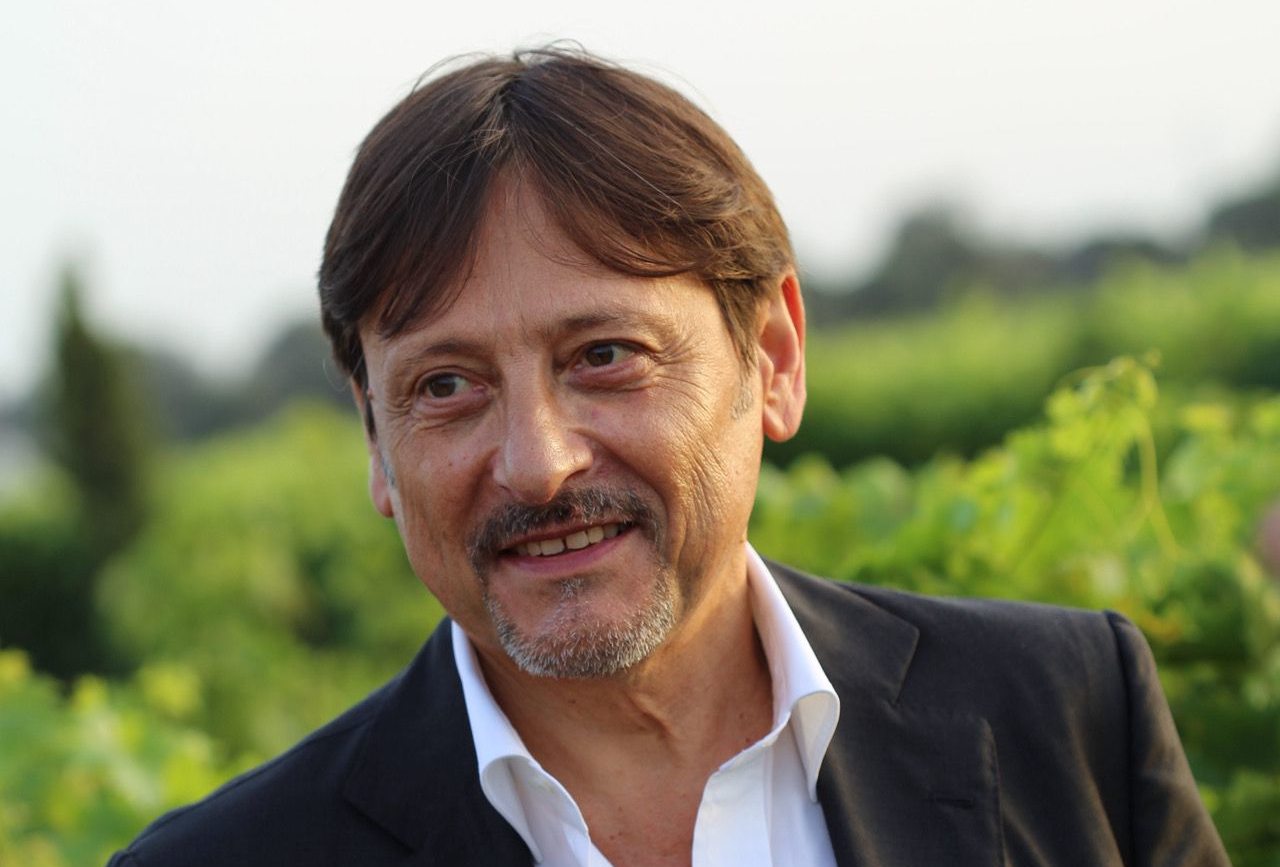
Wine tourism is becoming an increasingly more important asset for wineries and for the Italian wine sector as a whole. It can now also rely on a dedicated regulatory tool to support its promotion: the decree recently published by the Ministry of Agriculture, headed by Francesco Lollobrigida, and analyzed for WineNews by Marco Giuri of the Giuri Law Firm in Florence. A positive step forward, comments Dario Stefàno, former Senator, now professor of Tourist Management at Lumsa University in Rome and president of Centro Studi Enoturistici e Oleoturistici - the University Center for Wine Tourism and Olive Oil Tourism Studies, as well as the author of the legislation which first recognized and regulated wine tourism in Italy. However, according to Stefàno, this step alone “doesn’t yet amount to a national policy. The measure is based on CAP resources already allocated to the Regions and doesn’t provide for any new dedicated national funding. Moreover, while it envisages the use of digital tools and the collection of statistical data through the Agea system, it doesn’t establish a national governance framework capable of transforming that information into lasting knowledge and shared strategic guidelines. This is where a significant gap remains. Italy needs a national steering body that brings together institutions, Regions, universities, research centers, and industry operators; promotes continuous studies and data collection; and supports a strategy for sustainable and regenerative wine tourism. France, through Atout France, has developed national coordination and research activities dedicated to wine tourism. Spanish experiences likewise demonstrate the importance of networks and shared tools in enhancing the visibility of destinations”.
Stefàno observations introduce a broader reflection, which we have received and are pleased to publish, on a wine tourism sector that has grown significantly in Italy over just a few years and must now evolve into a genuine tourism product, supported by a network which connects wineries and territories, and by an offer in which wine and wine tasting are only one component of a richer and more complex tourism experience.
Wine tourism is growing. But now it must become a real tourism product
There is one figure among those that accompanied Italy wine tourism season this summer which perhaps deserves more attention than any other. When choosing a destination, the beauty of the place now carries more weight than the fame of its wines.
It may seem like a simple statistical curiosity, but it actually reveals a much deeper transformation.
For years, we have tended to think of the wine tourist primarily as a wine enthusiast who chose a destination in order to meet a producer, discover a label, visit a wine region, or take part in a tasting. That tourist may still exist, but their numbers are no longer sufficient to explain the scale, let alone the growth, of the phenomenon. Alongside them, a different and potentially far more numerous type of traveler is becoming increasingly important: one who first chooses a destination and then, within that holiday, decides to devote a few hours or one or more days to wine, gastronomy, and winery visits.
This is far from a marginal shift.
Wine is no longer necessarily the sole reason for a journey. More and more often, it becomes one of the reasons why the journey is remembered.
All the most recent surveys appear to point in precisely this direction. Wine and food tourism now involves an estimated 18 million Italians, a figure that has grown by more than four million in just two years. Yet even more significant than the size of the phenomenon is the geography of the most desired destinations: the Cinque Terre and Salento rank ahead of Chianti, the Amalfi Coast, and Mount Etna. Four of the top five destinations mentioned are either coastal or located close to the sea.
This doesn’t mean that wine tourism is turning into beach tourism. It means something far more interesting: the traditional boundaries between different holiday motivations are gradually disappearing.
Sea, landscape, wine, gastronomy, culture, and historic villages do not necessarily belong to separate tourism markets. In the perception of today traveler, they can become different elements of the same experience.
Within this scenario, the winery can continue to play a significant role. However, it represents only one chapter of the story, not the entire experience. It can become a gateway through which visitors discover a place, understand its landscape, meet its people, explore its food culture and traditions, and, in a sense, embrace its way of life, even if only for the duration of a trip.
From this perspective, the point is not to diminish the value of wine tasting. Rather, it is to restore it to its proper role: one of the many ways of building a wine tourism experience, without assuming that it can fully encompass that experience or necessarily be the decisive factor in choosing a destination.
Tasting a wine can be an extraordinary way to understand its origins, the territory from which it comes, and the culture of production that shaped it. But it would be unrealistic to imagine that the richness and complexity of a place-based experience could be fully contained in what happens in front of a single glass of wine.
The point, then, is not necessarily to add something to the tasting experience, nor to replace it with ever-new formats. Rather, it is about creating an experience that is consistent with the identity of the place, one in which wine, the winery, the landscape, gastronomy, local people, and culture can all contribute, in varying degrees, to conveying the character and uniqueness of that territory.
Ultimately, the growing importance attributed to the landscape, even more than to the reputation of the wine itself, tells us precisely this: attractiveness no longer belongs solely to the product or the business, but to the context that gives that product its meaning.
And this is probably where one of the most important opportunities for Italian tourism emerges.
For regions such as Salento, Sicily, Sardinia, Campania, Liguria, and many other wine-producing coastal areas, wine tourism can become a tool for transforming part of the large visitor flows concentrated along the coast into demand for inland destinations as well. Not simply by redirecting tourists, but by increasing the economic and cultural depth of their stay.
A tourist who spends a day at the beach generates a certain level of economic activity. The same tourist who, during that holiday, visits a winery, has lunch in a historic village, purchases local products, especially wine, meets a producer, and perhaps returns in the evening for an event, creates a different and more sophisticated value chain.
Available estimates seem to confirm this. Tourism linked to wine and food experiences generates greater added value than tourism associated, on average, with seaside holidays. Not because one form of tourism should replace the other, but precisely because their integration can increase the value generated by the same visitor presence.
In my view, this is the cultural shift that must take place: not necessarily increasing the number of tourists, but increasing the value generated by their stay in local communities.
This perspective is particularly important for a country that, in many destinations, is beginning to face the physical, environmental, and social limits of quantitative growth in visitor flows.
Yet the data also reveal something less reassuring.
Demand appears to be evolving faster than supply.
A significant share of tourists still encounter difficulties when booking experiences online. The main obstacles include a lack of clear information, rigid schedules and opening times, and the difficulty of reaching many wineries without using a car. August, in particular, when tourist pressure reaches its highest levels, records a decline in visitor satisfaction.
This is a signal that should not be underestimated, because it demonstrates that attractiveness and competitiveness are not synonymous.
We may possess extraordinary landscapes, outstanding wines, a gastronomy recognized around the world, and a cultural heritage that is difficult to replicate. But tourists also judge an experience on their ability to find it, book it easily, reach it conveniently, understand its pricing, access adequate services, and receive a level of hospitality consistent with the expectations that have been created.
Otherwise, the risk is that wine tourism continues to be seen as little more than a collection of winery visits rather than as a genuine tourism product.
And this is perhaps where one of Italy structural limitations becomes apparent.
We have invested heavily in the quality of wine and, in recent years, many wineries have also invested significantly in hospitality. Far less has been done to strengthen the connections between those businesses and the territorial systems in which they operate.
A winery may be beautiful, but if it is difficult to reach, if it doesn’t work in synergy with accommodation providers and restaurants, if it is not integrated into destination marketing and commercial platforms, if it doesn’t offer an appealing, creative experience that reflects the identity of the place, and if it can’t be easily booked from a smartphone while the visitor is already in the area, then a substantial part of its potential remains untapped.
A tourism experience doesn’t fully exist simply because it has been designed. It exists when it can be discovered, understood, booked, purchased, and enjoyed with ease.
Today, competition in wine tourism is therefore taking place less and less between individual wineries and increasingly between territorial ecosystems.
And this changes the geography of opportunity.
If rural landscapes, value for money, and proximity influence destination choice as much as, or more than, the reputation of the wine itself, then regions without internationally renowned denominations can still compete through the quality of the experience they offer.
This is particularly good news for those wine-producing areas of Italy that, for many years, have suffered from lower visibility than the country most established wine destinations.
But possessing a beautiful landscape doesn’t automatically make a place a wine tourism destination.
The gap between desire and satisfaction highlighted by recent surveys demonstrates this clearly. The most sought-after destinations do not necessarily coincide with those that enjoy the highest levels of reputation. Destinations that have long been better organized continue to benefit from the advantage built through years of investment, services, professional expertise, and a strong culture of hospitality.
And perhaps this is the most important lesson of all: attractiveness is a resource. Competitiveness is something that must be built.
The growing number of food-related experiences offered by wineries should also be viewed from this perspective. Restaurants, wine pairings, vineyard dinners, cultural events, and experiential activities can certainly increase both the length of stay of visitors and their spending. But it would be a mistake to turn every winery into a self-contained and indistinct hub of activities.
A winery experience gains value when it becomes part of the wider story of a territory, not when it attempts to replace that story or function independently of it.
The challenge, therefore, is not to keep adding new attractions around wine in pursuit of every emerging tourism trend. Rather, it is to create experiences capable of making wine understandable through the landscape, gastronomy, people, culture, and traditions that gave rise to it.
Some data also suggest the need for caution. Wine harvest experiences, for example, generate considerable curiosity, yet the willingness to pay of visitors remains relatively limited. It is a useful reminder that not everything that can be turned into an experience automatically has a market willing to cover its costs.
What is needed, therefore, is a shift from the proliferation of experiences to their tourism and economic design.
There is, finally, a contradiction that captures the current moment particularly well. The wineries analyzed achieve very high levels of visitor satisfaction, yet generate only a very small share of the conversations and digital footprints associated with their destinations.
Those who visit a winery are often highly satisfied. The challenge is ensuring that many more people are able to discover it and decide to visit.
Today, this challenge is increasingly played out before arrival and during the stay itself, through search engines, booking platforms, reviews, social media, and, more and more, through artificial intelligence systems which travelers will use to build itineraries and decide what to do during their holidays.
Digital presence, therefore, is no longer merely a communication tool. It is becoming part of the commercial infrastructure of a destination.
For this reason, the growth of Italian wine tourism is undoubtedly good news, but it should not lead to complacency.
Demand exists. Desire exists. The territorial heritage is probably unmatched. The task now is to transform these three elements into organization.
And this is also where a governance issue emerges. If tourists no longer distinguish rigidly between wine, the sea, gastronomy, culture, landscapes, and historic villages, we can’t continue to organize and promote these elements as separate worlds. Too often, businesses, consortia, local administrations, tourism promotion bodies, and other territorial stakeholders continue to plan and communicate exclusively within their own boundaries.
Tourists, by contrast, are purchasing a destination as a whole.
What is needed are wineries that are increasingly accessible and easy to book, stronger connections with accommodation and restaurant services, better local mobility, professional expertise, digital tools, shared data, and, above all, a governance system capable of bringing together actors that too often continue to operate separately.
Because the next phase of Italian wine tourism will not be determined solely by the ability to bring more people into wineries.
It will depend on the ability to use wine as a means of helping visitors discover territories more deeply, spreading visitor flows across space and time, connecting coastal and inland areas, extending tourism seasons, and increasing the value generated by every visitor.
Italian wine already possesses an extraordinary ability to tell the story of places.
The challenge now is to ensure that those places become capable of organizing, making accessible, and ultimately selling that story.
Dario Stefàno
Copyright © 2000/2026
Contatti: info@winenews.it
Seguici anche su Twitter: @WineNewsIt
Seguici anche su Facebook: @winenewsit
Questo articolo è tratto dall'archivio di WineNews - Tutti i diritti riservati - Copyright © 2000/2026