


Thursday 12th of November 2026 - Last Update: 11:09






Those looking for wellbeing (“flower children”) are younger, stay longer, and report the highest willingness to spend on almost all of the experiences considered. Those driven by social connection (“partygoers”) have the highest average age, while those pursuing luxury (“hedonists”) are surprisingly more likely to choose food trucks than Michelin-starred restaurants. The leading tribe of “explorers” is eager to try new experiences and shows a preference for Tuscany, whereas the “intellectual” tourist is the most closely linked to Instagram, bike tours, and trekking. These are the five motivational tribes identified in food and wine tourism, a sector in which the standardized tourist no longer exists. Behind the shared interest in food, wine, and local products lie very different motivations, behaviors, and declared levels of spending, requiring destinations and businesses to move beyond a one-size-fits-all approach. The findings were presented by Roberta Garibaldi, professor at the University of Bergamo and president of Aite-Italian Association of Food and Wine Tourism, at Bto - Be Travel Onlife 2026, Italy’s leading event on digital tourism and innovation, now in its 18th edition in Florence (today and tomorrow at the Stazione Leopolda). The analysis is based on a Computer Assisted Web Interviewing (Cawi) survey carried out in February 2025 on a sample of 1,501 Italians and identified 5 different, non-mutually exclusive tourist categories, as respondents could identify with more than one profile. These are the “Explorers” (69%), the “Partygoers” (40%), the “Intellectuals” (26%), the “Flower Children” (19%), and the “Hedonists” (14%).
The profiles are not mutually exclusive. The percentages derive from multiple responses, and the same traveler may belong to several tribes, with motivations that change depending on the destination, the occasion, and the stage of life. This overlap is one of the study’s most significant findings. Discovery emerges as the dominant motivation, though not the one with the greatest economic value.
Explorers, the largest group, are mainly motivated by the desire to try new experiences (77%), interact with local people (26%), and immerse themselves in rural and natural environments (16%). They are evenly distributed by gender (48% men, 52% women), have an average age of 42.7 years, and primarily gather information through recommendations from relatives and friends (64%, the highest value among the clusters) and Instagram (41%). They favor local, authentic experiences: 69% eat typical dishes in independent local restaurants, 67% buy directly from producers, and 61% visit local markets and artisanal food shops. Among the regions visited during their last three food and wine trips, Tuscany leads (37%), followed by Emilia-Romagna (24%), Veneto (20%), Puglia (18%), and Sicily (16%). Outside Italy, Spain (21%) and France (19%) are the main destinations, followed at some distance by the United Kingdom, Portugal, and Greece (all at 8%). However, the size of the segment doesn’t translate into higher spending. Explorers record the shortest average wine tourism stay (3.27 days) and the most modest declared expenditure: 45 euros for a traditional dinner, 36 euros for a winery visit with tasting, and 27 euros for admission to a food and wine event. They are also the cluster least concerned about overtourism (average perceived impact score of 5.88) and the most opposed to the idea of an entrance fee as a management tool (3.08 out of 5).
Partygoers are the oldest segment and are concentrated in Southern Italy. Their main motivations are entertainment (63%) and taking a break from routine (44%), yet they are not predominantly young. Their average age is 43 years, the highest among the five tribes, with an age distribution broadly reflecting that of the general population (25% aged 25-34, 26% aged 35-44, and 24% aged 45-54). Geographically, 34% live in Southern Italy, with a particularly strong concentration in Campania (14% of the cluster compared to 10% nationally) and in Naples, which alone accounts for 9% of Partygoers compared to the national average of 6%. In terms of experiences, they prefer convivial settings: local restaurants (60%), direct purchases from producers (60%), local markets (51%), and historic restaurants and cafés (43%). Agritourism accommodation is their preferred lodging option (26%, the highest percentage among all clusters). Their declared spending falls in the middle range: 47 euros for a traditional dinner, 41 euros for a winery visit, and 34 euros for an event. Among their most recent Italian food and wine travel destinations, Tuscany (32%), Emilia-Romagna and South Tyrol (21%), Puglia (19%), and Veneto (19%) feature most prominently. Abroad, France (22%) and Spain (21%) are the preferred destinations.
Intellectuals are young, digitally connected travellers who seek to learn through travel. They have the highest educational attainment among the tribes (34% hold a master’s degree, postgraduate qualification, or PhD, compared with 30% of the overall sample), a relatively young average age (40.8 years), and the highest representation of the 18-24 age group (10% compared to 6% average). They are the most active tribe on Instagram (47%) and the most inclined to consult specialist websites (32%), food-and-wine guides (19%), and industry publications (14%). 41% undertake self-guided thematic tours, while 38% participate in expert-led bike tours or trekking experiences focused on local cuisine and products, the highest proportion among all clusters. Learning, active participation, and digital tools can therefore coexist within the same tourism offering.
Flower children (19%) represent both the youngest segment and the one with the highest potential value. They associate food and wine experiences with physical and mental wellbeing (66%) and self-discovery (38%). Their average age is under 40, specifically 39.5 years, and 35% belong to the 25-34 age group, compared with a 26% average across the sample.
Predominantly male, they are the only cluster with a notable gender imbalance: 58% men and 42% women. They also stay longer than any other group, with an average trip length of 3.98 days, the highest among the five tribes. Day trips are far less common (7% compared to 15% average), while 19% stay between five and seven days. 41% have taken multi-day food-and-wine trips organized by specialized agencies, compared with 26% of the overall sample, making this the highest proportion among all tribes. They are also the most frequent visitors to wineries (only 16% have never visited one, compared with 26% on average) and food museums (36% have never visited one, compared to 50% overall). This tribe reports the highest willingness to spend on nearly every category: 56 euros for a traditional dinner, 53 euros for a winery visit with tasting, 47 euros for a vinegar cellar visit, 46 euros for a food and wine event, and 42 euros for admission to a food museum. They look for rich and multifaceted experiences, including wine-, olive oil-, or beer-themed wellness treatments (28%), cultural and artistic events hosted by producers (31%), and bike tours and trekking experiences (36%). They also favor themed accommodation, ranging from country relais to wine-, food-, and olive oil-themed hotels. Finally, they dine at Michelin-level gourmet restaurants at virtually the same rate as the Hedonists (31% compared to 30%).
Hedonists (14%) explicitly state a desire to indulge in luxury and have the highest income profile among all the tribes: 11% report a personal income between 55,000 and 75,000 euros (compared with 7% on average), while 6% earn between 75,000 and 120,000 euros (compared to 3% overall). They are overrepresented in Emilia-Romagna (15% compared with the national average of 9%). The real surprise? They are the most frequent purchasers of food from food trucks (55%), a proportion far higher than their patronage of Michelin-level gourmet restaurants (30%, equal to that of the Flower Children). 25% have primarily stayed in hotels, while 21% intend to do so on future trips, the highest percentage among all clusters for future travel intentions.
They combine luxury with other dimensions of experience: 37% are interested in wine-, olive oil-, or beer-themed wellness treatments on future trips, while 32% have attended cultural and artistic events hosted by producers during their travels over the past three years. They are also the most regular participants in fresh seafood tastings organized by fishermen and seafood businesses (31%). Their declared willingness to spend is relatively high, at 51 euros for a traditional dinner, 50 euros for a winery visit, 47 euros for a brewery visit, 45 euros for a vinegar cellar experience, and 40 euros for a food and wine event, although these amounts remain lower than those reported by the Flower Children across all comparable categories.
Among the regions mentioned as destinations for their last three food-and-wine trips, Tuscany leads (37%), followed by Emilia-Romagna and Lombardy (23%) and South Tyrol (18%). Outside Italy, Spain ranks first (29%, the highest figure among all clusters), followed by France (23%).
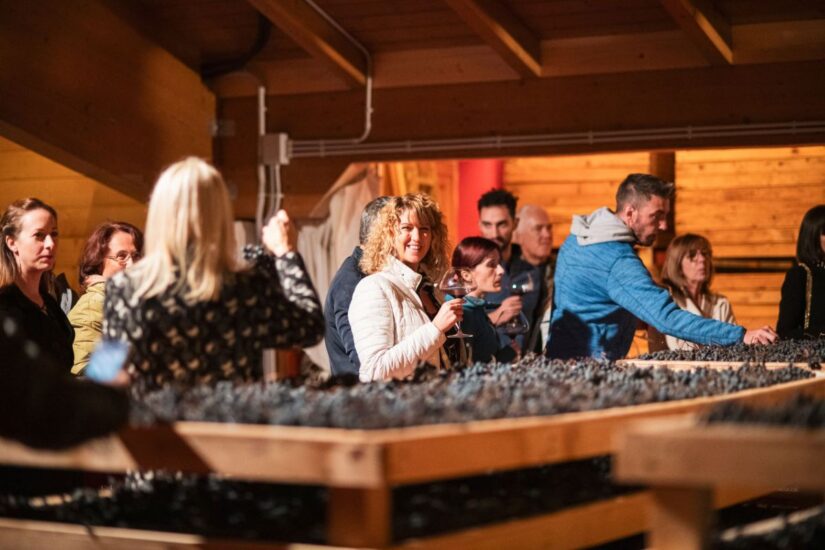
How can businesses transform these findings into a competitive advantage? Alongside the presentation of the research, the Bto panel coordinated by Roberta Garibaldi featured three territorial and supply-chain perspectives. Halil Korkmaz, board member of the Istanbul Convention & Visitors Bureau (Icvb), presented Turkey as a crossroads of cultures, historic routes, and gastronomic traditions. His contribution was linked to the Explorer tribe, highlighting how cultural diversity, interaction with local communities, and territorial discovery can be leveraged to create experiences that appeal to curious travelers looking for venture beyond conventional tourism routes. Representing Campania, Rosanna Romano, director general for Cultural Policies and Tourism of the Campania Region, illustrated the tourism potential of conviviality, pizza, festivals, events, and gastronomic traditions as drivers of travel motivation and tools for enhancing local territories. Meanwhile, Federico Desimoni, general manager of Consorzio Aceto Balsamico di Modena IGP, explored the relationship between quality productions, cultural heritage, and knowledge. The world of Aceto Balsamico di Modena IGP demonstrates how production know-how, processing techniques, vinegar cellar visits, and storytelling rooted in place can be transformed into structured and recognizable tourism experiences, particularly suited to the interests of the Intellectual tribe. Three different perspectives united by a common thread: an agri-food product becomes a tourism asset when its cultural and territorial value is translated into accessible, well-organized experiences that align with the motivations of visitors.
“These findings show how insufficient it is to define food-and-wine tourists solely by age, place of origin, or income level. Motivations cut across traditional demographic categories and often overlap: the same individual may seek discovery, culture, wellbeing, and gratification at different moments during the same journey. For destinations, this means moving beyond simply offering experiences to developing different propositions for different needs - concludes Roberta Garibaldi - the same winery, farm, or destination can therefore appeal to multiple tribes: to the Explorer through direct interaction with producers; to the Partygoer through convivial experiences; to the Intellectual through interpretation and knowledge; to the Flower Child through nature and wellbeing; and to the Hedonist through personalization and exclusivity. The challenge is not to multiply tourism products, but to make the offer more modular, adapting content, services, and pricing to different motivations”.
Copyright © 2000/2026
Contatti: info@winenews.it
Seguici anche su Twitter: @WineNewsIt
Seguici anche su Facebook: @winenewsit
Questo articolo è tratto dall'archivio di WineNews - Tutti i diritti riservati - Copyright © 2000/2026