


Thursday 26th of November 2026 - Last Update: 19:21






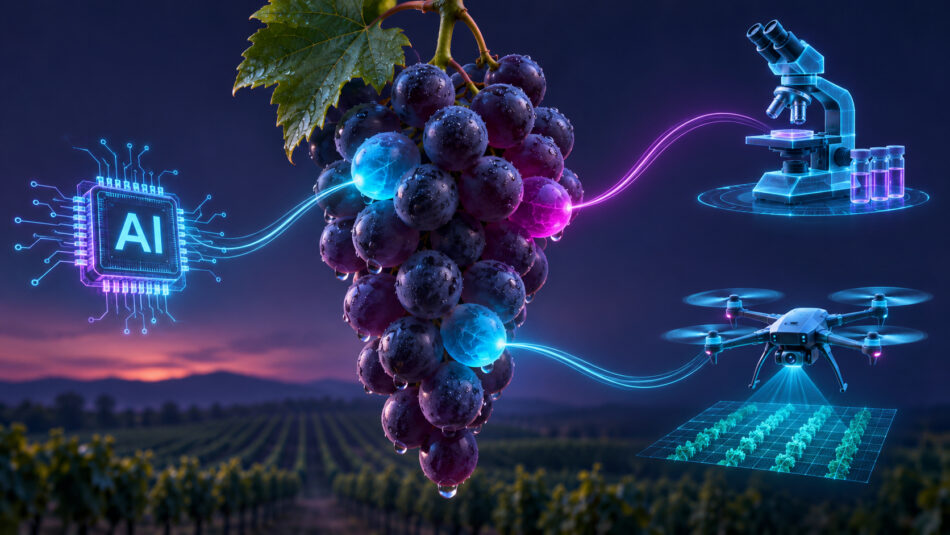
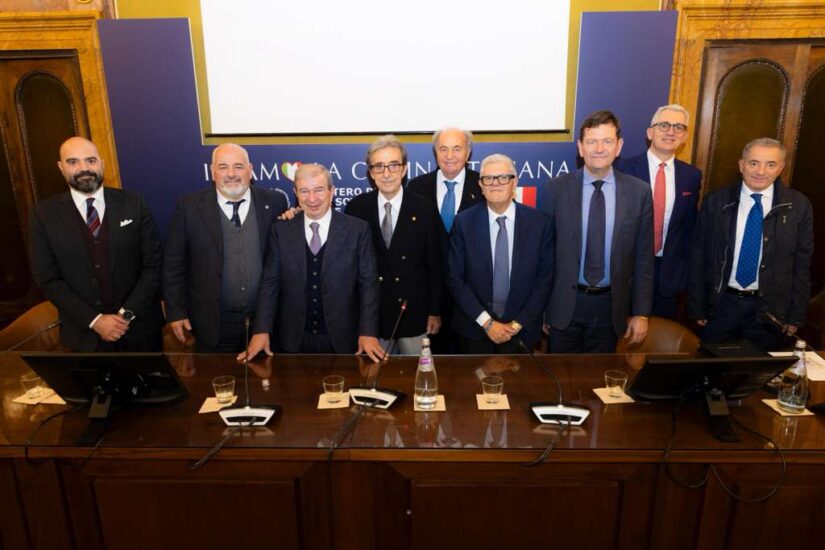
A portfolio of projects focused on innovation in the vineyard, the winery, markets and the frontiers of Artificial Intelligence on a scale perhaps never seen before in the wine sector, backed by a total investment of 27 million euros. Of this amount, 17 million euros comes from public funds under Italy National Recovery and Resilience Plan (Pnrr), mainly dedicated to research activities and managed through Ismea, while 10 million euros is being invested by private companies. The scientific results and tools developed through the initiative will be made available not only to the companies directly involved, but to the entire Italian wine supply chain. This is the vision behind the project launched by Wrt-Wine Research Team, a business network established in 2014 under the leadership of Riccardo Cotarella, one of Italy most acclaimed winemakers. The network includes companies ranging from Famiglia Cotarella to Giuseppe Pagano San Salvatore 1988, from Tenuta di Artimino to the Farchioni family Terre della Custodia, from Villa Sandi to Montezovo, from Di Majo Norante to Tenute del Leone Alato, among others. The initiative will also involve, across several research areas, two leading institutions in Italian food and wine education and culture: the Edmund Mach Foundation of San Michele all’Adige and the University of Gastronomic Sciences in Pollenzo, founded by the late Carlo Petrini, the visionary creator of Slow Food, who passed away in recent months.
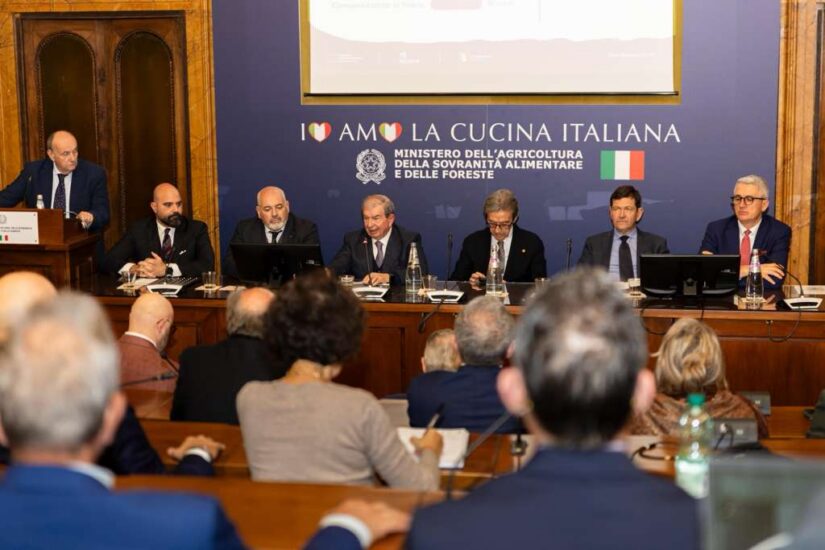
The project also aims to demonstrate that “wine is not an old or outdated sector with nothing new left to offer. On the contrary, through research and innovation it is responding to the attacks it has increasingly faced in recent years”, said journalist Carlo Cambi as he opened today proceedings at the Ministry of Agriculture in Rome. Moreover, the Wrt research program comes at what Wrt president Vincenzo Tassianari described as “a turbulent economic period, also for wine, which enjoyed many years of prosperity but is now suffering from declining sales and rising costs. To relaunch itself, the sector needs more than incremental adjustments: it requires a new strategic, holistic and structural vision involving not only producers, but also distributors, restaurateurs and consumers. In the not-too-distant future, technology will provide each of us with a pre-prepared shopping list, telling us what and where to buy. Wine, too, must take this into account”.
While an initial phase of Pnrr-funded structural investments, covering both facilities and equipment, has already involved several Wrt companies, the program now rests on three main pillars. One of these is “Vineyard-to-Glass”, led by the Edmund Mach Foundation in San Michele all’Adige. “Our objective is to connect grapevine genetic heritage with digital technologies - explained the Foundation director Riccardo Velasco - in order to make the wine supply chain more resilient and sustainable. We will work on the relationship between germplasm, for which we hold Italy largest collection and Europe second largest, and climate, with a particular focus on harnessing vine biodiversity to address environmental stresses. We will also develop the concept of an integrated supply chain, creating a single flow of data from vineyard to winery. As in all other areas of the project, the resulting tools and knowledge will be available to the entire sector. Another key focus will be wine characterization and traceability, through chemical and isotopic markers, real-time analysis of volatile compounds during fermentation, and shelf-life modelling. We will also work on the concept of the “Circular Winery”, particularly the recovery of so-called supercritical fluids and the extraction of carbon and bioactive molecules from grape pomace, which may become alternative revenue streams for wineries. Finally, there is the Academy component: we will organize four seasonal schools at different times of the year, alongside dedicated technical events, to develop new skills for agronomists, winemakers, entrepreneurs and researchers well beyond 2030”, concluded Valasco. The 48-month project, which officially began on June 1st, 2026, aims to achieve a 30% reduction in vineyard water consumption through predictive water-stress models and precision irrigation management, as well as a 70% reduction in production waste through automation, precision agriculture and the valorization of by-products.
Another major pillar is Wrt-Futura, a 24-month initiative coordinated by the University of Gastronomic Sciences in Pollenzo, in partnership with Tenuta di Artimino and Navara, one of Italy most advanced companies in Artificial Intelligence infrastructure. “We are delighted to be part of this project - said Michele Fino, professor at the University of Pollenzo - not least because it was the last project personally approved by our founder Carlo Petrini. Our goal is to scientifically validate the use of Artificial Intelligence in winery management. The results and the code generated through this work will be open access and available to everyone, not just our partner winery Artimino or the companies within the Wrt network. Personally, I prefer to refer to AI as “supercomputing”, because its true role is to process vast amounts of data that can support the decisions made by those managing the business”. The platform is built around three modules. The first, “Smart Vineyard”, aims to optimize agronomic practices while reducing chemical inputs and water consumption through IoT sensors, weather stations, soil probes, satellite and drone remote sensing, and predictive models for Botrytis risk. The second module, “Winery 4.0”, focuses on making winemaking processes more controllable, efficient and reproducible. Its features include a fermentation Digital Twin, real-time monitoring of temperature and density, predictive alerts for stuck fermentations, energy optimisation through Pulse Cooling, a Digital Wine Passport and additional advanced management tools. The third module, “Global Market”, is designed to support commercial decision-making and internationalisation strategies. Among its functions are demand and export analysis, sensory profiling of target markets, and an AI-powered regulatory intelligence system intended to simplify bureaucracy and compliance requirements for wine businesses. Expected outcomes include a 15% to 25% increase in business productivity, a 20% to 30% reduction in plant-protection product use, and a 15% to 20% decrease in water consumption.
A final pillar of the initiative focuses on communication and the dissemination of results. This workstream, which will run for 36 months, has already begun with the launch of a new website, www.wineresearchteam.com, and a new brand identity developed by BerylliumGroup, the communications agency led by Gaetano Grasso. Planned activities include dedicated events during the next three editions of Vinitaly in Verona, as well as nine knowledge-sharing events hosted at Wrt partner wineries.
“Wrt - concluded Riccardo Cotarella - was created to provide the next generation of wine producers, winemakers, agronomists and communicators with the skills they need in today world and in the world of tomorrow, not only for their own benefit but also for the benefit of the companies they work for. It is an important project, also because it helps modernize our wineries. The wine sector is indeed facing a crisis, and it is more complex than ever because it is driven by a multitude of factors. By comparison, even the tragic methanol scandal of the mid-1980s, often cited as the turning point that paved the way for the revival of Italian wine, was easier to manage and overcome. Yet this crisis, too, will eventually pass. There will undoubtedly be a process of selection among companies, and those that emerge stronger and in a better position will be the ones that are best prepared. Many things are changing. We are moving towards a new era for wine, both in Italy and globally. And investments in research and innovation, such as those we have undertaken through WRT, will become increasingly important”.
Copyright © 2000/2026
Contatti: info@winenews.it
Seguici anche su Twitter: @WineNewsIt
Seguici anche su Facebook: @winenewsit
Questo articolo è tratto dall'archivio di WineNews - Tutti i diritti riservati - Copyright © 2000/2026