


Wednesday 23rd of September 2026 - Last Update: 10:55





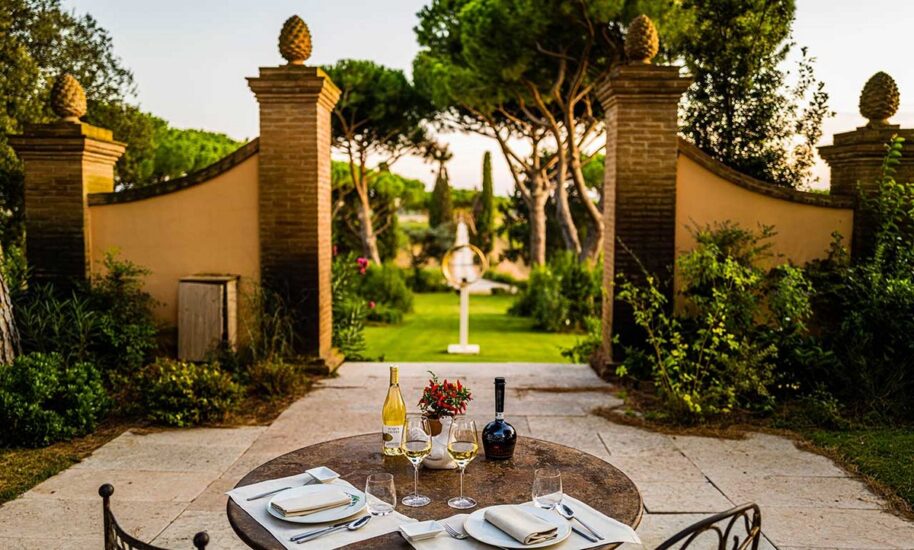
If the quality of made in Italy hospitality has grown, it is also thanks to Italy wineries, which in recent years have invested heavily in wine tourism to diversify their businesses through substantial investments in high-end accommodation facilities and fine-dining restaurants, often inspiring the entire hospitality sector. This is confirmed by the latest selection of the “Michelin Keys”, recently unveiled by the Michelin Guide, which crowned Italy as Europe leading destination with 224 awarded hotels out of 2,832 properties worldwide (with the United States ranking first globally and France following Italy). Notably, 19 of these properties are linked to the wine world (2 wine resorts awarded “Three Keys”, 5 with “Two Keys”, and 12 with “One Key”, including 2 new entries). This selection reflects a new concept of experiential luxury, encouraging travelers to seek privacy, authenticity, wellness, and an increasingly strong connection to the local territory, of which wine is a symbol. It also highlights the importance of food and wine experiences, which continue to be among the main motivations for travel, to the extent that many of these properties also feature Michelin-starred restaurants set among the vineyards.
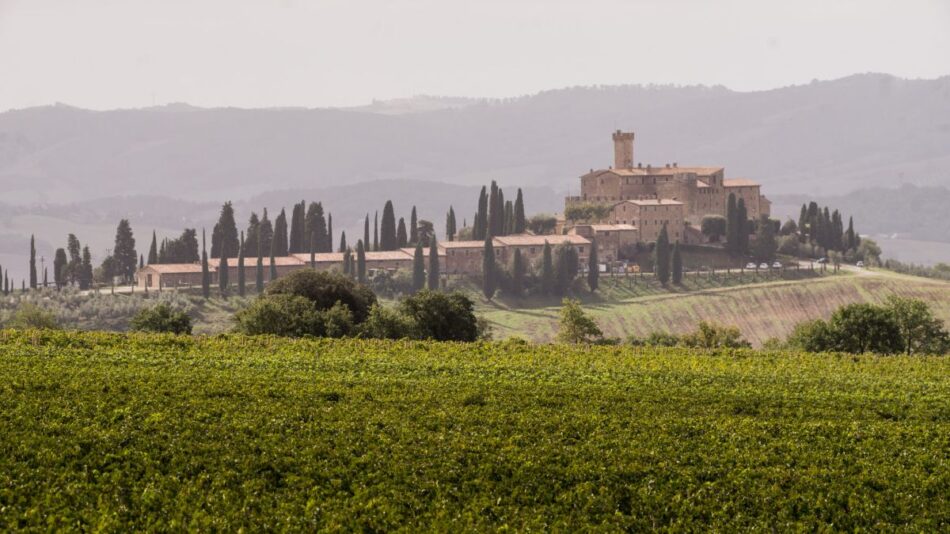
Among them, there is the “Three Michelin Key” property Castiglion del Bosco in Montalcino, part of the Rosewood Hotels group. The estate includes 42 suites and 11 private villas, a spa, Italy only private golf club, and the historic Castiglion del Bosco winery with its Brunello di Montalcino vineyards. It is also home to the two-Michelin-starred restaurant Campo del Drago, led by chef Matteo Temperini, whose kitchen is supplied by an extensive vegetable garden. According to press rumors, the resort is also expected to host the highly private wedding of Damiano David, lead singer of Måneskin, and American actress Dove Cameron in the coming days. Another example is Borgo Santo Pietro in Chiusdino, a 5-star boutique hotel owned by a Danish entrepreneurial couple. The estate features the Michelin-starred restaurant Saporium and the more casual Trattoria sull’Albero, set within grounds cultivated according to organic farming principles, including vegetable gardens, fields, ornamental gardens, woodlands, and, naturally, vineyards.
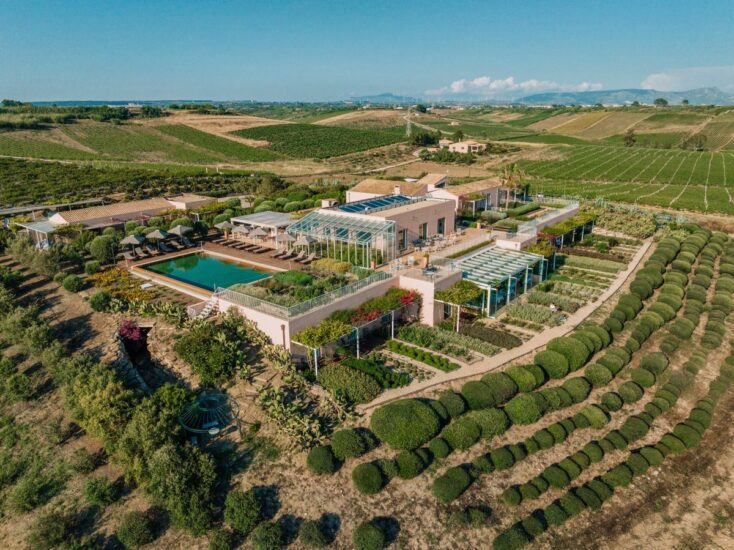
Tuscany is also home to several “Two Michelin Key” wine resorts, beginning with Borgo San Felice Resort Relais & Châteaux, owned by the Allianz Group. Its winery is an iconic producer in the Chianti Classico region, and the resort includes Il Poggio Rosso, a restaurant awarded one Michelin Star and a Michelin Green Star. The restaurant is part of the culinary universe of Enrico Bartolini, Italy most Michelin-starred chef, with Sakalis Stelios serving as resident chef. Castelfalfi, meanwhile, is located in the ancient medieval village of Montaione. Owned by Indonesian entrepreneur Sri Prakash Lohia - the estate stretches across vineyards, olive groves, farmhouses, a wellness spa, and a magnificent hotel. Also in Tuscany, there is Il Borro, located in the Valdarno region and owned by the historic Italian fashion family Ferragamo. This large organic farm estate includes a medieval hamlet, historic suites and villas, no fewer than four restaurants, including L’Osteria del Borro and Il Borro Tuscan Bistro, both headed by executive chef Andrea Campani. The property also features vegetable gardens, olive groves, an olive mill, livestock farms, and beehives, all centered around the winery that has helped make the area wines famous throughout the world. The Sanoner family, owners of the biodynamic Sanoner Winery in the Val d’Orcia and of the Adler hospitality group, also earned recognition. They received “Two Michelin Keys” for the striking Adler Spa Resort Sicilia and “One Michelin Key” for Adler Lodge Ritten in Soprabolzano.
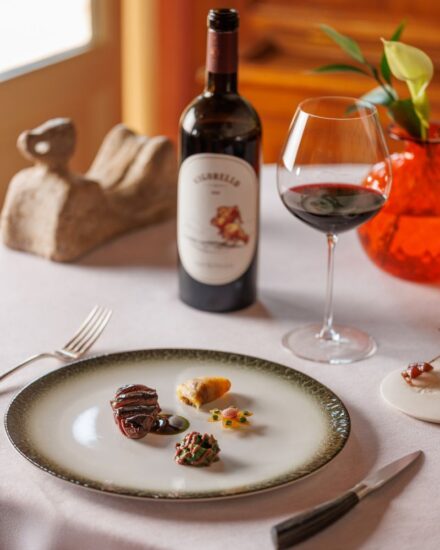
Tuscany also dominates among the “One Michelin Key” wine relais. These range from Castello Banfi Il Borgo Relais & Châteaux, back in Montalcino, which, with its 14 rooms, villas, and suites, a spa, two restaurants including the Michelin-starred Sala dei Grappoli led by chef Domenico Francone, a wine shop, a balsamic vinegar cellar, and the Glass Museum, has long been one of the benchmarks of wine tourism in Italy as well as a milestone in the history of Brunello di Montalcino; to Villa Le Prata - Residenza del Vescovo, an elegant wine resort still nestled among the Brunello vineyards, created through the restoration of a 19th-century hunting lodge. L’Andana is also featured, the pioneering and exclusive resort of the Terra Moretti Group, located on the Tenuta La Badiola estate. Surrounded by unspoiled nature between the sea of Castiglione della Pescaia and the rolling hills of Mediterranean scrubland, among umbrella pines, cypress trees, vineyards, and olive groves, it is home to the Michelin-starred restaurant La Trattoria di Enrico Bartolini, led by resident chef Gabriele Verri, in the heart of the Maremma region. The Maremma is also home to Castello di Vicarello, a true “bon refuge” in Cinigiano, and Conti di San Bonifacio, a wine resort and winery in Gavorrano. Both reinterpret local cuisine with a contemporary approach, paired with white and red wines produced from vineyards overlooking the sea. Villa Petriolo, in Cerreto Guidi, is another Tuscan property combining a luxury hotel with an organic farm and winery. Emilia-Romagna, meanwhile, boasts a new entry among the “Michelin Keys 2026” properties associated with wine: Relais Roncolo 1888 in Quattro Castella, in the heart of Italy Motor Valley. The wine resort is part of the historic Venturini Baldini estate, where, alongside Lambrusco, traditional balsamic vinegar is also produced. Finally, there is wine-growing Sicily, where winery hospitality is expanding in parallel with the growing international reputation of the island wines. Notable pioneering and outstanding examples include La Foresteria in Menfi, owned by Planeta, one of the families behind the “renaissance” of Sicilian wine; the Wine Relais of Feudi del Pisciotto, an 18th-century palmento (traditional wine press) in Niscemi belonging to the Domini Castellare group; the organic Relais & Châteaux Monaci delle Terre Nere, immersed among the vineyards and the enchanting landscape of Mount Etna; and Baglio Oneto dei Principi di San Lorenzo, a luxury wine resort in Marsala owned by one of Italy most noble wine-producing families, which is also a new entry among the “Michelin Keys 2026” selection.
Copyright © 2000/2026
Contatti: info@winenews.it
Seguici anche su Twitter: @WineNewsIt
Seguici anche su Facebook: @winenewsit
Questo articolo è tratto dall'archivio di WineNews - Tutti i diritti riservati - Copyright © 2000/2026