


Saturday 21st of February 2026 - Last Update: 18:50






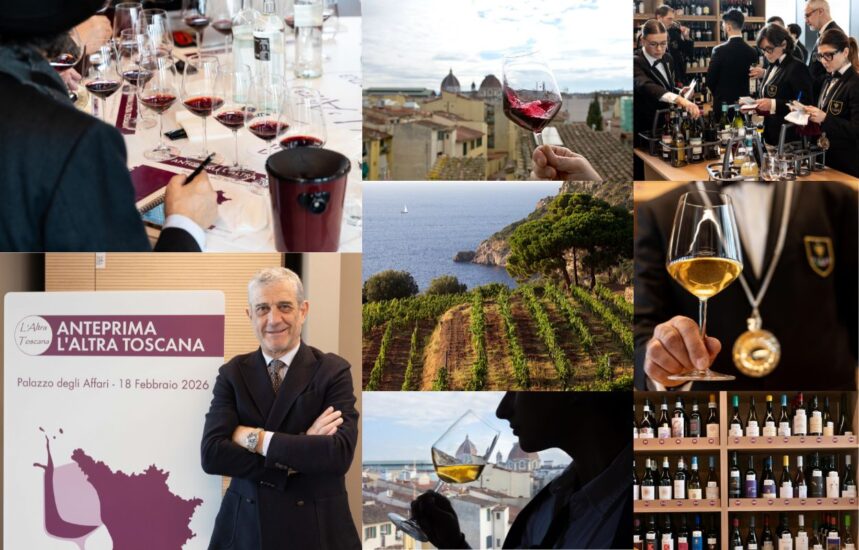
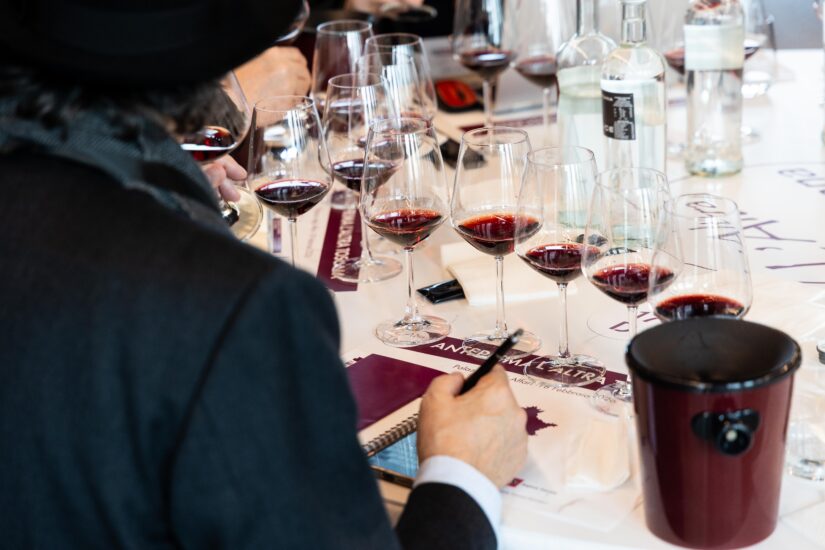

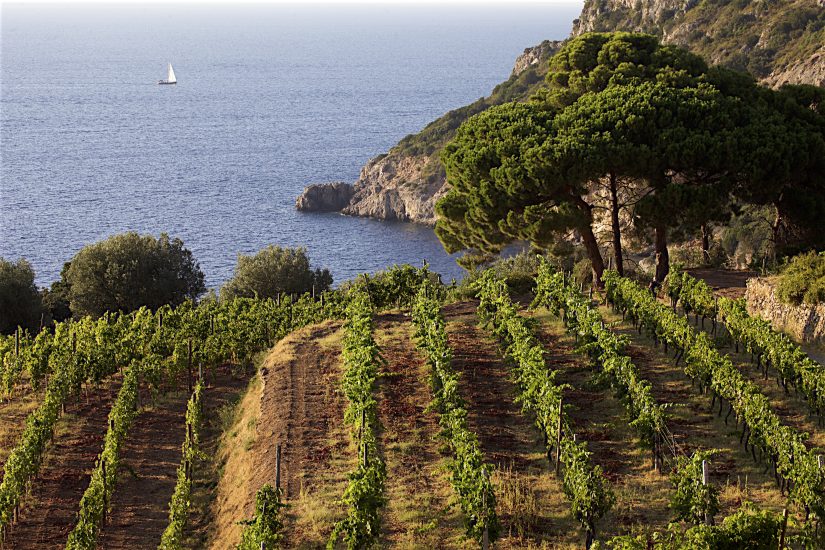
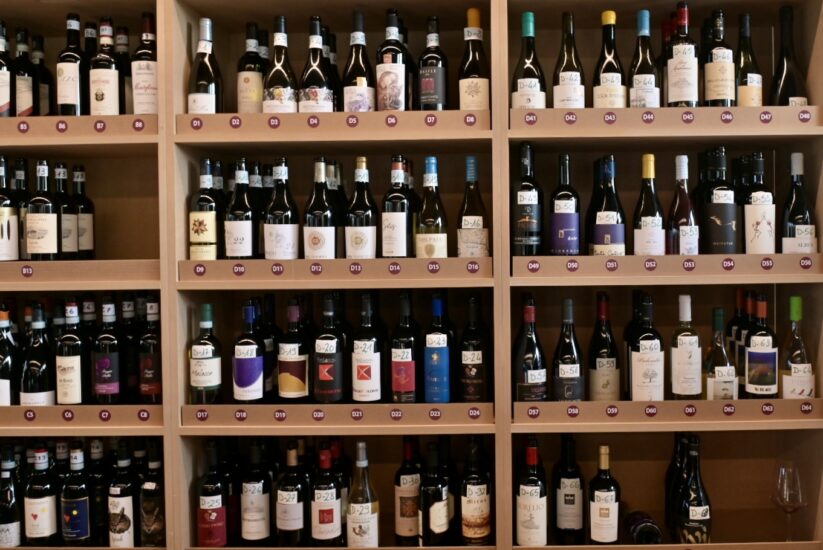
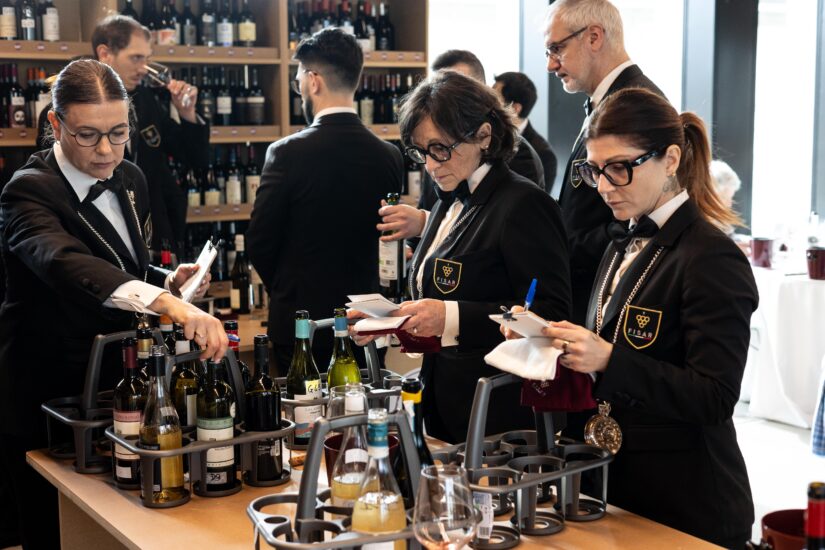
Beyond the major, well-established, and widely known regional wine denominations, Tuscany, stretching from the Tyrrhenian coast to the foothills of the Apennines, can offer, like few other regions, a mosaic of diversity in the glass, where grape varieties, whether single-varietal or blended, and very different territories all find expression. And, so, the so-called “L’Altra Toscana” - “The Other Tuscany”, the third “territory” of the 2026 “Anteprime di Toscana” - “Tuscany Previews” promoted by the Tuscany Region and the Florence Chamber of Commerce (together with PromoFirenze and Fondazione Sistema Toscana) presented wines from the most recent vintages.
After Vino Nobile di Montepulciano and Chianti Classico, it was the association which brings together the lesser-known, yet increasingly intriguing side of Tuscan wine production which showcased, from the heart of Florence, an extremely varied face of Tuscany, made up of a kaleidoscope of landscapes, grape varieties, more or less familiar labels, wines, and styles. “All together to tell the story of a different Tuscany of wine - explained Francesco Mazzei, head of the association L’Altra Toscana and president of the Consortium for the Protection of Maremma Toscana Wines - but one that is still important, since it represents almost 40% of all Tuscan wine production. It is made up of denominations which still have much to say and which pique market interest with their diverse offerings and increasingly high peaks of quality. We are here as part of the orchestra called Tuscany: we may not be playing in the front row, but without us the concert wouldn’t take place”.
An example of a collective choice which allows the more hidden - and perhaps for this reason more authentic - territories with a great winemaking tradition to present themselves together and “work as a team”, defying Tuscany proverbial parochialism. In the 2026 edition, 8 Consortia participated (out of the 12 belonging to the association: Maremma Toscana, Carmignano, Montecucco, Chianti Rufina, Cortona, Suvereto and Val di Cornia, Orcia, Terre di Casole, Terre di Pisa, Vino Toscana, Valdarno di Sopra, and Colli Lucchesi), representing 12 denominations with 238 labels available for tasting from the 131 wineries involved: these numbers reflect all the regional geographical “designs” from the mountains of Chianti Rufina and Montecucco to the hills of Val d’Orcia, Suvereto, Val di Cornia, and Terre di Casole, and the coastal areas of Maremma Toscana; further outlined by the broader regional indications Toscana and Costa Toscana. In the glass, a strong representation of the grape varieties most widely grown across the Grand Duchy: the unmissable variety for excellence Sangiovese, of course, but also Ciliegiolo, Grenache, Pugnitello, Mammolo, Vermentino Nero, as well as Trebbiano, Ansonica, and Vermentino, not to mention the international varieties Merlot, Cabernet, and Syrah. And even more international grapes like Petit Verdot, Cabernet, Merlot, Chardonnay, and Viognier. Vinified as single varietals or blends, and expressed as white, red, rosé, and a few sparkling wines.
The heterogeneity which characterizes this Tuscan story in a glass can also be seen in the figures it brings with it. In terms of scale, the Toscana Typical Geographical Indication - IGT (created in 1984 as the “Ente Tutela Vini della Toscana Centrale” and renamed “Consorzio Vino Toscana” in 2019) accounts for just over 36% of the region bottled volume: average production over the last five years - 77% red wines, 18% white wines, and 5% rosé wines - corresponds to 91 million bottles (a fluctuating figure, ranging from 77,878,464 bottles in 2017 to 104,745,111 the following year, stabilizing around 83,143,733 in 2025), supported by an average vineyard area of 13,600 hectares (also variable, ranging from a low of 11,680 in 2017 and 2023 to almost 15,000 hectares in the last two years). The average production value over the last five years exceeds 458 million euros, of which 31% is absorbed by the Italian market, while the remaining 69% (i.e. 62.8 million bottles) is exported, with Europe taking 46%, followed by the United States at 33% and Asia at 6%. The initial 70 members in 2019 have now grown to 450, reaching over 1,700 when considering growers belonging to cooperatives. The Maremma Toscana Consortium, on the other hand, founded in 2014 by 9 producers, now counts 475 members, including 343 growers, 131 producers, and 1 bottler. Producers of Maremma DOC number 950, with 2,248 hectares registered (slightly lower than the five-year average of 2,400 hectares) compared to a total viticultural potential of 9,400 hectares in the province of Grosseto. Of these, 44.5%, corresponding to around 4,200 hectares, are organically farmed. Bottled wine production in 2025 reached a historic record of over 56,000 hectoliters (+0.5% compared to 2024, while Tuscany overall recorded -2.4% compared to 2024), up from 55,923 in 2024 and 51,709 in 2023: an increase, however, accompanied by a 10% drop in average price. The main market is Italy (61%, of which 64% remains within Tuscany, one of the rare cases of a “prophet in his own land”), while the remaining 39% goes to the United States and Canada, followed by Switzerland, Germany, and the United Kingdom, and finally the Netherlands, Sweden, and China. Francesco Mazzei, president of the Consortium for the Protection of Maremma Toscana Wines and of the L’Altra Toscana Association, stated: “2025 was a transitional year, marked by strong market fluctuations and a general climate of uncertainty. Nevertheless - commented Francesco Mazzei, president of the Consortium for the Protection of Maremma Toscana Wines - the denomination showed good resilience, driven by Vermentino, a flexible production structure, and increasingly recognizable positioning. We look to 2026 with confidence, thanks to a strategy strongly oriented toward our key foreign markets”. The Suvereto and Val di Cornia Consortium represents the southernmost area of the province of Livorno, a link between the Pisan and Grosseto Maremma: re-established in 2021, reflecting the renewed desire of producers to work together to promote the territory, it has recently updated its procedural guidelines. Originating in 1989 as Val di Cornia DOC, it obtained DOCG recognition for Suvereto in 2011, along with Val di Cornia Rosso DOCG. The Suvereto DOCG now allows, from September 2025, the inclusion of Syrah and Cabernet Franc, alongside the existing Sangiovese, Cabernet Sauvignon, and Merlot, with the option to vinify all of them as single varietals. Around 25,000 bottles were produced in 2025, while the latest harvest totaled 2,200 hectoliters claimed, corresponding to a potential output of around 300,000 bottles. The consortium 28 member wineries collectively cover nearly 820 hectares, most in the municipality of Suvereto (over 346). Cabernet Sauvignon (156.8 hectares), Sangiovese (148.7 hectares), and Merlot (147.5 hectares) are the leading varieties (especially in Suvereto), closely followed by Vermentino (102.8 hectares), particularly in Campiglia Marittima and Monteverdi), traditionally grown in the area but curiously not included in the newly updated regulations. The Montecucco Wine Consortium, founded in 2000, saw the Montecucco DOC approved in 1998 and the DOCG in 2011. The denomination - extending from the slopes of Mount Amiata toward the Tyrrhenian Sea - now has 68 members and covers 500 hectares of registered vineyards, with 800 hectares potentially eligible, producing about 1 million bottles per year. These figures could grow, as the full potential - if all vineyards were dedicated to the DOC and DOCG - would reach 800 hectares and 5 million bottles. Organic certification is extremely widespread: the latest sampling (June 2024) reported 95% for the DOC and 91.5% for the DOCG. Alongside this focus on sustainability and agricultural landscape integrity, there is strong dedication to wine tourism: 100% of wineries are equipped to host visitors. Key markets include central-northern Italy (35%), followed by four main foreign markets: Switzerland (30%), Germany (12%), the United States (8.5%), and Benelux (8%). Given the variety of territories, grape varieties, winemaking approaches, and vintages present, offering a structured commentary on the harvests and denominations is difficult, as it is cataloguing the wines tasted. The approach currently adopted by the L’Altra Toscana Association is a dual list: one divided by denomination, and another divided into five “paths”: Sangiovese, international varieties, other native varieties, Sangiovese blends, and white wines. Overall, the wines appeared focused and well-defined, with particularly interesting expressions among the white wines from the Pitigliano area, the Sangiovese from Orcia, and the international varieties near the Tuscan coast. The WineNews tasting team mostly followed the “paths” proposed by the association grouping their selection of top wines into three categories: white wines, native varieties and blends, and international varieties. Here are the wines which impressed us the most…
White wines
Cantina della Luce, Bianco di Pitigliano Fattucchiero 2024
Strawberry blond in color, it smells of ripe, juicy yellow fruit, with hints of Mediterranean scrub: a full-bodied, sunny wine with a long, savory, clean finish.
Tenuta Roccaccia, Bianco di Pitigliano Poggio Stellato 2024
Initially shy, it slowly reveals its generous aromatic bouquet of cedar, broom, and flint: on the palate, it maintains its liveliness and fruity character.
Sassotondo, Bianco di Pitigliano Superiore Vigna Isolina 2019
A golden, layered wine: beeswax, tamarind, citrus, cypress, resin, and candied cedar anticipate a tannic and savory palate, fruity and balsamic, which closes on sweet notes of barley candy.
PoggioArgentiera, Maremma Toscana Vermentino PoggioArgentiera 2025
Aromas of white flowers and lilac, with the sweetness of white-fleshed fruit giving flavor to a full and savory sip, which closes on more yellow tones of cedar and yellow peach.
San Felo, Maremma Toscana Vermentino Le Stoppie 2025
It has a citrus character that refreshes and sharpens the nose and a sweet taste of pear and white melon, with a burst of catmint in the peppery smoothness.
Collemassari, Maremma Toscana Vermentino Melacce 2025
Almost glacial on the nose, with white notes of albedo, white almond, and white melon, it gains energy on the palate, with plenty of adherence, then minerality and a fresh, sweet finish of sage and chamomile.
Cantina I Vini di Maremma, Maremma Toscana Vermentino Albarese 2024
Saturated, intense, and sweet aromas of vanilla, apple, pear, and white melon with hints of iodine and rock; the taste is just as impressive, so juicy and gastronomic.
Fattoria di Magliano, Maremma Toscana Vermentino Pagliatura 2024
Hay, chamomile, apple, and white almond are the aromas of this aptly named wine: the palate has a savory and peppery grip, which releases sweetness with a caramelized pear flavor.
Belguardo-Mazzei, Maremma Toscana Vermentino Superiore Belguardo V 2024
It has the gentle balsamic notes of the Maremma dunes, combined with the sweetness of ripe white fruit: the palate is rich in pulp but taut, leading to a floral and clean finish of raw almond.
Gagiablu, Maremma Toscana Vermentino Superiore 2024
A decidedly yellow wine, in color, in aromas of beeswax, cedar, and melon, and in flavors, to which balsamic and mineral notes are added: the texture is harmonious and tasty.
Sangiovese and native grape varieties
Frescobaldi, Chianti Rufina Vigna Montesodi Terrælectæ
Riserva 2022 Violet tones in the bouquet with hints of undergrowth, this wine is dense and warm but elegant, savory on the palate with good adherence, giving way to a floral and clean finish.
Villa Travignoli, Chianti Rufina Vigna Colonneto Terrælectæ Riserva 2022
This Chianti Rufina Riserva is also refined and elegant, generous with flowers, cherry, mint, and orange: it remains intense and flavorful on the palate with red fruit, balsamic, and citrus notes on the finish.
Basile, Montecucco Sangiovese Cartacanta 2022
Dark and dense, yet clear, it is fleshy and slightly bloody, with notes of camellia and pomegranate; savory and flavorful on the palate, it adheres with juice and a vegetal finish.
Vitabella Toscana, Montecucco Sangiovese Ceppicaio 2021
Cherry, violet, and rose, with a hint of damp undergrowth and pomegranate: this glass makes you want to take a bite, anticipating a savory and balsamic sip with a long floral and citrus finish.
Marco Capitoni, Orcia Sangiovese Frasi 2022
Deep nose of cherry jam and plum, bay leaf and myrtle with earthy notes, red and black flowers: the pulpy sip has a decisive grip, which then releases balsamic and floral flavors.
Fabbrica Pienza, Orcia Newton Rosso 2022
Decidedly lively sweet aromas of pomegranate and cherry, flowers and Maremma scrubland, consistent with the flavors of a fleshy sip, punctuated by tannins and acidity.
Ammannati Lisa, Terra di Casole Sangiovese Etichetta Grigia 2022
Small berries with cherry, fresh spices, and balsamic notes of undergrowth anticipate a fruity and rocky palate, with tannins that are still rough but flavorful with strawberry and Mediterranean scrub.
Sequerciani, Maremma Toscana Pugnitello 2022
This Pugnitello has vinous notes and violet and balsamic developments, before spreading with a fine texture but intense spicy and balsamic flavors.
Cincinelli, Toscana Mammolo Il Santo 2022
Strawberry and rosemary flowers, light bloodiness and sweet spiciness, for a fresh, clear, savory, and citrusy palate, tight but juicy, sweet in the clean and floral finish.
Francesca Pascale, Tuscany Vermentino Nero I Pilastri 2024
There is sweet violet with mint, small berries and fresh spices: but above all, there is a juicy sip of blackberry, bramble and camellia; long, long and thirst-quenching.
Blends and international grape varieties
Nittardi, Maremma Toscana Rosso Ad Astra 2023
A dense, purple wine with cherry jam, sweet spices, and aromatic herbs. Clean on the finish, it arrives with a thick texture of fruit and purple flowers.
Le Pianore, Montecucco Rosso Tiniatus 2021
A floral and vegetal Montecucco, fresh and clear, with sweet spices and hints of Maremma dunes: followed by a much thicker sip, with sensations of iodine, marine savoriness, and floral delicacy.
Petra, Toscana Rosso Hebo 2024
An instructive example of vegetal notes of bell pepper, combined with the sweetness of violet and black cherry; the palate is also sweet with cherry and camellia, vanilla, but fresh with bell pepper and smooth.
Antinori, Toscana Rosso Villa Antinori 2023
This red has a sweeter and less vegetal interpretation, yet it is deep in flavor and decisive in its violet adherence.
Tenuta Moraia, Toscana Rosso Perpiero 2021
Spicy, dark, and dense on the nose, with notes of bell pepper, black cherry, and undergrowth; dense and savory on the palate, with black and red fruit pulp, wilted flowers, and a fresh finish.
Bragaglia, Maremma Toscana Syrah Fonte di Bestiale 2023
It has clear aromas of pepper, cherry, rose, and tomato leaf, alternating sweet and vegetal notes that give it rhythm. On the palate, it adheres with savory flavors and the juiciness of a cherry in candy.
Bulichella, Suvereto Rosso Montecristo 2020
A wine with excellent balsamic and spicy freshness, well integrated with sweet notes of cherry and lilac and white flowers; spicy on the palate, it is juicy, fruity, and floral, long and balanced.
Tenuta di Biserno, Toscana Rosso Cuvée Eva 2023
Components and aromas embroidered with finesse in this red wine, which tastes of forest fruits and balsams, carried by a savory sip, with juicy and peppery tannins, sweet with blackberry candy.
Vallepicciola, Toscana Rosso Migliorè 2021
A wine dense with red fruit jam, candy-like violets, blackberries and brambles, and notes of undergrowth; the palate is textured but vinous, flowing sweet and spicy, with a decidedly persistent finish.
Brancaia, Toscana Rosso Il Blu 2022
Crisp yet warm, purple yet red, balsamic yet spicy: Il Blu di Brancaia is rich in contrasts, juicy and spicy, balsamic and sweet on the palate.
Copyright © 2000/2026
Contatti: info@winenews.it
Seguici anche su Twitter: @WineNewsIt
Seguici anche su Facebook: @winenewsit
Questo articolo è tratto dall'archivio di WineNews - Tutti i diritti riservati - Copyright © 2000/2026