






From simplification to crisis measures and clarity on the definition of dealcoholized wine, the EU “Wine Package” incorporates many of Coldiretti requests to protect a flagship sector of Italian agri-food excellence, which is currently facing a delicate moment among U.S. tariffs and consumption tensions”: this is the comment from the agricultural organization following the unanimous approval by the EU Agriculture Committee, in Brussels, regarding the instrument designed to project the sector, grappling with one of its most difficult periods into the future. It represents a new step after the provisional agreement between the Council and the European Parliament and the green light from the Special Committee on Agriculture, before the final vote expected during the next plenary session in February of the European Parliament, which will confirm its implementation. This marks an important shift for Italian farmers, for whom it will now be essential to ensure adequate resources within the new European policies to make its implementation truly effective for companies.
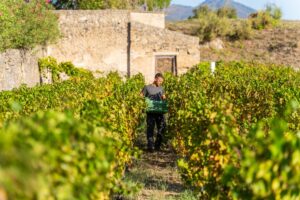
The Italian wine sector, recalls Coldiretti, represents one of the pillars of the national agri-food economy, with total revenues reaching 14.5 billion euros. This heritage is managed by 241,000 wine businesses spread across 681,000 hectares, with Veneto, Sicily, and Puglia leading in terms of area - corresponding to about 532,000 hectares - is destined to Gi (65% PDO and 14% PGI) in addition to an unparalleled biodiversity worldwide thanks to 570 indigenous native varieties.
According to Coldiretti, the green light by the Agriculture Committee of the European Parliament for the Package, following the agreement reached in December, moves toward transparency and the fight against bureaucracy. It ranges from the new authorization regime, which by extending timelines allows for greater agronomic and commercial rationality, to the extension of promotional program deadlines. Ensuring clearer labeling for dealcoholized wines is equally important, particularly regarding the use of the terms “alcohol-free” and “reduced alcohol” with more straightforward demarcation lines for both producers and consumers, as well as the provision of uniform crisis measures, which can be activated at the discretion of each Member Stat
Copyright © 2000/2026
Contatti: info@winenews.it
Seguici anche su Twitter: @WineNewsIt
Seguici anche su Facebook: @winenewsit
Questo articolo è tratto dall'archivio di WineNews - Tutti i diritti riservati - Copyright © 2000/2026