


Monday 14th of September 2026 - Last Update: 17:49





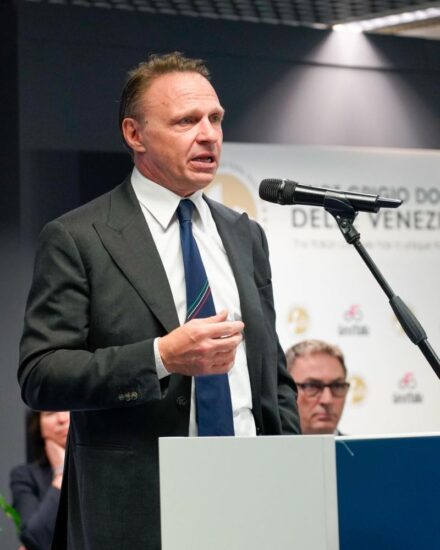
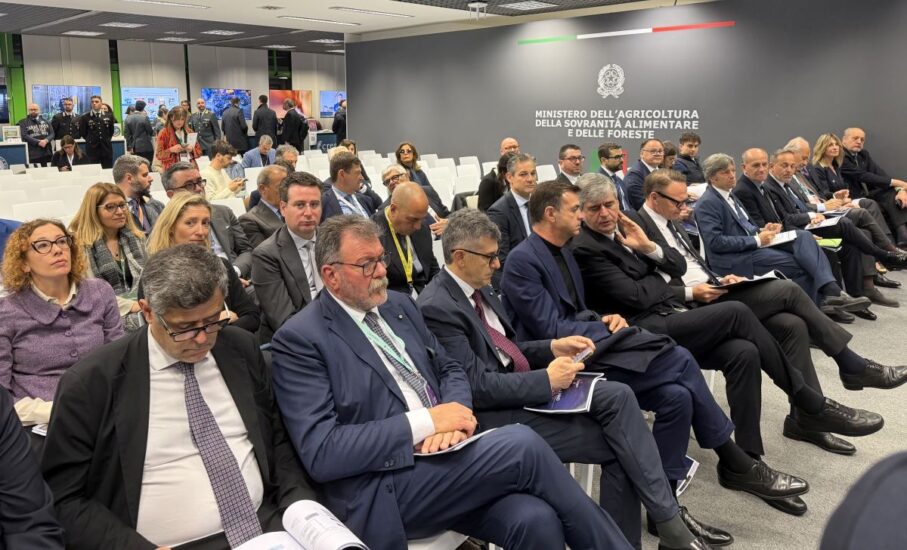
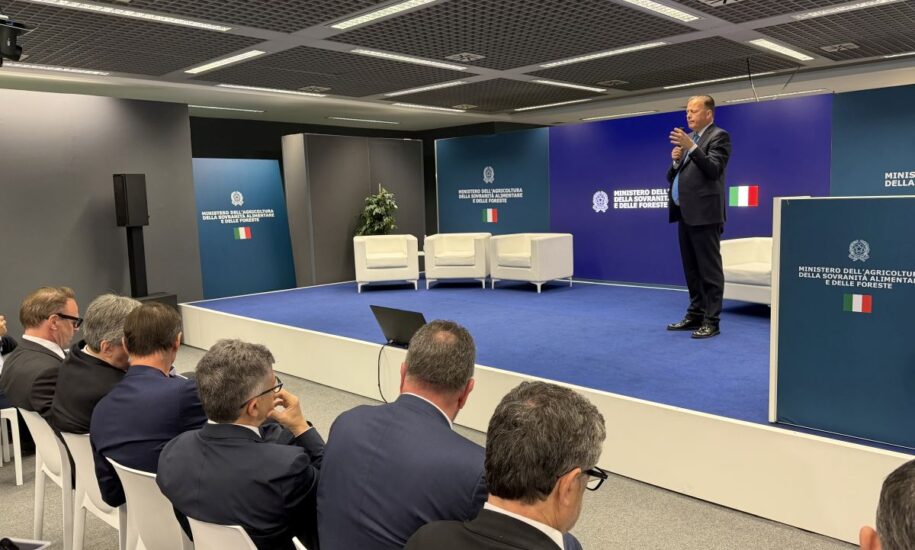
An Italian wine industry aware of the difficulties of the current period, yet also looking at the many opportunities opening up in new markets around the world, with the awareness that certain measures to curb production (whether people speak of uprooting vineyards or distillation) will need to be considered, but that there is still room to grow in some “new” parts of the world and to consolidate more traditional markets. This can also be achieved thanks to the joint efforts of businesses and institutions, first and foremost the Ministry of Agriculture and Ice, by promoting Italian wine more effectively worldwide, including through an Ocm Wine Promotion decree better suited to the needs of companies, with less bureaucracy and more simplification, or by continuing to invest, possibly also with an “international” perspective in the institutional campaign supporting the culture of Italian wine launched in recent weeks by the Ministry of Agriculture (with which we have had direct discussions), which in its first phase reached more than 71 million contacts. These were the messages emerging from “Tavolo Vino” - “Wine Roundtable” convened by the Minister of Agriculture, Francesco Lollobrigida, today at Vinitaly 2026 in Verona, on the day of the visit by Prime Minister Giorgia Meloni (whom WineNews interviewed).
Here, the entire supply chain, as explained by the coordinator of the Wine Roundtable Piero Mastroberardino (Federvini), thanked Minister Lollobrigida together with the president of Ice, Matteo Zoppas, for their “extraordinary closeness and attention to the sector” also stressing how the “continuity of government” is an important, positive, and also unusual element in being able to implement and give effectiveness to the projects put in place. This was echoed by president of Coldiretti Ettore Prandini, president of Confagricoltura Massimiliano Giansanti, and president of Cia-Agricoltori Cristiano Fini, as well as president of Federdoc, Giangiacomo Gallarati Scotti Bonaldi, and president of Copagri Tommaso Battista.
And while everyone highlighted the important role of institutions and politics, it was president of Unione Italiana Vini (Uiv) Lamberto Frescobaldi, who reiterated that “we companies must do our part. There are major resources made available by the Ministry, Ice, and so on, but we must reduce the supply currently on the market. There is a lot of wine. Today, the 42-44 million hectoliters of wine produced at each harvest can’t be absorbed by the market at this time. It’s not that the world has changed, it’s that there are fewer young people. This is an undeniable fact. Consumption has become much more occasional, at 61%, and we must take note of it. Then there are many countries around the world that were not producers before and have now become so, and therefore have become our competitors”.
For his part, president of Assoenologi Riccardo Cotarella, stressed that what should continue to give confidence to Italian wine is the “great quality we have achieved, and which will be even better tomorrow. Thanks to Minister Lollobrigida for what he is doing; it would be a real shame if we, as producers, winemakers, commercial operators, and administrators, didn’t seize the opportunity to make concrete use of what is being made available to us. We must be practical, tell the story of the beauty and goodness of wine, and fight against those who say that wine is the cause of all evils, especially at a time when wine consumption is declining while spirits consumption is increasing”.
Work at the EU level will also be fundamental, as recalled by Luca Rigotti, president of the Wine Sector of Confcooperative and also of Copa-Cogeca. “We must act as a system, in promotion but also within European institutions. Within the sector there are critical issues, and we must have the courage to address and resolve them, because we can’t only ask for support and help, which are very important, but we must resolve our internal problems ourselves. The work we are doing in Europe is in full synergy with the Ministry; this crisis too will pass, but certainly we must roll up our sleeves”.
Instead, focusing in particular on simplifying the Ocm Wine framework for small wineries was Rita Babini, president of Fivi, the Italian Federation of Independent Winegrowers. “I would like to add a special thank-you because this promotional campaign has restored dignity to the wine product and also to us producers. The producers I represent are mostly small and micro enterprises that, however, are structured in an extremely distinctive way across the entire territory. Therefore, the facilitation introduced in the Ocm measure for Third Countries allows us to become more active and to continue investing. Because we entrepreneurs are like this: we want to keep investing and affirming our strength through a glass of wine”.
Italian wine must also place strong emphasis on wine tourism, as promised by the newly appointed Minister of Tourism Gianmarco Mazzi. “It is a resource we must invest in heavily. In the meantime, however, the message I will convey, also after having attended the conference with professor Giovanni Scapagnini and the Veronesi family, is that wine, according to scientific data, is good for you, with a consumption that I will not call moderate or responsible, terms which in my view evoke a certain concern, but rather appropriate. I will commit strongly to wine tourism because it truly seems to me a solution, one might say the “Columbus egg” to also address the problem of overtourism and the need to bring tourists to the many lesser-known places in Italy, which are often linked to wine”.
The Minister of Agriculture, Francesco Lollobrigida brought the Roundtable to a close, taking stock of what has been done and outlining the road map for the future. “We must produce well, protect the sector, and promote it. On production, perhaps we produce too much; we need to work on quality, think about course corrections, and understand that there are different levels of supply. Some offerings manage to find a response in the market, others are either outdated or below the quality required for the Italy System to remain competitive, because there are other producers at the global level. And if you do not focus on a perceptible quality which distinguishes you from others, price becomes the dominant factor. The Italy System is a costly system: we must comply with environmental regulations, labor regulations, and we have significant taxation. Therefore, if we compete only on price, we will struggle to remain strong in the market. Protection - said Lollobrigida - is the other important element. Protection from the criminalization of wine, which is however being overcome, as we have said many times in many initiatives, supporting the message with science that wine, if consumed properly, not only is not harmful, except in cases of certain pathologies, but can also be beneficial. Then, we must promote. In this sense, the numbers from the first wine campaign are exceptional; you have seen them, and they will also mark the beginning of a system-wide campaign. We have not done this only for wine, because this kind of work is not being done only for wine: we have done it for pasta, we will do it for olive oil, we will do it for dairy products, because the entire Italy System must be promoted in a synergistic way as representative of a qualitative model. We must work even more, as we do with president Zoppas, on promotional capacity, to grow a value-added chain that must then find an increasingly fair distribution between production and trade”, said Lollobrigida, also underlining important measures introduced for the entire agricultural sector, such as agrivoltaics, which the government intends to further implement and which could bring savings of several billion euros to businesses in terms of energy costs. “We have also worked on logistics, because reducing transport costs is another factor that enables you to reach markets faster and at a lower cost, even compared to competitors who have worked very quickly in this area. We are doing this also by trying to coordinate markets, and we are working on a trade-fair coordination system to avoid one fair “cannibalizing” another, because the entire Italian trade-fair system, together, must promote our country and eventually compete with other European and global trade-fair systems. There are many elements, but today is not the day to explore them all in depth. Nevertheless, they can make us even more capable of achieving the strategic goal of protecting the quality system for ourselves, for our businesses, and for our economy. And allow me - stated Lollobrigida - also for a model of civilization that we believe is valid and that others, perhaps even more than we do, consider valid, as the recognition of Italian cooking as Unesco Intangible Cultural Heritage is no coincidence. It is not easy for Unesco to tell someone, fully aware of the competitive advantage this brings, that a cuisine is worthy of protection by all humanity and becomes a paradigm of well-being. One of the elements, perhaps the main one, that allowed us to achieve this goal was conviviality: Italian cuisine is a beautiful way of eating and being together; it is not just nourishment, it is something else, a higher level, a level that others look upon with admiration. Without wine, the table is sad: here at Vinitaly we wanted to reiterate this. Here we launched the campaign for the Italian candidacy, and today we celebrate it. Wine is at the heart of Italian Cuisine as a World Heritage, and therefore it is a claim that must be increasingly relaunched, because the main distribution network, obviously, remains Italian restaurants around the world, the many Italian chefs and restaurateurs abroad. I conclude by saying that the stability of action that many have emphasized is not built on governments lasting forever, far from it, but on objectives”.
These objectives will be put on the table at the next Wine Roundtable and shared with the supply chain, for a system-wide action benefiting all of Italian wine.
Copyright © 2000/2026
Contatti: info@winenews.it
Seguici anche su Twitter: @WineNewsIt
Seguici anche su Facebook: @winenewsit
Questo articolo è tratto dall'archivio di WineNews - Tutti i diritti riservati - Copyright © 2000/2026