

Wednesday 28th of October 2026 - Last Update: 17:39



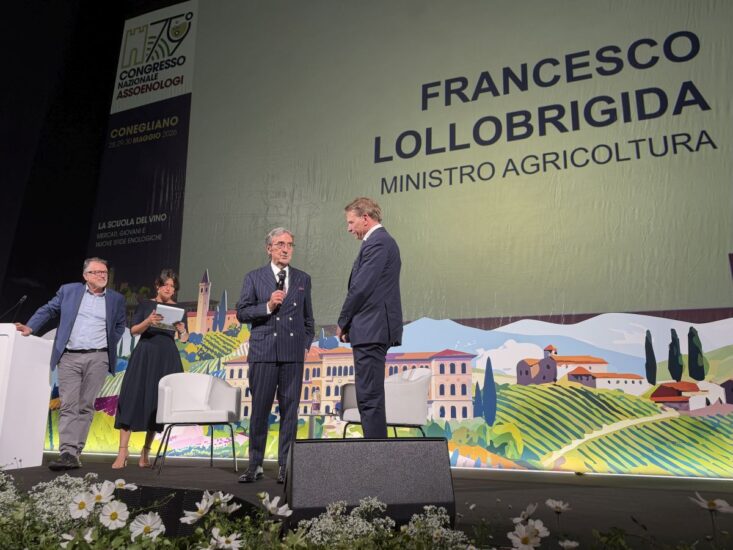
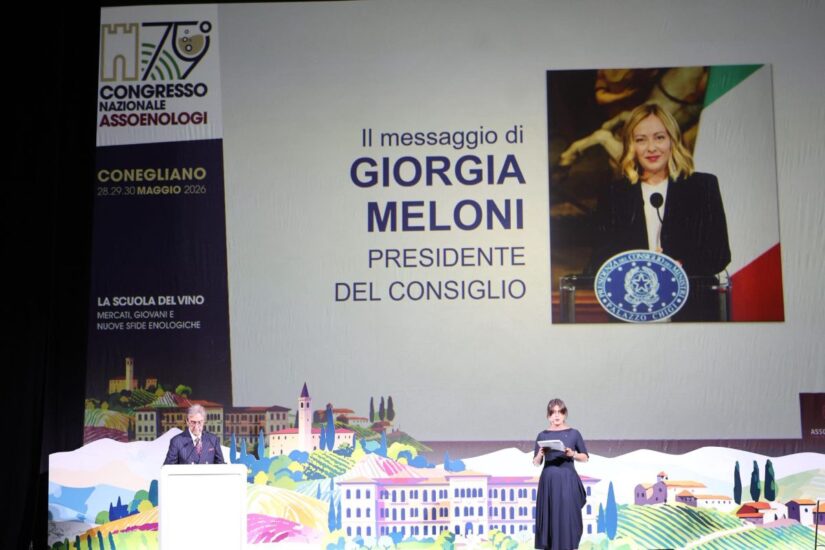
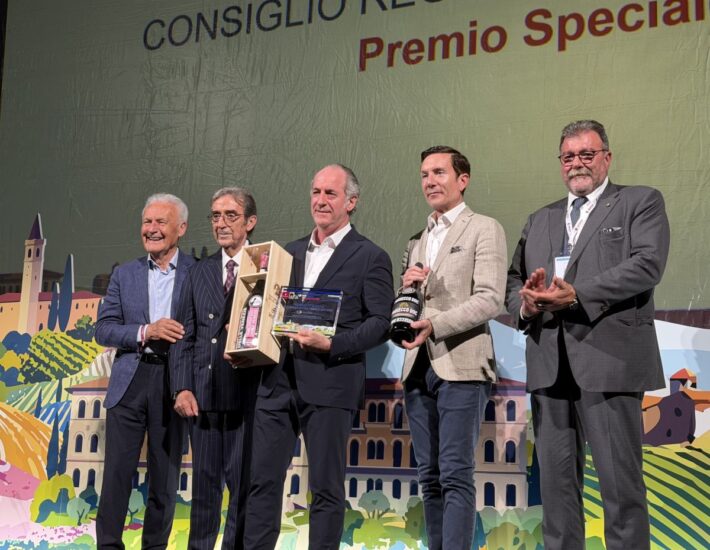
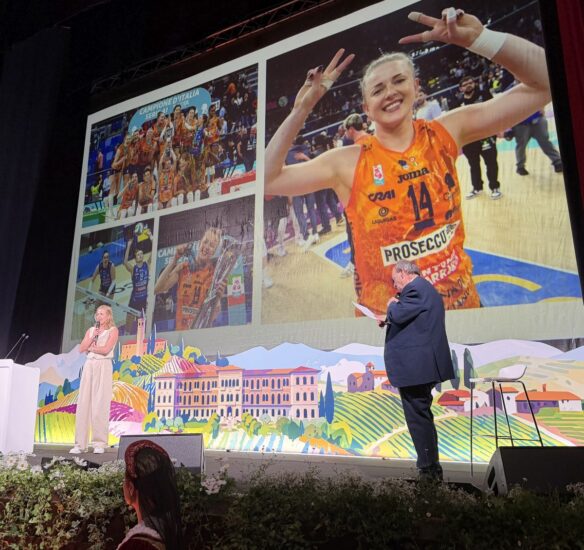
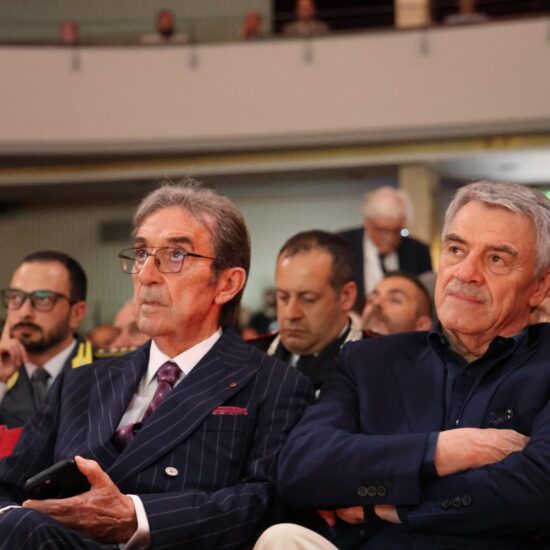
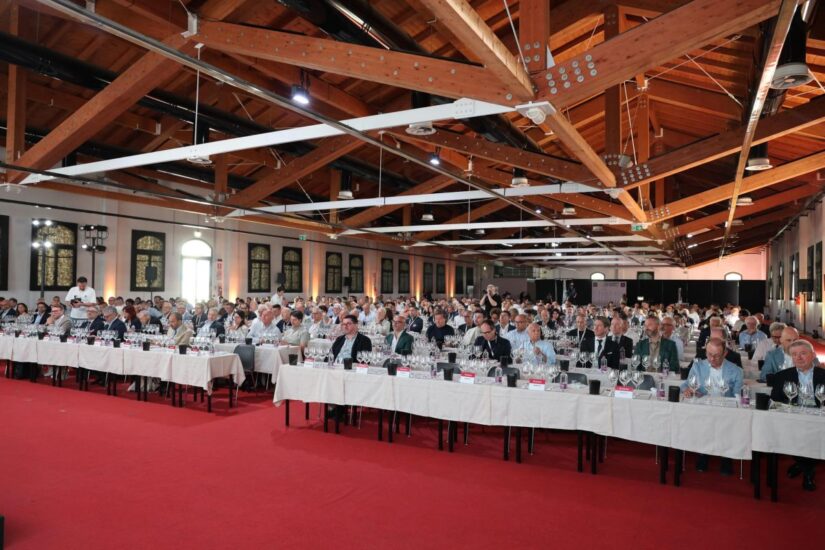
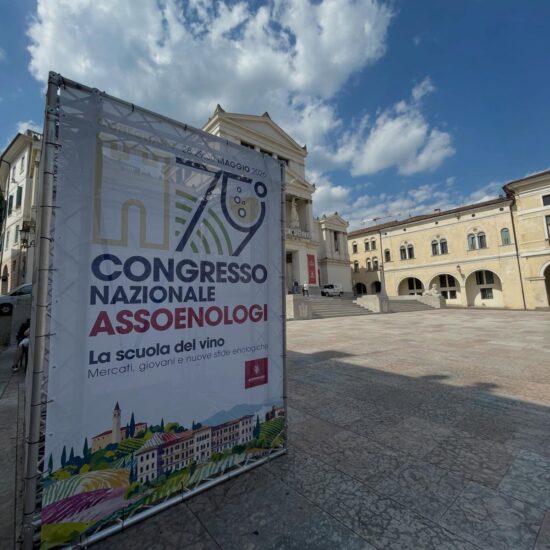
“Abandon negativity and be proactive in addressing the difficult economic situation in collaboration with institutions with which relationships have been strengthened”, and “have the strength to imagine a new Renaissance of Italian wine”: this is the appeal launched by Italian enologists gathered at the Assoenologi Congress No. 79 in Conegliano (May 28th - 30th), in the heart of the Conegliano Valdobbiadene Prosecco Superiore DOCG hills, where it opened yesterday with messages from the European Commissioner for Agriculture Christophe Hansen and Prime Minister Giorgia Meloni, as well as from the Minister of the Interior, Matteo Piantedosi. Minister of Agriculture Francesco Lollobrigida picked it up, who received the “Assoenologi Person of the Year 2026” award - alongside awards also given to WineNews director Alessandro Regoli, named “Honorary Enologist” and “Premio Assoenologi Comunicazione Italia” - “Assoenologi Award Communication Italy” 2026, president of the Veneto Regional Council Luca Zaia, recipient of the “Special Territory Award”, and Stevie Kim, Managing Partner of Vinitaly, awarded with of the “Assoenologi International Communication Award”, who are, starting from today, honorary members alongside Matteo Zoppas, president of Icd, Federico Bricolo, president of Veronafiere, and Fabio Chies, mayor of Conegliano - who talked about a “united” wine sector. There are enologists, agricultural associations, producers. Today, in Italy, the wine sector works as a system. I always ask that solutions come from wine round tables. When they are unanimous, I support them. I was not entirely convinced that dealcoholized wine was a solution for the wine world, but once unanimity was reached at the round table, we authorized a system which would protect geographical indications and also allow that market to develop. I am not particularly convinced about uprooting vineyards. We support the agricultural sector for two reasons: food security and environmental protection. At present, I don’t really know how vineyards could be replaced, and I would not want to end up with abandoned fields or unproductive land. There are also differing opinions on increasing production areas. If the sector were to reach unanimity on uprooting, I would be ready to proceed. But if this path is not shared, I believe there may be other solutions. I would still try to focus on quality, production and market positioning. The crisis in Bordeaux and in some French wine regions is also due to the fact that the price differential today is often higher than the real quality differential. Consumption is changing, with a boom in spirits, especially among young people. We need to intervene by clearly explaining the difference and also involving the restaurant sector. We are carrying out analyses to find the most suitable solutions. I always rely on those with greater technical expertise, while taking responsibility for the final decisions”.
Before that, however, Italian enologists commemorated Carlin Petrini, founder of Slow Food, who passed away in recent days, and “who had already predicted what is happening last year in his report at the Agrigento Congress - recalled Assoenologi president Riccardo Cotarella - it is time to restore the connection between wine and the land, to strengthen relationships with the communities from which society as a whole benefits”.
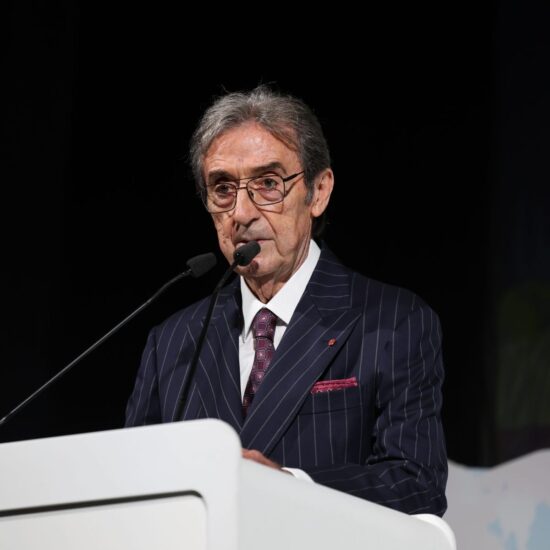
But it is also time to react “to the decline in consumption accompanied by a drop in passion for wine, which risks turning wine into just another ordinary beverage - Cotarella began in his opening speech at the Congress “La Scuola del vino - Mercati, giovani e nuove sfide enologiche” - “The School of Wine - Markets, youth and new wine challenges”, held at the Teatro Accademia in Conegliano - to deal with a complex situation worsened by “political” factors with negative repercussions on our sector and others, such as wars, tariffs that could easily be resolved, unjustified increases in retail prices that distance young people from consumption, and direct attacks on wine as if it were simply alcohol, we must abandon pessimism and set aside resignation. “In nearly 60 harvests (only one short of reaching that round number), I have experienced many crises and have always seen a positive rebound: even after the methanol scandal there was a renaissance. Wine can’t end; we would lose an iconic element of our country and our lives. Its cultural value can’t be replaced by other beverages. We must do our best and adopt a challenging attitude: otherwise, we are destined, and I don’t even want, out of superstition, to say to what”. As evidence of the recurring historical patterns affecting wine as well, Cotarella showed a 1984 “The New York Times” article in which journalist Paul Gillett described a 4.9% decline in U.S. wine sales compared to the previous year, “due to the sector inability to market effectively and essentially to health concerns among consumers, and even more to the strong media attention given to the issue”. The article also quoted Sandra McIver: “there is a great deal of misinformation that ends up in headlines - stressed the well-known producer of Matanzas Creek Winery in Santa Rosa, California - and with our national health phobia, this information is immediately absorbed and people change their habits. Since many small wineries are only marginally profitable, even a slight decline in sales caused by negative news and warning labels can be devastating”. At the end of the article, Gillett wondered whether this was just a temporary setback or whether “the party was over,” sadly opting for the latter hypothesis. “42 years have passed since that article - continued Cotarella - and that text is still relevant. Wine is very often discussed in terms of alcohol, which is only a small component of it, as recently seen in a national newspaper headline: “just two glasses of wine a day are enough to increase the risk of colorectal cancer by 25%: the alarm raised in a new study and the expert opinion”. Using a different, accessible and understandable language that tells not technicalities but the story of the territory, the producers and their families, the vineyards and the conviviality which only wine can kindle is one of the key ingredients for bringing young people closer, who, unlike in the past, are not accustomed to wine in everyday family meals. We enologists, sommeliers and industry professionals can only be the ones to counter the drop in consumption and the health-related attacks on wine”, he concluded. “Overcoming the crisis depends on our proactive attitude, which Assoenologi has embraced for some time.
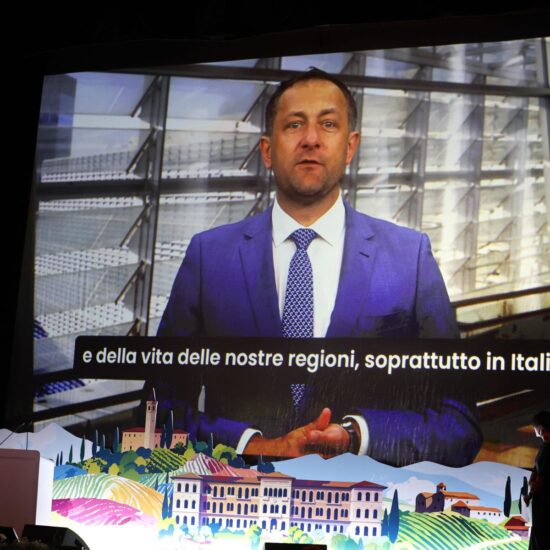
On this path, the wine sector finds support from politics, as confirmed by the messages sent by the president of the Council of Ministers Giorgia Meloni, and Minister of the Interior Matteo Piantedosi, who reiterated their actions. “In Europe, we have fought for a reform of the regulation on Geographical Indications, one which is perhaps closer to the Italian reality, in order to preserve EU resources and promote international trade - underlined Prime Minister Meloni - we condemn any attempt to demonize wine through labels or information systems which are misleading for consumers. Wine is a cornerstone of the Mediterranean diet, a symbol of well-being and conviviality, to be protected and promoted, naturally within the framework of conscious and responsible consumption. We will continue to do our part to support the sector and the Nation, starting with the opportunities offered by trade agreements signed by the European Union with Latin America, India, and Australia. We are also committed to doing our utmost to enhance opportunities for the sector development, for example in tourism, a rapidly growing field which is achieving increasing success. We will continue the work of connecting producers and farmers, but above all with their collaborating oenologists, who represent a fundamental pillar in today supply chain”. For his part, Minister of the Interior Matteo Piantedosi underlined the importance of the wine sector not only as a global excellence, but also as an integral part of the history, traditions, and communities that “the Government supports in order to strengthen competitiveness, protect employment, and promote high-quality production models. The tradition of conviviality remains a symbol of social interaction and sharing, and promoting conscious and responsible consumption is also essential within a media strategy. Preventing risky behaviors and protecting health are priority objectives which require the involvement of institutions, production sectors, associations, and the education system. Investing in innovation, scientific research, and the protection of denominations of origin is essential in an increasingly more competitive environment. The Ministry of the Interior will ensure maximum commitment to safeguarding economic legality and the security of supply chains”.
The actions implemented by the current Government to respond to this moment of crisis, also by changing the way of communicating, were illustrated by Minister of Agriculture Francesco Lollobrigida, prompted by questions from Luciano Ferraro, deputy editor of “Corriere della Sera”. Certainly, the most important element in recent times has been the increase in funds for the wine sector, to be used “to enhance not only wine, but also the territory in its most appropriate expressions, including its tourism vocation and environmental protection, which is safeguarded before all else by our farmers - specified the Minister specified - the Government has invested along two main lines, plus a third. We have invested 16 billion euros in the agricultural sector. In the wine sector, we have moved from 100 million euros in investments that I found at the Ministry to 1.1 billion. We have invested in companies capacity for resilience and efficiency, in the supply chain call for proposals which we promoted, because from production to distribution we must work as a team to address dynamics which allow us to create added value, starting from initial quality. We have worked on energy consumption: 2,500 wine companies will install solar panels, but not on the ground, consuming agricultural land, because we have prevented this with a specific regulatory measure which puts an end to speculation on farmland. These companies will save about 30% on energy costs by installing panels on processing facilities, greenhouses, and cellars. I would advise against turning wineries into “mosaics”, not because they don’t deserve it, but because I wouldn’t want the heritage authorities to block certain interventions. I am joking, of course, with great respect for the heritage authorities. However, I believe that companies are something different, and there are beautiful wineries everywhere which can also be used for tourism and wine tourism, which represent a resource within the multifunctionality of the company. We have funded a total of 24,000 farms, 2,500 of which are wine-producing. We have invested in generational renewal and will continue to do so. Then, there is the protection of the wine and agricultural system in general. The agri-food protection law, approved on April 15th after remaining in Parliament drawers for over 10 years, makes it possible to prevent counterfeiting with higher penalties for those who damage our entrepreneurs and the heritage which generations have been able to pass on. We have also worked on a new label which will allow greater recognition of our products. The Prosecco Consortium was the first to join. The label will display the Italian tricolor and a QR code which explains the product and ensures recognition of its quality. The State guarantees protection against all kinds of imitations. I thank the law enforcement agencies and quality control inspectors, together with the European Union, for the controls which, even in recent days, have led to the withdrawal of around 500,000 bottles that improperly evoked Prosecco. Then, there is promotion, the storytelling of wine. Wine must return to being presented as part of a balanced diet. My first vote in Europe was against the ban on using EU funds to promote wine. The previous Italian position had been abstention, but a producer nation must, above all, defend what is in its own interest. We have worked on promotion with more than 100 million euros in funding, because we are interested in strengthening and expanding our existing markets. Centers of excellence like this one in Conegliano help us reach a fundamental concept: it is one thing to make a grape-based product, and another to make a good wine. Enologists strive to produce good wine which can find its place in the markets. There is a great deal of competition worldwide; by now, almost everyone is trying to make wine, but Italy continues to be a leader. I believe much of the credit goes precisely to winemakers, who create high-quality wines that deserve to be told for what they are worth, also within Italian cuisine. I will conclude with this: in my view, Vinitaly is the global queen of events dedicated to promoting wine. It is second to none, not even Paris, in its ability to promote not only wine in commercial terms, but also the culture of wine and a way of life that is compatible with it. In Verona this year, we once again had the opportunity to make the wine sector central, involving young people, schools, and showcasing concrete examples”.
The campaign on moderate wine consumption reached 71 million contacts on Rai networks, but will there be a second phase? “Three years ago we were on the defensive - recalled Lollobrigida - wine was under attack, and many were afraid to say what some of us were courageously asserting, even facing personal criticism. Saying that wine is not harmful is not something to be ashamed of. Today, scientists say it as well. We said it starting from a fact: the nation with the highest longevity in Europe is Italy. There is such a thing as moderate, responsible drinking. There is also an age factor: a certain quantity may be tolerable for a young person, but it changes for adults. Let science make these assessments. However, the first statement had to be categorical: wine was not the danger some tried to portray. Today, we are in a different phase, in which we must explain and narrate. The advertisement we created tells the story of Italy, the environment, quality, identity, and tradition, and explains that wine is the element around which all this revolves. It is a campaign which has been very successful and which we also promoted during the Winter Olympics. Athletes who came to Italy appreciated many things, but food and good wine are what stayed in their hearts. Sport and wine are not incompatible. It is no secret that wine was present in the early Giro d’Italia, just as Sinner celebrated with an Italian wine, not Champagne, but with Asti. Wine is compatible with responsible drinking. One must not overdo it; one needs a balanced diet and shouldn’t overindulge in anything, not just wine. Wine is not only alcohol. It is much more. And this is what we wanted to convey. We are also doing this in countries that have a prejudice against wine. We went to the “Stan” countries, to Islamic countries. They didn’t serve wine at the table. We said: without wine, we don’t have an Italian dinner, because without conviviality, the same atmosphere is not created. We also brought Cannavaro, who coaches Uzbekistan. I must say that wine was appreciated by everyone. In every possible way, we try to promote this great product of ours and strengthen it in the markets. Some sectors perform better, others less so, but the challenge is always to do better. If we compete on standardized quantity and price per cent, Italy loses. We must focus on quality and on the ability to tell its story”.
Regarding broadcasts which demonize, Lollobrigida emphasized that “it is right to talk about problems as well, but we must remember that if one person makes a mistake, there are 100,000 others who do their job well and keep this nation going. We have just finalized a broader agreement with Rai. In recent years, the Ministry had stopped planning this type of activity carefully. Now, programmes will begin that promote Italy as a system, telling the story of agriculture, identity, catering, and products: where they are produced and how they are produced. And wine, as far as I am concerned, is central. Any table without wine is, in my opinion, a more boring table. I will not go further into health aspects, but certainly the atmosphere around a table with a glass of wine is different and, in my view, also more positive”.
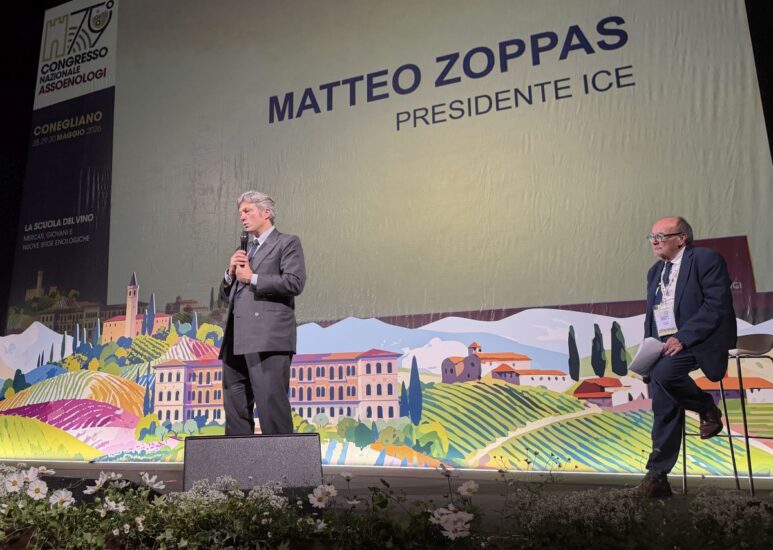
“Behind the success of Italian wine in the world, which is approaching 8 billion euros in exports - said Ice president Matteo Zoppas - there are the quality of our productions, the history of our wineries, the strength of our brands, and the link with the territory. The work of winemakers and of the association which represents them must be recognized as one of the main factors that, year after year, allow the quality of Italian wines and their worldwide recognition to grow, define trends, and contribute to spreading the culture and identity of wine. The role of their continuous research and development activities is fundamental in this journey, which provide entrepreneurs with tools and decisive skills to support the sector growth and the ongoing improvement of Italian wines positioning on the international stage. Now more than ever, given market challenges, we must stand close to businesses and entrepreneurs. Together with the Italian Government, with Prime Minister Giorgia Meloni, who established the Wine Roundtable, with Minister Francesco Lollobrigida and Minister Antonio Tajani, I hope to continue creating the greater value that this product deserves, an important ambassador of Made in Italy in the world”.
And, from Italy to the world and to the EU, alongside the message from the European Commissioner for Agriculture Christophe Hansen, a message also came from Member of the European Parliament Dario Nardella: “it has been a year since the Agrigento meeting and many things have happened. First of all, the new Wine Package which we voted on by an overwhelming majority in the European Parliament in Strasbourg, a charter of intentions and very concrete actions. For example, we are considering the possibility of introducing wine tourism projects into the European funding program. We are also considering extending European promotion for all wine-related promotional activities, from conferences to events and, of course, international promotion projects from 3 to 9 years. But we are also thinking about the available resources and instruments to address more difficult situations and the crisis we are facing, such as product storage or, in completely exceptional and extreme cases, the uprooting of vineyards. All these measures must and can be used in a very practical way, taking into account that the relationship between wine and tourism in Italy is already a reality for us. We now exceed 20% of the total revenue of all wine-producing companies coming from wine tourism, with an average spending per visitor in a winery exceeding 120 euros, and a total business volume surpassing 3 billion euros. These are all encouraging figures. What do they tell us? That tourism has now become an integral part of the wine sector. However, we must pay attention to certain aspects. We can’t replace the income of wine producers solely with tourism. Tourism is a complementary activity which integrates the core business of wine companies. This is fundamental, otherwise we risk focusing only on quantity, using wine tourism merely to generate flows when, in fact, wine tourism is an extraordinary lever for culture, for affirming, promoting, and consolidating the remarkable cultural heritage that wine represents. Let us put ourselves in the shoes of a visitor arriving in a region: they want an experience, they want something unique, they want to see the traditions and culture of that place. Wine is perhaps the only product capable of bringing all these elements together. For this reason, we must also defend wine, and there is no point in beating around the bush, the risk of alarmist policies in consumer communication is once again returning, through simplified solutions such as health warning labels - said Nardella - it is clear that we are all united in protecting health, but we also want to defend, basing on scientific evidence, the value of wine as a product, which is more than a beverage; it is a food product that cannot be indiscriminately associated with other alcoholic drinks. Moreover, today, as I am recording this message, the European Commissioner for Health and Food Safety, Olivér Várhelyi, is in Florence, and I will discuss the issue of wine labeling with him. It is right to provide full information to consumers, but it is wrong to include messages that frighten and alarm people, because wine consumed in moderation, when it is not abused, is a product that fits perfectly within the Mediterranean diet. All of this is part of the work of promoting wine and our territories. This is why winemakers are interpreters of the land, you are not simply those who introduce enthusiasts, visitors, clients, and buyers to a winery. You have a much more difficult, complex, and I would say strategic role: strengthening this cultural vision of wine as an integral part of a heritage of civilization, history, and culture that also looks toward the future. With Riccardo, we organized a wonderful event with young people right in Florence, it was a commitment we made in Agrigento, and I am ready to take on another commitment with you for an initiative which can travel across our beautiful Italian regions, bringing together tourism operators at all levels with the extraordinary, rich, and diverse world of wine”.
Copyright © 2000/2026
Contatti: info@winenews.it
Seguici anche su Twitter: @WineNewsIt
Seguici anche su Facebook: @winenewsit
Questo articolo è tratto dall'archivio di WineNews - Tutti i diritti riservati - Copyright © 2000/2026