


Sunday 20th of September 2026 - Last Update: 21:50







Italians, despite some generational differences, show a strong affinity with Italian agri-food products (and with the Mediterranean Diet). A full 82% reward their health benefits, acknowledge the value of the sector in which they place great trust, and look at factors such as taste, health and price as the main drivers of their choices. However, while Italian consumers are increasingly more aware of the role of diet in maintaining good health, they do not yet display full consistency in their behavior. Although the idea that health also depends on what we eat is now a shared and well-established value, in everyday life this awareness clashes with other equally relevant factors, such as taste, price and social influences. The result is a hybrid decision-making model in which rational considerations and emotional dimensions coexist without a stable synthesis. The challenge for the future? To build a new balance between tradition and innovation, able to speak different languages and respond to increasingly informed consumers who are, at the same time, exposed to multiple and often contradictory stimuli. These are the findings of the survey “Le nuove tendenze alimentari, la salute, la Dieta Mediterranea in Italia” - “New food trends, Health and the Mediterranean Diet in Italy”, carried out by Format Research and presented in recent days at Agronetwork Forum No. 1, in collaboration with Confagricoltura.
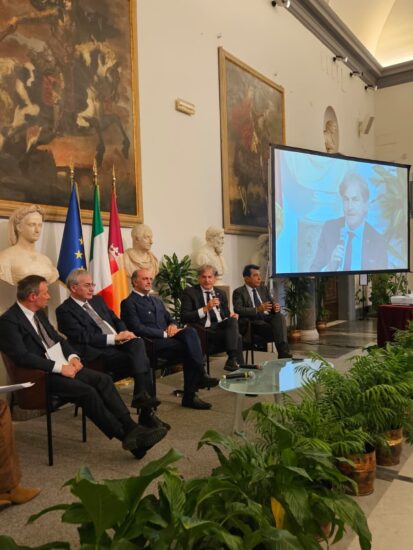
The initiative, entitled “Agroalimentare Made in Italy. Competenze, salute, mercati” - “Agri-food Made in Italy. Skills, Health, Markets”, took place in Rome, on the Capitoline Hill, in the presence of institutions, companies and experts, including Matteo Zoppas, president of Ita - the Italian Trade Agency; Sara Farnetti, nutritionist and president of Agronetwork; Matteo Caroli, Vice President of Agronetwork and Associate Dean of Luiss Business School; the mayor of Rome, Roberto Gualtieri; and (via a message) the Minister for Enterprises and Made in Italy, Adolfo Urso, who sponsored the initiative. Across three panels dedicated to skills, health and markets, the forum brought together representatives from the Ministry of Universities, the Ministry of Education, the Ministry of Health and the Ministry of Agriculture, along with senior figures from Simest, Confagricoltura, Confindustria, Federalimentare, Italmercati, and representatives of Indeed, Novartis, Gvm Care & Research and the Italian Chamber of Commerce in Frankfurt.
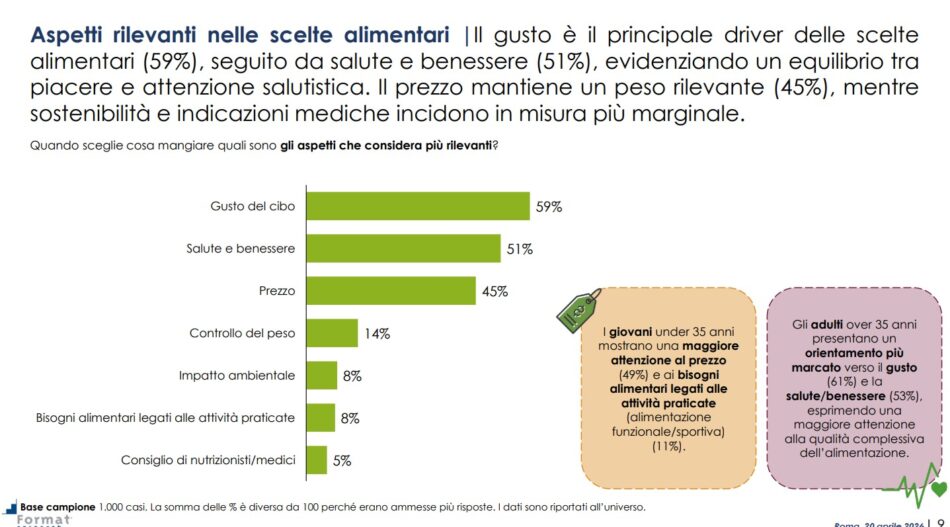
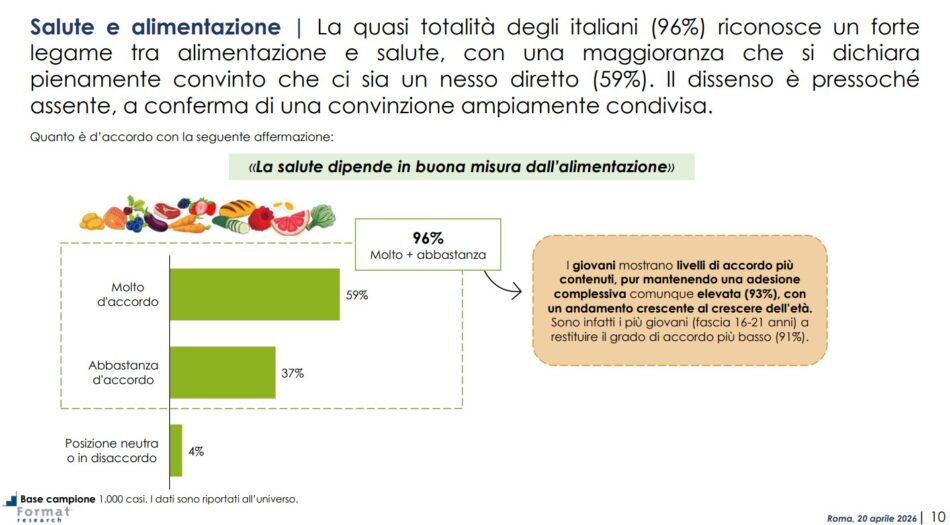
Some reflections also emerged regarding wine, one of the products that, by combining tradition and healthy eating, best represents made in Italy (25%). Over the past 5 years, however, while 30% of consumers say they drink the same amount or more than before, 39% report drinking less and 13% have removed wine from their habits altogether. As for no-alcohol beverages, although they remain a niche phenomenon, only 30% consume them (5% frequently, 25% occasionally), but the trend is growing thanks to young people (10% consume them frequently and 33% occasionally). The research reveals that taste is the main driver of food choices (59%), followed by health and wellbeing (51%), highlighting a balance between enjoyment and health awareness. Price remains an important factor (45%), especially among young people, while sustainability and medical advice play a more marginal role. Almost all Italians (96%) recognize a strong link between diet and health, with a majority fully convinced that there is a direct connection (59%). However, the relationship between health and the pleasure of eating is more divisive: 42%, particularly young people (55%), believe that a healthy diet may reduce the pleasure of eating, while 33% see no such risk. Among those over 35 (37%), a greater ability to reconcile wellbeing and enjoyment emerges. Italian consumers are divided between those who attribute healthy choices to fashions and trends (36%), those who link them to scientific evidence (33%), and, to a lesser extent, those who associate them with family tradition (24%). Ethical (5%) and religious-spiritual motivations (2%) remain marginal. Dietary choices for health reasons are widespread but not systematic: occasional behavior prevails (44%), alongside 39% who adopt them frequently (46% among under-35s). Overall, 97% of Italians have made food choices for health reasons at least once. Healthy choices are more likely to translate into consistent eating habits when they are perceived as being based on scientific evidence (46% frequent, only 10% rare), whereas when attributed to fashions and trends they tend to be weaker and more inconsistent (29% frequent, 25% rare).
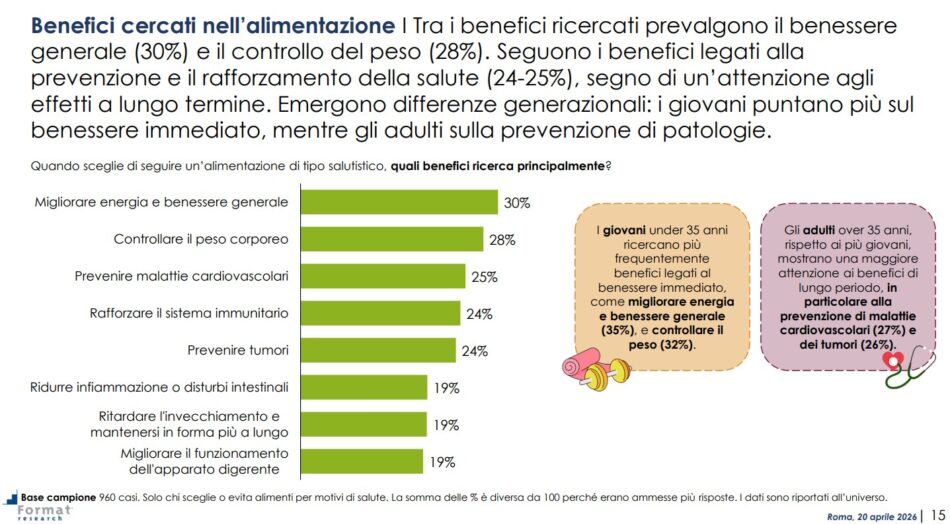
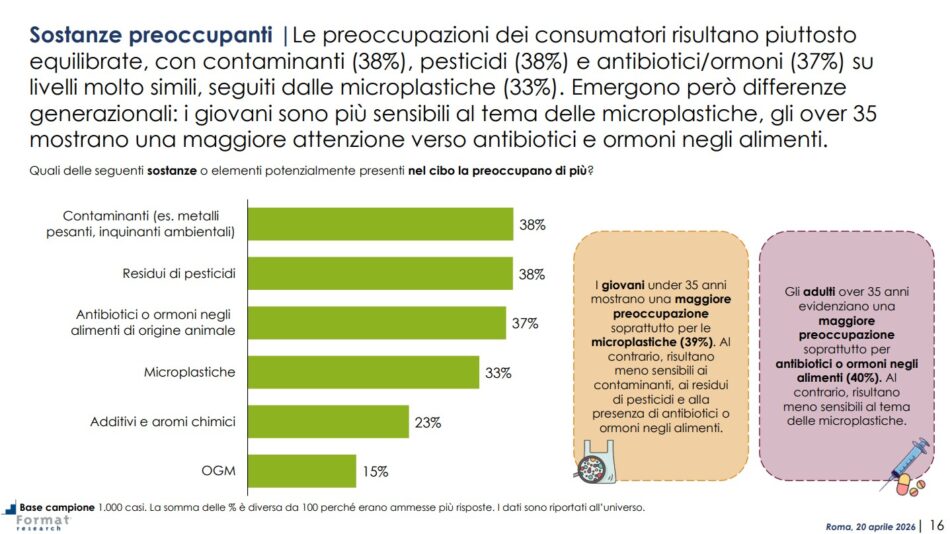
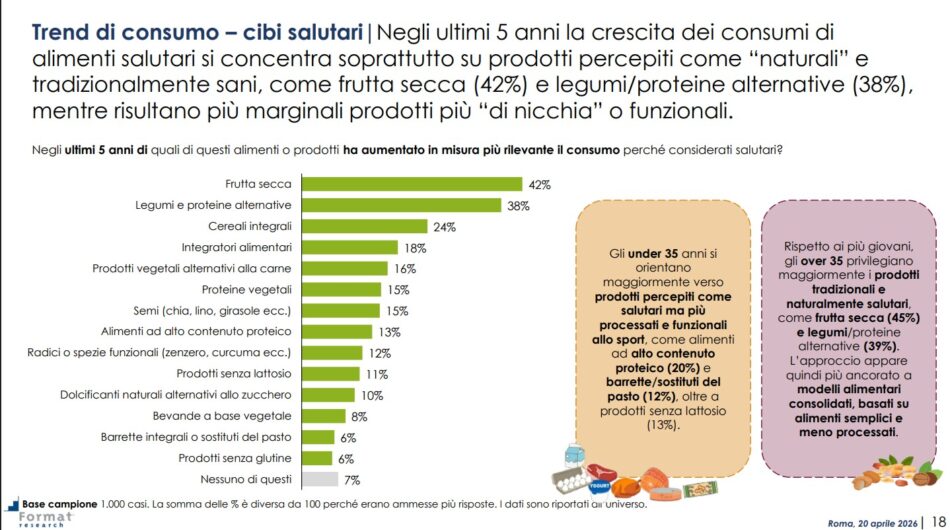
Among the benefits sought through diet, general wellbeing (30%) and weight control (28%) prevail, ahead of benefits linked to disease prevention and health strengthening (24-25%), indicating attention to long-term effects. Generational differences emerge: young people focus more on immediate wellbeing, while adults pay greater attention to disease prevention. Regarding concerns about substances potentially present in food, contaminants (38%), pesticides (38%) and antibiotics/hormones (37%) top the list at similar levels, followed by microplastics (33%). Over the past 5 years, the growth in consumption of healthy foods has focused mainly on products perceived as “natural” and traditionally healthy, such as nuts (42%) and legumes/alternative proteins (38%), ahead of whole grains (24%), dietary supplements (18%), plant-based meat alternatives (16%), vegetable proteins (15%) and seeds (15%).
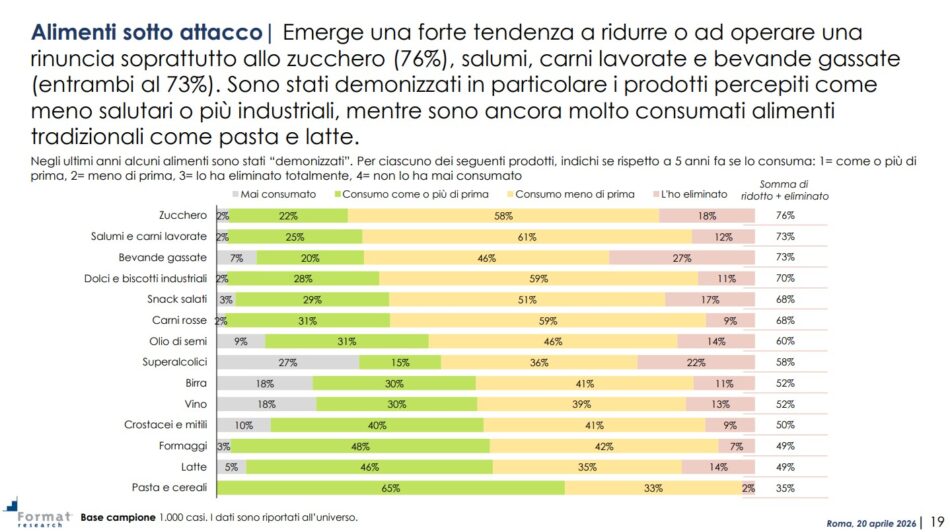
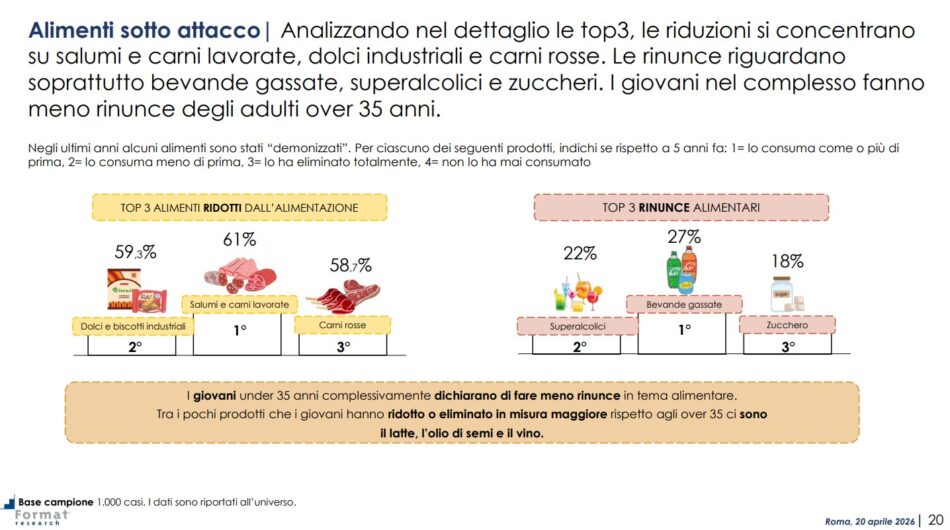
Chapter “foods under attack”. A strong trend emerges to reduce or eliminate above all sugar (76%), cured meats, processed meats and carbonated drinks (both at 73%). Products perceived as less healthy or more industrial have been particularly “demonized”, while traditional foods such as pasta and milk remain widely consumed. Again, over the past 5 years, 22% have eliminated spirits (while 36% drink less), 11% have eliminated beer (41% drink reduced quantities), and 59% have reduced red meat consumption (9% have eliminated it). The “Top 3” foods that have been reduced are cured and processed meats (61%), industrial sweets and biscuits (59.3%), and red meat (58.7%). Among food eliminations, carbonated drinks lead (27%), followed by spirits (22%) and sugar (18%). Overall, young people under 35 report making fewer food eliminations. Among the few products that young people reduce or eliminate more than those over 35 are milk, seed oils and wine.
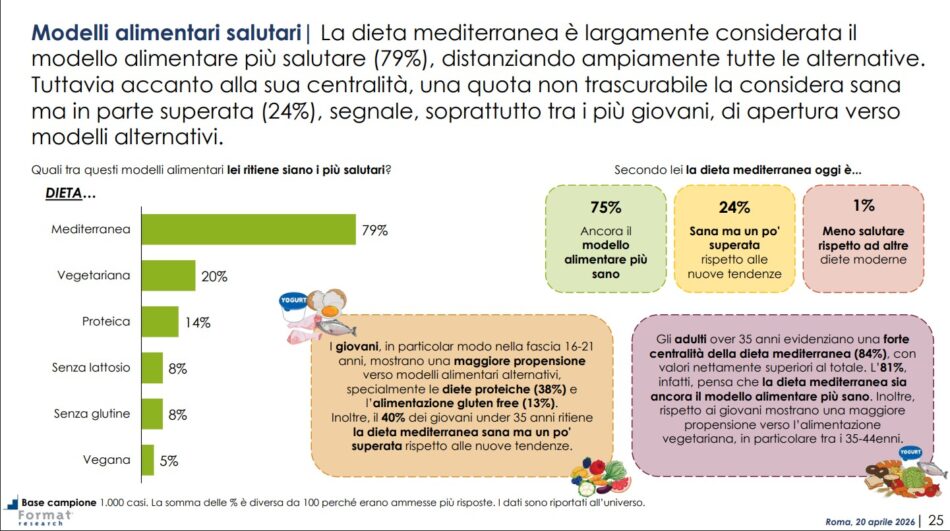
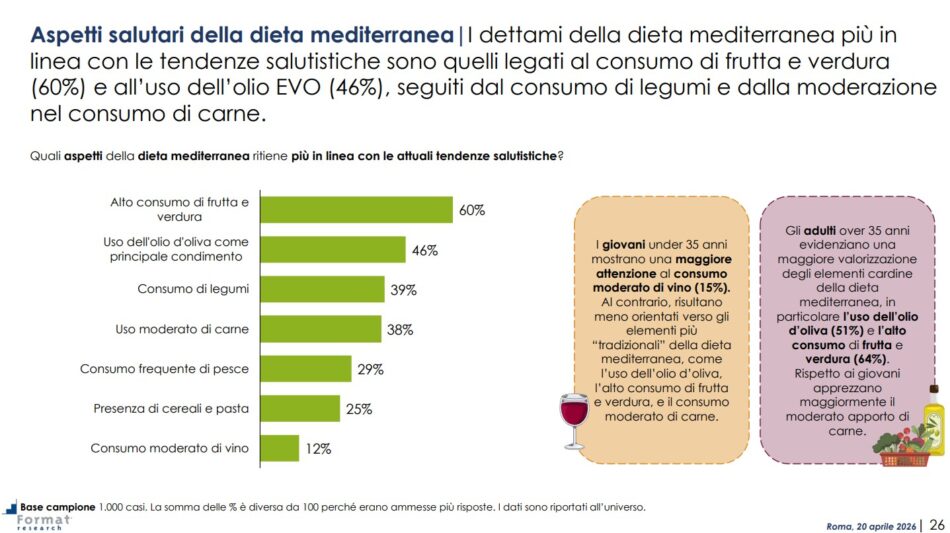
The Mediterranean Diet is widely considered the healthiest eating model (79%), far ahead of all alternatives (vegetarian at 20%, high-protein at 14%). However, alongside its central role, a significant share consider it healthy but partly outdated (24%, rising to 40% among under-35s), signalling, especially among younger generations, openness to alternative models. Not surprisingly, high-protein diets (38%) and gluten-free eating (13%) are appreciated among those aged 16 to 21. Adults over 35, by contrast, show a strong centrality of the Mediterranean Diet (84%), well above the overall average. Indeed, 81% believe it is still the healthiest dietary model today. The Mediterranean Diet principles most aligned with healthy trends concern fruit and vegetable consumption (60%) and the use of extra-virgin olive oil (46%), followed by legume consumption and moderation in meat intake. Young people under 35 show greater attention to moderate wine consumption (15%) and are less oriented toward the more “traditional” elements of the Mediterranean Diet, such as olive oil use, high fruit and vegetable intake and moderate meat consumption.
For consumers, made in Italy is an important driver of food trust. 82% of Italians perceive its products as healthier than others, a stronger belief among adults, while young people show a more neutral attitude. Made in Italy also enjoys very high levels of trust: it is associated with Italy food identity (95%), healthfulness (92%), quality and safety (92%). Adults express stronger agreement, while young people appear slightly more cautious.
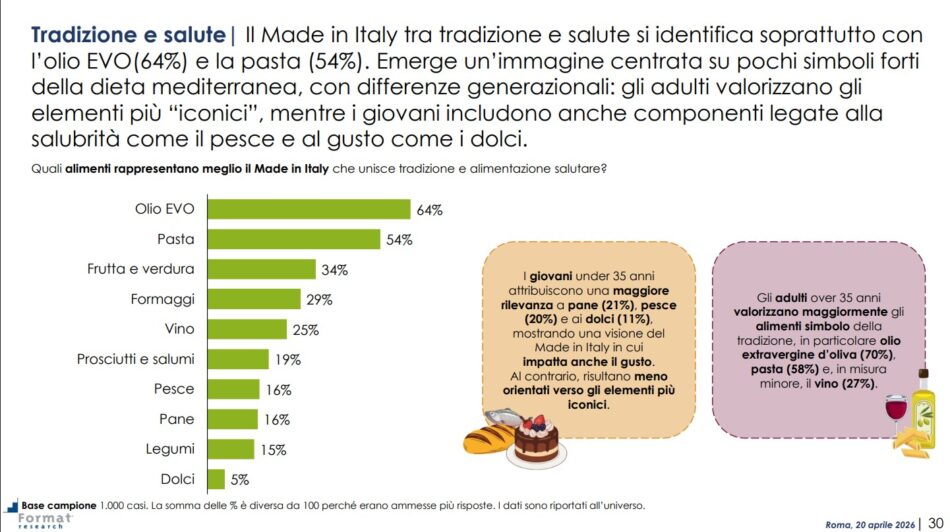
Extra-virgin olive oil (64%) and pasta (54%) are the foods most strongly identified with made in Italy, though generational differences also emerge here: adults value the most “iconic” elements, while young people also include components linked to health, such as fish, and to taste, such as desserts. Attention to made in Italy is a selection criterion for 95% of consumers and emerges especially in the purchase of fresh (41%) and traditional products (37%). While adults consistently integrate made in Italy into their choices, young people seek it mainly in specific contexts such as health or wellbeing products (29%) and quality or premium products (22%).
Food safety is mainly associated with structured and certified elements, such as controlled supply chains (50%) and quality certifications (49%), while more informal aspects or those linked to purchase channels play a secondary role. Generational differences are nevertheless observed between more institutional approaches (adults) and more relational ones (young people), with younger generations showing interest in direct purchasing from producers (26%) and in well-known, reliable brands (22%).
Institutional sources are considered the most reliable for information on food and health (83%), followed by books (77%) and specialized websites (75%). Traditional media rank at intermediate levels of trust (newspapers and TV at 63%), while social media credibility is low (35%). Newspapers and magazines are preferred by those over 35, whereas young people look particularly to specialized websites, artificial intelligence, and expert podcasts/videos, also showing greater openness to social media. Doctors and nutritionists remain the main influence on food choices (89%), ahead of family members (77%), while influencers and experts also play a significant role (56%), especially among young people highlighting an integration of traditional sources and digital channels in shaping eating behaviors.
When evaluating the influence of social media on their own dietary choices, a lukewarm judgement prevails: only 22% report a strong impact; among young people, however, this influence becomes significantly stronger (34% among under-35s), confirming digital channels as a key driver for new generations.
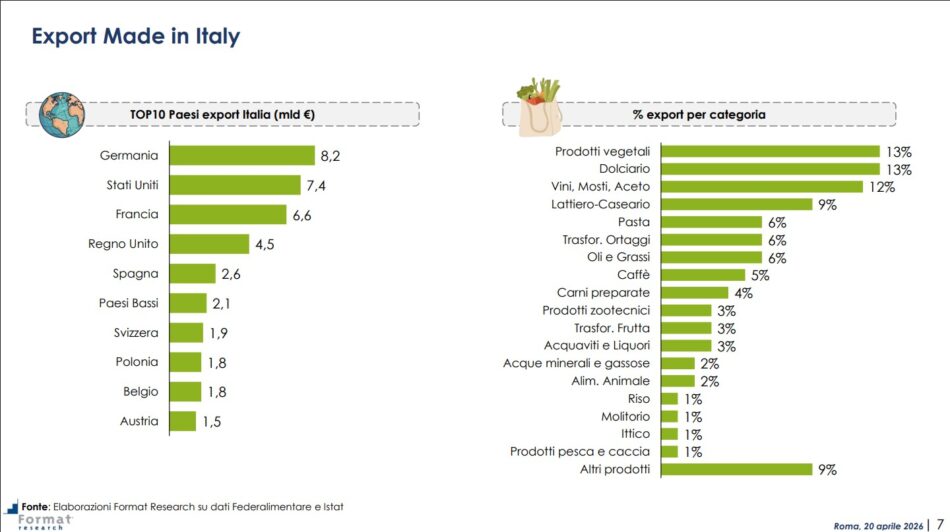
Matteo Zoppas, president of the Italian Trade Agency, highlighted the importance of exports for the Italian agri-food sector, the government’s support for the industry and the opportunities offered by new markets, while reaffirming the fundamental role of the United States. “We are experiencing a fairly complex market situation. Our second destination, especially from a strategic standpoint, the United States, is going through a particular period for reasons we know well: tariffs, the euro-dollar exchange rate and consumer behavior, which has particularly penalised wine. Germany too is experiencing a temporary slowdown. This leads us - continued Zoppas - to seek solutions that can help offset the challenges we are facing. On the other hand, we have a government that is pushing strongly. This year, for the first time, agri-food exports reached 72.4 billion euros, an all-time record, reflecting how well we are working as a system, starting with entrepreneurs across the entire supply chain moving in the right direction. Together with the Minister of Agriculture (Francesco Lollobrigida, ed), we have consistently attended trade fairs and international pavilions where agri-food promotion and development take place and where the needs of entrepreneurs are identified. The first real opportunity is to continue being present and active wherever agri-food business development opportunities arise. But the truly strategic initiatives are the three major new markets: Mercosur, India and Australia. In a context where tariff and non-tariff barriers increased from 300 to 2,400 between 2014 and 2023, seeing a reversal of this trend sends a strong message”.
“The presented data - declared Sara Farnetti, president of Agronetwork - confirm that food, health and production quality are increasingly intertwined in the perceptions of citizens. The Mediterranean Diet remains a strong reference point, but at the same time new orientations are emerging, especially among younger people, who are asking for authoritative information, updated language and a greater ability to bring together wellbeing, food culture and innovation. In this scenario, Italian agri-food made in Italy can further strengthen its role by enhancing quality production, expertise and responsibility along the entire supply chain”.
Confagricoltura director general Roberto Caponi concluded: “Made in Italy confirms itself as an important purchasing lever, inspiring trust among consumers who consider our agri-food products healthier. This makes us proud and motivates us every day to continue our work of protecting our excellence and supporting agricultural enterprises that guarantee our food security”.
Copyright © 2000/2026
Contatti: info@winenews.it
Seguici anche su Twitter: @WineNewsIt
Seguici anche su Facebook: @winenewsit
Questo articolo è tratto dall'archivio di WineNews - Tutti i diritti riservati - Copyright © 2000/2026