






In stark contrast to the global trend of declining alcohol consumption, the fine wine auction market continues to grow even in 2025. At least according to the annual Barometer from iDealwine, the world leader in online wine auctions and France’s top auction house for the sale of prestigious wines and spirits, which has published its annual report containing a detailed analysis of the fine wine market (which, after a period of decline, is looking ahead to 2026 with greater confidence, based on Liv-Ex indices analyzed by WineNews) and on the main trends in the auction market. In 2025, iDealwine sold over 300,000 bottles, marking an 18.5% increase in volume and a 9% increase in value for a total of 42.4 million euros, with the only decline being in the average price per bottle: 137 euros (-8%).
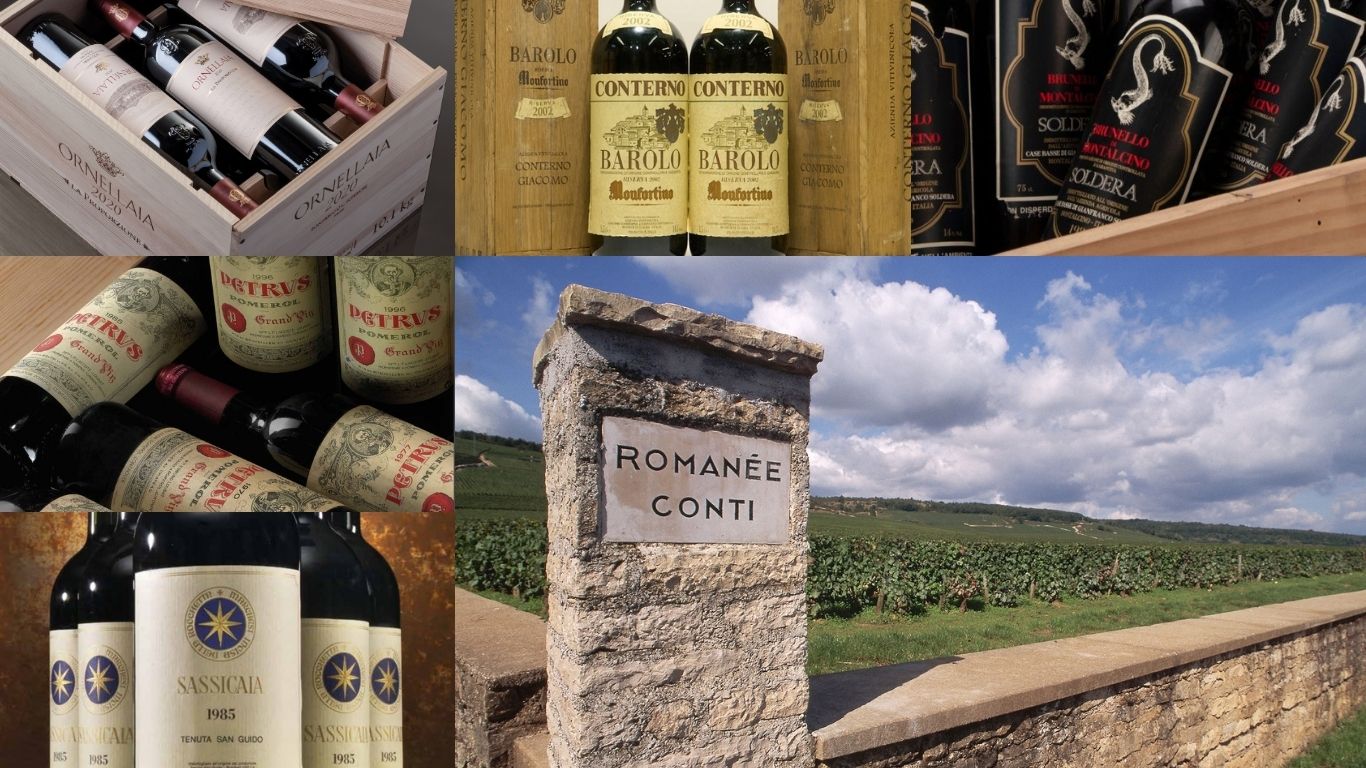
The most traded brand was Domaine de la Romanée-Conti, an icon of Burgundy (514,000 bottles for 1.9 million euros), while the most expensive lot went to Bordeaux and consisted of a jeroboam (3 liters) of 2010 Petrus sold for €27,043, with the most expensive single bottle being a 2006 Musigny Grand Cru from Domaine Leroy, which was sold for €25,416. As for Italy - whose fine wines in 2025 accounted for 51% of non-French wines sold at auction, with over 10,000 bottles sold (+33%), a total value nearing one million euros (+37%), and an average price of 96 euros (+2%) - the record-breaking bottle was a 1985 Sassicaia from Tenuta San Guido, which sold for €2,629.
In terms of trends, red wines remain the most popular category among collectors (accounting for 72% of the volume traded and 71.4% of the value), but for several years now, the percentage of white wines at auction has also been steadily increasing (in 2025, they accounted for 20% of the volume traded). And according to the iDealwine Barometer, the search for older vintages within the catalogs is also waning somewhat: because while it is true that 55% of the wines sold at the 2025 auctions were over 10 years old, it is also true that compared to 2024, this category declined by 14%, thus indicating a tendency among bidders to purchase younger vintages. Even more intriguing, however, is the marked interest in organic and biodynamic wines: in the 2025 auctions, they accounted for a full 30% of the volume and 36% of the value.
More paradigmatic, however, is the situation in Italy, where red wines dominated the rankings (95% of volume and 97% of total value traded) and older vintages (in 2025, 41% of the bottles sold were over 20 years old, and 24% fell within the 2006-2015 range): which, according to iDealwine, confirms just how aware collectors are of the aging potential of great Italian wines.
Looking globally, Burgundy is the wine region with the highest sales value (41.3%), but not in terms of volume, where Bordeaux takes the lead (34%): in Burgundy, the average price per bottle is, in fact, 212 euros (albeit down 15% from 2024). The top three, however, remain unchanged from 2024, with the Rhône in third place in both value and volume, where younger vintages (49% of the total) and producers such as Emmanuel Reynaud (4,813 bottles sold for a value exceeding one million euros) dominate. These three regions account for 72% of the total sold, although, in terms of volume, they have lost a full 10 percentage points over the past 10 years. According to the Barometer, this figure should not be interpreted as a decline in interest, but rather as a greater focus on other wine-producing regions such as Jura, Loire, Beaujolais, Alsace, or Corsica. Then there is the home of the world’s most renowned sparkling wines: Champagne ranks fourth in value (+21%) with an average price of 201 euros (+16%) and fifth in volume. After all, it is the major maisons that are the real stars, with 13 Champagne houses among the 20 most sought-after producers overall. The Jura region ranks fifth, continuing its strong performance in volume (+10%) and value (+7%), though it recorded a slight decline in average price per bottle (116 euros, -3%), which nevertheless remains the highest after Burgundy, Champagne, and Bordeaux.
And in Italy, where red wines and mature vintages perform best, it comes as no surprise that, once again, Piedmont and Tuscany are the most traded regions in the country: the former retains the top spot in terms of volume with 60%, while the latter accounts for 21%. At the same time, wines from Veneto, Abruzzo, and Sicily are gaining ground. The ranking of the year’s most sought-after estates accounts for 55% of the total value traded, and a full 14 out of 20 positions are held by Piedmontese producers, led by Giovan Battista Burlotto (for a total of 54,000 euros), followed by Giacomo Conterno, Giuseppe Rinaldi, Bartolo Mascarello, Angelo Gaja, and Roberto Voerzio. Yet in the top 20 most sought-after wines, Tuscany takes center stage, with the legendary Sassicaia from Tenuta San Guido in Bolgheri shining brightly, as well as Brunello di Montalcino with Soldera, Biondi-Santi and Stella di Campalto, Tenute dell’Ornellaia’s Ornellaia (Frescobaldi Group), and Montevertine’s IGT Toscana. Meanwhile, Emidio Pepe, the iconic winemaker of Abruzzo, returns to the top 20 Italian producers after a four-year absence, in a list that also features vignerons of the caliber of Quintarelli and Bertani for Valpolicella and Frank Cornellissen as a benchmark for Etna.
Copyright © 2000/2026
Contatti: info@winenews.it
Seguici anche su Twitter: @WineNewsIt
Seguici anche su Facebook: @winenewsit
Questo articolo è tratto dall'archivio di WineNews - Tutti i diritti riservati - Copyright © 2000/2026