


Saturday 12th of September 2026 - Last Update: 11:47






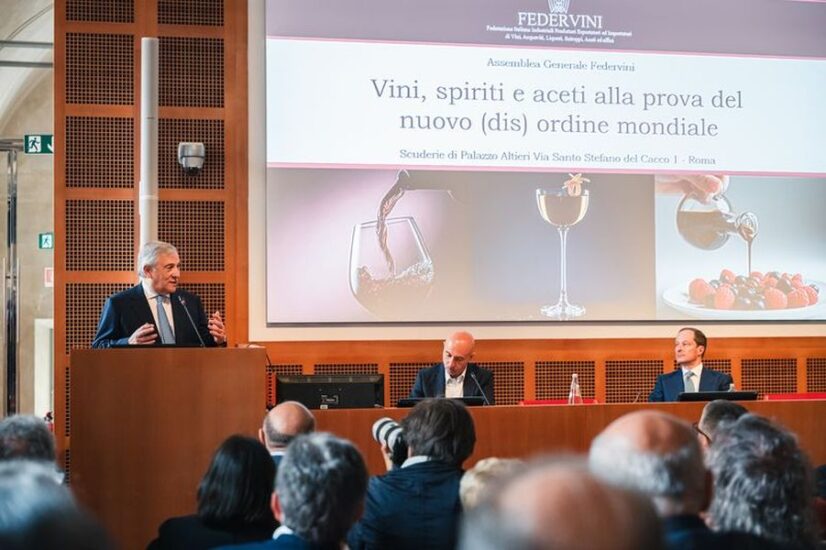
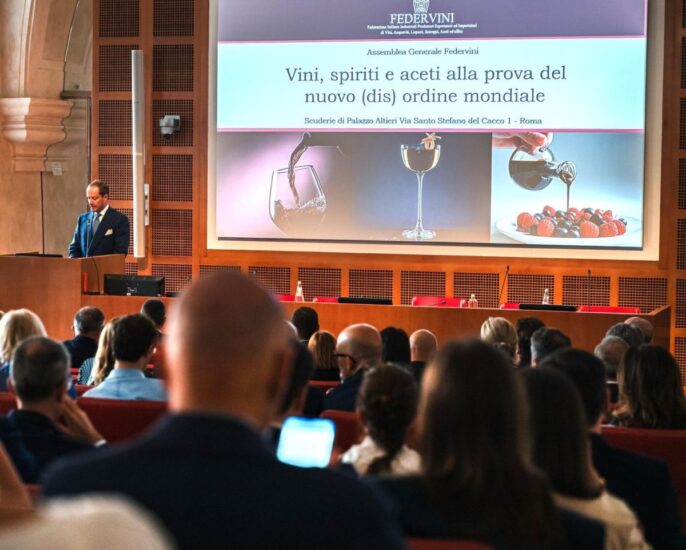

The now well-known difficulties, for obvious reasons, affecting exports, impacting Italy as much as the major producing countries, which in general are weathering the storm even worse than the Belpaese; some positive signals, especially in value (particularly thanks to the renewed strength of sparkling wines), in the domestic market, led by large-scale retail, and the out-of-home sector, which is certainly not thriving, also penalized by the growing gap between purchasing power (declining) and consumer prices (rising), but which still sees wine remaining a key presence on the tables of wine bars and higher-end restaurants. This suggests that behind the decline in consumption, more than any “disaffection” or “lack of interest”, especially among young people, as many claim, the issue of economic availability plays a major role, as is the case with any discretionary good, such as wine, as well as spirits and made in Italy high-quality vinegars. This is the summary picture of the Federvini Assembly, entitled “Vini, spiriti e aceti alla prova del nuovo (dis)ordine mondiale” - “Wines, spirits and vinegars facing the test of the new world (dis)order”, held today in Rome.
“2025 has put us to the test with unprecedented intensity - declared Federvini president Giacomo Ponti - first the reciprocal tariffs, then their suspension, and finally the current 10% regime in force until July 24th. Not to mention the “Kafkaesque” situation in which importers are trying to recover from suppliers the tariffs imposed by Trump and declared illegitimate by U.S. courts, all within an operational framework that is far from clear. Our companies have demonstrated extraordinary adaptability and have realized one thing: we operate in a scenario where uncertainty is the new normality. Now it is essential that the ratification of the EU-U.S. agreement be concluded quickly: we cannot think of replacing the American market, but we can and must diversify, innovate, and engage at European tables with even greater determination. In this regard, it is important that the EU “Wine Package” has removed the 3-year limit as the maximum duration for promotional actions funded in various countries, although the planned cut to the Cap is concerning, the Commission proposes less than 300 billion euros for the post-2027 period, a -20% reduction compared to the current cycle, and the loss of the wine sector specificity with the Single Cmo, which we hope the work of our Government and others will manage to avoid. In any case - concluded Ponti - we look to the future with confidence: we carry a strategic value - economic, cultural, identity-based - that no tariff can undermine”.
However, it is essential to continue diversifying markets, as reiterated in their speeches by, among others, the Minister of Agriculture, Francesco Lollobrigida, speaking from South Africa, and the Minister of Foreign Affairs, Antonio Tajani. “We are in South Africa also to present our wine sector and to grow exports in this country as well. We are a nation investing in the primary sector as never before, over 16 billion euros from the Ministry of Agriculture alone - said Minister of Agriculture Francesco Lollobrigida - in addition to resources from the Ice agency and the Ministry of Foreign Affairs, to consolidate established markets and open new ones. We are working to enhance production with significant funding and with regulations which better protect “made in Italy”, which means more than “produced in Italy”, it means good, beautiful, high-quality products, deserving a fair price. We will continue to work together to strengthen Italy value; we also bear additional responsibility resulting from the milestone of Unesco recognition of Italian cuisine, which requires us to stay one step ahead of others in quality”.
“Wine is a flagship of our country, we are the world’s leading producer and the second-largest exporter. It is not only part of our lifestyle and the Mediterranean diet. Our goal is to increase exports - said deputy Prime Minister and Minister of Foreign Affairs Antonio Tajani - and in this respect, the record stability of the Government is essential to implement certain programs. In the United States, things have gone less badly than expected, but of course we are not happy about tariffs, I support free markets because they drive economic growth. However, the quality of Italian wine can overcome the economic barrier, because the American consumer who loves Italian wine is willing to pay a bit more, as it is irreplaceable. Through agreements, we have further opened new markets, such as India, China, Mercosur, Australia, and many Asian countries. We have surpassed 650 billion euros in total exports and aim for 700 billion euros; “made in Italy” agri-food products are essential, as is the entire high-end segment, of which wine is part, together with fashion, design, and more, which must interact. All our embassies worldwide have become platforms for promoting Italian products. The Government has a duty to put you in a position to grow by cutting burdensome bureaucracy and taxes”.
However, as underlined by president of Ita - Italian Trade Agency Matteo Zoppas, also speaking from South Africa, it is undeniable that the situation is “if not critical, certainly complex. The real enemy is not only tariffs or the euro-dollar exchange rate, but a decline in consumption that is becoming structural. This means we must stay even closer to entrepreneurs, as the Government is doing and as we are doing with Ita, increasing our activities also thanks to the additional resources allocated to us. By boosting incoming activities at major trade fairs, starting with Vinitaly, strengthening Vinitaly.USA, doubling our presence at Vinexpo Paris, and so on. 2025 has not been rosy, the U.S. is continuing to decline even in 2026, and we need to understand whether this is due to tariffs, currency, or other factors. It is clear that these difficulties require us to work harder, we have asked the supply chain which actions need to be implemented and we are doing so, and we must continue striving to remain optimistic”.
Moreover, all things considered, despite a complicated context, while exports continue to suffer significantly in 2026, the situation in Italy, which remains the primary market for Italian wine—has overall held steady.
On the international front, as explained by Denis Pantini, head of Nomisma Wine Monitor, the first quarter of 2026 opened on a slowing note for all major wine-producing countries due to a widespread contraction in the value of imports recorded across the 12 main reference markets (-17.1%), with the sharpest decline in the United States (-38.9% in import value compared to the same quarter in 2025), followed by China (-10.6%) and Canada (-10.5%). In this scenario, Italian exports showed a 13.3% drop in value, performing better than the overall decline in demand.
“The situation is complicated, as we partly expected. The difficulties, even in the U.S. - underlined Albiera Antinori, head of one of the most important Italian wine producers, Marchesi Antinori, and of the Federvini Wine Group - can’t be attributed solely to tariffs, because the downward trend is general. Tariffs arrived at a time when the dollar was weak, when the U.S. distribution chain was starting to show cracks, with the three-tier system increasing the final price at every step, and while American purchasing power was declining. The moment is not easy, not even for American wine itself, but the U.S. remains a fundamental market for Italian fine wines. Agreements with India, Mercosur, and all other opportunities to diversify markets are important, but they are long-term, and in any case the U.S. market can’t be replaced”.
But while this is the picture abroad, things are better, or at least less negative on the domestic market. According to data processed by the Federvini Observatory in collaboration with Nomisma, the first quarter of 2026 in Italian large-scale retail shows divergent dynamics across sectors. Wine records a slight decline in volume (-1%) but grows in value (+2.2%), with sparkling wines accelerating (+8.7%), continuing a trend that has lasted for more than 5 years. Spirits show a stronger rebound (+2.9% in volume), driven by alcoholic aperitifs and sodas; gin is also growing, while grappa remains in negative territory. Vinegars show positive performance, with sales in large-scale retail increasing both in value (+2.4%) and volume (+1%), driven by the strong performance of apple cider vinegar and the stability of Modena PGI Balsamic Vinegar.
As for the out-of-home channel, the Federvini Observatory, in collaboration with TradeLab, describes a total consumption market that closed 2025 with a value of 102 billion euros. Independent restaurants are driving the sector, with a value of around 55 billion euros, slightly up compared to the previous year. The propensity to consume wine and spirits in restaurants, recorded by TradeLab on a sample of 1,000 consumers weighted according to the distribution of the Italian population by age and gender, shows patterns strongly influenced by spending capacity and type of establishment. Indeed, 55% of customers in high-end restaurants say they “always” consume wine or sparkling wine; this drops significantly in mid-range restaurants (25%) and low-end ones (11%). A similar situation applies to after-dinner liqueurs. In consumers’ perception, the wine and sparkling wine category plays a central role: 67% say that choosing a good wine significantly affects the overall quality of the restaurant experience. The collected evidence also shows evolving preferences, especially among younger groups, with growing interest in options such as organic or natural wines (considered appealing by 62% of those aged 18-24) and, to a lesser extent, alcohol-free or low-alcohol wines. These trends should still be interpreted with balance: they do not challenge the centrality of traditional categories, but confirm the importance for companies of engaging with new consumption languages and different occasions, including across generations.
“These are figures which should be considered positively, because Italy high-end restaurant sector is performing well and is one of the key settings for the consumption of quality wine. At present, food and wine tourism in Italy, together with the Unesco recognition of Italian cuisine worldwide, are resources we can’t afford to squander. We must also work to simplify bureaucracy and further integrate agriculture, wine, and tourism”, commented Albiera Antinori. In a world which is changing rapidly and unpredictably, from the most remote countries to the squares of the Belpaese, wine has the responsibility to interpret and anticipate these changes in order to remain a leading presence at the table.
Copyright © 2000/2026
Contatti: info@winenews.it
Seguici anche su Twitter: @WineNewsIt
Seguici anche su Facebook: @winenewsit
Questo articolo è tratto dall'archivio di WineNews - Tutti i diritti riservati - Copyright © 2000/2026