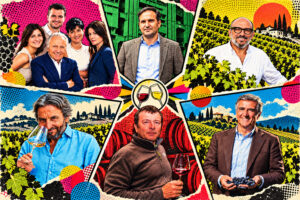








The Wine Package was a political success for the European wine industry and the fruit of a new, positive period of dialogue between politicians, institutions, and business representatives, but the process is not yet complete. We must work on the delegated acts and, above all, defend the gains made to foster business competitiveness in the CAP negotiations: we have won a battle, but only after the new Common Agricultural Policy (CAP) is finalized will we be able to say we have won the war. Ignacio Sánchez Recarte, Secretary General of the CEVV, was very clear in outlining the next objectives of the European dialogue on the measures approved last February with the Wine Package (EU Regulation 2026/471) in his opening remarks at the conference “Wine is changing: challenges and opportunities. The Wine Package and its first applications”, organized recently by Ugivi-Unione Giuristi della Vite e del Vino, in collaboration with the Cantina Sociale di Quistello, the Civil Chamber of Mantua, and Legal Hackers Mantova, at the Mantua wine cooperative. Anticipating the launch of the political roadmap towards the CAP - which recently included an important meeting organized by CEEV in Taranto with European Commissioner Christoph Hansen - Recarte highlighted two aspects of the measure that the European wine industry must leverage to address the delicate moment of market difficulty and the battle that will lead to the design of the new CAP: the positive climate of dialogue with EU politicians and institutions, inaugurated with the approval of the wine package and continued by Commissioner Hansen, and the measures to enhance the competitiveness of European wine companies. Among these, first and foremost, those for regulating supply and managing potential, which were the focus of the entire discussion held in Quistello among the representatives of the sector who attended: Luca Rigotti (president of Confcooperative Vino and of the Copa Cogeca Wine Working Group), Riccardo Ricci Curbastro (president of EFOW - European Federation of Origin Wines), Mario Danesi (vice president of AsCoViLo - Associazione dei Consorzi di tutela dei Vini Lombardi - Association of Consortia for the Protection of Lombard Wines), Carlo Alberto Panont (director of the Garda DOC and Valtenesi Consortiums), and Stefano Sequino (director of the DOC delle Venezie Consortium). These measures are currently at the center of heated debate among industry associations and local authorities, ahead of the approaching harvest. This will impact an already “full” Italian winery -with 50 million hectoliters of stock (49.1 million as of May 30, more than an average harvest) - further complicating a difficult market situation. But the very focus of the debate was the Wine Package Analysis and its path forward.
“Since September 11, 2024, with the first meeting of the High-Level Group on Wine Policy”, recalled journalist Giulio Somma, who moderated the meeting, “it took about 18 months of intense discussion to reach a vote on a very broad package of measures. These changes to the sector's four pillars - the regulation on the common market organization (CMO) for the wine sector, the CAP strategic plans, the Geographical Indications for wines and agricultural products, and aromatized wine-based products - touch on all the sector’s key issues: from managing potential to regulating supply, from promotion to internationalization, from labeling to dealcoholized products, with important innovations in the areas of wine tourism, managing the consequences of climate change, and even sustainability”. A constructive discussion made possible by the new climate of willingness to listen on the part of European institutions and politicians, was jointly celebrated by Riccardo Ricci Curbastro (who spoke of a “paradigm shift” on the part of European politics) and Luca Rigotti, emphasizing the remarks made by CEEV Secretary Recarte regarding the productive dialogue between business, politics, and institutions that paves the way for the new CAP under the best auspices (“We must transfer the measures of the 'Wine Package' to the CAP to make them stable”, Rigotti emphasized). However, no one is hiding or underestimating the risks of a discussion that will refocus on the need to defend the specificity of the wine sector.
A legal analysis of the regulations on the main issues of the “Wine Package” was the focus of the presentations by experts Ugivi, Filippo Moreschi, Dino Tedeschi, Elisa Pradella, Alessandra Zuccato, and Gloria Trombini. They illustrated the new regulations regarding potential management and supply regulation, wine tourism expertise, and reform of the rules governing dealcoholized wines, with a focus on the institution of professional partnerships, a modern form of collaboration between agronomists and lawyers capable of offering an integrated service to wineries. “This integrated set of rules”, emphasized Filippo Moreschi, Vice President of Ugivi, “above and beyond the value of its specific content, introduces valuable provisions for harmonizing regulations, promotes and increases the regulatory action of member states, the contribution of inter-branch organizations and producer groups, including in terms of pricing for grapes/musts/bulk wines intended for PDO or PGI designations, and introduces provisions for greater consumer protection”.
As mentioned, much of the current debate focuses on issues such as supply management, territorial development projects, the role of consortia, wine tourism, and low-alcohol wines. Luca Rigotti, after highlighting the need to reintroduce into the CAP the “carry over” measure, not included in the Wine Package (the possibility of retaining resources not spent in the previous financial year in a dedicated Member State fund to allocate them to crisis management), interpreted the new European regulation as a stimulus to develop long-term projects and programs for wine-growing regions at the local level. ”The sector must make a cultural leap forward by becoming the protagonist of a new development vision”, Rigotti said, “building growth projects tailored to different regions, adopting the potential management tools that the wine package offers us”. Projects carried out by the Protection Consortia, together with interprofessional organizations and local authorities (regions in particular), “which must also respond to the aggregation and coordination needs of medium-small or less resourced production and territorial entities”, stated the president of the wine cooperative. He added: "The emergency measures approved and strengthened by the European Regulation, such as distillation, green harvesting, and grubbing, if applied according to a linear and homogeneous approach nationwide, cannot represent the solution to the crisis for those areas—and there are many in Italy—that have no valid alternatives to viticulture in economic, cultural, or landscape terms" (a point already expressed in recent days to WineNews).
The explicit, though unquoted, reference to the proposals put forward in recent days by one sector of the industry (Unione Italiana Vini) regarding a horizontal and widespread cut in yields and a freeze on permits was also echoed by Riccardo Ricci Curbastro, who, distancing himself from generalizing positions, emphasized the need to calibrate the measures adopted at the local level, as each territory has its own peculiarities and must respond to the current difficulties and challenges differently, with different strategies from area to area. Returning to Rigotti’s other point regarding the need to reorganize and consolidate regional production facilities, the president of the European consortia reiterated the need to streamline the services of smaller consortia by encouraging their consolidation (while also working on a revision of the Designation of Origin system) to improve their effectiveness and impact, especially now that the increased responsibility and expertise brought about by recent regulations is placing new organizational pressure on these structures. Among these new skills, Ricci Curbastro (recalling his experience as president of Equalitas) couldn’t avoid mentioning sustainability. “For protection consortia, acquiring sustainability certifications, in their various ESG forms”, he said, “can be the essential prerequisite for collective and integrated protection of the local ecosystem and for a new relationship with consumers of all ages and backgrounds, based on a good reputation and genuine practices of environmental, social, and governance care”. The alarm over the growing difficulties in managing the Protection Consortia, especially in light of the new tasks and functions assigned to these entities, was echoed by Carlo Alberto Panont, director of the Garda DOC and Valtenesi Consortium, who focused on the central role of the Consortia in the traditional fields of production and supply management, promotion, but also in new areas of action such as tourism services and sustainability. “Consortia, faced with new tasks, need to enhance their skills, capabilities, and professionalism”, Panont emphasized “therefore, they require more resources or organized support services. Only in this way can they address the new challenges of changing markets, updating specifications, including the inclusion of potential ESG sustainability standards, and evolving business demands”. Mario Danesi, vice president of AsCoViLo - Association of Consortia for the Protection of Lombardy Wines, emphasized the importance of recognizing wine tourism as a strategic activity, as a response to declining consumption and market turbulence. Wine tourism, he noted, is an economic asset capable of bringing value to other local businesses (restaurants, hospitality, etc.) as well, provided they have the tools and resources to operate and invest. “The resources the EU has decided to deploy are welcome”, he emphasized, “which will support the development of production facilities, as well as hospitality, territorial organization (signage, mobility, connections, accessibility, and sustainable mobility), and the implementation of services”. Recalling the Italiancellardoor.wine portal project, spearheaded by AsCoViLo with professor and wine tourism expert Roberta Garibaldi, Danesi emphasized how managing hospitality requires the acquisition of specific tourism, digital, promotional, and communication skills that enable, for example, monitoring visitor flows, understanding customer demographics, and recording impressions of experiences.
Last but not least, there was an in-depth look at no-low wines, both dealcoholized (the subject of a regulatory analysis by Alessandra Zuccato, UIV) and “naturally low alcohol” wines, discussed by Stefano Sequino, director of the Consorzio DOC delle Venezie. “The steady growth of the no-low segment on global markets and the pressure of climate change on the alcohol potential of grapes”, Sequino said, “make it increasingly necessary to identify agronomic tools capable of preserving the qualitative and sensorial balance of wines and producing products with a naturally low alcohol content through specific cultivation and agronomic practices, rather than mechanical dealcoholization processes in the cellar”.
The research project initiated by the Consorzio DOC delle Venezie aims to provide producers with technical and scientific tools to protect the varietal identity and territorial character of Pinot Grigio DOC delle Venezie, while also producing quality wines with reduced alcohol content. “It offers strategic value in terms of positioning opportunities and additional competitive margins in a constantly evolving market” - emphasized the Consortium’s director - however, today it is urgent to recognize, from a regulatory and product perspective, the specificity of wines with a low natural alcohol content, clearly distinguishing them from dealcoholized and partially dealcoholized wines. This is, in fact, a profoundly different production method, in which the reduction in alcohol content is the result of agronomic and management decisions made in the vineyard, rather than the use of subsequent technological interventions in the cellar”. A substantial distinction”, Sequino concluded, “that can open up new opportunities for businesses and deserves to be adequately valued and communicated to consumers as well”.
Copyright © 2000/2026
Contatti: info@winenews.it
Seguici anche su Twitter: @WineNewsIt
Seguici anche su Facebook: @winenewsit
Questo articolo è tratto dall'archivio di WineNews - Tutti i diritti riservati - Copyright © 2000/2026