


Monday 16th of March 2026 - Last Update: 18:14





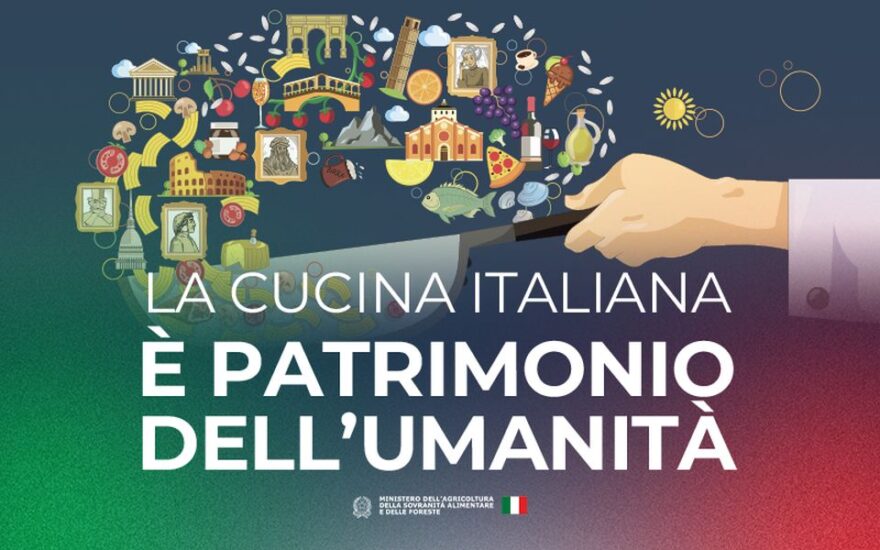
L’immagine della Cucina Italiana Unesco
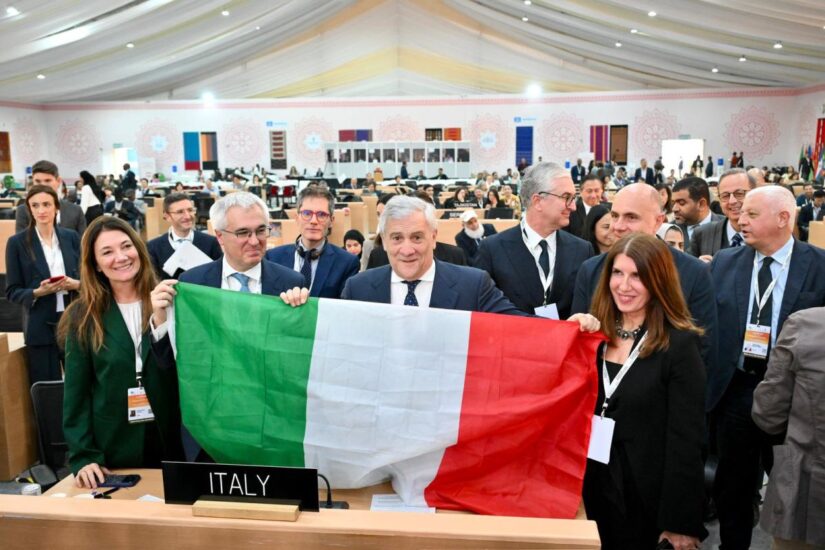
“Dear friends of WineNews, yes indeed, Italian cooking is now a Unesco Heritage. I am here at the Red Fort, where the proclamation has just been voted, and as president of the Committee that promoted this candidacy, I can tell you that today is a great day for Italian cooking. Long live Italian cooking, long live Italy”. In this way, from New Delhi, Maddalena Fossati Dondero, director of the historic magazine “La Cucina Italiana” spoke, which in 2023 launched the process which led to this recognition, together with the Italian Culinary Academy and the Casa Artusi Foundation. And, which, today, culminated in the long-awaited “award” for the dossier coordinated by Pier Luigi Petrillo, holder of the Unesco Chair at Unitelma Sapienza University in Rome, and by Massimo Montanari, one of the leading experts in Food History and Emeritus Professor of Medieval History at the University of Bologna, and in the candidacy promoted by the Italian Government - through the Ministry of Culture and the Ministry of Agriculture, Food Sovereignty and Forests - on the initiative of the three proposing communities (Casa Artusi Foundation of Forlimpopoli, the Italian Culinary Academy, and “La Cucina Italiana” magazine, as said).
And, if Italian Prime Minister Giorgia Meloni emphasized that this recognition “honors who we are and honors our identity”, and the Minister of Agriculture Francesco Lollobrigida reiterated that today “is a celebration which belongs to everyone because it speaks of our roots, our creativity, and our ability to transform tradition into universal value”, Foreign Minister Antonio Tajani, present at the Unesco Conference in New Delhi, described the recognition as “an extraordinary tribute to flavors, traditions, and creativity which unite generations and enhance territories, making Italy a unique country in the world. This achievement reflects the Government broader commitment to safeguarding our agri-food heritage and promoting our cooking and food supply chain as tools of dialogue, cooperation, solidarity, and peace”.
“This recognition reaffirms what we have always supported: Italian cooking is not just food, but culture, a heritage made of identity, community, and a living mosaic of traditions passed down from generation to generation. We are proud to have initiated this historic milestone and will continue to support the preservation and promotion of Italian gastronomic culture”, still explains Maddalena Fossati Dondero, director of “La Cucina Italiana”.
“With the recognition of Italian cooking as Unesco Intangible Heritage, the United Nations organization defines our cuisine as the result of diverse influences, a melting pot of knowledge and habits that, by blending together, have created something truly distinctive. This idea of inclusive cuisine, different from family to family, everyday and dynamic, becomes an example of dialogue between cultures and differences, a bridge between peoples”, added professor Pier Luigi Petrillo.
“The Unesco recognition of Italian cooking as Intangible Heritage of Humanity - declares Andrea Segrè, president of Casa Artusi - is well deserved. From Pellegrino Artusi, the father of modern Italian cooking, this heritage has grown in cultural biodiversity and sustainability. Now, however, we must preserve it, and for this reason, Casa Artusi Foundation announces today the creation of the International Observatory on Italian cooking and good taste, established to monitor and maximize the value of this heritage. Through surveys, research, and reports, the Observatory will be a concrete tool and opportunity to communicate, nationally and internationally, the identity values of Italian cooking - taste, healthiness, sustainability - as well as to reflect on the challenges of our time regarding food production and consumption: from resource efficiency to changing consumption models, to ethical and social values linked to the Mediterranean food tradition”.
Thus, December 10, 2025, marks a milestone for “Italian cooking” which the dossier presented to Unesco describes as “a mosaic of traditions: a system of social practices, rituals, and knowledge which intertwines agricultural biodiversity, typical products, food craftsmanship, local markets, family recipes, and conviviality”. This is the culmination of a path which began in 2020 and required over five years of work. In March 2023, the Italian Government officially submitted the candidacy. On November 10, 2025, the Unesco evaluation body gave a favorable opinion, leading to the decision adopted on December 10, 2025, by the Intergovernmental Committee.
Focus - Reactions to the proclamation of Italian cooling as Unesco Intangible Cultural Heritage
The comments coming from the world of politics, associations, and consortia regarding the recognition of Italian cooking as Unesco Intangible Cultural Heritage are many, so many, given the popularity of the topic. According to the Minister of Culture Alessandro Giuli, “Unesco recognition marks a historic milestone: what is being protected is not a single dish, but the entire system of Italian cooking, understood as a living heritage made up of practices, rituals, respect for seasonality, and the intergenerational transmission of knowledge. With this recognition, Italian cuisine officially enters the list of humanity intangible cultural assets - added the Minister - confirming its identity, cultural and social value, as well as its role in building a shared collective memory”. “I express my deepest satisfaction for achieving a historic goal - declared Tourism Minister Daniela Santanchè - this is, in fact, the global recognition of a cultural model that is an integral part of our national identity and, at the same time, a strategic asset of great importance for Italy’s economic fabric. The success of our culinary excellence lies in a winning and enduring system where all elements work in synergy - explains Santanchè - its heart is conviviality and social value, which binds families and communities and is inseparably linked to the richness of our territories, promoting the protection of local products”.
“A recognition that, by celebrating Italian cuisine, also acknowledges the extraordinary agrobiodiversity which underpins it - comments Barbara Nappini, president of Slow Food Italy - a biodiversity that Slow Food has been working to enhance through projects like the Presidia and Arca del Gusto for nearly 40 years. The recognition also honors the craftsmanship of farmers and cooks who, with skill and creativity, have made possible recipes known worldwide, a source of pride that we will continue to tell, protect, and valorize”.
“This recognition also belongs to us farmers. After all, when we talk about cooked products, we are the ones who ensure that our products form the basis of what is cooked and admired worldwide”, said Confagricoltura president Massimiliano Giansanti, today, during the Assembly in Rome.“Farmer-chefs, together with farmers across Italy, celebrate the inclusion of Italian cooking among Unesco Intangible Heritage, a recognition rooted in the culinary traditions of the countryside and the richness of a thousand regional dishes”, comment Coldiretti and Campagna Amica, noting that this is “an important result also in terms of the country growth. According to a Coldiretti/Censis survey, 94% of Italians believe that recognizing Italian cooking as Unesco Heritage is an opportunity for economic development for Italy and in general. Unesco listing gives our cuisine what it has long earned, a high-profile certification that will benefit the entire supply chain and involved territories. Today, Italian cuisine in the world is worth 251 billion euros, with a +5% growth compared to last year, according to Coldiretti analysis of Deloitte Foodservice Market Monitor 2025 data. The U.S. and China alone account for over 65% of global consumption of Italian cuisine. But the recognition is also crucial to clarify the proliferation of Italian Sounding, with more than one in two Italians (53%) abroad regularly encountering fake Italian dishes and products made with ingredients or processes unrelated to true culinary tradition, according to Ixè”.
“The strength of made in Italy agri-food lies in the close synergy between agriculture and catering, between those who produce and those who transform. Collaboration along the supply chain, from field to table, is the added value of Italian food worldwide”, comments Cia-Italian Farmers president Cristiano Fini, who added “national cuisine is a set of social practices, rituals, and gestures based on many local knowledges. Knowledges and flavors which reflect the immense biodiversity of products and territories represented by our agriculture and showcased in countless agritourism and restaurant recipes that which the story of regional culture and traditions. So vast and unique as to make Italian cuisine the most loved and sought-after abroad. This recognition, the result of government commitment and teamwork with agricultural organizations, represents a new, great opportunity to protect, guarantee, and promote Italian cuisine worldwide, starting from agricultural products”.
“The news of Italian cooking inclusion in Unesco Intangible Cultural Heritage list is excellent news which rewards and enhances the work of thousands of producers, farmers, and fishers, as well as the value of thousands of cooperative enterprises that every day transform raw materials of absolute excellence into products and preparations that triumph on tables and in kitchens in Italy and worldwide. This achievement, which makes an entire nation proud, is not only an extraordinary recognition of the quality and undisputed value of our cuisine, territories, and priceless food heritage handed down through generations, but also an extraordinary opportunity to enhance our supply chains. Leveraging this prestigious milestone, it will be possible, as the minister has often hoped, to launch communication campaigns to promote all made in Italy food and beverage products, including wine, both in Italy and abroad”, added Fedagripesca Confcooperative president Raffaele Drei.
“Unesco recognition of Italian cooking rewards not only dishes and recipes, but the daily work of millions of farmers, fishers, processors, and cooperators who safeguard territories and agri-food supply chains. This milestone has deep meaning: it is not just symbolic recognition, but concrete international appreciation of agricultural and agri-food chains which have preserved knowledge, traditions, and biodiversity for generations”, claims Legacoop Agroalimentare, whose president Cristian Maretti states that “Italian cuisine is above all a social practice arisen from the land, the sea, and community work. Cooperatives play a fundamental role in protecting production quality, income of producers, and the transmission of knowledge at the heart of this recognition”.
Still, according to Nomisma president Paolo De Castro, the Unesco recognition will also boost agri-food exports: “the Italian agri-food industry today operates in a context dominated by great uncertainty, where instability factors multiply and reinforce each other. The decline in domestic consumption is offset by steady export growth, which rose by +5% in value in the first half of 2025 and, according to Nomisma forecasts, will surpass 70 billion euros for the first time this year. While market diversification is the main strategy to create new development opportunities for the entire supply chain, global trade is becoming less fluid, also affected by U.S. customs policies. Our agri-food exports benefit, however, from the presence of large Italian communities abroad, which will hardly give up using products and raw materials from our culinary tradition, and from a widespread network of Italian restaurants, the first ambassadors of our food & beverage worldwide. Considering this, Unesco recognition of Italian cooking as Cultural Heritage of Humanity results to be particularly important. The recognition concerns the entire Italian culinary system, based not only on an extraordinary variety of globally appreciated products, but also on a cultural model rooted in diversity, strong ties to territories, high sustainability of agricultural production, conviviality and socialization, and the oral and practical transmission of culinary knowledge and techniques to new generations. Beyond strengthening the cultural identity of our products, the initiative launched at Unesco by Minister of Agriculture Lollobrigida together with Minister of Culture Giuli can also play a key role in promoting our excellence and protecting Italian food from Italian Sounding, which exploits the reputation of “made in Italy” and currently steals significant market share”.
Finally, many positive comments came from Italian chefs, both renowned and emerging. Among them, the most acclaimed worldwide, Massimo Bottura, wrote on his social profiles: “I’ve always said it: Italian cooking is unique in the world in its kind and, in fact, it is not just a collection of dishes or recipes, but a ritual of love, a language made of gestures, aromas, and flavors that unite an entire country. Around a set table, Italy recognizes itself: dreams are shared, arguments happen, peace is made, memories are passed down. I explained this at the opening of the Refettorio in Paris, for us, it is not just about eating: it is about caring for family, friends, and guests in our restaurants or Refettori. Each region guards its own grammar of taste: a different way of combining flour with water, oil with light, time with patience. In this biodiversity of landscapes, cultures, and traditions, our true wealth lies. Italian cooking is a living intangible heritage: built day after day by millions of hands of farmers, cheesemakers, breeders, artisans, cooks. Recognizing it as World Heritage means acknowledging its power to create bonds, build communities, and restore dignity! Because when taste meets memory, it is no longer just cuisine: it is culture, it is Italy renewing itself every day by cooking for love. We must thank Maddalena Fossati for making the invisible visible and always believing in it. Ministers Lollobrigida and Giuli, who teamed up Agriculture and Culture, and as we know, when you play as a team, you win, and undersecretary Gianmarco Mazzi, a force of nature”.
Copyright © 2000/2026
Contatti: info@winenews.it
Seguici anche su Twitter: @WineNewsIt
Seguici anche su Facebook: @winenewsit
Questo articolo è tratto dall'archivio di WineNews - Tutti i diritti riservati - Copyright © 2000/2026