


Monday 23rd of March 2026 - Last Update: 12:25






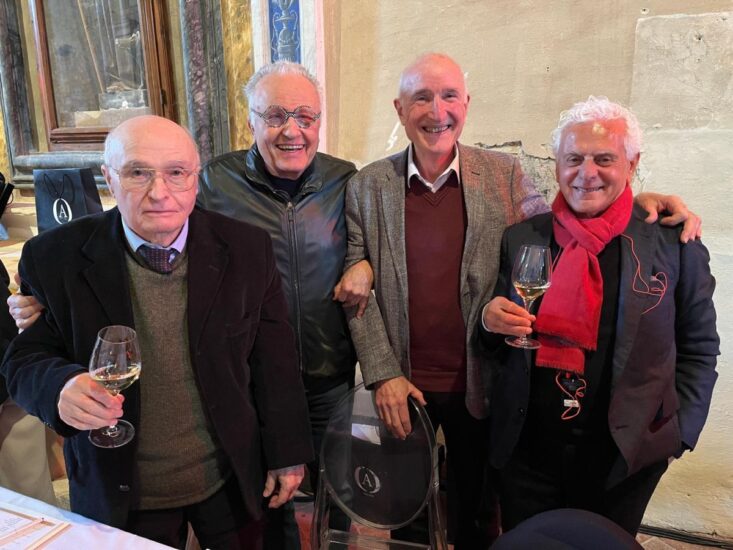
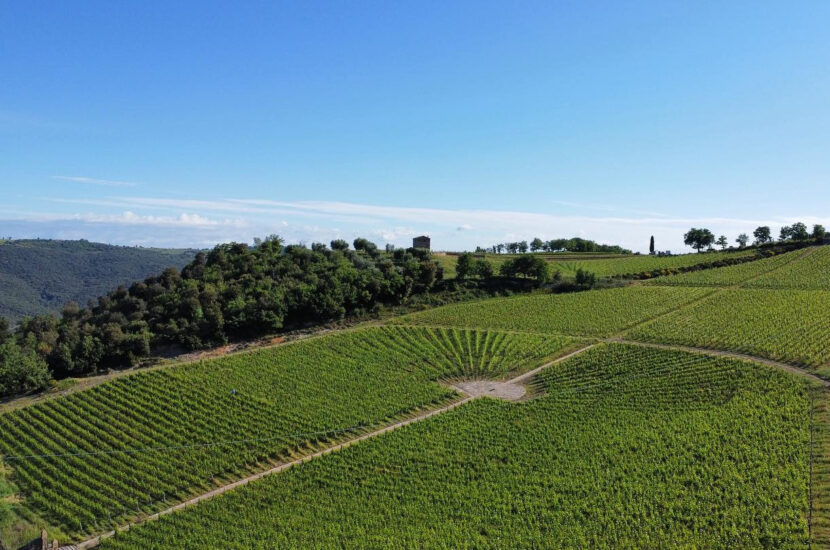
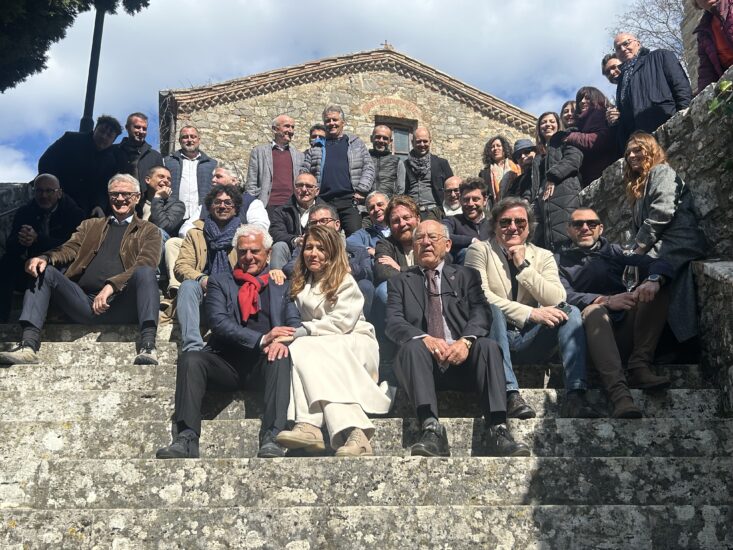
Wine and the vine, throughout their millennia-long history, have experienced many “Renaissances”, each with its own protagonists. From the Romans, who spread the vine throughout the Mediterranean, to the Benedictine and Cistercian monasteries which consolidated viticulture by selecting the best areas to produce excellent wines; through the Middle Ages, the Renaissance, the French Revolution - which almost made the vine disappear from France “because wine was a symbol of the nobility”, later saved by French intellectuals - to the industrial and chemical revolutions, which risked “standardizing” wine; and finally the rediscovery of the concept of terroir and the creation of appellations in both France and Italy. But today, with climate change and, above all, the cultural transformation taking place, a “new Renaissance” is needed, one which reaffirms the role of wine as a cultural beverage and a symbol of sharing, togetherness, and harmony (a particularly pressing theme in an increasingly divided and war-torn world). It must courageously reclaim the essential role of alcohol as a natural component of wine, while reaffirming the fundamental value of moderate consumption. This new Renaissance must also envision a different, more ambitious viticulture, looking toward a gradual abandonment of grafted vines in favor of returning, progressively, to ungrafted vines which today cover an estimated 1.5 million hectares worldwide out of a total of 7.5 million under vine. And it must place trust in a new generation of producers. This is the key message emerging from the 2026 edition, the No. 6 of the forum “Reincontrare Giulio Gambelli” - “Meet again Giulio Gambelli” held in memory of Giulio Gambelli, the enologist who more than anyone shaped the modern history of Sangiovese in Tuscany, recognized as its “master,” and who collaborated with many iconic wineries. The forum was created by Pasquale Forte at Podere Forte, in the heart of the Unesco-listed Val d’Orcia, of which it is one of the symbolic and pioneering estates.
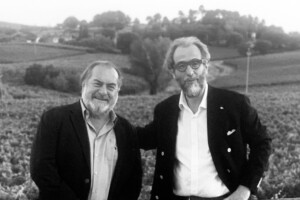
These reflections were signed by leading figures such as Jacky Rigaux, wine writer, critic, former professor at the University of Bordeaux, and a deep connoisseur of Burgundy; Aubert de Villaine, co-owner (until 2022) for half a century of one of the world most prestigious estates, Domaine de la Romanée-Conti, a Burgundy icon and central figure in one of the world most important wine regions; professor Mario Fregoni, a dean of vine science and research, who taught and conducted research in Viticulture at the Università Cattolica del Sacro Cuore in Piacenza for 50 years, and who also served as president of the International Organisation of Vine and Wine (Oiv), of the Italian National Wine Committee, received honorary degrees from the universities of Bucharest, Budapest, and Santiago de Chile, and was named Commander in Spain, Officer of Merit in France, and Knight of the Italian Republic, as well as author of the “viticulture” entry in the Treccani Encyclopedia. Also contributing was one of Italy most acclaimed producers, Angelo Gaja.
“It is fundamental, today more than ever, to reflect on the “new Renaissance” of wine. The world is changing because of climate change, and the vineyard is changing too, but wine remains a cultural beverage by history, tradition, and sustainability. Yet, we must reaffirm this, because wine today is under threat: some are advocating for dealcoholized wine, which is, however, an “agronomic aberration” - says Rigaux - not to mention that the discovery of fermentation, the transformation of grapes into wine, has accompanied every civilization.
Producing dealcoholized wine forces the vine to work against its natural vocation: it is an aberration”. Aubert de Villaine fully agrees: “wine is a cultural beverage, and it has never been more necessary than it is today. Wine illuminates life, it is peace, sharing. These things matter. And yet, French legislation has become more restrictive, evaluating wine solely based on its alcohol molecules. Wine exists to celebrate the pleasure of existence, of being together. In France, there is confusion between distilled alcohol and alcohol from fermentation: wine complexity requires alcohol, without it, wine would not exist. Some are fixated on producing alcohol-free wine - says de Villaine - but this is a cultural error. Wine without alcohol is a dead wine, without life. We are in a crucial moment: in France, things have gone too far. In a country where wine is a cultural element, just as in Spain and Italy, wine should be viewed differently from other alcoholic beverages, yet it is being demonized. It is time for all viticulturists, and wine lovers in general, to stand up and say clearly: enough! Of course, obviously, we support moderation and the fight against excess. But excesses - recalls Aubert de Villaine - are always tied to personal problems, to suffering. We must change direction. France is the world leading producer of fine wines: for this country not to acknowledge, or even to condemn, this heritage is incredible. If Voltaire, arriving in 19th-century France, was astonished by its contradictions, he would be even more astonished today. At this gathering, we celebrate wine and reaffirm that it exists to celebrate life and the pleasure of being together”.
Professor Fmario regoni reflection focuses instead on the “Renaissance” in the vineyard. “Today, viticulture is concentrated between the 30th and 50th parallels in the Northern Hemisphere and between the 30th and 40th in the Southern Hemisphere, but we are already moving closer to the poles. In these bands, we have a temperate climate where the vine rests in winter, a crucial facet, because without dormancy the vine becomes evergreen and produces multiple times a year. Only a few days ago I wrote an article, not yet published, on viticulture in the Arctic and Antarctic. For now, it is science fiction, but if climate change continues, certain lands, now home to reindeer and sled dogs, may become ice-free and suitable for viticulture. Not simple, of course, but possible. Meanwhile, the shift toward high-altitude viticulture is already real, reaching extreme elevations such as 1,850 meters above sea level, as in Valle d’Aosta, home to Europe highest vineyard. But the question is whether climate change can be addressed with current viticulture. And, my answer - says Fregoni - is “yes and no”. We must think historically. We have known the vine for 12,000 years, since the last glaciation, the era in which the Bible collocates the Ark of Noah. Naturally, these were ungrafted vines; phylloxera didn’t exist, nor did rootstocks. I am not among those who consider rootstocks indispensable, or at least not always. In many areas, ungrafted viticulture is possible. Even Pasquale Forte, here at Podere Forte, has planted 3 hectares of ungrafted vines, with another 2 on the way, in soils at risk for phylloxera, working on soil pH, to which the insect is sensitive. We must think differently, because ungrafted vines live much longer and allow for finer, more complex wines. American-rooted vines live, at best, 15-20 years, partly because of graft rejection. And planting one hectare of vineyard today costs an average of 50,000 euros, meaning that an estate must spend this amount every year for each hectare, given current practices. We must discuss these matters. The viticulture we know is not eternal. Today, according to my estimates, out of 7.5 million hectares of vineyard worldwide, 1.5 million are ungrafted. Half of them are located in China and Chile, where I have proposed that the country century-old vines be recognized as Unesco heritage. Furthermore, in research, we are experimenting with a new vine type using an “intermission” (element between rootstock and scion, ed) to study its behavior. We are, in short, moving toward a “new Renaissance” without American rootstocks. We must rethink the model based on different criteria. The future is also a matter of courage and responsibility”.
“I am 86 years old, but there is always more to learn. Today we celebrate a human monument: Giulio Gambelli - added Angelo Gaja - it is essential to draw from the past. But Gambelli worked in the last century, with grapes entirely different from those of today, in different vineyards, in another world. We know things now that were unknown then, and we must manage them both in the vineyard and in the cellar. Moreover, although we have studied the vine extensively, we know very little about soil, barely the first 30 centimeters. And today, a producer must manage the vineyard, the cellar, but also marketing, which is not a vulgar word: it is necessary to convey that we are capable of producing wines of place, to increase a wine’s desirability. How is this done? I don’t know - says Gaja - and if I did, I wouldn’t say. Each of us has small secrets to enhance our product”.
But, according to Gaja, it is fundamental to reaffirm one key concept, echoing Rigaux and de Villaine: “red wine is good and good for you if you know how to drink it. I dislike the word moderation: I prefer drinking with measure, with culture. It is true that the alcohol molecule is always the same, but in wine it is bound to other important elements that also protect health. For this reason, wine must be distinguished from other alcoholic and distilled beverages”. But this “Renaissance of wine” also, and above all, depends on new generations: “some years ago, President of the Republic Sergio Mattarella, in a speech, invited everyone to make the effort to read the present with the eyes of tomorrow, not only with the eyes of yesterday. Let us trust young people. The world has changed: many 40-year-olds are far more capable and prepared than we were, they will surprise us”.
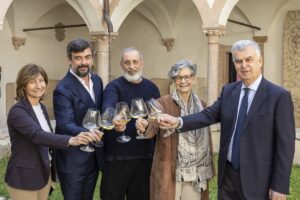
These reflections came as the great wines of Italy and France spoke from the glass, presented by their producers and estates, such as Canalicchio di Sopra, Poggio di Sotto, Cupano, and Biondi-Santi from Montalcino, Alois Lageder from Trentino; CostaRipa from Valtènesi; Uberti from Franciacorta; Poggio Grande from Castiglione d’Orcia; Bibbiano from Chianti Classico; Ceretto and G.D. Vajra from Barolo; and Domaine Clavelier, Domaine Rougeot, Domaine Boris Champy, and Liger Belair from Burgundy. All gathered in Unesco-listed Val d’Orcia, at the initiative of Pasquale Forte, to honor the memory of Giulio Gambelli and to outline the “new Renaissance of wine in the age of climate change”.
Copyright © 2000/2026
Contatti: info@winenews.it
Seguici anche su Twitter: @WineNewsIt
Seguici anche su Facebook: @winenewsit
Questo articolo è tratto dall'archivio di WineNews - Tutti i diritti riservati - Copyright © 2000/2026