

Wednesday 28th of October 2026 - Last Update: 17:39



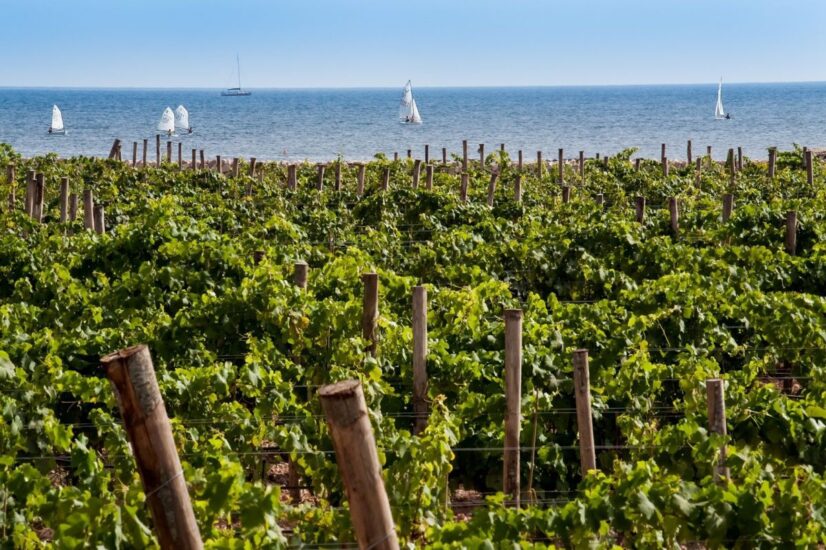
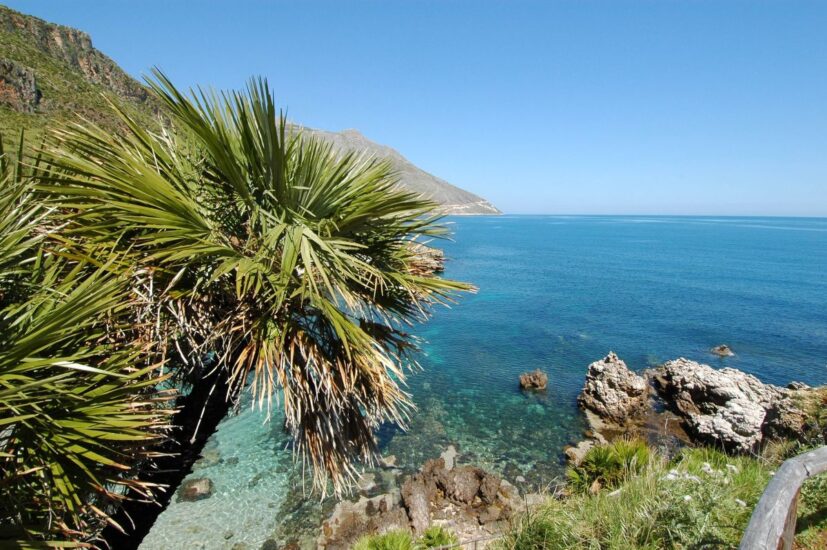
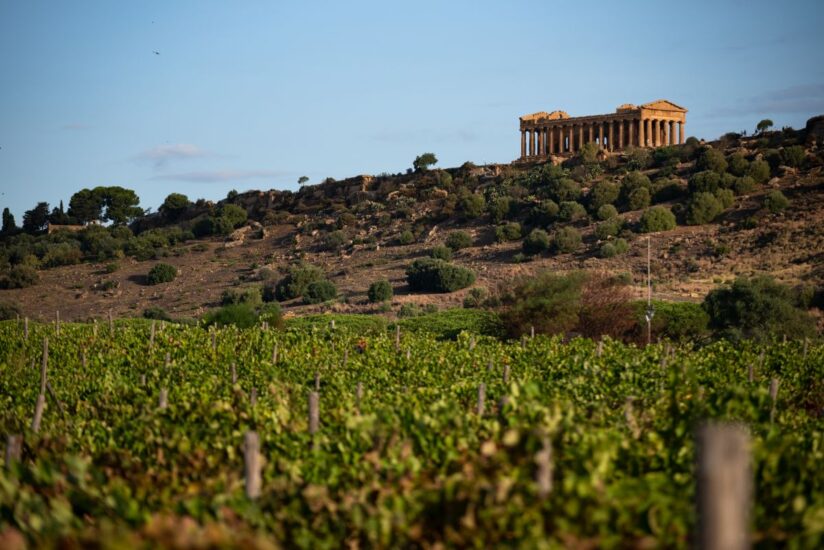
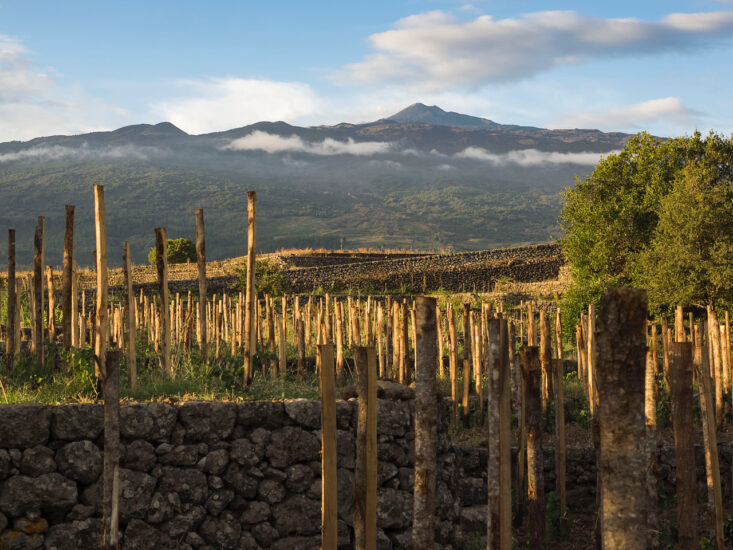
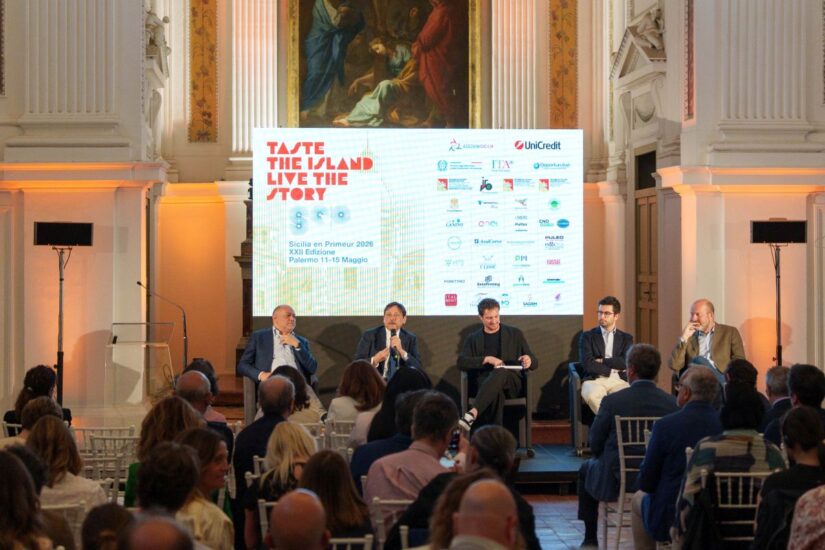
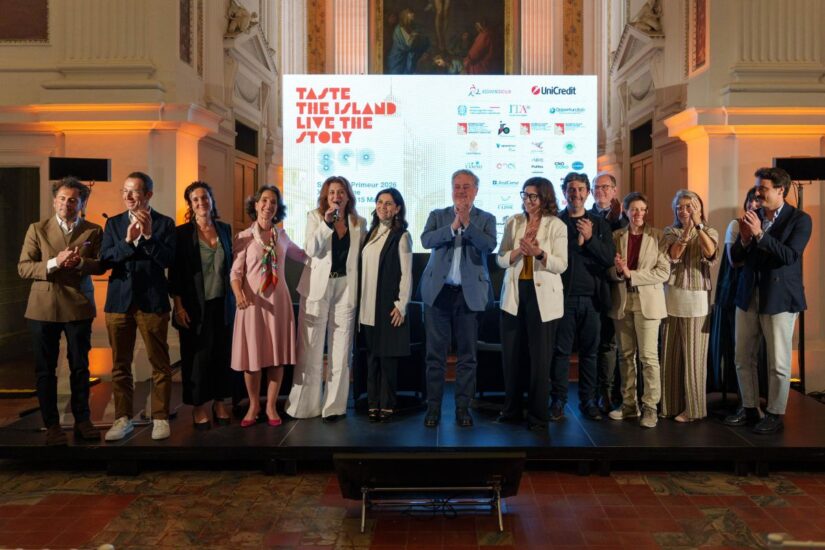
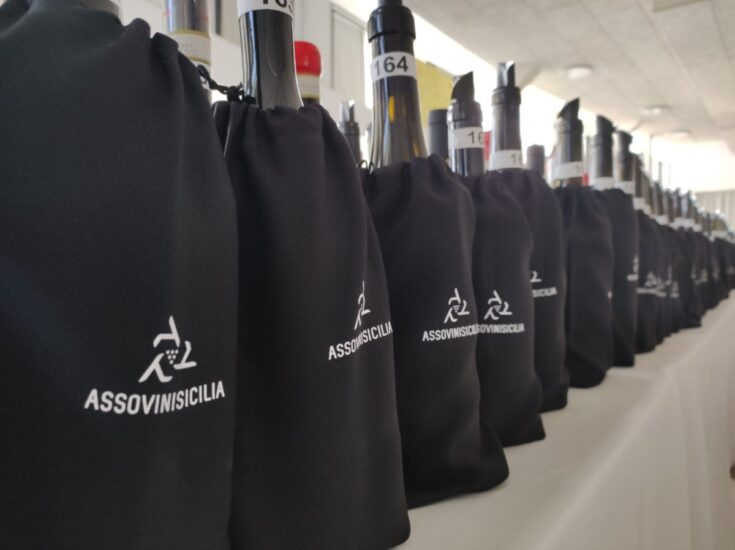
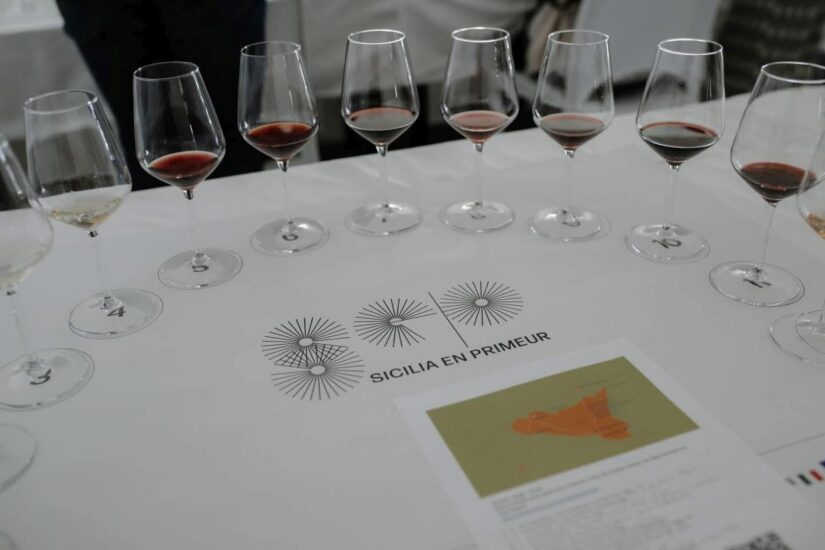
In 2025, 61.4% of Sicilian wineries recorded an increase in visitors, and 74.7% report a predominance of foreign customers, mainly from Europe and the United States. Wine tourism is becoming an increasingly more concrete and growing economic component for the Sicilian wine sector: for 58.3% of companies, it accounts for around 10% of total turnover - excluding direct wine sales - and guided tours and tastings are confirmed as increasingly important commercial drivers for wineries. However, this is not the only strategic investment asset: among the main strengths of Sicilian wine has always been sustainability. Today, 86.7% of wineries produce energy from renewable sources, 56.2% cover at least 40% of their energy needs with green energy, 88% have eliminated single-use plastic in hospitality, and 7 out of 10 use lightweight bottles. In short, this is a production and wine tourism system which is not only solid but already international, and that can rely on tangible, not merely declared, environmental sustainability. It is a market where both demand and supply exist, including ecological terms: therefore, the goal is not to attract, but to monetize and translate the sector into value, meaning stable, long-term economic returns by creating premium experiences and customer loyalty (6 companies out of 10 report having already designed new experiences for 2026, with the aim of building increasingly sophisticated and high-quality offerings). There is also a rapidly growing tool, much like wine tourism itself, which can help achieve this quickly: Artificial Intelligence (implemented by 30.6% of companies). It is now used to plan trips and can increase average spending by up to 30%, boost customer loyalty by up to +50% (through repeat visits or word of mouth), and reduce waste by 30%. With one guiding principle: the human being. And this is where Generation Z comes into play, for whom value lies not in the product itself but in the experience. This is the picture of Sicilian wine, a true wine “continent” that presents itself to the world at its most important event, “Sicilia en Primeur” 2026, the annual preview of Sicilian wines organized by Assovini Sicilia, which, with its traveling format, runs until May 15th and is being held in Palermo for its edition No. 22 featuring over 100 Italian and international media outlets, 56 companies, and more than 1,000 wines available for tasting. The event opened with the conference “Taste the Island, live the story”, held in the Baroque Oratorio dei Bianchi - founded by the Compagnia dei Bianchi, which accompanied those condemned to death to their final moments, just a few steps from the sea and among the lesser-known places that nonetheless capture the soul of the city. These were chosen as event backdrops together with the Real Albergo delle Povere, founded in 1733 to house the poor, disabled, and orphaned or wandering young women, along with the Church of Santa Maria dello Spasimo and Palazzo Sant’Elia. The conference analyzed the sector challenges among new market demands to younger generations and Artificial Intelligence, and outlined the next strategies to improve both the offering and the economic and social returns that tourism can bring to the island.
Sicily is the largest island in the Mediterranean, and “everyone who sailed there wanted a piece of this land rich in valuable resources such as grain, citrus fruits, and wine - recalled Andrea Amadei, host of “Decanter” on Radio2 Rai and Rai1 and curator of “The Art of Wine” - and all those who settled there - from the Sicani to the Phoenicians, from the Greeks to the Romans, from the Arabs to the Normans, from the Swabians to the Aragonese and Bourbons - left traces which Sicilians have preserved and enhanced. For this reason, Sicily is a “continent” which contains the whole world, and this is why Assovini wants to bring that whole world back to Sicily”.
However, today “wine tourism doesn’t weigh heavily on revenue, so much so that the most virtuous companies, 41.7%, measure its impact at no more than 10%. There is therefore significant potential - explained Antonello Maruotti, scientific coordinator of Ceseo (Center for Wine and Olive Oil Tourism Studies) and professor of Statistics at Lumsa University in Rome, and author of the new report on 85 Sicilian wineries from which the presented data are presented, connecting from Abu Dhabi - starting from better customer targeting (who am I addressing? what age group? what are their demands?), the type of experiences and services offered, and the use of collected data, which are abundant but still underutilized”. The research also highlights a strong evolution in the offering: tasting rooms, wine shops, visitor routes, and dedicated staff are now widely available. The basic level of digitization - websites, e-commerce, and mailing lists - is also good, while the use of more advanced tools remains limited: only 20% of companies have a structured Wine Club, and 30.6% report using Artificial Intelligence, mainly in marketing and communication. This is crucial: companies must explain that a higher price corresponds to higher quality, not just quantity; emphasize environmental sustainability choices, which are often taken for granted but enhance product excellence; not only join local partnerships but actively contribute to creating them, building stable and mutually beneficial relationships; and maintain open communication channels with visitors to build loyalty and exclusive relationships. “The work carried out by Ceseo for Assovini Sicilia provides a unique and stimulating body of knowledge for those who care about the future of Sicilian wine tourism. Having solid, up-to-date, and territorially detailed data is not an academic exercise but a necessary condition for enabling institutions and operators to act effectively, overcoming fragmented approaches and guiding a growing sector toward full competitive maturity - explained Dario Stefàno, president of Ceseo - the figures emerging from the survey confirm the vitality of the sector, characterized by strong international appeal and a now well-structured offering, but they also clearly highlight certain weaknesses which need to be addressed”.
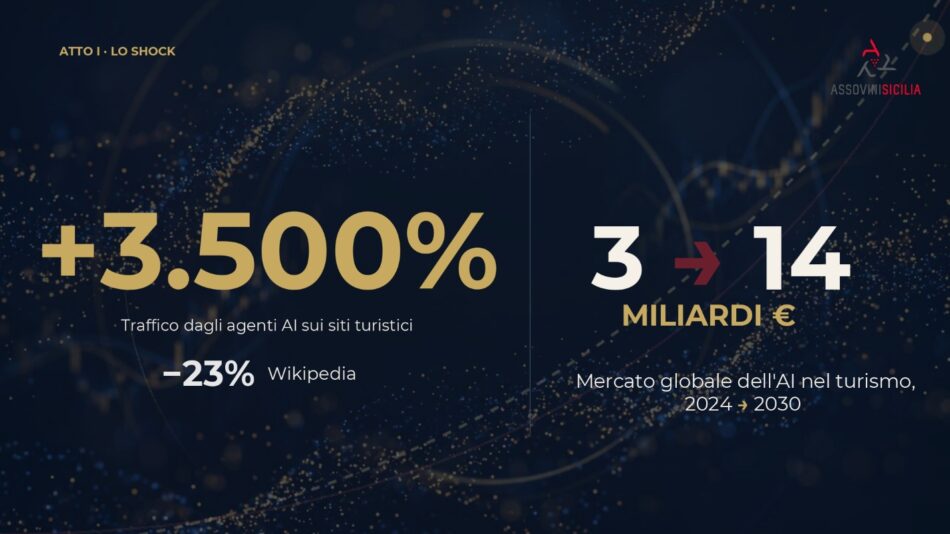
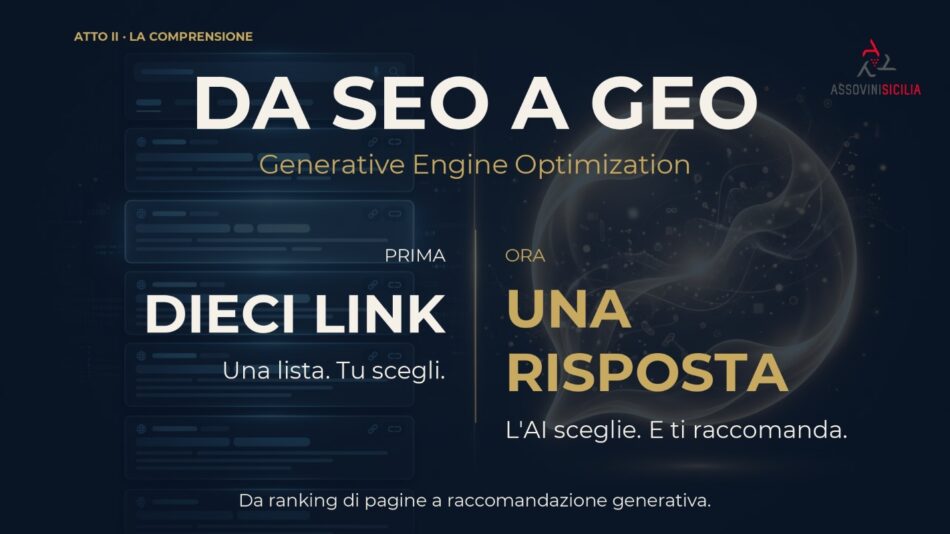
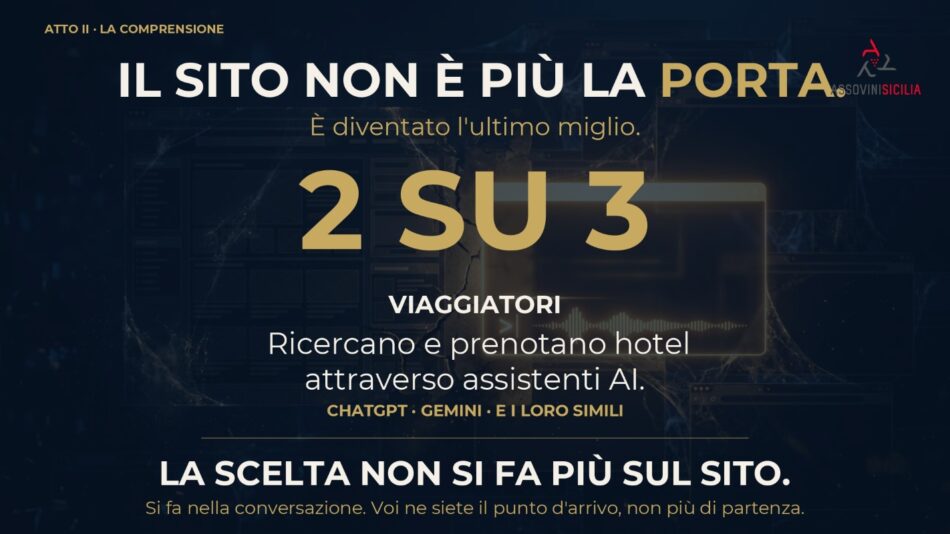
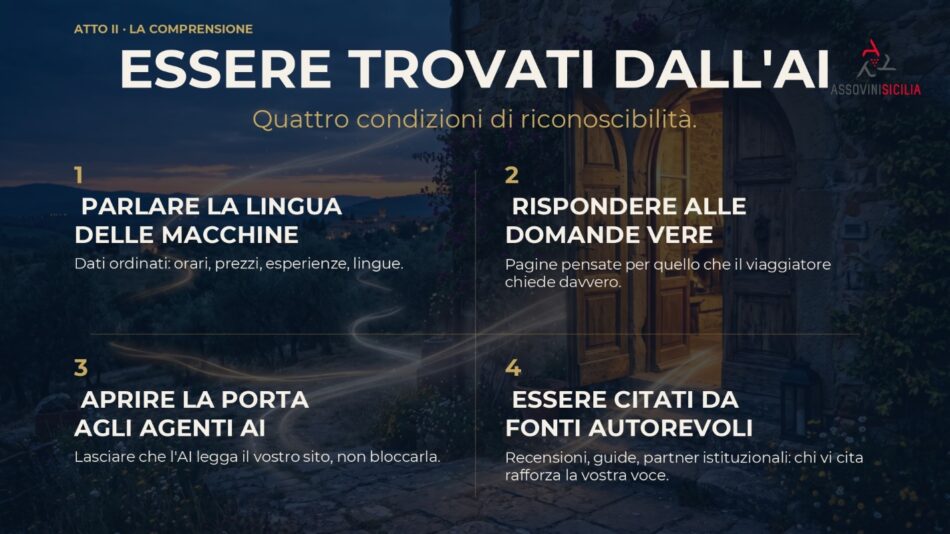
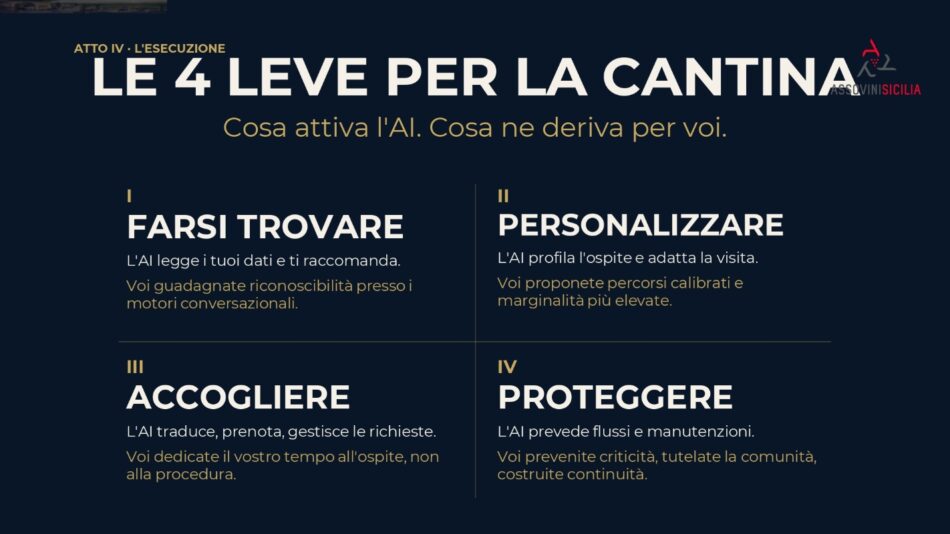
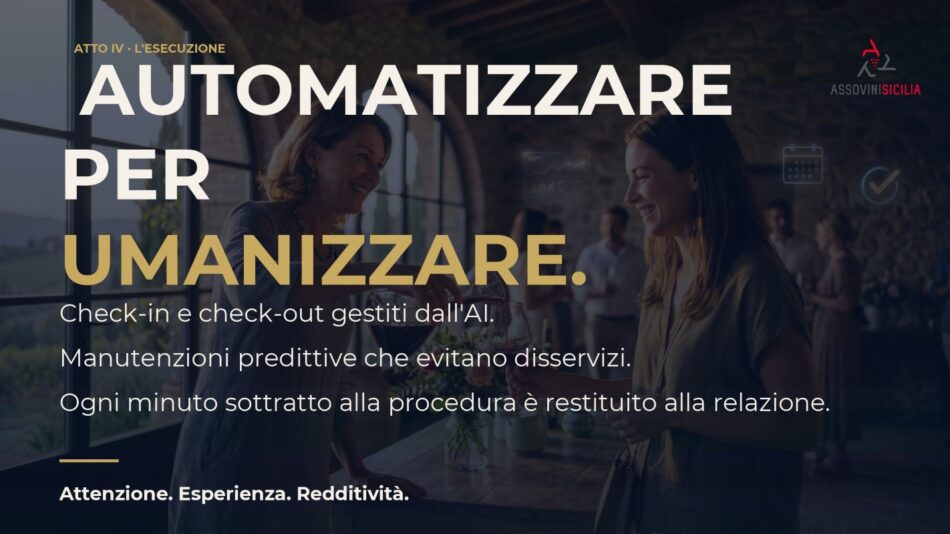
The issue of collected data, often gathered continuously and systematically but not sufficiently leveraged, was also highlighted by Edoardo Colombo, president of Turismi.AI, who studies how tourism has been revolutionized in the span of just two years by the advent of Artificial Intelligence. This is because tourists no longer search, they ask: they ask to plan a trip (59% of Generation Z and Millennials) and to book (1 in 3 requests turns into a reservation), and they ask while trusting Ai more than friends (for 41% of respondents). In the last two years, traffic from Ai agents has increased by as much as 3,500%, and from 2024 to 2030 the global AI tourism market is expected to grow from 3 billion to 14 billion euros. This is why major search platforms are relying on Artificial Intelligence: not only Meta and Google, but also Uber, Expedia, Amazon, and Alexa. “The interface disappears to make room for the relationship, and this revolution must be understood. Users no longer receive lists of website links to choose from, but a single answer selected and recommended by Ai. This means that company websites are no longer the starting point - clarified Colombo - but the final destination of searches and bookings, making it essential to be found by Ai”. How? By speaking the language of machines; by responding to real, specific questions and needs rather than generic ones; by opening the door to Ai agents instead of blocking them; and, reassuringly, by being cited by authoritative sources. This is why data and information are so important: authentic, clear, and transparent storytelling pays off; direct relationships with consumers who see their expectations met and their needs fulfilled also pay off. Artificial Intelligence collects highly precise consumer data and is capable of building tailor-made trips, managing unexpected events, and quickly finding alternatives, all perfectly customized to the individual traveler who uses it. This is exactly the ability that wineries must be able to intercept by offering precisely what visitors are looking for. This type of offering, in fact, aligns with the premium experience described by Antonello Maruotti: it can increase average spending by up to 30%, boost customer loyalty by up to 50% (through repeat visits or word of mouth), and reduce waste by 30%. Mapping data, connecting data, training teams to use data, and constantly monitoring and refining data flows are the foundations of this new way of doing tourism. The goal is to be recognized by Ai agents and fully benefit from this digital transformation. In short, it is necessary to ensure that the tourist’s Ai agent and the winery Ai-driven digital systems meet like a silent direction, always active and operating in real time.
Is it frightening? Only in part. In reality, these are new tools that both begin and end with human actions, the one true superpower of human beings. In fact, authoritative websites remain the primary source of Artificial Intelligence (when it is properly configured), and it is human hospitality listening skills and preparation which truly make the difference. This was also clearly explained by Filippo Galanti, co-founder of WineSuite, a software platform which helps companies attract more visitors and sell more wine. By analyzing companies that achieve above-average sales results, he confirmed that it is the extraordinary quality of the people working in them that makes the difference, especially in wine tourism and hospitality. “In times of crisis caused by global warming, changing consumer lifestyles, and shrinking margins due to current macroeconomic conditions, many companies, especially small and medium-sized ones, are squeezed within traditional sales channels and new markets. This is where wine tourism helps balance the books”, explained Galanti. He pointed out that in Italy only 1 in 10 bottles is sold directly to private consumers, compared to 1 in 5 in France, thanks to better digitization, and 2 in 3 in Napa Valley, where newer companies were established with a strong wine tourism focus, in addition to benefiting from higher domestic spending power. The traditional hierarchical structure of wineries, which places greater value on the enologist and therefore on directors or agronomists, while positioning marketing and hospitality staff at the base, doesn’t truly reflect the high level of expertise required for those who welcome visitors. These roles demand organizational talent, foreign language skills, flexible working hours, in-depth product knowledge, storytelling ability, as well as empathy, attention to detail, and problem-solving skills.
Essential competencies that now also include ease with digital tools, to follow the guest journey from the first interaction with the website to their return home, fostering loyalty and building a strong territorial network capable of enhancing the value of the wine tourism offering. The recommendation is to invest in these exceptional people and in cross-functional collaboration across different company roles, because the economic return is guaranteed for those who do so: in these companies, the average number of visitors increased by 12.7% from 2022 to 2023, by 22.6% to 2024, and by 15.3% to 2025. Meanwhile, average winery sales grew by 16.7% from 2022 to 2023, by 29% to 2024, and by 18.8% to 2025, also thanks to higher average spending per visit and post-visit purchases.
Beyond the questions that many people have about Artificial Intelligence - which the tools mentioned here may have partly alleviated - there is also the uncertainty surrounding younger generations. Do they drink as much as previous age groups? What language do they speak? How can their interest be sparked? The Neuromarketing Lab at Iulm University in Milan, headed by Vincenzo Russo, professor of Consumer Psychology and Neuromarketing, offers some answers. First of all, it recalls Giampaolo Fabris, who in 2010, reflecting on the 2008 crisis, identified three types of consumer reactions during periods of hardship: changing one lifestyle by rejecting an unsustainable growth model; reducing waste and unnecessary spending; or spending only on what one personally considers valuable. But what gives value? Not the product itself, but the experience. And this is where Generation Z comes into play. They don’t drink less than previous generations (in 2013, 42% of 20–24-year-olds drank wine, while in 2023 the figure rose to 50%), but they drink in a different way: occasionally and outside meals. This is because taste and identity are no longer formed at home, at school, or in youth groups, but independently.
“Moreover, the brain of Generation Z is different: the significant amount of time spent in front of screens has led to earlier cortical thinning compared to Baby Boomers - pointed out professor Russo - resulting in fewer neurological connections, greater distractibility and reduced rational control, a stronger search for immediate gratification, increased visual preference, and the first recorded intergenerational decline in fluid Iq. What does this mean? That communication has only a few seconds to capture attention - we have moved from the 20 minutes of Baby Boomers to the 12 minutes of Millennials, to just 8 seconds for Generation Z - and to capture attention, it must engage emotionally on all levels, promising authenticity and new experiences”.
For wineries, it becomes essential to deeply understand who they are and what they want to communicate about themselves, in order to convey it clearly through engaging and enjoyable activities: using games, riddles, music, art, and even provocations; involving all the senses to increase participation, enhance the sense of competence, and leave a lasting impression on young people.
Of course, it becomes complicated for companies to tailor every wine tourism offer to so many generations that differ widely in expectations, needs, and their personal perception of and connection with reality. Yet we are all, in one way or another, “emotional machines which think, not thinking machines which feel”, as Vincenzo Russo often concludes, once again placing the irreplaceable human contribution at the center of everything we do. This was also mentioned by Maddalena De Luca, director of the Department of Cultural Heritage, and Roberto Lagalla, mayor of Palermo, in confirming that culture and wine together can enhance territories like few other symbioses in the world, reviving agricultural tradition and helping young people remain rooted in their place of origin while developing it. Also Alessio Planeta, ceo of Planeta, among the wineries that led the “renaissance” of Sicilian wine, and newly appointed president of the Sicilia DOC Consortium, emphasized this point, recalling that the complexity of Sicily is both a challenge to overcome and a fascinating richness to tell, expressed through the thousands upon millions of pieces in the mosaics which adorn the island, the dozens upon dozens of grape varieties that inhabit it, and the languages spoken there. Alberto Tasca, head of Tasca d’Almerita and president of the SOStain Sicilia Foundation, echoed this by citing projects such as the entirely Sicilian lightweight bottle, the millions of bees acting as sentinels in certified vineyards, and the 50 weather stations that will provide data for the island in the coming years. He also stressed how important it is to seek consistency rather than perfection, working in synergy with all the stakeholders living in the territory so that the visitor experience is positive throughout their entire stay, not only within individual wineries.
Matteo Zoppas, president of Ice - Italian Trade Agency, also highlighted this when he outlined Ice efforts to bring more foreign buyers to Italy and more Italian companies abroad, calling for even stronger coordination among the initiatives led by Prime Minister Giorgia Meloni, the Ministry of Agriculture under Francesco Lollobrigida, the Ministry of Tourism under Gianmarco Mazzi, the Ministry of Foreign Affairs under Antonio Tajani, and the Ministry of Enterprises and Made in Italy under Adolfo Urso.
“Wine tourism is set to become one of the pillars on which to build our economy - reiterated Luca Sammartino, Regional Councillor for Agriculture of Sicily - experiential tourism focused on discovering wine, the distinctiveness of its territory, and local culture is attracting thousands of visitors to our region, and the figures show that we are on the right path: we are the second leading wine and food destination in Italy after Tuscany. We are also one of the most attractive destinations, and day by day we see growing demand for authentic, territory-linked experiences. This is a way to diversify the tourism offering and boost our economy”.
Finally, Mariangela Cambria, president of Assovini Sicilia, explained it by defining the storytelling of wine as something that “in Sicily inevitably means talking about travel: a journey which goes beyond tasting and becomes a cultural experience, an encounter with territories, communities, and the island deep identities. We chose Palermo for this edition of “Sicilia en Primeur” because it perfectly represents this layering of history, cultures, and visions which makes our land unique. Today, wine tourism is a fundamental strategic lever: not only an economic opportunity for companies, but a powerful tool to tell the story of wine through landscapes, gastronomy, art, and Sicily human heritage.” And not only.
Copyright © 2000/2026
Contatti: info@winenews.it
Seguici anche su Twitter: @WineNewsIt
Seguici anche su Facebook: @winenewsit
Questo articolo è tratto dall'archivio di WineNews - Tutti i diritti riservati - Copyright © 2000/2026