


Tuesday 6th of October 2026 - Last Update: 09:48







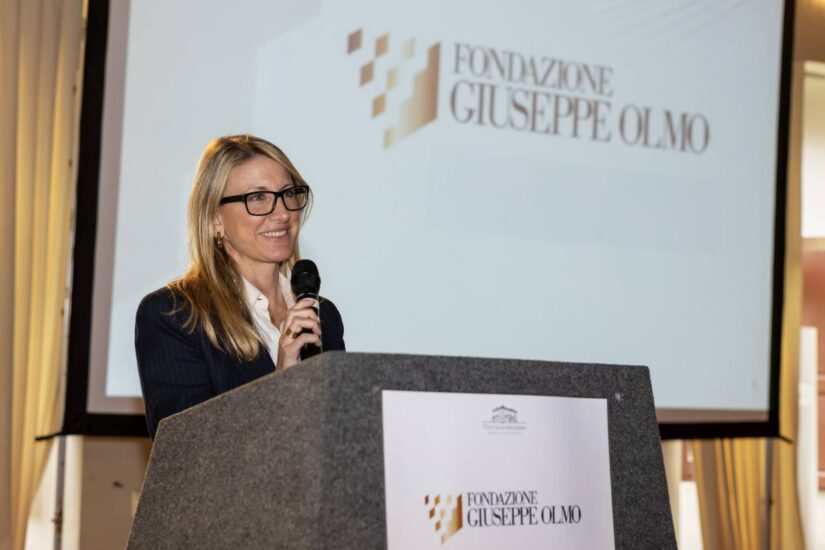
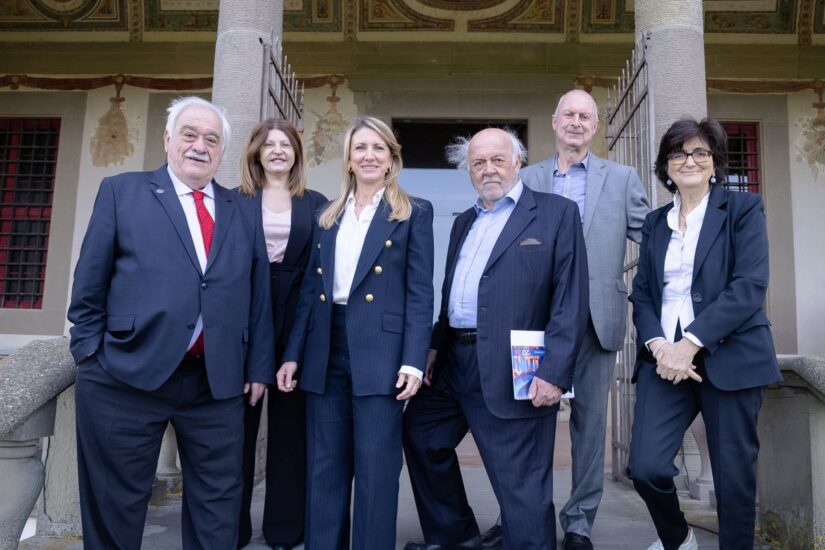
The Mediterranean Diet is facing the major generational shift currently reshaping the world. Within its complex system of foods and elements, there is also wine which has always been - since the ancient times of Mesopotamia, through the “Odyssey” up to Dante and Medicean Tuscany - the central pillar of conviviality and culture. Longevity, well-being, and health have always been associated with this dietary pattern, which, since the post-World War II period, has undergone significant transformations. With the introduction of ultra-processed foods containing large amounts of chemical additives, the Mediterranean Diet seems to have altered its intrinsic nature. Today, growing disaffection toward wine and traditional eating habits is affecting consumption, especially among new consumer groups. Health-oriented trends, neo-prohibitionist ideologies, and a direct attack on the glass of wine are among the main drivers of a gradual distancing of consumers. A response to clarify the situation and understand the future of the Mediterranean Diet comes from the synergy between research, culture, and science, which combine their expertise to analyze the issue in depth. The topic was at the center of a study day entitled “Elogio della misura: salute, vino e Dieta Mediterranea, verità scientifiche. I cibi ultra processati stanno cambiando le abitudini alimentari degli italiani incidendo su salute e longevità” - “In praise of moderation: health, wine and the Mediterranean Diet, scientific truths. Ultra-processed foods are changing the eating habits of Italians, impacting health and longevity”, organized by the Olmo Foundation at the Medici Villa La Ferdinanda in the Artimino estate in Carmignano, headed by Annabella Pascale, where, in recent days, some of the leading experts in the field spoke.
“Moderation today represents a key to interpreting the complexity of the present. We believe it is necessary to bring public debate back onto solid scientific foundations, without ideological simplifications”, underlined the same Pascale.
Professor Attilio Scienza, professor emeritus at the University of Milan and head of the scientific area of the Olmo Foundation, organizer of the study day together with Fulvio Mattivi, full professor of Food Chemistry at the University of Trento opened the reflections on the theme. His speech focused on the word “Taste”, a term that, according to Scienza, seems today to have lost its deeper meaning. “In 1735, Johann Sebastian Bach published a keyboard work, little known today, entitled “Concerto after the Italian Taste”. Although Bach had never been to Italy, he knew Italian works well and chose the word “Taste” to indicate an expression of civilization, capable of playing with the typically bright flair of our country. That civilization, over time, is unfortunately fading. Taste - said Scienza - is a true cultural emblem: it defines what a person considers important and pleasurable and dictates how we interpret art and culture in general. The concept spans multiple disciplines, and by isolating taste within our culture, we can come to understand society itself. The wine world is at a crossroads: to return to itself, it must embrace a radical choice, which will inevitably be a minority one and, precisely for that reason, revolutionary. Being a minority doesn’t mean being insignificant; on the contrary, it allows one to have real influence over true enthusiasts. While the massive abandonment by consumers causes bitterness and sadness, it also represents an extraordinary opportunity for change, to focus on quality rather than the production of millions of hectoliters. The future of the sector shouldn’t be seen as decline, but as an opportunity to move from a compulsory and traditional belonging to a purely conscious choice. The real problem today - concluded Attilio Scienza - is the lack of a shared vision to define the role of wine in contemporary society. It is imperative to defend wine from health-obsessive attacks and extremist ideological positions. Italian taste is a unique heritage in the world, a richness that, now more than ever, we have the duty to enhance appropriately”.
From a clinical and preventive perspective, professor Licia Iacoviello, an internationally renowned epidemiologist specializing in cardiovascular risk factors and Mediterranean Diet research (University of Ulm, Giuseppe De Gennaro Bari, and director of the department at Irccs Neuromed), highlighted how the term “Mediterranean Diet” is now overused: “the base of its true food pyramid consists of plant-based foods, while meat and sweets are at the top, with a recommendation for limited consumption. The primary interest of research is to understand whether populations following the Mediterranean Diet actually enjoy longer lives. Data confirms that this dietary pattern is associated with a potential reduction in various diseases; for example, it reduces cardiovascular risk by one third. In a study conducted on a sample of residents in the Molise Region, it emerged that those who still adhere to this regimen reduce mortality from cardiovascular causes, a benefit that also extends to diabetic patients.
The Mediterranean model is, in every respect, a health model, recognized in 2010 as a Unesco Intangible Cultural Heritage of Humanity. This recognition is due to its ability to unify knowledge, symbols, and traditions globally, embracing the entire supply chain: from planting the grain to its commercialization, to the way it is experienced through the social act of eating together. Alongside foods, the pillars of this diet include biodiversity, seasonality, gastronomic and physical activities, within an environment which inspires meditation. To this same cultural context, wine also fully belongs. It is the overall combination of different foods - explained Iacoviello - which makes the Mediterranean Diet unique and healthy. However, adherence to this diet has also become a serious socioeconomic issue. After the major crisis of the mid-2000s, consumption halved. As highlighted by the “Moli-sani’ study, the diet has become closely linked to socioeconomic status and education level: what was historically considered the “diet of the poor” has become the preserve of the wealthy. Moreover, consumers often purchase products commercially classified as “Mediterranean Diet” which in fact are not, especially in lower price ranges. Many widely advertised industrial products are actually ultra-processed foods, loaded with additives (up to ten at once), in which the concentration of modified substances is so high that the original culinary ingredient is almost absent. While in Italy the consumption of processed foods is around 14%, in countries such as Germany, Denmark, and Ireland this percentage reaches 60%. The future of the Mediterranean Diet therefore represents a true challenge: protecting it means defending not only public health, but also culture and social equity”.
Expanding the view to social dynamics, professor Fabiola Sfodera, from the Department of Communication and Social Research at Sapienza University of Rome, shifted attention to the future by analyzing culture, balance, and sociality. Studying alcohol consumption from empirical evidence and specialties, she highlighted how analysis often focuses only on volumes, ignoring the vectors of change. Regarding wine and Italian consumption styles, four major contemporary trends emerge: demographic aging, which directly impacts purchasing habits; cultural contamination, evident in the fact that soy sauce is now among the most consumed products by younger generations; climate change, with its multiple effects on production; and artificial intelligence, increasingly used by people to seek dietary advice. “These factors are deeply reflected in the Italian scenario. From 2000 to 2022 - explained Sfodera - per capita consumption declined by 17%. Today, the percentage of those who drink wine daily has dropped from 24.9% to 20.1%. We are facing a radical shift in gender and generations, with young women now consuming proportionally much more wine than in the past. Nevertheless, in European panorama, Italy remains a virtuous country: people drink less, and harmful daily consumption stands at only 1.5%, even though rules on wine promotion aren’t particularly strict and prices remain accessible. The real turning point concerns younger generations, whose consumption is increasingly disconnected from traditional conviviality. There is a rise in drinking outside meals or in the phenomenon of “binge drinking” on Friday nights, outlining new patterns significantly influenced by social networks. In the Mediterranean Diet, alcohol consumption is characterized by moderate wine intake during meals. Losing this conviviality means losing the Mediterranean lifestyle, dangerously moving closer to the Northern European model, characterized by far less balanced consumption”.
Doctor Giovanni De Gaetano, a specialist in Clinical and Laboratory Hematology, president of Irccs Neuromed and honorary member of the Italian Academy of Vine and Wine, brought the discussion back to history and medical science. “Wine is a reality with at least three thousand years of history, celebrated in the episode of Ulysses and Polyphemus in the “Odyssey” and echoed in the maxim inscribed on the Temple of Apollo at Delphi: “moderation is the best thing”. From a scientific point of view, moderate wine consumption can be associated with a reduction in cardiovascular disease - said De Gaetano - but it is essential to clarify that neither alcohol nor wine directly cause this reduction. Epidemiology studies statistical phenomena to which a rigid cause-effect principle can’t be applied. Likewise, recent dogmatic claims that wine, even in moderation, causes cancer lack absolute scientific foundation: it may be associated with cancer risk, but it doesn’t mathematically determine the event. Real medicine doesn’t recognize zero risk, nor absolute benefit. The primary objective should be to live well according to one culture, reducing risks without eliminating cultural, social, and economic context. A fitting parallel is driving: we accept traveling by car while respecting speed limits to create conditions that reduce risk. For this reason, the correlation between mortality and smoking can’t be compared to that of wine. A cigarette is always harmful and is a dogmatic factor, while the impact of wine varies depending on the number of glasses consumed and numerous other segmented factors, influencing cardiovascular risk in complex ways. Consequently, proposals such as placing health warnings on bottles like Brunello di Montalcino - comparing them with cigarette packs - are unacceptable due to lack of scientific evidence. Finally, in prevention, chronological age proves to be a less important predictor of mortality risk than biological age, that is, the actual functioning state of the body. Those who maintain a younger biological age inevitably face a lower mortality risk”.
Fulvio Orsini, a medical biochemist and professor emeritus of Biological Chemistry at the School of Medicine of the University of Padua, completing the scientific picture, who offered a counterintuitive and enlightening perspective: “if we don’t take in something that potentially “harms” us, we do not adequately train our defense mechanisms”. The professor traced the evolution of public debate: “in the 1990s, wine was discussed analytically, then the focus shifted to alcohol in general, eventually leading to an overlap with political and ideological movements that blurred the terms of the issue. Today, the World Health Organization implements a paternalistic approach, classifying ethanol as carcinogenic in a way that is often not precise and applying to medical risk the same mathematical model used for financial risk. Epidemiology, on the contrary, must take into account a complex network of factors”. Orsini also recalled how, following the studies of Ancel Keys - the “discoverer” of the Mediterranean Diet - there was a drastic reduction in fat consumption; however, later, sugar industry lobbies funded targeted research, such as that conducted by some Harvard scholars, effectively triggering a global epidemic of diabetes and obesity. Some of Keys own studies, including the famous “Seven Countries Study”, were partly conducted following the logic of cherry-picking, selecting only the data useful to support a predetermined thesis. “When science produces misleading data and is used as a dogma to spread new cultural norms rather than to describe probabilities - added Orsini - it causes incalculable damage. In this scenario, the Puritan legacy of Anglo-Saxon origin plays a significant role: alcohol is framed as a “sin” and an impure substance, and virtue is pursued through prohibition. The Mediterranean model, on the contrary, assigns wine a ritual function integrated into daily life, aiming at balancing through education. By studying the chemistry of wine in depth, one discovers that certain molecules, such as polyphenols, induce a mild level of stress in human cells, forcing them to activate and strengthen their defense mechanisms. This is the biochemical demonstration of how something which seemingly “frightens” the cell can through a controlled reaction mechanism, generate a real benefit for the entire organism”.
Ultimately, safeguarding the Mediterranean Diet and the convivial role of wine represents much more than a simple medical prescription: it is the defense of a deep cultural identity and a centuries-old balance. In the face of the advance of ultra-processed foods and the proliferation of neo-prohibitionist ideologies aiming to demonize ancient social rituals, the most effective response lies in education and awareness. Embracing this lifestyle means rejecting dogmatism and the easy shortcuts offered by the market, instead rediscovering the moderation and “taste” which have characterized our civilization for millennia. This dietary model reminds people that true health is not achieved through sterile deprivation, but through a complex, balanced, and richly nuanced harmony. The future of wine and of Italian and Mediterranean gastronomic tradition, therefore, is not destined for decline, according to the experts, but for a qualitative rebirth, capable of proudly reaffirming its central place at the table as an ancient, revolutionary, and deeply human gesture.
Copyright © 2000/2026
Contatti: info@winenews.it
Seguici anche su Twitter: @WineNewsIt
Seguici anche su Facebook: @winenewsit
Questo articolo è tratto dall'archivio di WineNews - Tutti i diritti riservati - Copyright © 2000/2026