


Wednesday 28th of October 2026 - Last Update: 17:39







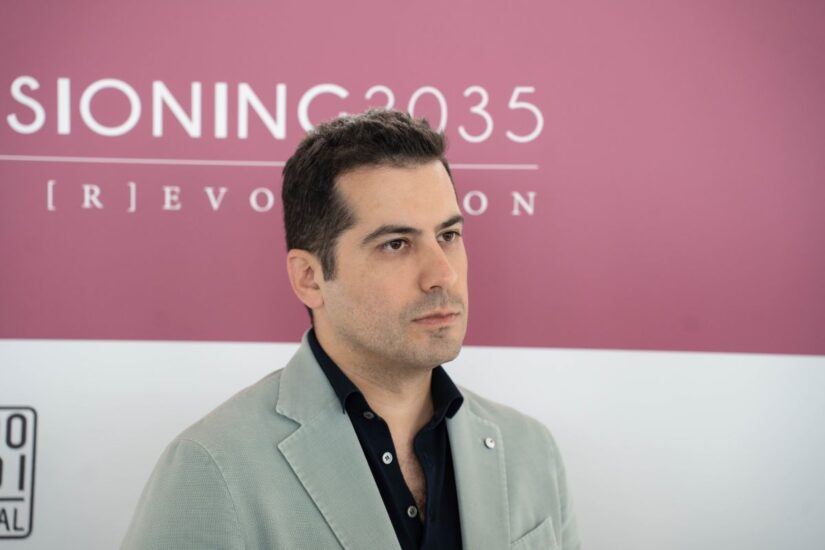
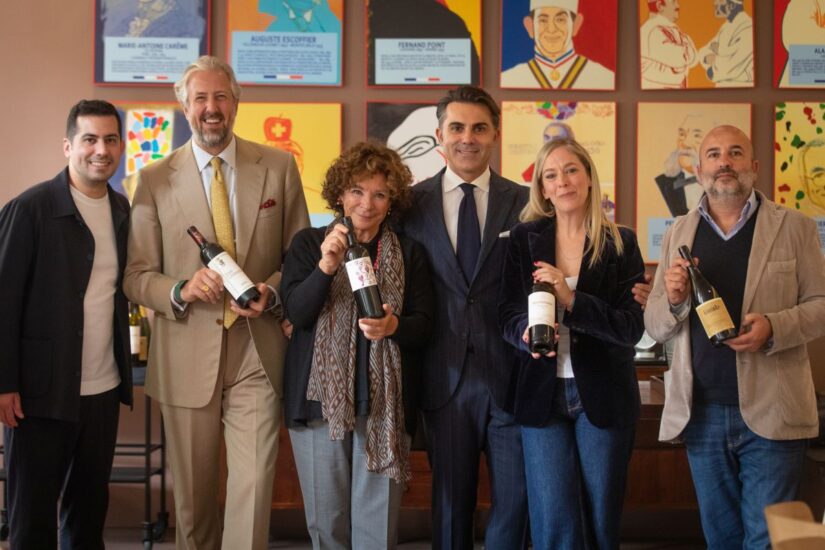
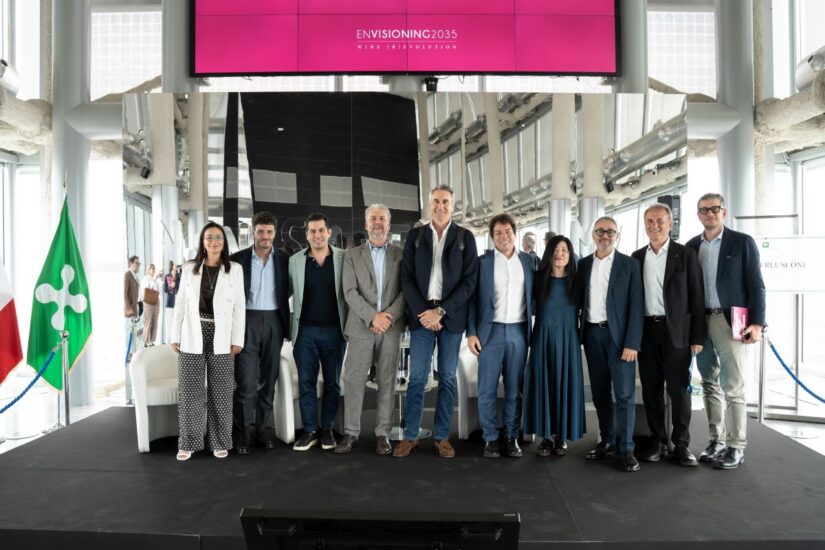
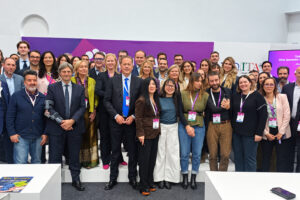
Corporate culture and cautious business management, the ability to anticipate (as far as possible) changes in markets and consumers by analyzing them carefully, decisiveness, proper product positioning, and the opening of new markets and channels: these are good principles that have always guided, or should guide, the work of companies in every sector. And, these are the principles which the wine industry, now facing what some describe as a crisis and others as a transformation after more than 15-20 years of uninterrupted growth, must also pay closer attention to. In particular, by focusing on 5 key levers to regain competitiveness: management, markets, speed, positioning, and consumers, with “wine tourism, emerging markets, and a new corporate culture” indicating “the directions on which Italian wine can build competitiveness in the coming years”. This is the interpretation that emerged from Envisioning2035 - Wine [R]evolution, the summit promoted by FreedL Group headed by Edoardo Freddi, held today at Palazzo Regione Lombardia in Milan (a in-depth coverage video will be available on WineNews in the coming days, ed), with contributions from, among others, Pierluigi Catello, Executive Manager Food & Wine Industry and Head Hunter at Michael Page, Luca Castagnetti, chartered accountant and founder of Centro Studi Management DiVino at Studio Impresa, Riccardo Cotarella, president of Assoenologi, Lavinia Furlani, president of Wine Meridian, Federico Giotto, ceo of GiottoConsulting, Stevie Kim, Managing Partner of Vinitaly, Francesco Magro, ceo and co-founder of Winelivery, Alessandro Mutinelli, president and ceo of Italian Wine Brands, Ettore Nicoletto, wine industry expert, Denis Pantini, head of Nomisma Wine Monitor, and René Sorrentino, owner of Ges Sorrentino.
Everything starts from the figures: in 2025, global wine exports declined to 33.8 billion euros, with Italy recording a 3.6% drop in value, according to data reported by Nomisma Wine Monitor head Denis Pantini. Meanwhile, wine tourism has reached 3.1 billion euros in revenue for Italian wineries, and emerging markets have increased their share of Italian exports from 15.1% to 19.5% between 2019 and 2025. These figures clearly outline a scenario of change. And, according to Edoardo Freddi, ceo of FreedL Group, “Italian wine is not in crisis: what is in crisis is an outdated model of how it is conceived, sold, and communicated. With Envisioning2035, we aimed to shift the discussion from the celebration of the product to the construction of a more modern system: one capable of making faster decisions, competing more effectively in international markets, and understanding consumers before competitors do”.
Envisioning2035 developed the debate along three main axes. The first concerned the company: moving beyond the idea of export as a promotional activity or trade fair participation, toward building strategies tailored to geographical areas, channels, and consumption clusters. Within this framework also fall the themes of human capital, data analysis, profitability, and the ability of wineries to redesign themselves as businesses in more selective scenarios. The second direction focused on the consumer. Italian wine no longer competes only with other wines, but with new consumption occasions, spirits, cocktails, premium beers, and more immediate social rituals. The transformation also involves language: digital tools, communities, e-commerce, podcasts, and Artificial Intelligence are changing the way wine is discovered, desired, and purchased, especially by younger generations. The third axis addressed identity as an economic lever. Terroir, appellations, and production culture remain central, but they must become more accessible, understandable, and adaptable to different audiences, overcoming entrenched habits and making room for new styles and market trajectories. In this context, wine tourism can no longer be limited to hospitality: it must evolve into relationship-building, commercial conversion, and continuity beyond the winery visit.
Among the most interesting contributions, there was the analysis by Luca Castagnetti, chartered accountant and founder of the Centro Studi Management DiVino of Studio Impresa, who examined the economic and financial situation of Italian wine companies starting from a privileged observatory: the systematic monitoring of 1,000 wineries organized as corporations and cooperatives that he has been conducting for years. Castagnetti analysis highlighted how the sector is entering a new phase, characterized no longer by widespread growth but by a progressive selection between truly solid companies and more fragile business models. “As early as 2024, more than 50% of the monitored companies showed declining revenues and profitability, especially among smaller businesses. The first evidence for 2025, however, shows that the slowdown also affects more structured wineries: according to the most recent sector analyses, even among companies with revenues above 20 million euros, the share of businesses experiencing falling turnover and pressured margins is increasing significantly. In this scenario, the asset value of vineyards continues to represent an important anchor, but it risks masking the real economic sustainability of the business”, underlined Castagnetti. He also pointed out how, in difficult market conditions, the decisive factor is not only product quality or the strength of the denomination, but the company ability to generate cash flow. “A winery may have good positioning, a recognized product, and significant land assets - said Castagnetti - but without financial balance, it still risks running into difficulties. For this reason, control of cash flows, debt sustainability, the ability to plan investments, and careful management of deadlines become central elements of business management”. Castagnetti then addressed the role of banks, consortia, and public funding, highlighting “a widespread lack of preparedness to face a crisis phase after years of growth. Banks are aware of the difficulties and focus primarily on the ability of companies to generate cash flow. Consortia can play a fundamental role in managing supply, but they often have to deal with conflicting internal interests. Public funding, finally, risks supporting supply-side investments without sufficient verification of actual market demand”. From this, a clear proposal comes: in the coming years, public resources should be directed less toward undifferentiated support for production investments and more toward strengthening demand, exports, commercial processes, and more effective communication of wine, especially toward new consumers and younger generations. “Continuing to increase production capacity without asking who will buy the product means fueling already evident imbalances”.
The conclusion of Castagnetti speech is that “there is no single measure capable of solving the difficulties of Italian wine Smes. The real turning point lies in greater entrepreneurial awareness: targeted investments, skilled people, corporate culture, management control, monitored processes, and the ability to adapt to market changes. Wine remains a great Italian asset, but today competitiveness increasingly depends on the quality of the company that produces it”, said Castagnetti. Because “a winery is a business. It may sound like an obvious statement, yet it is not. A great deal has been said and is still said about wine as a product, but very little about the company that produces it. The real question today is this: what characteristics must a winery have to be competitive and create value in a challenging market context like today’s one? There is no structural intervention capable of changing the fate of all Smes in the sector, but rather a greater awareness among operators of how a company must operate if it wants to achieve results: targeted investments, skilled people, corporate culture, processes that are monitored and improved over time, and appropriate communication”, concluded Castagnetti.
But, the central issue of “cash flow management” was also addressed by Alessandro Mutinelli, Chairman and ceo of Italian Wine Brands: “in such a complex context, with declining volumes and competitive pressure on prices due to production exceeding demand, how can a company be managed in a financially sound way? In this scenario, cash management is fundamental. It always is, regardless of the circumstances, but in the current environment it is even more crucial, and I will explain why. With an income statement in the red, it can take several years for a company to fail. With a balance sheet crisis, however, it can happen in a minute”. That minute is when lenders tell you, “we will no longer finance you, you must repay your debt” underlined Mutinelli - in a market expansion phase, with growing revenues and margins, access to credit is easier. Lenders - mainly banks in Italy - feel more confident, they understand the context very well, and they place their trust in companies. Credit becomes necessary - added the manager - to finance net working capital (inventory, trade receivables, and trade payables) and investments. In a context of declining revenues, cash management becomes the absolute priority, because access to credit becomes increasingly difficult and costly, and inventory tends not to be liquidated”. Mutinelli also provided some operational guidance, ranging from reducing inventory, even through promotions, to postponing non-essential investments, divesting non-core assets, and cutting operating expenses that do not generate revenue.
“Wine industry is being called upon to question some of its founding dogmas: the uncritical bond between wine and territory, the dominance of denominations as the sole compass of value, and the tendency of operators to focus on winning categories without daring to explore new paths, new varieties, and new styles. This inertia, while having consolidated significant assets, now risks becoming a structural limitation - said Ettore Nicoletto, a long-standing manager in the wine sector - change requires, first and foremost, courageous and enlightened leadership, capable of interpreting markets with competence and vision. The wine system, both cooperative and private, is called to find a new balance between external management and entrepreneurial instinct, between managerial expertise and ownership leadership. Not a contradiction, but a necessary complementarity. The wine sector will only emerge from its current difficulties by building new alliances: among producers, among territories, and among different areas of expertise. The future belongs to those who can build systems, innovate boldly, and turn the diversity of skills into a competitive advantage”, concluded Nicoletto.
But the future of wine, like that of any other sector, depends on the people who drive it and their skills, as underlined by Pierluigi Catello, Executive Manager Food & Wine Industry and Head Hunter at Michael Page, a British multinational recruitment firm. “Italian wine today faces a structural managerial challenge: it struggles to attract talent, fails to retain it, and has difficulty opening up to expertise from other sectors. The causes - said Catello - are multiple: lack of career paths, family ceiling barriers, and an almost total absence of employer branding. But the deeper problem is cultural: we work in a sector which still prefers trusted individuals over competent ones, delegates without granting real autonomy, and promotes loyalty over merit. The result is an aging management, few women in leadership positions, and fragile organizations in a market which demands speed in decision-making and strong managerial capabilities. The answer is not to hire more people, but the right ones: with expertise in profitability, brand development, and data analysis. To remain competitive, the Italian wine sector must begin investing in the quality of its people with the same dedication it invests in the quality of its product”.
Copyright © 2000/2026
Contatti: info@winenews.it
Seguici anche su Twitter: @WineNewsIt
Seguici anche su Facebook: @winenewsit
Questo articolo è tratto dall'archivio di WineNews - Tutti i diritti riservati - Copyright © 2000/2026