


Saturday 17th of October 2026 - Last Update: 23:55







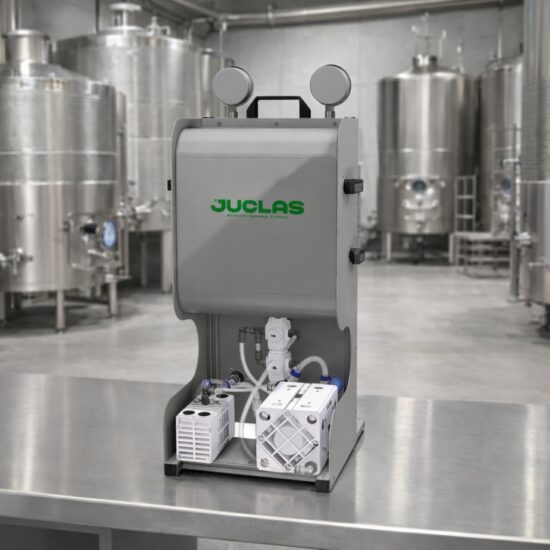
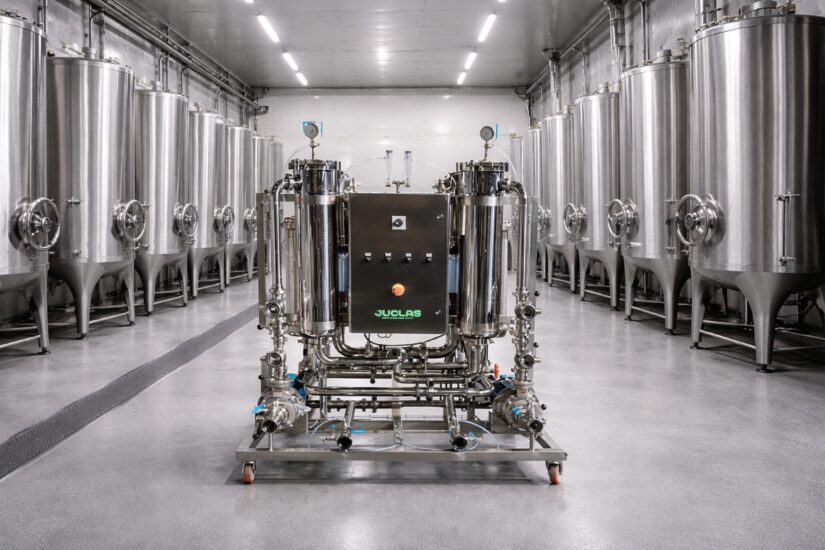
Whether you like it or not, the trend of alcohol-free or low-alcohol wines is gaining ground in the market. And while today’s focus is on de-alcoholization in wineries, there are already those who are going a step further, thanks to technology, to extend the ability to de-alcoholize and lower the alcohol content of wines before consumption in restaurants or even in the homes of wine enthusiasts. So, it will be a little bigger than a kitchen appliance, and to use it, all you’ll need to do is plug it into an outlet and turn on the faucet, the first “home” wine de-alcoholizer, which is still being refined but should be ready by the end of the year, perhaps as a Christmas gift, even though the cost is not insignificant (it’s expected to be around 5,000–7,000 euros). Vasongroup, a historic Verona-based company that has been working alongside producers for 60 years to create winemaking systems for wineries and a pioneer in the field of wine dealcoholization, is developing this truly innovative product, which is sure to spark debate just as the entire phenomenon of “No-Lo” wines does: “Since 2012 (when the OIV, the International Organization of Vine and Wine, included it among official winemaking practices up to 20%, ed.), we have specialized in machinery to perform this function, and many have suggested that we also offer a non-industrial, simpler version designed for the end consumer. So we started working on it”, explains Albano Vason, the group’s managing director, to WineNews.
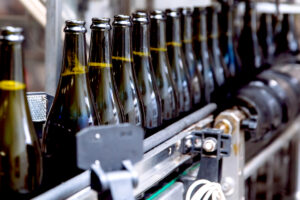
In recent months, the Verona-based company unveiled the MasterMind Remove Lab Unit, a device designed to support wineries during the experimental phase of producing no- or low-alcohol wines (as we partially covered in this video). And now, following the lead of that model, which was already a “mini-de-alcoholizer” for laboratories, a “home” version is also on the way. Or a restaurant version. The process remains the same, but on a smaller scale: To reduce a wine’s alcohol content, Vasongroup uses “membrane technology”, that is, hydrophobic microporous membranes that allow alcohol in gaseous form to pass through to the opposite side, where water acts as the extraction solvent. The difference in alcohol concentration between the wine, which flows on one side of the membrane, and the water, which flows on the other side, creates a vapor pressure gradient that drives the process. Obviously, the extraction water and the wine never come into direct contact with each other.
“The process involves first pouring the bottle of wine into a carafe and then, using a small tube, feeding it into the machine and starting the process”, explains Vason. “So far, we’ve always designed systems that de-alcoholize up to 25 liters and take some time, but for a Bordeaux wine, I think a few hours will suffice. It also depends on how much you want to reduce the alcohol content. If you just want to “remove” a few degrees, it will clearly take less time than it would to get the alcohol content below 0.05%”. The home de-alcoholizer can perform both functions, whether you want low-alcohol wine or alcohol-free wine, while always “preserving its quality: the wine isn’t heated and doesn’t lose its aromas”, Vason assures us. There is one thing, however, that cannot be done, and that is to precisely control the desired final alcohol content of the wine being de-alcoholized: “It would be too expensive to include this feature in a small machine like this one (though it is available in industrial models costing over 100,000 euros, ed.)”, says the company’s CEO. “It certainly removes a lot of alcohol and lowers the alcohol content, but at the end of the process, you don’t know exactly how much is left. As the dealcoholization process gets underway, however, you can taste it. You decide when to stop, as long as you like the taste. Then you stop it”. All of this applies to still wines, regardless of alcohol content, while the process is more “complicated” for semi-sparkling or sparkling wines: “With these types of wines, the membrane can also allow CO₂ to pass through, thereby removing the carbonation”. In fact, just as the machine doesn’t work on spirits, it also can’t be used to dealcoholize beer: “Unless they’re carbonated again afterward”, adds Vason, half-jokingly, “maybe for those who have a sparkling water maker at home, this could be an option, too. Of course, I wouldn’t go around de-alcoholizing a Trentodoc, a Franciacorta, or a quality Champagne. However, if I want to make a sparkling de-alcoholized wine at home, I might take a still wine, de-alcoholize it, and then “sparkle” it using a system that’s now common in many homes”.
But while Vasongroup’s dealcoholization systems have so far been designed for wineries looking to enter the non-alcoholic and low-alcohol market, or those operating on behalf of other companies, what customer base is this home dealcoholizer aimed at? “Everyone. The thing is, if someone wants to drink dealcoholized wine, they can buy it and take it home, but there are also those who want to enjoy a wine that was conceived and produced with alcohol, yet would like to reduce the alcohol content a little, perhaps bringing it down from 14 to 10 degrees”, says Vason. “Then there are also bars and restaurants to consider. Perhaps even more so than at home. There are people who go out to dinner and then have to drive. You can have a 12-degree wine dealcoholized, bring it down to 6–7 degrees, and enjoy one more glass. Or there are those who want to try a dealcoholized wine out of curiosity at a bar. It’s a way to diversify. We’re still finalizing the model, but between now and the end of the year, when it will be ready, there could be significant developments. Consumption patterns are changing, grapes are ripening earlier and earlier, and alcohol levels are high: factors that sometimes result in heavy wines that aren’t always pleasant”.
And last but not least, the issue of health comes into play here as well: “Wine is now seen as a scapegoat for everything related to alcohol”, concludes Vason, “but wine isn’t just alcohol. In fact, it contains only a minimal amount of alcohol compared to spirits. It is a fermented product that contains antioxidants and even some postbiotics. If we reduce the alcohol content of wine slightly, we can also raise the general level of knowledge about the product. What it contains, how it’s made. And this, perhaps, could also help boost consumption”.
Copyright © 2000/2026
Contatti: info@winenews.it
Seguici anche su Twitter: @WineNewsIt
Seguici anche su Facebook: @winenewsit
Questo articolo è tratto dall'archivio di WineNews - Tutti i diritti riservati - Copyright © 2000/2026