


Thursday 8th of October 2026 - Last Update: 17:44






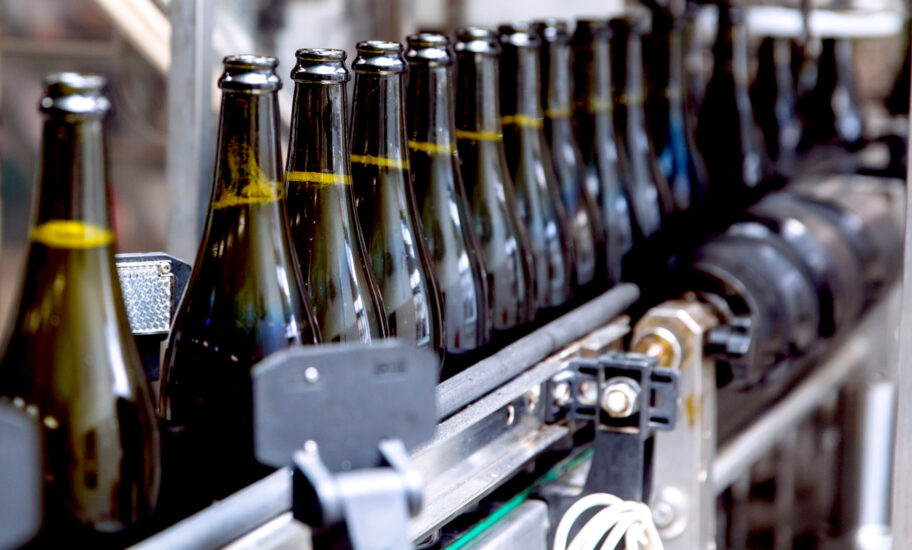

Wine bottlings don’t tell the whole story, but they do reveal a great deal about the state of the wine market, especially when it comes to wines with a Designation of Origin or Geographical Indication. Even within a context that remains highly challenging, particularly for red wines as has been the case for some time, some positive signals are emerging, notably from denomination wines in the white and sparkling categories. This is according to the Business Intelligence division of Valoritalia, the leading Italian wine certification body, chaired by Francesco Liantonio and managed by Giuseppe Liberatore, which certifies 219 denominations and covers 56% of Italy PDO and PGI wine production. According to data updated onSeptember 30th and referring to denominations and productions certified by Valoritalia, the decline in bottlings came to a halt in the third quarter of 2026 (-0.3% compared to the same period of 2025), while the contraction recorded over the first nine months narrowed to -3%, for a total of 9.86 million hectoliters (down 4.2% compared to the average for the 2023-2025 period).
“After a worrying -7.7% year-on-year decline in the first quarter, the second quarter had already shown a marked slowdown in the downturn (-0.6%). The recovery consolidated in the third quarter, with volumes essentially stable compared to the same period in 2025 (-0.3%). Particularly significant was the performance in September, when bottlings rose by 4.9% compared to the same month a year earlier”, explained Valoritalia. The certification body stressed, however, that the overall picture “continues to be characterised by significant concerns. Geopolitical tensions, trade policies adopted by the United States and uncertainty surrounding tariff regimes continue to influence operators’ decisions, particularly on international markets. These cyclical factors are compounded by more structural dynamics linked to changes in consumption patterns and drinking occasions across major export markets”. According to the International Organization of Vine and Wine (Oiv), global wine consumption fell by 2.7% in 2025, while consumption in the European Union declined by 3.1%, “in a context where economic factors, trade tensions and changing consumer habits continue to overlap”. On the trade front, analyses by Nomisma Wine Monitor, Valoritalia added, show that in the first seven months of the year the value of wine imports across the world 12 leading markets fell by -11%, with a particularly sharp decline in the United States, where imports dropped by -23%.
At the same time, Valoritalia notes that bottlings of DOC wines rose by 5% and those of DOCG wines by 4.9%, while IGT wines suffered a sharp decline (-18.9%). Looking at the first 9 months as a whole, DOC (-0.5%) and DOCG (-0.2%) wines were essentially in line with 2025 levels, whereas the situation remained decidedly negative for IGT wines (-13%). “A market operating at different speeds is therefore emerging, where the overall stabilisation of volumes is accompanied by growing divergence among categories - explained Valoritalia - adding that “the differentiation becomes even more evident when looking at the main product types”. In the third quarter, still white wines increased by 6.7% and sparkling white wines by 7.6% compared to the same period in the previous year. Red wines, by contrast, recorded a decline of 6.7%. The quarter performance significantly altered the balance for the first nine months of the year. Between January and September, still white wines grew by 1.8% and sparkling whites by 1.3%, while red wines remained in negative territory, declining by 8.8%.“The figures therefore appear to confirm a transformation in the composition of demand: the recovery is not affecting all categories equally, but is being driven primarily by white wines and, particularly during the quarter, by sparkling wines, while red wines continue to show greater weakness”.
Regional dynamics also reveal significant differences. During the first nine months, bottlings fell by 4.7% in Central Italy and by 4.1% in the North-East. The North-West returned to positive territory (+1.4%), while Southern Italy recorded a 26.7% increase, albeit on much lower volumes within the scope of denominations certified by Valoritalia. “The regional picture - noted the organization - must be interpreted in light of the distribution of certified denominations: Valoritalia figures are particularly representative of northern regions, where the volumes certified by the organisation account for more than 90% of all designation wines”. Valoritalia also stressed the importance of closely monitoring stock levels. On July 31st, 2026, the last statistically comparable month before the certification of the new vintage, inventories within denominations certified by Valoritalia stood at approximately 15.96 million hectoliters, compared with 13.67 million hectoliters in the same period of 2025, representing an increase of around 16.8%.
In any case, “the third-quarter data provide an encouraging signal after the difficulties experienced in the first part of the year. We cannot yet speak of a structural reversal of the trend, but the substantial stability in bottlings and the return to growth for DOC and DOCG wines - comments Francesco Liantonio, president of Valoritalia - highlight the sector resilience and capacity to respond. This comes against the backdrop of an international environment that remains complex, shaped by geopolitical tensions, trade uncertainty and evolving consumption models. Data also shows very clearly that the market is not moving uniformly. White and sparkling wines - concludes Liantonio - are performing significantly better than red wines, just as DOC and DOCG wines are outperforming IGT wines. The ability to identify these differences promptly is one of the key strengths of Valoritalia Business Intelligence: transforming the data generated through certification activities into a knowledge tool available to companies, consortia and the entire supply chain”.
Copyright © 2000/2026
Contatti: info@winenews.it
Seguici anche su Twitter: @WineNewsIt
Seguici anche su Facebook: @winenewsit
Questo articolo è tratto dall'archivio di WineNews - Tutti i diritti riservati - Copyright © 2000/2026