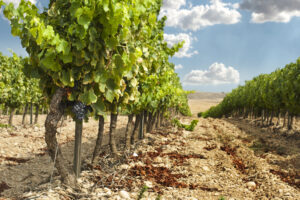









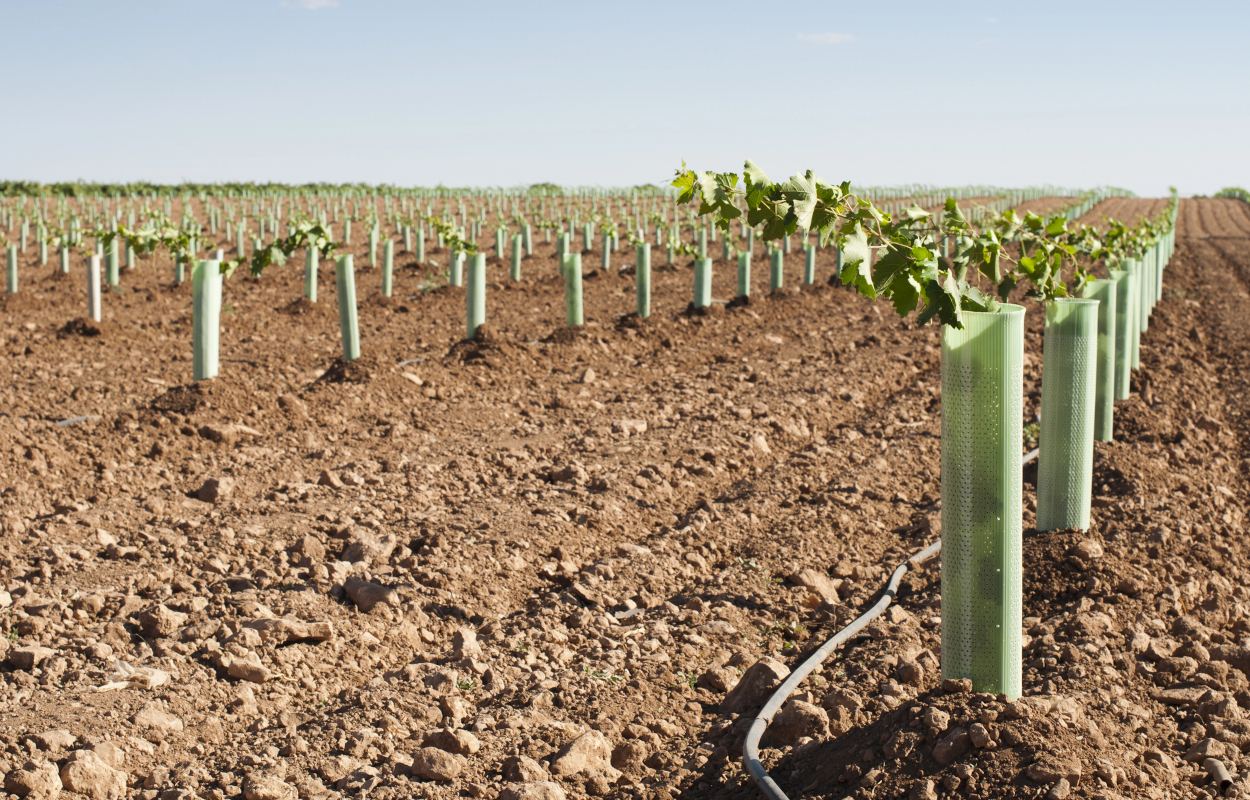
To rebalance declining demand and excess production, the wine sector in many countries, from France to Spain and from Australia to the United States, particularly California, is witnessing vineyard extirpation schemes of varying scale, with differing levels of public funding support. While Italy is still debating the best course of action, with an increasing number of industry organizations expressing support for, or at least not opposing, targeted vine removal measures in struggling areas rather than nationwide programs, another voice has entered the discussion: that of those who produce the vines, or more precisely, the vine cuttings. Italian nursery operators are calling for policymakers to “stop funding the extirpation of Italian vineyard area and instead invest available resources in its renewal”. This joint proposal comes from the two industry associations representing almost the entire sector: Miva (Moltiplicatori Italiani Viticoli Associati), which brings together 100 businesses across all Italian regions, and the Friuli Venezia Giulia Association of Viticultural Nurseries, which includes 12 nurseries of varying size and production capacity, among them industry leader Vivai Cooperativi Rauscedo, in a region which accounts for more than 50% of Italy total vine nursery production.
According to the two associations, to address the challenges currently facing Italian viticulture, “the response to the crisis cannot be found in extirpation subsidies, which risk permanently reducing a productive asset built up over decades. Instead, resources should be concentrated on vineyard restructuring and conversion, turning an instrument already provided for under European wine policy and the Cap Strategic Plan into a genuine driver of innovation”.
“Let us not pay to remove vineyards: let us invest in making them fit for the future - affirms Dino Scanavino, president of Miva - reducing vineyard potential today means addressing the effects of the crisis rather than its causes. Instead, we have the opportunity to use available resources to support wineries in developing more efficient, resilient vineyards capable of producing what the market will demand in the years ahead”.
The focus, they argue, should be on restructuring that goes beyond simple “replacement” and delivers a genuine leap in quality. “Too often, restructuring has meant replacing an old vineyard with a new one that is essentially the same - underline the nursery operators - replicating varieties, clones, rootstocks, planting densities and training systems without adequately considering climatic and market developments. What is needed instead is to encourage structural and forward-looking renewal: varieties and clones capable of maintaining acidity, balance and quality under warmer climatic conditions; rootstocks that use water more efficiently and are adapted to different soil types; disease-resistant varieties; planting material selected according to new soil and climate conditions; and canopy management and training systems better suited to increasingly extreme weather patterns”.
“We must move beyond the logic of simple replacement - underlines Yuri Zambon, director of Vivai Cooperativi Rauscedo, talking on behalf of the Friuli Venezia Giulia Association of Viticultural Nurseries - if we remove a Merlot vineyard only to replant the same Merlot, using the same production model, we have renewed the vineyard age, but not necessarily its ability to face the future. Genetics, varieties, clones, rootstocks and training systems must become part of a strategy that starts with a very simple question: what kind of wine will we need to produce and sell in ten or fifteen years’ time?”.
According to the nursery operators, Italian viticulture is facing “a crisis coming from two directions”.
“The figures make the need for change urgent. On July 31st, 2026, on the eve of an unusually early harvest, Italian wineries held 42.6 million hectoliters of wine in stock, up 6.9% compared to the same period in 2025, alongside 3.1 million hectoliters of must, an increase of +31.5%. At the same time, demand is slowing. In the first half of 2026, Italian wine exports amounted to just over 3.6 billion euros, down 6.2% in value and 4% in volume. Bottled still wines recorded an 8.9% decline in value, while sales through large-scale retail channels on the domestic market fell by 2.5% in volume. Commercial challenges are compounded by climate-related ones: accelerated ripening, earlier harvests, higher temperatures and increasingly unpredictable weather events are changing the conditions under which grapes are grown. Climate and market pressures are therefore acting simultaneously on the same production model, which is becoming increasingly unsustainable. Vineyard extirpation schemes risk leaving a legacy that will be difficult to reverse,” the associations warned.
The nursery operators are therefore calling for caution. “Extirpation policies adopted in the past have not structurally resolved supply-demand imbalances and may produce consequences that are difficult to reverse. The issue is particularly sensitive in historic and hillside vineyards, where the continued presence of viticulture also plays a crucial territorial and landscape management role, helping to prevent land abandonment and hydrogeological instability”, they stressed. They also argue that it is necessary to “design the wine starting from the vineyard”, because “renewal must also involve the product itself.
Growing demand for lower-alcohol wines, for example, should not be addressed solely through technological interventions in the winery, nor viewed merely as a possible outlet for surplus production. A naturally lighter wine can be designed in the vineyard from the outset, through genetics, clones, rootstocks, agronomic practices and harvest timing capable of achieving aromatic and phenolic ripeness at lower sugar concentrations”.
“The point is not to adapt the wine we have already produced to market demands after the fact - adds Zambon - but to design the vineyard according to the wine consumers will be looking for. The nursery sector can provide the industry with genetics, agronomic expertise and plant material to support this transformation in concrete terms”.
Miva and the Friuli Venezia Giulia Association of Viticultural Nurseries are therefore proposing the launch of a broad discussion involving institutions, industry organizations, consortia and the research community to build a national project for the renewal of Italy vineyard heritage, linking public resources, genetic research, sustainability, climate adaptation and market strategies.
“Italy leadership in wine is not safeguarded simply by producing less - concludes Scanavino - it is safeguarded by producing better and by designing today the vineyards we will need tomorrow. This is the challenge on which the Italian nursery sector is ready to work together with producers, consortia, researchers and institutions”.
Copyright © 2000/2026
Contatti: info@winenews.it
Seguici anche su Twitter: @WineNewsIt
Seguici anche su Facebook: @winenewsit
Questo articolo è tratto dall'archivio di WineNews - Tutti i diritti riservati - Copyright © 2000/2026