


Thursday 8th of October 2026 - Last Update: 12:52






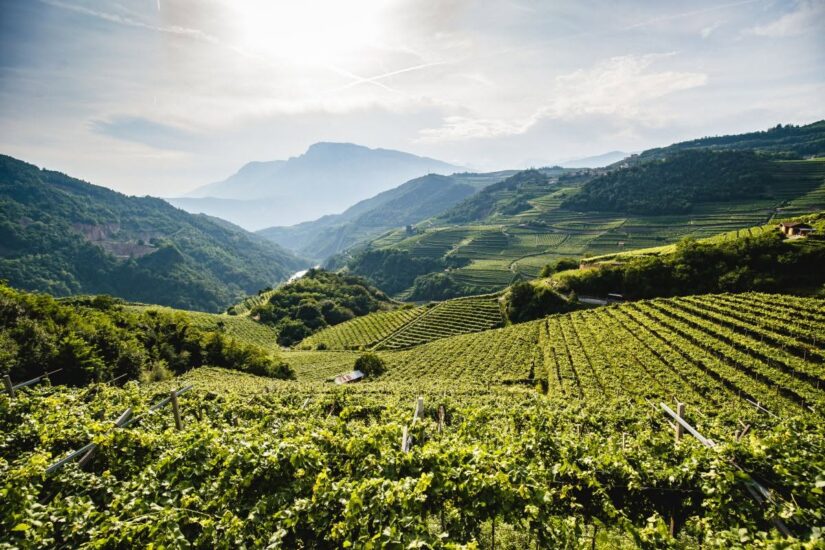
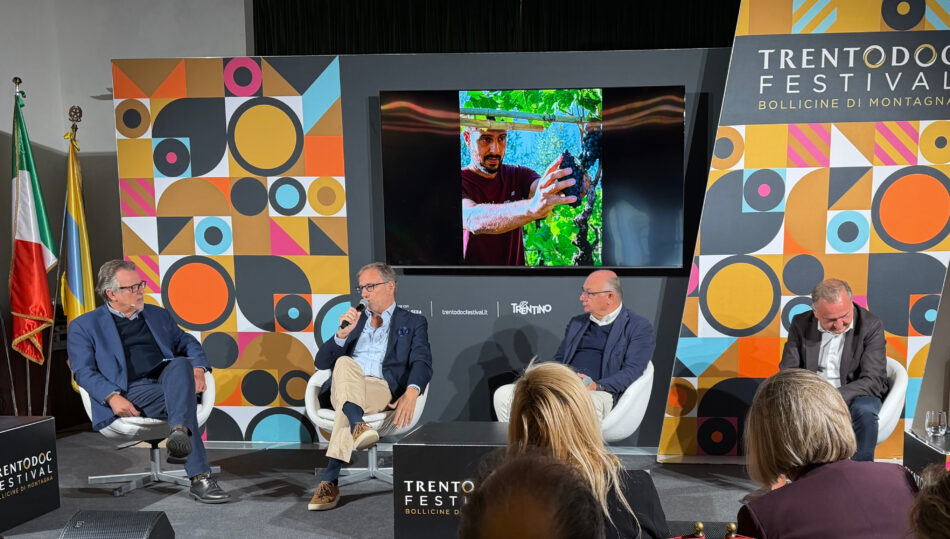
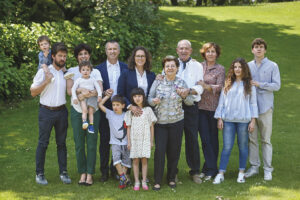
The wine market is changing, and waiting for it to return to what it once was risks becoming a strategy with no future. Declining consumption, the growing distance of younger generations from wine, and mounting cost pressures are forcing companies to rethink production, distribution, and communication. Decisions may need to be drastic, but they must also be carefully considered. This is the common thread running through the reflections of the leaders of three very different wine businesses: a large cooperative, a “boutique winery” inextricably linked to a single territory, and a highly structured private winery with a vertically integrated supply chain, estates in multiple wine regions, and diversified activities beyond wine production, including distribution. These leaders are Enrico Zanoni, general manager of Cavit, the Trentino-based giant which, with 5,250 winegrowers, manages more than 6,000 hectares of vineyards, representing 60% of the region total vineyard area; Rodolfo Maralli, president of Banfi, the winery founded in 1978 in Montalcino (and inaugurated in 1984) by Italian-American brothers John and Harry Mariani under the guidance of Ezio Rivella, and still owned today by the Mariani family, represented by Cristina Mariani. Banfi owns more than 2,800 hectares of land, over 1,000 of which are under vine, primarily in Montalcino, but also in Bolgheri, Chianti Classico, the Tuscan Maremma, and Piedmont Alta Langa region. During the 1990s, the company played a key role in driving the commercial success of Brunello di Montalcino, originally “invented” in the nineteenth century by the third company involved in the discussion, Biondi-Santi - Tenuta Greppo, owned by the Biondi Santi family until 2016 and subsequently by the Epi Group, which first acquired a majority stake and later full control, under the leadership of ceo Giampiero Bertolini. The three executives met in Trento during the “Trentodoc Festival”, in a discussion organized by “Corriere della Sera” as part of one of the newspaper “Wine Talks”, moderated by deputy editor Luciano Ferraro.
Despite their differences in size, structure, and market positioning, the three companies share a common belief: the strength of tradition must be matched by the ability to make choices, plan strategically, and understand the market. For Rodolfo Maralli, for example, the role of a manager goes far beyond the “simple” administration of a company. It means deciding which products to invest in, which channels to focus on, and which consumers to target. This lesson stems from Maralli early experience working alongside Ezio Rivella, one of the most influential managers in the history of Italian wine. “I believe in territorial marketing. Leadership must be nurtured through everything that culture and tradition represent”, said Maralli. He mentioned, for example, “Jazz & Wine in Montalcino”, the renowned jazz festival promoted and supported by Banfi and one of Italy longest-running and most prestigious music events, which will celebrate its edition No. 30 in 2027. He also referred to the now limited but historically significant production of Moscadello, which is in fact Montalcino original historic wine and has been produced in the area since the sixteenth century: “Today it is a niche product, but it allows us to tell a story of history and tradition”. That history and tradition, however, must be reconciled with a different future because, according to Maralli, “companies must prepare for the market that is emerging, a market increasingly fragmented by the very high number of wineries, without expecting a return to the conditions of the past”.
The relationship between heritage and change is also central to the experience of another wine industry executive, Giampiero Bertolini, ceo of Biondi-Santi Tenuta Greppo (owned by the Biondi Santi family until 2016 and subsequently by the Epi Group, ed). At Biondi-Santi, Bertolini explains, the work began in the vineyards and the cellar, with the aim of understanding and enhancing what the company had inherited from its history. This was accompanied by a review of the distribution strategy, with the goal of aligning the brand market presence with its prestige and reputation. The transformation also involved the organization itself: “We moved from a family-run business to a professionally managed company. We also introduced modern data-analysis tools, and today we can understand almost in real time how things are performing and where our bottles are being sold”. For Bertolini, safeguarding the reputation of a historic brand such as Biondi-Santi and its Brunello di Montalcino requires management capable of translating objectives into measurable figures and pursuing medium and long-term strategies.
Enrico Zanoni, on the other hand, offered the perspective of a cooperative business model, where industrial decisions are closely tied to the income of winegrowing families. When he joined Cavit, after experiences with a global giant such as Nestlé, one of the priorities, recalls General Manager Zanoni, was “to build a vision which extended beyond a single harvest or vintage, coordinating production and sales while identifying growth opportunities, including in export markets”. In this context, the diversity of territories and microclimates represents a valuable resource for differentiating the offering and maintaining consistent quality. But it also requires a shared strategic direction, supported by data and a deep understanding of wine specific characteristics. It calls for forward-looking decisions as well, such as the one made nearly twenty years ago to invest decisively in traditional-method sparkling wines. Today, this has become a well-established business in one of the strongest-performing segments of the wine market, sparkling wines, despite receiving far less attention until relatively recently.
The three executives also addressed one of the industry most pressing challenges: how to align wine supply, and therefore production levels, with an overall decline in demand. According to Zanoni, for example, it is essential to reduce production capacity, even through vineyard removals as has been done in France, because the decline in consumption is structural. “There had been signs of it for years, including in the United States. The post-Covid rebound in consumption misled us into thinking those signals were not real, but they were. Supply must adapt to demand. There is no point in defending production levels that struggle to find a market and only achieve non-remunerative prices. We should also consider alternative crops. In Italy, per-capita wine consumption has fallen within a few decades from 100 liters to less than 30 liters. That world no longer exists. Consumer tastes have changed as well. In the past, the most widely planted grape variety in Trentino was Schiava, and the focus was on red wines. Later, we shifted toward whites thanks to the success of Pinot Grigio and Chardonnay”.
For Giampiero Bertolini, embracing change while keeping “balance” as a guiding principle is equally essential. To rebalance production, some vineyards may also need to be removed. At the same time, he argues, it is crucial to win back younger consumers by offering meaningful experiences, including at the winery itself, “with less technical language and more engagement. But we also need to restore balance when it comes to pricing and margins within the distribution chain. Markups on wine are often excessive, and this is something that needs to be addressed”.
According to Rodolfo Maralli, however, decisions such as reducing vineyard acreage must be carefully evaluated, taking alternatives into account, because removing a vineyard to replace it with another crop, such as olive trees or something else, can have long-term effects on the landscape. What is certain, he adds, is that “crises are challenges that also create opportunities. The crisis we are experiencing today has deep roots. Moreover, Covid reminded us that we are vulnerable. It triggered a sort of health-focused absolutism, and wine has lost part of its ritual role as a social beverage. This is a reality we must come to terms with”.
A future for wine that is already here, and is deeply different from the wine world we have known until now.
Copyright © 2000/2026
Contatti: info@winenews.it
Seguici anche su Twitter: @WineNewsIt
Seguici anche su Facebook: @winenewsit
Questo articolo è tratto dall'archivio di WineNews - Tutti i diritti riservati - Copyright © 2000/2026