









While the wine market and other sectors as a whole are struggling, the global luxury sector is expected to see slight growth in this extremely challenging year of 2026, both globally (estimated at +2%) and in the personal goods segment (between +2% and +4%), driven by experiences such as hospitality and dining, and assets such as mega-yachts, private jets, and art. Artificial intelligence is playing an increasingly decisive role in purchasing decisions. This is according to the recent mid-year update of the Altagamma-Bain Monitor on Global Luxury Personal Goods Markets, produced by Bain & Company in collaboration with Altagamma.
“Despite the context of growing instability, characterized by economic volatility, geopolitical tensions, and profound cultural changes, the fundamentals of the high-end market point to a gradual stabilization. The sector has reached a global value of 1,443 billion euros, and by the end of the year, it is estimated to reach 1,440–1,470 billion. A significant divide persists in the varying performance of companies, although 60% of brands are posting results above last year’s levels, which is an encouraging sign”, explains a statement. In particular, in the “experiences” category, driven primarily by hospitality, fine dining, restaurants, cruises, and wines, overall growth of approximately +4% is projected, although in the high-end dining and gourmet food sectors, despite the prevailing principle of “less, but bette”, performance appears to be stronger than in the wines and spirits sector, which “is seeing weaker consumption as consumers reduce the frequency of consumption or turn to non-alcoholic alternatives”.
Looking at geographic regions, the report shows that, despite everything, the U.S. remains the strongest market, unlike China, which is showing signs of recovery but with caution, and, above all, Europe and the Middle East, which are facing greater difficulties.
Among the interesting findings, the report notes that consumers, including those in the luxury sector, are increasingly using artificial intelligence, to the point that more than half already rely on it during the purchasing process, and all plan to do so in the future. About one in four consumers uses it to discover new brands and products, while two-thirds use it to compare different options before making a purchase.
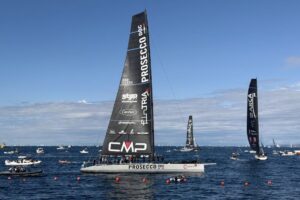
Furthermore, sport, with its ability to reach a vast audience, represents a new and powerful platform for building the value of luxury brands. So much so that today, more than 80% of the total value of the luxury market is accounted for by brands that have invested in sports sponsorships over the past twelve months. “However, the primary goal of these initiatives is not yet direct sales growth, but rather the strengthening of cultural relevance, brand awareness, and the brands’ ability to connect with new audiences on a global scale”, explains the report.
It also highlights how “experiential luxury (i.e., that which is most closely tied to wine and food, ed.) is evolving toward forms increasingly focused on emotion, personalization, and the search for meaning. Bookings for immersive experiences in the restaurant, leisure, and entertainment sectors have grown by 30% compared to last year, driven by tailor-made offerings, forms of slow tourism, and experiences deeply rooted in local cultures. Travel to destinations other than traditional luxury hotspots has also increased by 20%, fueling a trend known as “Elsewhereism”, the search for lesser-known and more authentic places. At the same time, the trend of multigenerational travel is on the rise: about 50% of Generation Z say their brand preferences have been influenced by their parents, confirming the increasingly important role of the family in passing on values and shaping consumer choices”.
Furthermore, according to the analysis, the very meaning of luxury for consumers is changing: “from a need for social recognition to an individual focus on “self-actualization”, a shift from the desire to be admired to the goal of personal fulfillment. “This new era for the industry implies that luxury will no longer define what consumers own, but rather the way they live”, the report suggests. Luxury, therefore, is evolving from elitism, through aspiration and self-expression, toward an era characterized by “living well”. In this evolving landscape, Bain identifies three imperatives for brands: to inspire wonder through immersive experiences in “havens of longevity and wild sanctuaries”; to build cultural relevance for diverse communities; and to offer customers a platform for co-creation through creativity and personalization enabled by artificial intelligence.
“Bain & Company has reminded us that the projected growth for the luxury sector as a whole through 2026 is moderate”, notes Giovanna Vitelli, president of Altagamma, “with the exception of experiential luxury, which is projected to grow by 4 percent. As Altagamma, we have a responsibility to support this growth, while highlighting the importance of our sector as a driving force for the country. Altagamma companies contribute three times as much to GDP growth, generate five times as many jobs, and pay an average of 300 times more in taxes. Not only that, but our companies embody our country’s cultural tradition, its art of living, and its craftsmanship. Supporting the growth of the luxury sector also means supporting the continuation of “Made in Italy” manufacturing, another cornerstone of Altagamma’s commitment over the next three years. Italy’s high-end sector is a heritage that belongs to everyone, and it must be recognized, protected, and promoted”.
“The market is stabilizing, but this isn’t a return to the old patterns: rather, it’s the emergence of a new one. Consumers aren’t turning away from luxury; they’re redefining its meaning: they’re more attached to the significance than to the product itself, and they increasingly value experiences over ownership, driven by a desire for identity and personal expression rather than status. Appetite remains quite strong; what is diminishing is tolerance for disappointing products and experiences. This is demonstrated by the fact that over 70% of customers who have drifted away intend to return to making purchases, but not necessarily of the same brands or in the same categories. The real question is whether brands are building the AI-native meaning and relevance needed to stand out and be chosen when that moment arrives: because discovery, evaluation, and the purchase decision are increasingly mediated by artificial intelligence, and already today, one in two luxury consumers uses it in their purchasing journey”, explain Claudia D’Arpizio and Federica Levato, Senior Partners at Bain & Company and authors of the study.
Copyright © 2000/2026
Contatti: info@winenews.it
Seguici anche su Twitter: @WineNewsIt
Seguici anche su Facebook: @winenewsit
Questo articolo è tratto dall'archivio di WineNews - Tutti i diritti riservati - Copyright © 2000/2026