





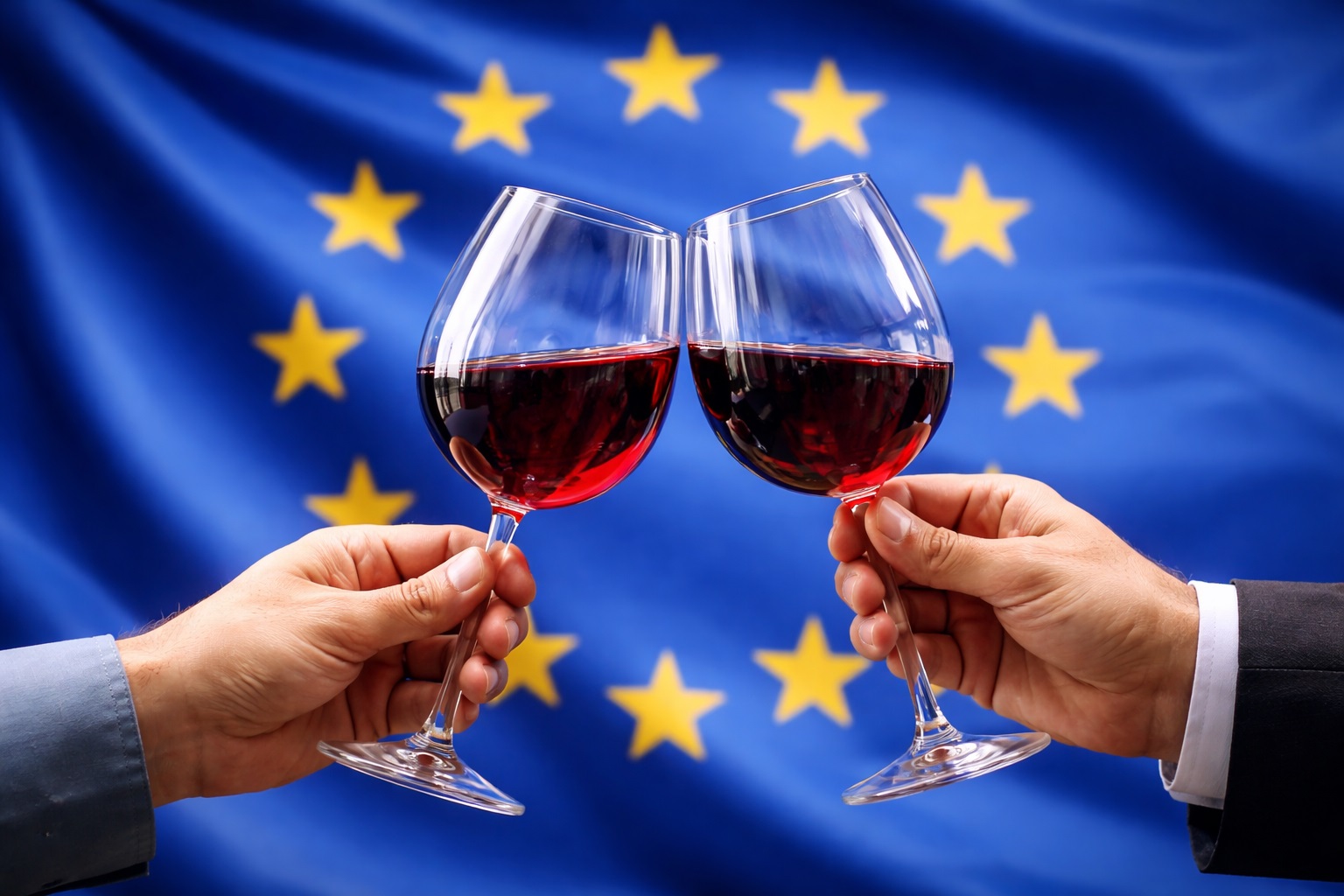
Important news, though nonetheless expected, from the European Parliament in Strasbourg, which has given the green light to the so-called “Wine Package”. After the provisional agreement reached in December between the EU Council and Parliament, and following approval by the Agriculture Committee in Brussels in January, this marks another significant milestone. The final step is still pending: the legislation must also be formally adopted by the EU Council before it can be published in the Official Journal of the European Union and enter into force. Increased funding for vinegrowers to adapt production to market developments; additional tools to address extreme weather events; clearer rules for labeling dealcoholized wines; and support for wine tourism, exports, and promotion are the pillars of the legislation, which was approved today by a large majority (625 votes in favor, 15 against, and 11 abstentions).
It is a substantial document covering many aspects, such as new labels aimed at clarifying the status of alcohol-free and low-alcohol wines. In this regard, the rules amend labeling requirements for dealcoholized wines: the term “alcohol-free”, accompanied by the expression “0.0%”, may be used only if the product alcohol content doesn’t exceed 0.05% vol. Products with an alcohol content above 0.5% vol., but which are at least 30% lower than the standard alcohol content of their wine category prior to dealcoholization, must be labeled as “low-alcohol”.
To support increasingly frequent natural disasters, extreme weather conditions, or plant diseases (another major issue in recent years), vine growers will receive additional financial assistance. The text establishes, an especially crucial point, particularly for a country like France, which has been moving in this direction for some time, that EU funds may also be used for the permanent extirpation of vines to stabilize production. The maximum national support rate for wine distillation and green harvesting is set at 25% for each Member State wine sector.
Measures to foster economic growth in rural areas and to promote high-quality European wines in third countries may receive EU funding of up to 60% of eligible costs, while Member States may add further support up to 30% for small and medium-sized enterprises and 20% for larger companies.
New measures also include additional financial support for producers to promote wine tourism. Fundable activities include promotional and informational initiatives such as advertising, events, exhibitions, and studies. These activities may receive support for three years, renewable twice for a total of 9 years.
According to the Spanish rapporteur Esther Herranz García, the “Wine Package” is “an effective response to the sector crisis and equips vine growers with concrete tools to promote and manage production potential and adapt to new market demands”. García added that “Europe is responding with tangible tools, such as the use of EU funding for crisis measures, better conditions for promotional and communication activities, and greater co-financing to help farmers adapt more quickly to climate change. Member States will have a more robust set of measures to address the challenges the sector faces across different countries and regions”.
The wine world has reacted to the approval from Strasbourg with a very positive sentiment, although some distinctions remain.
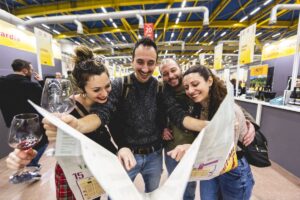
From Wine Paris, in Paris, Marzia Varvaglione, president of the Comité Européen des Entreprises Vins (Ceev), commenting to WineNews on the approval of the “Wine Package”, highlights the aspect of “speed” considering that “Member States can already begin working on it and implementing it. Certainly, as we have often said, the increase of the maximum contribution from 50% to 60% is very important, as it is greater flexibility in choosing markets. And the possibility of financing projects related to wine tourism will definitely help smaller companies as well. As Ceev, we requested a lot, worked hard, provided feedback, and we truly managed to bring home an excellent result”.
Also Federvini expresses satisfaction with the definitive approval of the “Wine Package”. Today’s vote concludes the legislative process that began with the agreement reached in December during the Trilogue between the European Parliament, the Council, and the European Commission, giving companies in the sector a defined, modern regulatory framework oriented toward strengthening their presence in global markets. “The vote of the European Parliament rewards long-standing work and represents an important result because it finally provides a clearer, more stable framework oriented toward international growth”, comments Albiera Antinori, president of the Federvini Wine Group, who adds that “it is now essential that the implementation phase of the “Wine Package” move forward without delays, so that the approved measures can quickly translate into development opportunities for businesses and local territories”. Federvini notes that the new regulation introduces crucial measures for the stability and growth of the Italian wine supply chain, focusing on three key pillars: the standardization of digital labeling via Qr code, which ensures transparency for consumers and regulatory certainty for businesses, eliminating national fragmentation; the extension of promotion programs in third countries to up to 9 years, in order to ensure the financial stability needed to consolidate the presence of Italian and European producers in global markets; and the simplification of Ocm management, aimed at streamlining procedures for accessing funds and optimizing the use of resources for competitiveness and innovation.
Unione Italiana Vini (Uiv) confirms its assessment from last December, following the provisional agreement reached between the EU Council and Parliament, calling it “a new, balanced “Wine Package”, the result of institutional attention to the sector despite some sore points”, particularly regarding vine extirpation, which “as a measure eligible for national programs, is not the solution to address the sector problems”.
“This is an important sign of attention toward a sector that, as it is well known, is going through one of the most difficult phases in its history. Several approved measures - the increased financial allocation for combating climate change, actions against flavescence dorée, and the strengthening of investments linked to wine tourism - go in the right direction and respond to real needs of businesses. However, concern remains over the exclusion of certain qualifying elements which would have made the provision more complete and effective, giving the sector additional tools to regain full competitiveness”, says Luca Rigotti, president of the Wine Sector of Confcooperative and president of the Copa-Cogeca Wine Group. He expresses appreciation for the updated definitions regarding dealcoholized wines, particularly the introduction of the designation “low-alcohol”, “a positive step forward for both producers and consumers”. On this point, he renews “the hope that a regulatory solution can soon be reached for naturally low-alcohol wines, a segment experiencing growing market interest”. He adds that “significant concerns remain over the failure to include tools that would have had a decisive impact on the overall effectiveness of the Package: from the possibility of carrying over unused funds to the following year, to the lack of extension to cooperatives of the higher co-financing rates reserved for Smes. These gaps - comments Rigotti - reduce the scope of an initiative which, although containing positive aspects, could have been much more impactful. The hope - he concludes - is that the introduced innovations will be confirmed beyond the current Cap and that the excluded measures will find space in future regulatory revisions, in order to guarantee European winegrowers truly adequate support within a sector-specific Ocm equipped with proper resources”. According to Confagricoltura, “the European Wine Package represents a concrete political signal of attention toward a sector that is strategic for the Union agricultural economy. The new provisions help strengthen its competitiveness and resilience in the face of crises, while supporting promotional activities in foreign markets and introducing more effective tools for managing difficulties. The increased flexibility in managing vineyard authorizations is particularly significant, which allows producers to plan and manage their production potential with greater peace of mind. The increased support for interventions aimed at mitigating the increasingly severe effects of climate change on European and Italian wine production is also relevant, with funding that may reach up to 80%. The reinforced promotion measures for third-country markets are also positive, which help consolidate the presence of European wine on international markets and strengthen its reputation, quality, and value among consumers. Another step forward concerns labeling, with clearer criteria for products with low or no alcohol content: a measure that allows producers to respond to evolving consumer demand and seize new commercial opportunities in emerging segments”.
For Rita Babini, president of Fivi (Federazione Italiana Vignaioli Indipendenti), “the “Wine Package” is a starting point, not a finishing line: with its strengths and weaknesses, it should nonetheless be considered a step in the right direction and proof that the future of the wine sector must be built on dialogue and the involvement of all actors in the supply chain, first and foremost the producers”. According to Fivi, several positive elements are included in the measures of the “Wine Package”, starting - explains the Federation - with the protection of micro enterprises and Smes, which retain access to the maximum contribution rate, and the possibility for Member States to facilitate access for small producers to promotion measures already from this year calls. This represents “the recognition of the importance of vine growers, male and female, in the wine supply chain, and the need to ensure that even very small businesses can access support measures”. A positive evaluation is given also to the new authorization system, with the extension of replanting authorizations to 8 years and the possibility of a 12-month extension for new planting authorizations in cases of force majeure or exceptional circumstances. There is also approval for the measures to monitor the spread of plant diseases and the increase in contribution rates for interventions which help mitigate the effects of climate change. However, Babini notes that “unfortunately some critical issues and gaps remain. The main problem is the inclusion of the extirpation measure among the sector measures eligible for EU funding: this is a mistake, because EU funds should support the growth and competitiveness of companies. In the field of wine tourism, a rapidly expanding sector and a crucial growth lever for local wineries, this would have been an opportunity to include individual wineries, not only consortia, among the beneficiaries.
Finally, more flexibility could have been ensured in the use of funds, with the possibility of transferring unused resources to the following year, but unfortunately this suggestion was not accepted”. “The wine sector is facing truly significant challenges from every perspective: productive, environmental, social, commercial. These challenges can be addressed, and hopefully overcome, only if Europe and individual states put agricultural production and rural supply chains at the center. In this sense - Babini concludes - we don’t consider the proposal presented by the European Commission for the next Cap planning cycle to be adequate, because specific and direct funds for the wine sector are needed: eliminating the two-pillar structure and merging agricultural policy with other European policies would in fact undermine the specific recognition that the wine sector has always held within the Cap, due to the particular needs of the companies that make it up”.
The green light from the EU Parliament for the “Wine Package” also responds to many of Coldiretti requests to ensure greater transparency for consumers and simplification for businesses, supporting a key sector of made in Italy. The new measures include a new authorization system which, by extending timeframes, promotes more rational management from both an agronomic and commercial standpoint, as well as an extension of the timelines for promotional programs. Greater label clarity regarding dealcoholized wines is also essential, especially for the terms “alcohol-free” and “reduced alcohol”, with simpler guidelines for producers and consumers. Additionally, uniform crisis measures which can be activated at the discretion of Member States are planned among the highlighted aspects. This represents “a significant change, but it is now essential to ensure adequate resources for the sector within the new European policies to make the implementation truly useful for companies”.
Coldiretti also recalls that the Italian wine sector is one of the pillars of the agri-food economy, with a turnover which has reached 14.5 billion euros. 241,000 wine-producing companies operate over an area of 681,000 hectares, with Veneto, Sicily, and Puglia leading in terms of extension. 78% of this area, corresponding to 532,000 hectares, is dedicated to Geographical Indications (65% PDO and 14% PGI), enriched by unparalleled biodiversity, with 570 indigenous varieties.
Copyright © 2000/2026
Contatti: info@winenews.it
Seguici anche su Twitter: @WineNewsIt
Seguici anche su Facebook: @winenewsit
Questo articolo è tratto dall'archivio di WineNews - Tutti i diritti riservati - Copyright © 2000/2026