






Fostering networks and alliances among companies to strengthen the average size of the supply chain, develop economies of scale, and increase productivity and competitiveness; promoting wine as a cultural and identity heritage through integrated communication, education and training initiatives, enhancing its connection with local territories and encouraging responsible consumption models; defining a structural skills plan for the wine supply chain, implementing training programs and attracting specialized labor while highlighting the professional opportunities linked to wine tourism; accelerating investment in innovation and digitalization throughout the value chain, facilitating SMEs’ access to advanced technologies; and strengthening the international positioning of Italian wine through coordinated promotion and market penetration strategies focused on high-potential markets. These are the recommendations that emerged from the first final forum of the “Visione Vino Community” by The European House Ambrosetti, held in recent days in Oltrepò Pavese, which, through the “Visione Vino 2026 - Radici profonde, sguardo lontano - “2026 Wine Vision - Deep roots, long-term vision”, outlined the future of the sector beyond current challenges while also highlighting its substantial value. For example, “in 2025 the Italian wine sector generated 16.5 billion euros in turnover and 4.7 billion euros in added value, with 681,000 hectares of vineyards spread across all regions and 530 PDO and PGI certifications. These figures become even more significant when considering the broader value chain: 36.8 billion euros in turnover and 15.1 billion euros in direct added value, rising to 40.7 billion euros, equivalent to 2.1% of Italy GDP, when indirect and induced effects are included”.
It was further emphasized that wine “has a direct impact on four Ateco industry codes and an indirect impact on ten additional ones, which the Community has grouped into four macro-areas: intermediation, distribution, hospitality, and business support services”. According to the data, intermediation, distribution and hospitality alone generate 10.4 billion euros in added value, in addition to the 4.7 billion euros produced directly by the wine sector. The economic multiplier of the extended wine supply chain is 2.7: for every euro of added value generated directly, a further 1.7 euros is activated in the wider economy. This figure is higher than that of the extended agri-food supply chain as a whole (2.5). In other words, around 10% of the added value supported by the broader agri-food chain can be attributed to wine.
A strong and strategically important sector, yet at the same time fragmented and threatened by a combination of geopolitical instability, extreme weather events and changing consumption patterns, creating a new landscape for Italian wine. In 2025, The European House Ambrosetti notes, the Global Uncertainty Index reached an all-time high, standing at 8.5 times its 1990 level. According to the March 2026 Community Food & Beverage survey, seven out of ten companies in the sector are concerned about their operations, with an impact 6.4 times greater among SMEs than among large companies. Climate change remains the most evident structural challenge. Over the past decade, climate-related economic losses in the European Union have increased 2.8-fold, and Italy ranks first among the EU-27 with 13.4 billion euros in annual damages. In 2025, nearly one European company in two (46%) was affected by climate-related events, while in Italy only 10% of agricultural land is insured against climate risks, compared with the European average of 42%.
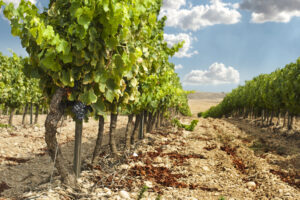
The figures for wine-growing territories are particularly significant: in the first 6 months of 2026, Italian wine-producing municipalities recorded an average temperature anomaly of +2.4 Celsius degrees compared with the 1961-1990 period, with even sharper increases in Northern Italy (+2.8 Celsius degrees) and Central Italy (+2.5 Celsius degrees).
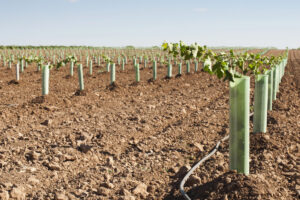
By the end of the century, up to 90% of traditional vineyard areas in coastal and lowland regions of Spain, Italy and Greece could be at risk, primarily due to drought and heatwaves. At the same time, rising temperatures are making viticulture increasingly viable in territories that were once considered marginal. In the United Kingdom, vineyard area in production expanded from approximately 1,300 hectares in 2012 to 3,400 hectares in 2023, while new suitable wine-growing areas are also emerging in northern France.
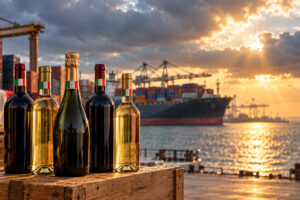
At the same time, however, it was emphasized that the value of Italian wine exports has doubled over the past 15 years, rising from 3.9 billion euros in 2010 to 7.8 billion euros in 2025, with an average annual growth rate of 4.7%. Despite the slowdown recorded in 2025 compared to 2024 (-3.7%) and the difficulties experienced in 2026 (-5.3% in the first seven months of the year compared to the same period in 2025, according to Istat data analyzed by WineNews), and although the United States, Germany and the United Kingdom still account for almost half of total exports, making much of the decline in 2025 and part of that in 2026 attributable to challenges in the U.S., partly linked to tariffs, as well as in Italy two main European trading partners, exports are now less concentrated than in the past: the top ten destination countries account for 73% of the total, 8 percentage points less than in 2010. “There is still considerable room for growth beyond Europe. Wine exports amount to 44 euros per capita in Switzerland, 18 euros in Belgium and 17 euros in Sweden, while they stand at around 0.10 euros in China, 0.01 euros in Indonesia and 0.002 euros in India. In the ‘what if’ scenario developed by Teha Group - explains a note - if exports to China reached 0.50 euros per capita, sales to the country would exceed 700 million euros, ten times the current value of 66 million euros”.
The Italian wine sector is also facing the delicate issue of generational succession, but in a largely positive way. According to The European House Ambrosetti, “family-owned businesses hold 65% of the net equity of the Italian wine sector, a figure that rises to 81.5% when cooperatives are included. Around 30.4% of families have already completed and resolved the generational transition, while for 39.2% the process is currently underway. Companies which have successfully completed the transition have recorded 8.8% revenue growth and an +18% increase in investments”. This issue, however, is part of the broader ageing trend affecting the agricultural sector. In Italy, 45% of farm business owners are over 65 years old, 10 percentage points above the EU-27 average. “This is compounded by the fragmentation of the supply chain: 95% of wine companies are small businesses, generating 49% of total turnover. The decline in exports in 2025 was more pronounced in regions with a higher concentration of micro-enterprises, highlighting the link between company size and international market reach”.
But, the wine industry is also having to adapt to changes in consumption habits and drinking occasions. According to estimates by Teha Group, only 14% of under-35s consume wine with their daily meals, compared with 38% of over-65s, while 50% associate wine with special occasions, compared to 34% among over-65s. The Community interprets this evolution as an invitation to rethink how wine is communicated, understood and experienced, by emphasizing the values it represents: territories, landscapes, people, culture, conviviality, expertise and quality. New technologies can play an important enabling role. 48.6% of wine consumers already use digital tools, mainly to search for information and reviews and to discover new wines and producers. E-commerce, whether through proprietary platforms or online marketplaces, is identified by wineries as the leading driver of revenue growth through 2030. However, digital maturity remains relatively limited: half of wineries report not using Artificial Intelligence, and fewer than 5% cite e-commerce and digitization among the key trends to monitor.
The same applies to wine tourism, a sector that continues to evolve: 53% of consumers have taken part in at least one wine tourism activity over the past 12 months, and for 32.4% of wineries it already accounts for more than 5% of turnover. Meanwhile, 40% of consumers already use AI to plan wine tourism experiences, or are highly inclined to do so, whereas only 31% of wineries have a defined digital strategy for this area.
The findings and recommendations of the Strategic Report, explains The European House Ambrosetti, are based on a survey of approximately 1,000 Italian consumers, a study conducted in July 2026 involving 72 wineries, an analysis of 14 Ateco business classifications, and an in-depth examination of national and international case studies. This first edition was produced with the support of the main partners Assolombarda, the Chamber of Commerce of Cremona-Mantua-Pavia, the Province of Pavia, and Fondazione Monte di Lombardia; partner Gruppo Berlucchi; junior partners Business Strategies and Rina; and in collaboration with the Consorzio dei Vini di Oltrepò and Colline e Oltre.
Copyright © 2000/2026
Contatti: info@winenews.it
Seguici anche su Twitter: @WineNewsIt
Seguici anche su Facebook: @winenewsit
Questo articolo è tratto dall'archivio di WineNews - Tutti i diritti riservati - Copyright © 2000/2026