







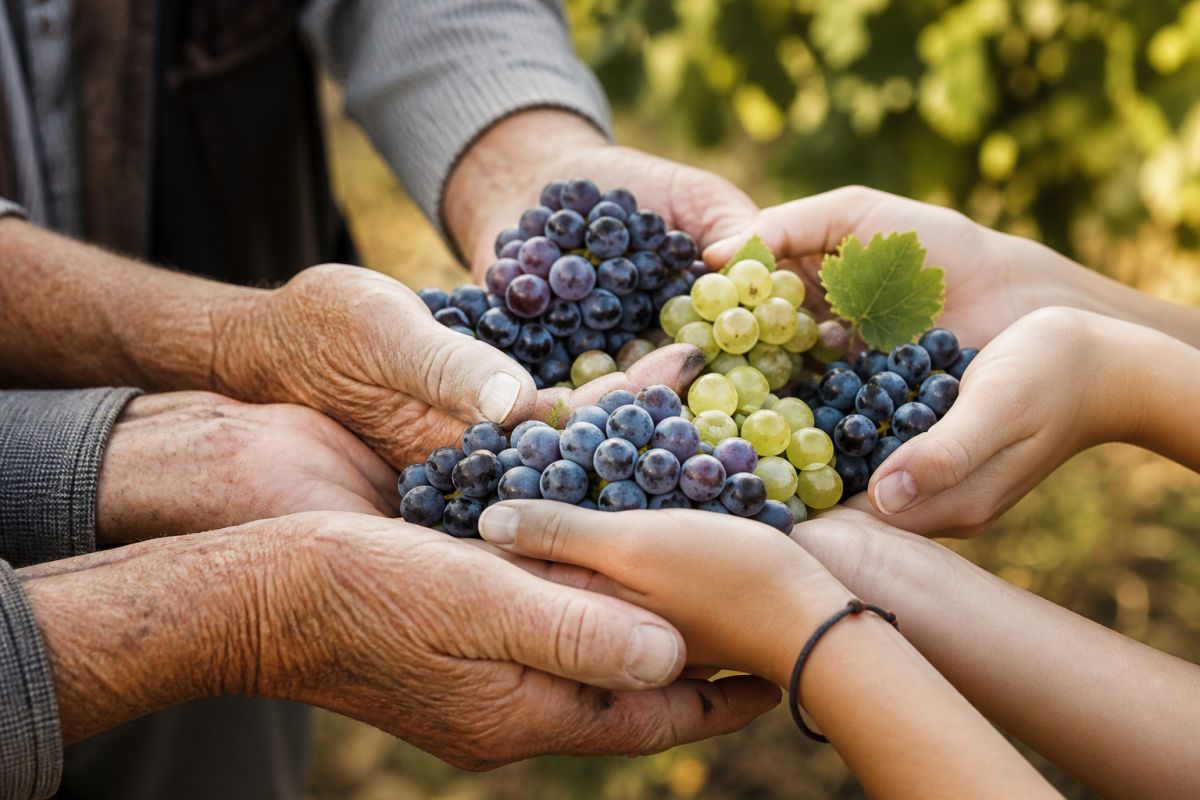
There is a dark of to the crisis which affects the wine sector, one which is rarely discussed but could have an even more devastating impact on the future of the industry than market difficulties: the abandonment of vineyards (regardless of the debate which is beginning to emerge among the supply chain and institutions about possible uprooting plans or not, ed), mainly by older generations, but not only, and the resulting weakening of the social fabric in rural areas. This phenomenon is now affecting even important wine-growing regions of the country. It is difficult to get precise data, but reports coming from local areas speak of a reality which in some zones has reached serious, if not worrying, proportions. What is at stake is the future of the sector, because without vineyards there is no wine: declining profitability is driving abandonment and blocking generational turnover, with social and economic consequences (not to mention environmental ones) which are hard to reverse in the short term. In fact, while it takes at least 4 years - from planning to the first harvest - to make a vineyard productive, reversing the rural exodus requires much longer. It is not simply a matter of planting new vines, but of restarting a viticultural economy in areas where it has disappeared, recreating the economic and production conditions necessary for a new social “grafting”. The challenge today is therefore to slow this uncoordinated exodus from vineyards, as unmanaged abandonment risks particularly affecting the most difficult areas (such as those of “heroic viticulture”) and the most suitable ones, as well as the oldest vineyards, where what is lost is not just generic production potential, but potential for excellence. There is also the related danger of desertification, which leads to the disintegration of rural communities that have developed and strengthened around wine. The first line of defense in this battle is cooperation, a segment of the Italian wine sector which accounts for more than 55% of total production (Ismea data), with a turnover of over 5 billion euros (Confcooperative data). After giving a voice to thousands of Italian winegrowers for decades and bringing them to market, it now stands as a fundamental socio-productive safeguard for viticulture, especially the historical kind - fragile, hidden, and entrusted to experienced but aging hands - which now risks being wiped out by the crisis. This is a social, productive, and environmental responsibility that much of the virtuous cooperative system is taking on, aware that what is at stake is not only the depopulation of territories and landscape neglect, but also the future of a production sector that begins in the vineyard.
“The phenomenon of vineyard abandonment and rural depopulation represents one of the most delicate challenges for the future of the wine sector - declared Luca Rigotti, head of the Wine Sector at Confcooperative and of the Wine Group of Copa-Cogeca (the European association of agricultural organizations and cooperatives) to WineNews - if the intergenerational chain that has ensured continuity in viticulture for decades is broken, the risk is not only reduced production, but the loss of an economic, environmental, and cultural heritage that is difficult to recover. In this sense, wine cooperatives view this trend with great concern, because the vineyard is not only a source of income, but a real territorial safeguard. In many hilly and inland areas, viticulture is what keeps local communities alive, guaranteeing income, landscape maintenance, and social stability”.
And, beyond the need to “work in synergy with institutions, organizations, associations, and businesses to achieve the goal of ensuring adequate economic sustainability for those who cultivate vines, thus guaranteeing the continuity of economic activities”, cooperation can also represent a barrier against the social erosion of vineyards and a safety net for small vin growers. As Rigotti further notes, “it has historically fulfilled precisely this function. Cooperative wineries were created to build collective strength - he continues - bringing together many small and medium-sized vine growers and enabling them to remain in the market, obtaining more stable remuneration for their grapes. This model has allowed widespread viticulture in many areas, including inland zones, and has kept alive a network of small and medium-sized farms which form the backbone of our communities, preventing important areas from being gradually abandoned. In this sense, cooperation is not only an economic model that creates value, but also a tool for territorial and social cohesion”.
According to an unwritten rule of cooperation, since the vineyard is a collective asset, any effort must be made not to lose even a single parcel of vines, and the cooperative winery must take responsibility for it when the private owner abandons it. From this ethical principle, before being an economic one, the commitment of several cooperative entities which have launched projects to safeguard the vineyard potential of their territories comes. “In many Italian regions - still explains Rigotti - cooperatives have long developed concrete initiatives to support the continuity of viticulture: support programs for members managing smaller or more challenging vineyard areas, shared technical services to reduce management costs, and projects to enhance appellations capable of giving greater value to grapes. Significant experiences can be found in various wine regions and are carried out by many cooperatives. All this is embedded in the Dna of wine cooperatives, because the cooperative is an integral part of the wine territory in which it arose. The history of the Italian wine sector shows how strong, locally rooted cooperation has helped preserve wine territories and landscapes and ensure greater competitiveness in an otherwise fragmented production system”.
The strategies implemented by cooperative wineries to address the problem mainly follow two paths: ensuring income for winegrowers to prevent abandonment due to impoverishment, and finding alternative solutions for managing at-risk vineyards.
The first direct example supporting Rigotti statements comes from Cantina Rauscedo in Friuli, a cooperative founded in 1951 which today manages 2,000 hectares of vineyards. “In our winery there is a strong sense of belonging among members and a deep connection to the territory - declared new dg Flavio Geretto - we have established an intensive technical assistance and agronomic consulting plan through climate and phytosanitary monitoring systems distributed across the vineyards, weather stations, and constant checks, as well as clone selection programs and vineyard enhancement initiatives. Today, this is one of the key elements capable of supporting winegrowers and ensuring the continuity of cultivation and generational renewal”.
The strategy implemented by Cantina Valpolicella Negrar is more focused on the organic and sustainability aspects, and with a specific intervention for situations of abandonment. “Preventing the abandonment of vineyards first and foremost means making them economically and managerially sustainable - explains president Giampaolo Brunelli - for this reason, we have chosen a concrete approach: maintaining organic production where conditions allow it, and adopting the Sqnpi certification in more complex contexts, thus ensuring that our members have effective tools, especially in climatically challenging years”. There is also an intervention plan to manage the most critical situations of abandonment: “Many vineyards - continues the president - are entrusted to us by elderly members, and our task is to take care of them professionally with constant monitoring, favoring low-impact practices even in these cases and intervening with targeted solutions only when necessary. A vineyard that remains productive is a vineyard which is not abandoned: in this way we protect both family incomes and the landscape of Valpolicella”.
For Cantina Produttori di Valdobbiadene (with over 1,000 hectares of vineyards managed by about 600 members), however, the new service of direct agricultural management of vineyards—aimed at long-standing winegrowers who, due to age, lack of generational turnover or other operational difficulties, wish to entrust the care of their vines to third parties, has become a specific entrepreneurial development project. The goal is to ensure that high-quality vineyards, located in a unique and fragile territory, remain within the company supply chain, guaranteeing agronomic continuity, sustainability, and high quality standards for the grapes. “We want to provide a concrete response to our members who have devoted a lifetime to heroic viticulture on these hills, safeguarding their vineyards, the most precious asset we have - explained president Stefano De Rui - the aim is to keep the agricultural heritage within the cooperative, avoiding fragmentation or management by actors outside our vision, so that the winegrower retains ownership and the emotional bond with their vineyards, which will be cultivated by agronomists and specialized personnel coordinated by the winery. At present, about ten vine growers have joined, for a total of around 10 hectares located in the Rive. The development plan will evolve over time according to the needs of members”.
Another testimony comes from Umbria, which over the past three years has lost 20% of its viticultural potential, all within high-potential vineyards. “It is not only generational turnover issues that are pushing toward the abandonment of viticulture - says Mario Ciani, president of Cantina Sociale Tudernum in Todi - there is also the fear of not being able to sustain the investments required for replanting vineyards. To curb this valuable loss of potential, we have launched a project of direct management by the winery through the use of contractors: recently we have recovered more than 20 hectares of member vineyards (about 20% of the winery total 110 hectares, across 80 members). We are aware that we have only mitigated the problem, which can be considered fully solved only when viticulture returns to being profitable and attractive to younger generations”.
We conclude this journey in Maremma with Cantina Vignaioli del Morellino di Scansano, one of the first national experiences of direct vineyard management, which since the early 2000s has acquired its first three hectares, planted with Sangiovese in the municipality of Magliano. Recently, another 12 hectares recovered from members have been added, while work is underway to plant a further 5 hectares at higher altitudes, between 550 and 600 meters. This vineyard recovery project led in 2022 to the establishment of Poderi di Toscana, an agricultural company created with the aim of supporting members who have encountered difficulties due to generational turnover or who, for family reasons, are no longer able to manage their vineyards, by purchasing or directly managing their properties. “As a cooperative company - underlined Benedetto Grechi, president of the Cantina Vignaioli del Morellino di Scansano - we have always played a role in safeguarding and protecting the territory and the families who live there, represented by our members. Ensuring continuity for these vineyards, preventing their abandonment or a change of management that no longer pursues the quality objectives we maintain internally, is an important and necessary step”. Ethics and solidarity become marketing as well: “the establishment of this company, which reports directly to the winery - explains dg Sergio Bucci - is the first step toward the creation of a new excellence brand through which we will channel some innovative projects in the future, always linked to the territory and its native grape varieties”.
For heroic viticulture, where yields are naturally already limited, abandonment can threaten the very survival of wineries and viticulture across entire areas. Two exemplary cases, even if in different territories, with different histories and types of wine, such as the Vinchio Vaglio winery, founded in 1959, and La Crotta di Vegneron, founded in 1980, tell parallel stories of efforts to curb the abandonment of vineyards which would have led to an irreparable loss of genetic heritage and biodiversity. Vinchio Vaglio was founded precisely to support the winegrowers of the two namesake municipalities in Monferrato at a time when their Barbera grapes were underpaid, making vineyard cultivation uneconomical and thus avoiding the risk of uprooting that would have permanently damaged one of the most beautiful ecosystems in the world (recognized as a Unesco World Heritage site in 2014). “A continuous challenge - explains president Lorenzo Giordano - which in 1985, when the wave of replanting arrived to replace old vineyards with new plantings, different clones and higher densities, led us to identify the best vineyards owned by members who were over 50 years old, starting to produce a wine that has since been called “Vigne Vecchie” - “Old Vines”. Today, those same vineyards are over 80 years old (others have reached around 50), and since they require meticulous work with very low yields, we guarantee them the highest possible remuneration, well above the market average, thus ensuring sufficient income and preventing uprooting. This successful policy, in recent years, has also been encouraging generational renewal, with many young people returning to viticulture as a primary occupation. We are also directing them toward those historic vineyards where abandonment would otherwise be inevitable”.
In the Aosta Valley, “the abandonment of a vineyard - explains Alessandro Neyroz, president of La Crotta di Vegneron (which today has 50 members and produces 200,000 bottles) - not only further reduces the already limited viticultural potential of these areas, but also leads to the spread of uncultivated land, weeds and shrubs, and the collapse of the dry-stone walls that for hundreds of years have protected against landslides and erosion. It is an environmental as well as a productive tragedy, driven by the aging of winegrowers who are no longer being replaced by younger generations”. La Crotta has tackled this issue head-on in 2025 by beginning to directly manage vineyards. Those that would have been abandoned during the year were taken over from members, and additional ones have since been added, bringing the total managed area today to around 2.5 hectares. This has also involved a couple of young people from the local area in their first employment, trained by a team of experienced “old” vignerons from the board of directors. In 2025, the first harvest of Crotta-branded grapes marked the beginning of a new chapter.
These are just some of the many possible stories emerging from a virtuous cooperative wine sector that is striving to redesign its future.
Copyright © 2000/2026
Contatti: info@winenews.it
Seguici anche su Twitter: @WineNewsIt
Seguici anche su Facebook: @winenewsit
Questo articolo è tratto dall'archivio di WineNews - Tutti i diritti riservati - Copyright © 2000/2026