


Monday 21st of September 2026 - Last Update: 21:57





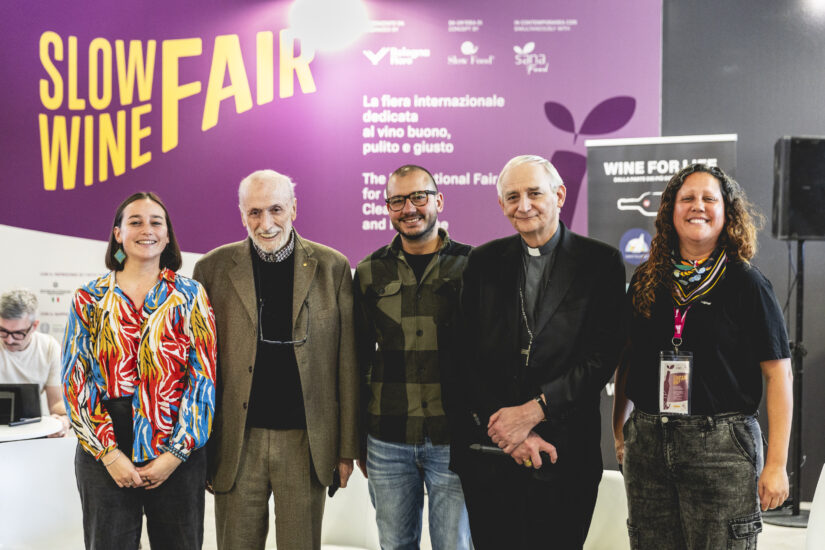
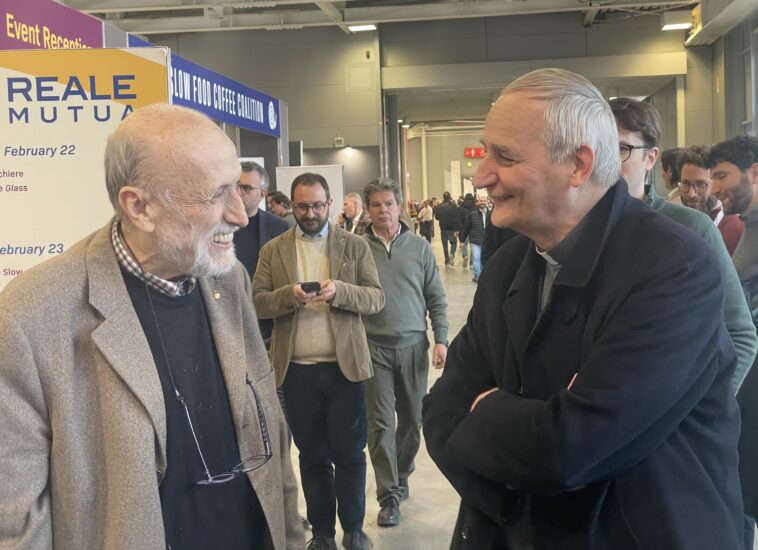
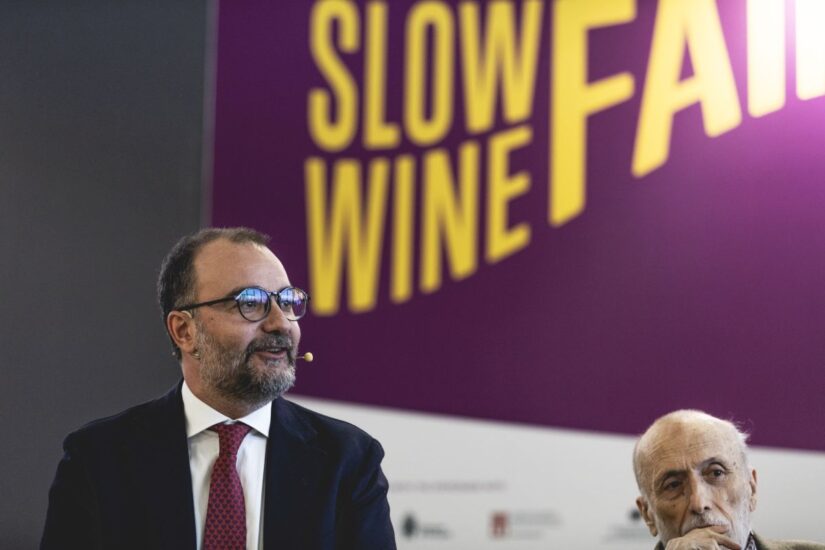
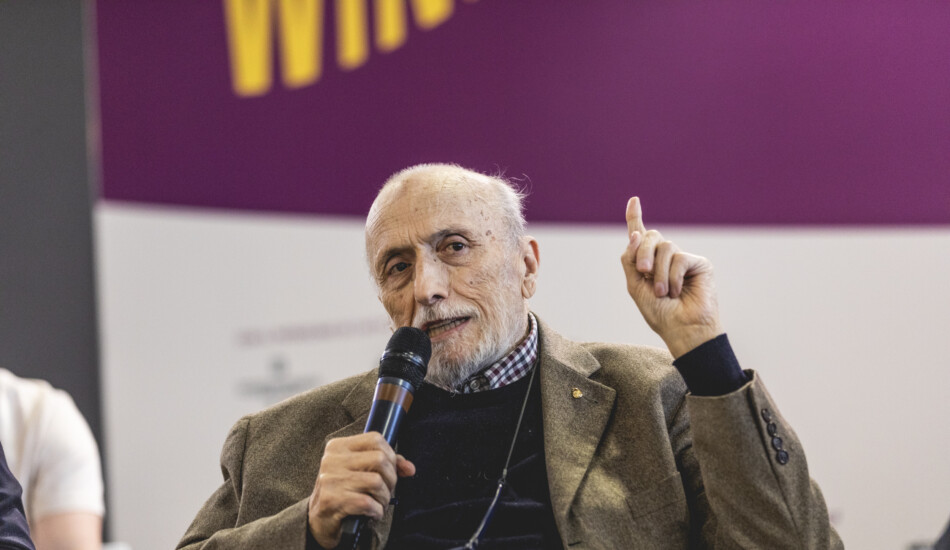
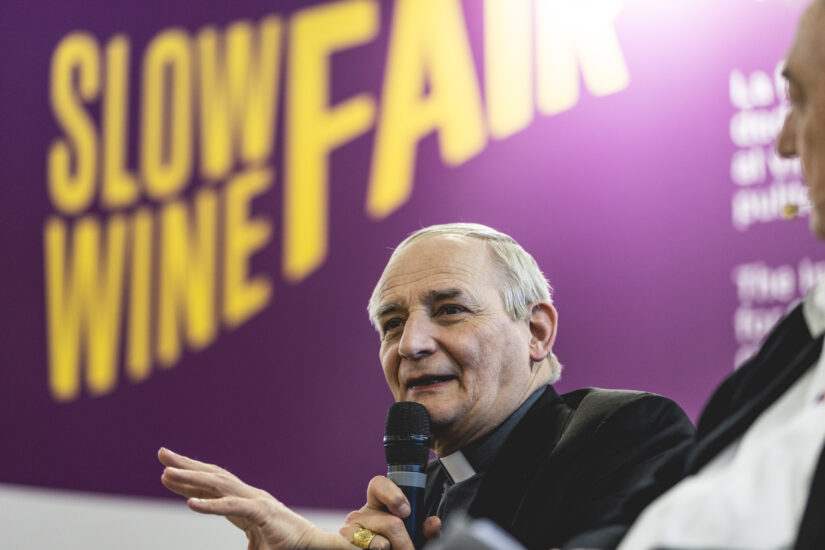
Agriculture in general, and wine, its crown jewel in particular, must take on the duty of corporate social responsibility. Together with co-producers, namely those who purchase the products of wineries and farms, who should reward those who prioritize what is “right” over the logic of profit, those who look to cooperation before competition, those who pair personal gain with the well-being of community and relationships, those who see not “pairs of hands” in farmworkers, but people. These are fundamental elements to embrace and guide with joy, rather than with a sense of sacrifice, this new historical phase, the ecological transition, which follows three centuries of industrial revolution. As Pope Francis said, “less is more” because freeing ourselves from unrestrained consumerism means becoming free and restoring meaning to life, meaning that everyone, but especially young people, seems to have lost. These were the messages addressed especially to young people, and to young wine producers in particular at the Slow Wine Fair by two prominent figures: Carlo Petrini, founder of Slow Food and of the University of Gastronomic Sciences in Pollenzo, and Cardinal Matteo Maria Zuppi, president of Cei - the Italian Bishops Conference. At BolognaFiere, they engaged in a dialogue moderated by Giancarlo Gariglio, head of Slow Wine, and Mario Marazziti of the Community of Sant’Egidio, to which the wine world contributes through the “Wine for Life” project.
“It is important at this moment, and in this sector, to speak about organic production - began Petrini - talking to young people about organic production means ensuring that this new generation of producers fully embraces responsibilities that were not always shared across the sector in the past. Over the last 50 years, which I have experienced firsthand, production has evolved: wine was once a food staple, then became a source of pride for producers, and eventually the jewel of the food system, contributing knowledge and a cultural dimension very different from other food components. We have entered a new historical phase: the “ecological transition”. We come from the industrial revolution, which lasted three centuries and brought levels of well-being, education, health, and innovation once unimaginable, yet it was based on an assumption which proved false: that the planet resources were infinite: water, fertile soil, biodiversity. Production continued to grow, fostered by the system. But due also to the global population boom - said Petrini - the finiteness of resources has become tangible, to the point that it is now debated whether humanity might disappear if habits and systems don’t change. Homo sapiens, not the Earth. Thus, the need to live through a new historical phase arises, in which an “ecological conversion” of individuals leads to a transition. This takes time; it may last decades or centuries. But it will require all of us, individuals, collectives, associations, nations, to change behaviors and ways of thinking. Humanity is becoming aware that we can’t continue as we are, and also that the primary culprit is the food system. We face incredible levels of waste: we produce enough food for 12 billion people; we are 8.4 billion; 30% of food is thrown away, 1.5 billion tons of edible food every year. And all this while the Fao tells us that 300 million people are undernourished, and 20 million suffer and die from hunger, mostly children. This cries out for justice. We must also understand that speaking only of growth, without acknowledging limits, puts us on a path of no return. If everything revolves around profit, that alone will not change this historical phase: we must pair profit with the common good and relational goods; without these pillars, we can’t design a different society.
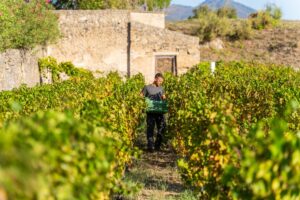
And to young people I say: this food and wine system must become socially responsible. It is no longer acceptable to limit the meaning of wine to its organoleptic qualities. If we don’t integrate into this system, represented here today at the Slow Wine Fair, a component of social responsibility, it too is destined to disappear. I come from a land, the Langhe - recalled Petrini - where wine is an extraordinary resource. Yet on some days you see vans stopping in front of migrants and choosing them: “you yes, you no”. Recently, while visiting a vineyard, I saw a North African migrant sleeping on the ground during his lunch break. He worked in the vineyard of a producer who hires through cooperatives, yet lives only 300 meters away. But our elders, when someone helped them in the fields, didn’t let them sleep on the ground, they welcomed them into their homes. Where has this humanity gone? How can it be that what we owe these people is still not guaranteed? I remember when I was young, signs would say “no rentals to southerners”. Today it is the same - explains Petrini - but the fashionable narrative is that these people “invade” Italy. Yet we need them, and at the same time we must help them, be grateful to them. Across Italy there is a crisis, not only in agriculture, there is a shortage of waiters, and Italians no longer want to do those jobs. We must change our mindset.
Pope Benedict XVI, upon being elected, presented himself as “a simple and humble worker in the vineyard of the Lord”. But the “vineyard of the Lord” in the Bible had a premise: the Lord paid everyone equally. Today, instead, the vineyards of earthly masters are full of people who are desperate, humiliated, lacking the means for dignity, people who, without Caritas, do not know where to sleep. I tell young people: it must be clear that either wine production becomes virtuous enough to recognize equal rights for all, and recognizes this humanity as our brothers and sisters, or there is no story to write for the future unless we move beyond the exclusive logic of profit and open ourselves to the common and relational good”.
“Today we are questioning rights and systems - said Cardinal Zuppi - that may seem secure, but are not. The “age of force” diminishes rights; it claims there are too many, and that market logic and production must guide choices. But the “good, clean, and fair” of Slow Food is in fact the only way to survive; it is not something for “a few good people”, it is the only way to move forward. The “age of force” is dangerous; it requires awareness. It is the problem of the “murderous tenants” - says Zuppi, referring to the parable in which tenants beat and kill the servants sent by the vineyard owner to collect the harvest, eventually killing the owner son to seize the inheritance - the problem of possessing, and possession leads to a destructive logic. I hope the new generation is aware of resource limits, but I fear growing inequality. Carlo Petrini mentioned Homo sapiens. At times, one doubts the “sapiens”. The finiteness of resources is often met with the idolatry of “me first, more for me”. But as Pope Francis has said, “less is more”. It is not sacrifice; it is the only way to survive. And it is freedom, because it frees us from consumerism, which leads to waste and loss of humanity. How do we remain human? Choosing what is “good, clean, and fair”, and above all fair, is a good path, the only one. It is the only way everyone wins; only thus there can be a future. Solidarity is not a luxury; it is the only sustainable way to live. The meaning of life for believers through religion, but for everyone in communit —is found when we build community”.
“To young people I say: live this historical moment with joy - reiterated Petrini - because the choices we are called to make are choices of liberation. Moving from consumerism to sharing, from competition to cooperation, is not a transition of suffering but of freedom. If the idea spreads that people have enjoyed until now and must now tighten their belts, if discouragement spreads, no one will be convinced. When Pope Francis invited me to speak at the Pan-Amazon Synod, I told him I was agnostic. He replied that I was a “pious agnostic” because I feel “pietas for nature”. And I say that Pope Francis “Laudato si” is the most important document of this century: it is not an environmentalist document, it is a social one. I don’t want “Barolo made through exploitation”. It is not enough for producers to say “I paid the cooperative to hire, I didn’t know”. As a co-producer, not a consumer, through my choices I don’t buy your Barolo at 50 euros a bottle. Being co-producers is a powerful stance which makes us active. But no one understands the revolutionary power of “Laudato si” without also absorbing “Fratelli tutti”, with which Pope Francis gives us the means to change. Fraternity, which is also one of the three pillars of the French Revolution. We have always valued liberty and equality, but without fraternity there is nothing. Let us embrace this phase with joy: this is not moralism, but a methodological shift from competition to collaboration. Young people: do it, live it proudly, and bear witness to it. We must accompany you as co-producers. If today you are a minority, tomorrow you will drive the world, even the world of wine: the old logics will no longer be welcome”.
Copyright © 2000/2026
Contatti: info@winenews.it
Seguici anche su Twitter: @WineNewsIt
Seguici anche su Facebook: @winenewsit
Questo articolo è tratto dall'archivio di WineNews - Tutti i diritti riservati - Copyright © 2000/2026