






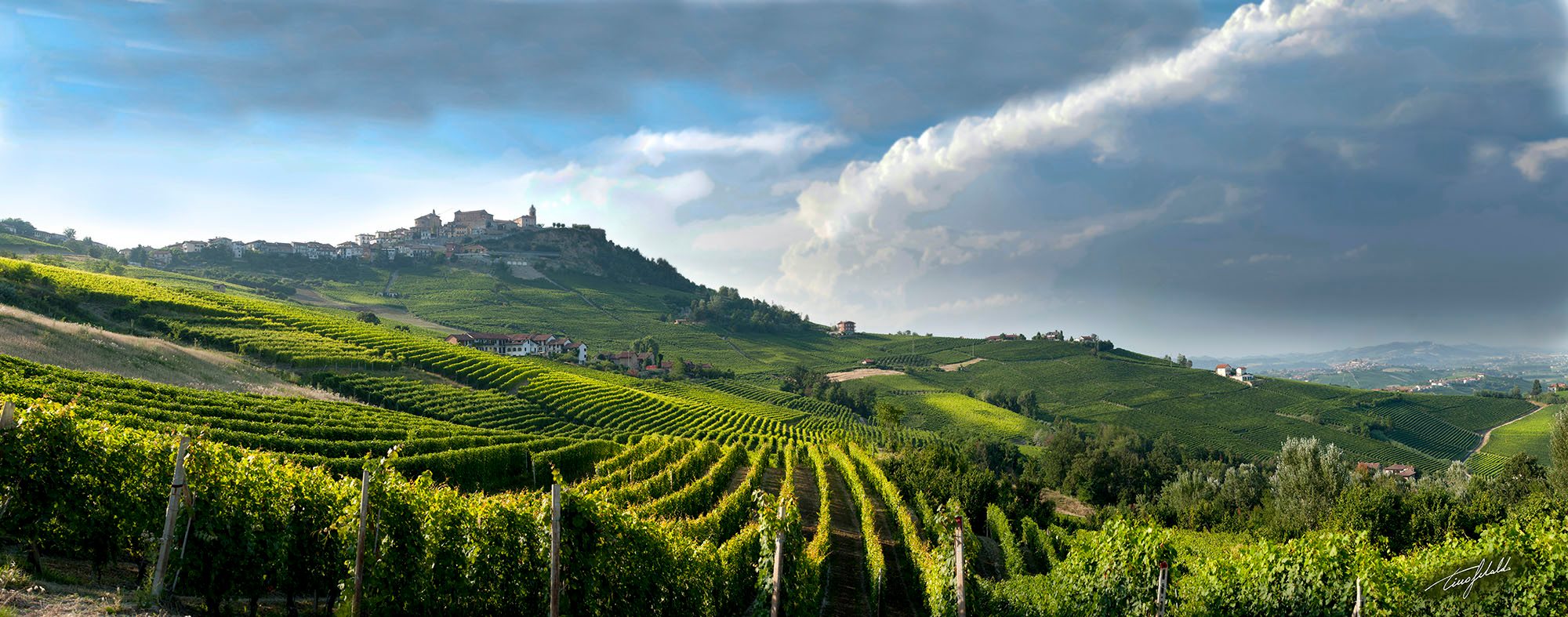
Global geopolitical uncertainty caused by armed conflicts is proving, in some respects, to be a fortunate opportunity for our country. The appeal of real estate investment is growing, linked on the one hand to the beauty that Italy expresses from a natural, architectural, historical-cultural, and food and wine perspective, and on the other to the positive effects of the Flat Tax - introduced in 2017 by the Gentiloni Government and consistently renewed - targeted at new residents who transfer their tax residence to Italy, allowing them to pay a flat substitute tax on foreign income for 15 years. This was a somewhat provocative point made in recent days by Bill Thomson, ceo of Knight Frank Italian network, during the presentation of “The Wealth Report” 2026 (which we explored here), and it is supported by unequivocal market data. The wine sector is also benefiting from this trend, with vineyards confirming themselves as among the most interesting (and growing) alternative assets for international investors, combining economic value, territorial identity, and a strong experiential component. Italian vineyards in particular are increasingly perceived as “iconic assets capable of combining economic and symbolic value”.
While the challenging context in which the Italian wine sector operates has not had direct negative repercussions on the real estate transaction market, it is nonetheless true that what is happening in the markets is reshaping the map of investment opportunities, as the Report highlights. “Despite the challenges facing the wine sector, demand for particularly suitable vineyards remains strong - confirms Alexander Hall, head of International Vineyards at Knight Frank - investors are increasingly focused on quality, climatic suitability, and long-term resilience, particularly in areas where supply is limited and value is supported by provenance and know-how”. These trends and directions must be carefully considered, as they show how certain factors, until recently considered cyclical - such as wine tourism and the experiential dimension of wine consumption, are becoming structural realities, even influencing the criteria used to evaluate and enhance businesses.
To better understand these dynamics, WineNews held in-depth discussions with both Alexander Hall and Bill Thomson. Commenting on the initial provocation, they explain: “wine production is a business in every respect, just like any other, and it is subject to the same pressures in terms of costs, regulatory frameworks, labor legislation, and so on. The fact that production takes place far from urban centers does not change this reality in the slightest. In an increasingly more unstable world, political and economic stability has an invaluable value. Winemaking is a very long-term business in which investment decisions made today will bear fruit (literally) over years rather than weeks or months. A vineyard replanted today will not be productive for three years and won’t reach full maturity - and therefore the optimal balance between yield and quality - before about ten years. The same applies to the other end of the production cycle: selling wine in international markets requires significant investment to develop relationships and build brand reputation. Consequently, a region which is perceived as offering greater stability and a regulatory and fiscal environment favorable to businesses is likely to be preferred by wine investors, just as it would be by those acquiring other commercial activities or real estate assets”.
It is certainly true that investments in the most prestigious territories, where the value per hectare often exceeds one million euros and goes even higher, require very long payback periods, differing significantly from the logic of traditional finance. It is therefore natural to ask what the real objectives of those investing in this sector are. “An investment in a vineyard combines a real estate asset, usually available in limited quantities, with a commercial activity. As a result, the “return on investment” - explain Knight Frank - is based partly on the operational performance of the company and partly on capital preservation and the potential appreciation of the underlying asset. A technology company may have few or no tangible assets, as its value lies in intellectual property and human capital. While such value can be created very quickly, it can also be destroyed just as rapidly by competing or improved technology and/or by the loss of key personnel. The value of a wine business, particularly if located in a prestigious region, is supported by tangible assets that are unique and non-replicable. There is only one Tenuta San Guido or one Château Pétrus. It is also important not to underestimate the heritage component of this type of investment, namely, the desire to own or act as the “custodian” of a historic property, or to perpetuate a centuries-old economic and cultural activity, along with the environment - both physical and social - which has developed around it. Similarly, these investment decisions typically include a strong emotional and passion-driven component”.
However, Knight Frank specifies that in most cases these are business investments, not simply a prestigious “retirement retreat”.
“A winery is first and foremost a commercial enterprise; therefore, any investment must be structured around the economic fundamentals of that specific production activity. However, as noted earlier, the assets of a wine company constitute a key component, particularly in the premium segment. It is possible to produce wine without owning significant assets, by purchasing grapes or must and outsourcing vinification and logistics. Nevertheless, the world most sought-after wines are usually linked to a specific region and, more often than not, to a specific site. Therefore, they are inextricably connected to a tangible asset, and the nature and value of that asset consequently represent a cornerstone of the investment decision”. Although real estate and brand value are one thing, vineyards follow distinct dynamics that can differ significantly.
“It is important to distinguish between the value of vineyard land and the value of a wine business as a single economic entity. The value of the former is primarily driven by location: for example, a vineyard in Barolo DOCG is generally worth more than a neighboring vineyard in Langhe DOC. However, within a given region or denomination, one company may be worth more than another due to the quality of its other assets and, in particular, the strength of its brand. In the long term, vineyard values will be determined by the overall quality and reputation of the wines produced in that region, rather than by the individual elements of a specific company. Using Barolo as an example, there are certain vineyards in the most prestigious crus (the MGAs, Menzioni Geografiche Aggiuntive) that have immeasurable value, even if the company that owns them does not have a particularly strong brand or other notable assets. Likewise, if a well-known producer acquires land in a relatively unknown region, this could increase vineyard values over the long term if the move helps the region become more renowned and the wines command higher prices; however, real-world examples of this happening are relatively few”.
When assessing the value of a vineyard, in any case, it is not only its suitability that matters, but also its historical value. “The historical and viticultural significance of a vineyard is inextricably linked to the quality and potential of the terroir. Most of the world most historically and viticulturally significant vineyards - Montalcino, Margaux, Mendoza… - have achieved their importance thanks to the quality of their terroir and their potential to produce exceptional wines.
Of course, when evaluating an individual wine business, we typically apply different values to older vineyards compared to younger ones, while also considering soil type, exposure, altitude, planting density, training system, and so on”.
However, the “Wealth Report” also highlights, with regard to the wine world, the growing importance of wine tourism, hospitality, and the experiential dimension. This suggests that the beauty and functionality of facilities, alongside the territory and its broader context, are becoming increasingly important in assessing an investment and its potential return. “These trends are certainly influencing the valuation of wineries, with the exception of those located in the most prestigious regions. Outside these areas, the hospitality component has undoubtedly gained greater relevance, given its ability to generate additional income streams and increase brand awareness at a time when wine sales through traditional distribution channels are under pressure. However, the hospitality credentials of a property should still be seen as complementary rather than a substitute for the viticultural component; the latter remains the key and determining factor for producing high-quality wines and, consequently, for the commercial success of the company and the preservation of capital over the long term.
The exception to the above occurs when an estate is primarily a hospitality property rather than a wine production asset. For example, there are several properties in beautiful locations in Provence, in southern France, which are almost entirely oriented toward hospitality activities, offering extensive accommodation and catering services and/or hosting weddings and other events. In many of these cases, the vineyards represent a secondary asset, serving as a backdrop and providing the product that supports the hospitality business. It is therefore necessary to distinguish between an estate centered on a hospitality offering and one in which hospitality complements the core business of wine production”.
As it is well known, however, the sector is not without its challenges. For this reason as well, Knight Frank concludes that “investors are paying much closer attention to the economic fundamentals of wineries and are focusing on the most prestigious wine regions, those that produce premium or super-premium wines. As a result, vineyard values have held up better in top-tier areas, while in other regions the main factors influencing asset value are brand strength, a well-established distribution network, and consistent profitability”.
Copyright © 2000/2026
Contatti: info@winenews.it
Seguici anche su Twitter: @WineNewsIt
Seguici anche su Facebook: @winenewsit
Questo articolo è tratto dall'archivio di WineNews - Tutti i diritti riservati - Copyright © 2000/2026