


Wednesday 28th of October 2026 - Last Update: 17:39






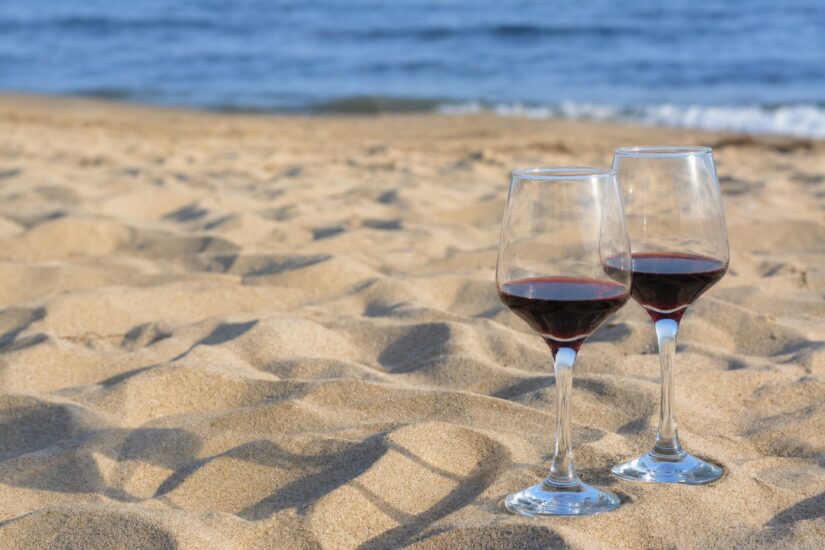

If until a few years ago it was a practice labeled as heretical by the most orthodox sommeliers, it is now becoming an increasingly more widespread trend: red wine in summer can be served slightly chilled. Perfect for barbecues, aperitifs, and outdoor dinners, chilled red wine is becoming a stylish choice, breaking one of the biggest service taboos. Prestigious sommeliers confirm this to WineNews, such as Paolo Porfidio (Excelsior Hotel Gallia, Milan), who notes that “it is also enjoyable to drink a glass of Brunello di Montalcino or Barolo in summer, at the right temperature”, as Sebastien Ferrara (Enrico Bartolini at Mudec, Milan) states that “serving a great red at around 13-14 Celsius degrees is no longer a taboo, but an act of care and hospitality”, or as Marco Reitano (La Pergola by Heinz Beck in Rome), who observes that “our palate craves freshness, when drinking red wine, we all want to find a hint of white”.
But, the trend is also supported by enologists. “According to my personal taste, I prefer tasting red wines between 15 and 17 degrees, no higher - explains Riccardo Cotarella, president of Assoenologi and one of Italy leading professionals - first, you perceive less alcohol, there is no alcoholic dominance as there is at 20-22 Celsius degrees, so there is better balance among the various components and an improved perception of the wine quality”. Leonardo Palumbo (vice president of the Union Internationale des Œnologues) describes it as “a positive trend which could encourage red wine consumption among younger generations”, while Mariano Murru (president of Assoenologi Sardegna and winemaker at Argiolas winery) notes that “the problem is that red wines are still often served at so-called room temperature, but people forget that “room temperature” refers to cellar temperature, which is considerably lower than what we experience in summer”. And, now, Italian wineries are now also focusing on red wines specifically designed for the warm season, created with the aim of being enjoyed after time in the refrigerator: from Masi, a Valpolicella producer, with its Fresco line, to the prestigious Sardinian winery Siddùra, launching Èros, a Gallura red intended to be served at lower temperatures, to the now classic Fichimori by Tormaresca, and Braida, a flagship Barbera producer, which lists ideal serving temperatures for its wines during the hottest months. The phenomenon is not limited to Italy: overseas, people openly speak of “chillable red wines”, juicy red wines meant to be served cool, competing with white and rosé wines for the title of summer wines.
After all, serving a wine correctly is not merely a technical gesture, but a form of respect. It means recognizing that every bottle has a precise moment when it expresses itself at its best, and that this moment changes with the season, the light, and the context. In summer, more than ever. According to Paolo Porfidio, head sommelier at the five-star luxury Excelsior Hotel Gallia in Milan and enologist, “it is a good thing this trend is gaining traction, even though some people are still frowned upon for ordering chilled red wine in restaurants. Without going to extremes, it is essential to keep even structured, character-driven wines fresh. Important wines like Brunello di Montalcino or Barbaresco can be served at around 14 Celsius degrees, also because by the time they are opened and poured, they gain 1-2 degrees. Proper storage is therefore crucial to have them reach the table at the right temperature. For wines like Etna Rosso, Pinot Noir, and, in general, varieties with softer, more delicate tannins, you can go down to 13 Celsius degrees. It is better to avoid wines which are too young or have overly aggressive tannins, as this could result in an astringent sensation. In short, it is enjoyable to drink a glass of Barolo in summer at the right temperature, kept nicely cool, but they are not beach wines obviously”.
“In recent years I have noticed a spontaneous increase in demand - explains Sebastien Ferrara, director and sommelier at the three-Michelin-star restaurant Enrico Bartolini al Mudec in the heart of Milan to WineNews - customers, especially international ones, are increasingly more looking for lightness, digestibility, and dynamism, rejecting the idea that summer should be a season only for whites and sparkling wines. At the same time, our wine list plays a fundamental role: we often anticipate this desire by reading the mood at the table. Serving a great red at around 13-14 Celsius degrees is no longer a taboo, but an act of care and hospitality. It allows guests to enjoy the complexity of a red wine without the heaviness of alcoholic perception caused by high summer temperatures. On our wine list at Mudec, I look for wines with three key characteristics: vibrant freshness, a good aromatic profile, and delicate tannins. Lowering the temperature tends to harden tannins, so naturally elegant and agile grape varieties are needed. Varieties like Nebbiolo and Pinot Noir are my favorites”. As for pairings, Ferrara notes that “a chilled red breaks traditional rules: it pairs beautifully with complex or fatty fish dishes (I am thinking of turbot, grilled preparations, or rich fish soups), but it also works exceptionally well with pasta dishes rich in aromatic herbs”. He concludes with a personal memory: “when I close my eyes and think of red wine in summer, my mind travels from Piedmont - with one of Bruno Giacosa juicy Barolos - to the Rhône Valley, with the pale color of Château Rayas’ Grenache and its intriguing aromas; I wouldn’t miss having a Burgundy Grand Cru in an ice bucket with water and a few ice cubes”. “My philosophy is that red wine should always be served at cellar temperature, and that’s the starting point - states Marco Reitano, head sommelier at Heinz Beck three-Michelin-star restaurant La Pergola in Rome - then, in summer we lower it further, especially when serving outdoors on the terrace or when it’s particularly hot, even indoors. In general, our palate craves freshness, we all want to find a hint of white wine in red, in terms of mouthfeel, and we find that very pleasing. If wine is served too warm, whether white or red, we become bored, distracted, and disengaged. It’s also worth noting that producers now help us lower serving temperatures: there is no longer that rough tannin which used to become unpleasant when chilled. Modern winemaking and aging methods prioritize respect for the raw material, the fruit and the grape. Today, all producers seek freshness and drinkability as never before. This is also linked to a global gastronomic trend toward lighter cuisine”.
“Once, for tastings, wine was brought to the table at room temperature - underlines Riccardo Cotarella, president of Assoenologi and consultant to over 80 major wineries in Italy and around the world - but if it is 25 degrees or even higher, which is perfectly normal in summer, that is not the best way to appreciate a red wine. Red wine should be served cooler because it warms up quickly in the glass. In winter, if the environment isn’t warm, it can be served at a slightly higher temperature. In any case, for my personal taste, I sample red wines between 15 and 16 degrees, no higher. First of all, you perceive less alcohol, there us no alcoholic dominance as there would be if served at 20-22 Celsius degrees, so there is more balance among the components and a better perception of the wine quality. My ideal summer red? It should have a moderate alcohol level, not too much tannic structure, be easy-drinking yet not banal, with a personality defined by elegance and balance”. “We always recommend serving red wines at lower temperatures in summer, a practice which would also encourage their consumption - underlines Mariano Murru, winemaker at Argiolas and president of Assoenologi Sardegna - here in Sardinia we have grape varieties well suited to producing wines that are never too tannic, Carignano above all, which can be served cool and pairs very well with fish dishes. The same goes for Monica and even the newer styles of Cannonau. The problem is that red wines are still sometimes served at so-called room temperature, but people forget that “room temperature” actually refers to cellar temperature, which is significantly lower than summer conditions. From an enologist point of view, there are technical choices involved: we aim for good color and fruit, but never astringent tannins. It starts in the vineyard, identifying the right harvest time, then careful work in the cellar to avoid excessive extraction of phenolic compounds, always at low temperatures to enhance the fruit, while avoiding excessive use of oak whenever possible. If oak is used, it should be very subtle, so it doesn’t dominate, leaving room for fruit and a smooth taste, which is what consumers are increasingly looking for”. Winemaker from Puglia Leonardo Palumbo, vicepresident of the Union Internationale des Œnologues, explains that “this is a positive trend which could facilitate the consumption of red wines, particularly lighter, fruitier ones among younger generations, for whom, as it is well known, overall red wine consumption is declining. All grape varieties can be used to create wines to be served cool: here in Puglia, for example, we have Nero di Troia, Negroamaro, and Susumaniello. It is a bit more challenging with Primitivo, which produces more structured wines. In any case, the correct serving temperature for summer is about 12 Celsius degrees, I wouldn’t go any higher. Wines suited to being served cool must be carefully managed from the vineyard - avoiding over-ripeness - and in the cellar, maintaining freshness and acidity, aiming to achieve those floral and fruity aromas that consumers especially appreciate”.
In summer, days grow longer and the table moves outdoors: wine service changes, becoming a response to the season. In this delicate balance, serving temperature is the detail which makes the difference. If served too warm, wine loses tension; if served too cold, it closes up. In between lies the precise point where the wine expresses itself at its best. Reds suited to summer service are characterized by low tannins, moderate alcohol levels, and the absence of long aging. Thus, many leading names in Italian wine are following new taste directions, offering red wines specifically designed to be served at lower temperatures in summer. The Fresco line by Masi, a Valpolicella producer, has created a Rosso Verona IGT made from Corvina and Merlot, light and versatile, designed for everyday drinking and suitable for lower serving temperatures. The bottle itself is innovative, made with lightweight glass and the result of a collaboration between Piero Lissoni, one of the masters of contemporary design, and Verallia, a global leader in container design. In Puglia, Tormaresca, the Antinori family estate in Puglia - signs the now classic Fichimori, a Negroamaro and Syrah blend with soft tannins, ideal for aperitifs and for fish or white meat dishes, to be served at 6-8 Celsius degrees. The winery Siddùra, one of the protagonists of Sardinia winemaking renaissance, has created a wine for those looking for the freshness of a white without giving up the identity of a red: Èros, a red wine designed to be served chilled (between 10 and 12 Celsius degrees), the result of a two-year project in collaboration with the Laboratoire d’Oenologie Rolland & Associés, founded by the renowned winemaker Michel Rolland (one of the world “masters” who recently passed away, ed). “Today many consumers approach wine with different expectations compared to the past: they look for wines which are more versatile, more immediate, and adaptable to different occasions - observes Mattia Piludu, general manager of Siddùra - Èros arose from this reflection, not to replace traditional red wine, but to broaden the ways it can be enjoyed”. Braida, a flagship Barbera producer, has instead created a guide for serving its most representative wines during the summer: from Barbera del Monferrato Frizzante DOC, to be served at 10-12 Celsius degrees, as well as Grignolino d’Asti DOC and Timorasso dei Colli Tortonesi DOC. Lower temperatures are recommended for Brachetto d’Acqui DOCG, to be enjoyed between 6 and 8 Celsius degrees. The phenomenon of red wines served chilled is clearly not limited to Italy: overseas, people talk openly about “chillable reds”, juicy red wines meant to be served cool, competing with white and rosé wines for the title of the quintessential summer wine.
In the United States, there is a real shift toward lighter reds, ideal for the warm season, chosen because they align with a lifestyle focused on lighter foods, vegetarian cuisine, and reduced alcohol consumption. This is exemplified by the California winery Field Recordings, which produces Freddo, a 100% Sangiovese designed specifically to be served at low temperatures, in a transparent bottle which highlights its “summer” nature right from the packaging.
Copyright © 2000/2026
Contatti: info@winenews.it
Seguici anche su Twitter: @WineNewsIt
Seguici anche su Facebook: @winenewsit
Questo articolo è tratto dall'archivio di WineNews - Tutti i diritti riservati - Copyright © 2000/2026