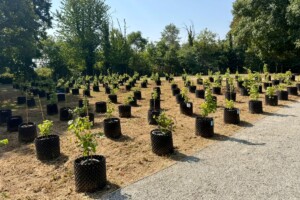







An Italy increasingly more “green” and with an “organic” soul. Ismea has published “Rapporto Bio in Cifre” 2025 - the “Organic Report in Figures” 2025, which captures the evolution of the organic sector in 2024, confirming its central role in Italian agri-food and the consolidation of its leadership at the European level. Organic agricultural area in Italy exceeds 2.5 million hectares (+2.4% compared to 2023), representing 20.2% of the national Uaa (Utilized Agricultural Area, ed), a share which is approaching the 25% target set by the EU Farm to Fork and Biodiversity strategies for 2030. Italy remains at the top in Europe for this indicator, with values significantly higher than those recorded in other major continental agricultural economies (Spain 12.3%, Germany 11.5%, France 9.9%).
The growth in organic land is mainly driven by meadows and pastures (+8.2%), while arable crops and horticultural crops show a slight decline. Permanent crops are also increasing. In the livestock sector, the number of organic animals shows an overall positive trend, contrary to conventional livestock farming, with particularly significant incidences for goats, sheep, and cattle.
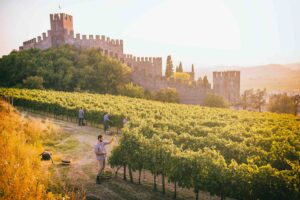
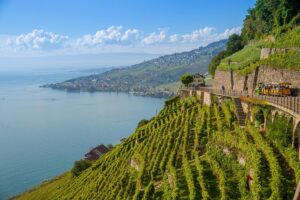
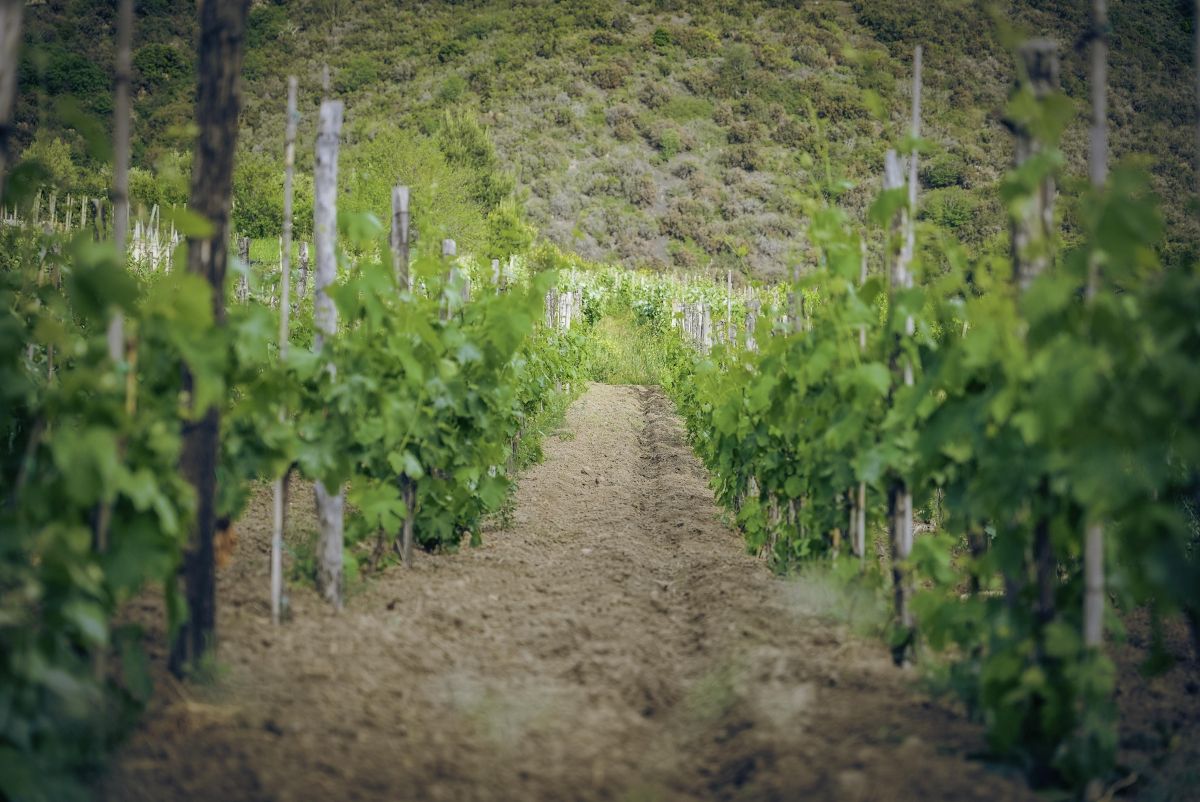
Organic vineyard area remains almost stable at 132,441 hectares (-0.4%), of which 104,767 hectares are converted. Wine grape vineyards account for 128,929 hectares (102,134 hectares converted), while the remainder concerns table grapes. As for the percentage share of organic vineyards on the total, vines reach 21%.
At the territorial level, Southern Italy accounts for 58% of the national organic Uaa, followed by Central Italy (23%) and Northern Italy (19%), but the North is growing at a faster pace (+8.4% compared to +3.5% in the South). 38.1% of the national organic Uaa, explains the report, is concentrated in three regions: Sicily, Puglia, and Tuscany; the top ten regions hold 83.4% of it.
The number of organic operators also continues to grow, reaching 97,160 units in 2024 (+2.9% compared to 2023, or +2,719 units compared to 2023). The increase is mainly among exclusive producers (+2,675 units, +3.8%) and, to a lesser extent, producers who also carry out processing activities (+176 units, +1.2%), while importers remain substantially stable. Exclusive processors, however, decrease by 133 units. Over the last decade, the number of organic operators in Italy has grown by 62%, data corresponding to over 37,000 units.
As for consumption, in 2024 domestic spending on organic products reached 3.96 billion euros, with an increase of 2.9% compared to 2023, while volumes grew by 4.3%, confirming a generally more contained price trend compared to conventional products. The increase in domestic purchases of organic products is higher than that recorded for the total agri-food sector (+0.9%), so that, after two years of contraction, the share of organic in overall agri-food spending is growing again, standing at 3.6% (+0.1% compared to 2023). As a result of these positive dynamics, the share of organic products in overall agri-food spending is once again growing, reaching 3.6%
Organic spending shows an increase in value for most sectors, with particularly significant growth for vegetable oils and fats (+31.8%), eggs (+10.4%), and honey (+5%), as well as non-alcoholic drinks (+3.8%). In contrast, purchases of cured meats (-19.1%) and meat (-3.5%) are down. There are smaller declines for wine and sparkling wine consumption (-1.6%, representing 1.4% of the organic shopping basket) and cereal-based products (-1.2%), a trend which reflects, although less markedly, what is observed in the overall agri-food basket. Supermarkets remain the main purchasing channel for organic products, with turnover now close to 1.5 billion euros and an increase of over 43 million euros compared to 2023 (+3.1%).
The national organic Uaa in 2024 consists of arable crops (40.3%), followed by meadows and pastures (31.4%), permanent crops (22.7%), and vegetables (2.3%). As in the previous year, the most significant increase concerned meadows and pastures, which grew by 8.2% compared to 2023, corresponding to about 60,000 more hectares, mainly concentrated in Valle d’Aosta, Campania, and in the Autonomous Province of Bolzano. Permanent crops also grew (+1.9%), while organic areas for arable crops (-2%) and vegetables (-5.1%) declined. Despite the decline in the last year, the organic Uaa for vegetables has almost doubled (+93.5%) over the last decade, a result that, in relative terms, is even better than that recorded for the larger macro-categories such as permanent meadows (+85.1%), arable crops (+72%), and permanent crops (+56.7%). A detailed analysis of crop categories shows that, in addition to meadows and pastures, permanent crops are growing, driven by olive groves (+9,185 hectares, +3.3%) and nut trees (+2,732 hectares, +4.3%), compared to reductions in fruit (-3,220 hectares, -8.1%) and citrus (-1,705 hectares, -5.2%).
Regarding farm size, the average size of Italian organic farms is about 29 hectares in 2024. This indicator is about 44 hectares in France, down from the previous year, and exceeds 50 hectares in Germany and Spain. Interestingly, in France and Germany, where the agricultural sector is characterized by a larger average farm size, organic farms are smaller than the overall agricultural average. Conversely, in Italy and Spain, the average size of organic farms is larger than that of all farms: in Spain it is double, in Italy even triple. France (2.71 million hectares) and Spain (2.94 million hectares) surpass Italy in organic area, but unlike Italy, they are down compared to 2023: -2% in France, -1.6% in Spain.
Finally, as the report introduction explains, “in 2024 the organic sector continued to consolidate with positive growth dynamics both structurally and in the market, supported by a growing domestic demand for organic products, the ability of operators to meet strategic challenges related to sustainability and technological innovation, and significant regulatory developments, as well as intensified communication on the ability of organic farming to contribute to strengthening the circular bioeconomy and short supply chains, also through direct sales, fostering greater resilience of the agricultural production system”, however, it is also staed that “in general, the effects of calls for tenders on committed areas remain positive”, but at the same time, “it can’t be ignored that, in some territories, some companies are leaving the organic system because they consider the incentives insufficient, also in light of the strict network of commitments required for organic farming, which add to the binding conditions already imposed by EU environmental policy. In this scenario, to reaffirm the identity of organic and give new impetus to the sector, the implementation of the development strategy envisaged by the National Action Plan for Organic Production and Organic Products (Pan 2024-26), and the application of Law No. 23 of 2022, particularly regarding the adoption of branding tools provided therein, such as the label for organic school canteens and the “Italian Organic” brand, appear to be of fundamental importance”.
Copyright © 2000/2026
Contatti: info@winenews.it
Seguici anche su Twitter: @WineNewsIt
Seguici anche su Facebook: @winenewsit
Questo articolo è tratto dall'archivio di WineNews - Tutti i diritti riservati - Copyright © 2000/2026