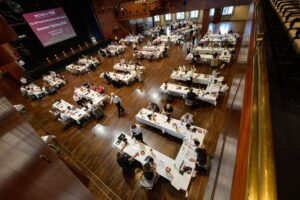







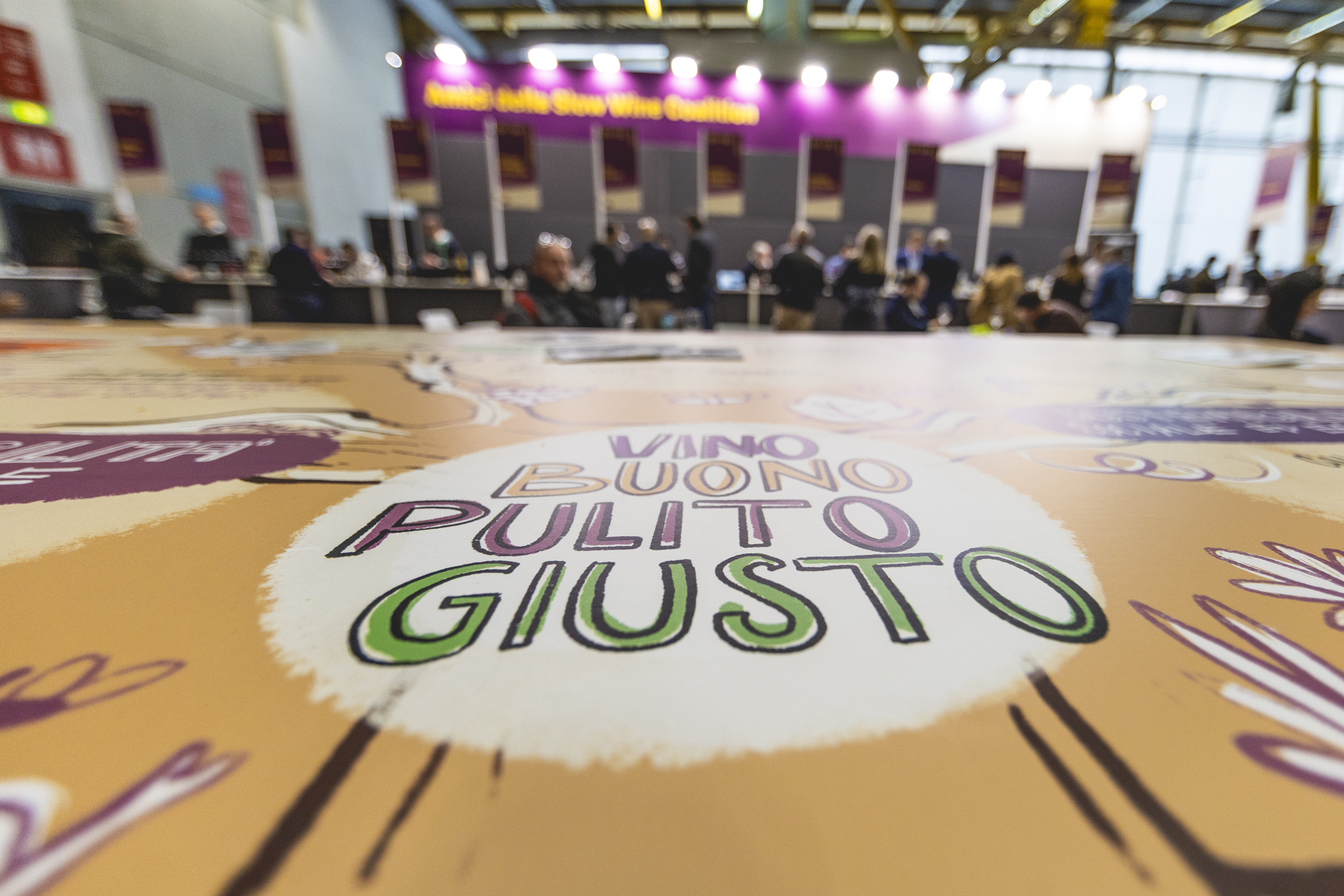
“Wine is only good if it is fair”. From an ethical, qualitative, social, environmental, economic and so on point of view. It is a clear and unambiguous message, which goes beyond the concept of “good, clean and fair”, launched by Slow Wine at the start of the “Slow Wine Fair”, taking place from today until February 24, 2026, at BolognaFiere, together with “Sana Food” . It is a strong, clear message that comes in a year that marks the 40th anniversary of the founding of Slow Food, which, in four decades of battles, has led and won many, and also just a few days before the restart of the anti-caporalato round table at the Ministry of Labor (February 19). With the privileged observatory of the Slow Wine Fair, with its 1,100 Italian wineries and wineries from 28 countries, it focuses attention on the issue of labor in the vineyard, especially that of foreigners. “Because if it is true that agriculture - and the wine sector is no exception - is subject to overt forms of labor exploitation, such as illegal hiring, or covert forms, as occurs in some cooperatives, we must not forget the many positive examples that emerge from this sector. There are numerous examples of those who have set themselves the goal of ethical production, beyond the privilege of drinking good wine and the lure of profit: according to Slow Food, wine is good if it is also fair”, explains the “Chiocciola” (Snail).
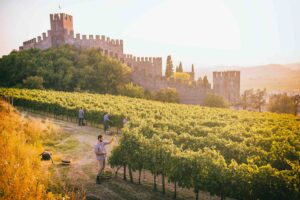
“Drinking good wine has nothing to do with daily nourishment; it is more of a gastronomic, convivial experience. This social and cultural dimension”, said Serena Milano, director general of Slow Food Italy, “makes it even more important to be sure that wine is not the result of the exploitation of vulnerable young people who are alone and poor in a foreign country. Among the rows of vines, the majority of workers are immigrants, and so wine can and must become a vehicle for recognizing and fairly remunerating their work, their skills, and their essential contribution to one of our country's most distinctive industries”. “We started from the observation that there were critical issues regarding work in the vineyard. It was 2020. Workers often did not have a contract”, added Maria Cristina Galeasso, coordinator of the Accademia della Vigna, “and often did not receive adequate pay. Today, it is very difficult to find trained labor, and it is also very difficult to create a solid bond between companies and workers. Most non-EU workers employed in vineyards do not have the necessary skills. The Accademia della Vigna combines four key ingredients: ethical work, training, social inclusion, and corporate social responsibility. We create a bond between companies and workers (mostly of African origin, as well as from Pakistan and Bangladesh), so that they can approach work in the vineyard in a protected environment”. Yunuel Ibarra and Irene De Barraicua (Lideres Campesinas) added: “In our work, we want to protect women above all else: promoting their role in agriculture to ensure they receive fair wages. We try to raise awareness of the importance of farm laborers, who are highly sought after but poorly protected. They are subject to easy dismissal, low wages and, in this historical period, in some cases even deportation. We are committed to bringing farm workers out of the shadows, and we do this thanks to “ethical labels”, where a QR code tells you about the working conditions in which a particular wine was produced, whether it was produced fairly, and whether it was made from grapes grown in a healthy environment. In order to obtain our label, producers must comply with a series of requirements: gender equality, training, and healthy working conditions. This is because in California, where we operate, workers often work near smoke from fires or in areas where pesticides are used extensively”. Yvan Sagnet, Cavaliere del Lavoro (Knight of Labor), president of NOCap (an association that works against illegal hiring practices), said: “Fifteen years ago, as a student at the Polytechnic University of Turin, I went to work in the countryside, but I soon realized what an unfair and abnormal system I had ended up in. In Nardò, the economy revolved around tomato harvesting: it was a difficult, traumatic experience. We worked 14 hours a day and were paid piecework. I earned just €14 gross per day: I filled four crates, and the pay for each 300-kilogram crate was €3.50. After paying for transport, food, and drink to the gangmasters, I was left with about €4 net. That experience led me to decide to strike, to rebel, to make the fight against similar situations my reason for living. Gangmastering, in various forms, can be said to be widespread throughout Italy. We support workers, regularize their status, and try to integrate them into the workforce, bringing them into the legal market. In just a few years, we have regularized the status of over 5,000 workers, almost all of whom came from shantytowns. There is a need for labor, but the immigration decree is not working, and it is estimated that there are 500,000 farm workers in Italy who are employed illegally. We are also working on the issue of fair pricing, running awareness campaigns with supermarkets. The No Cap label identifies fair practices, a fair working system, and a fair and supportive economy”.
The experience of Boban Pesov, illustrator and winegrower, born in Macedonia and producer in Piedmont, is also interesting: “Together with my father and brother, we improvised in 2008: there was an unclear cooperative system at the time, but my father decided to do things his own way. As a Macedonian immigrant, he experienced clandestinity and the search for work as an invisible man. We started the Arco del Lavoro cooperative with 10 people, and today we are between 100 and 120 people. Cooperation is always looking for a solution. We try to offer greater security, both economic and relational, to the young people from Bangladesh, Pakistan, and North Africa who work or have worked with us. For us, the best thing in the world is investing in people. If you invest in people, the business benefits, and so does the wine we drink. Which is only good if it is fair, according to Slow Food”.
Copyright © 2000/2026
Contatti: info@winenews.it
Seguici anche su Twitter: @WineNewsIt
Seguici anche su Facebook: @winenewsit
Questo articolo è tratto dall'archivio di WineNews - Tutti i diritti riservati - Copyright © 2000/2026