







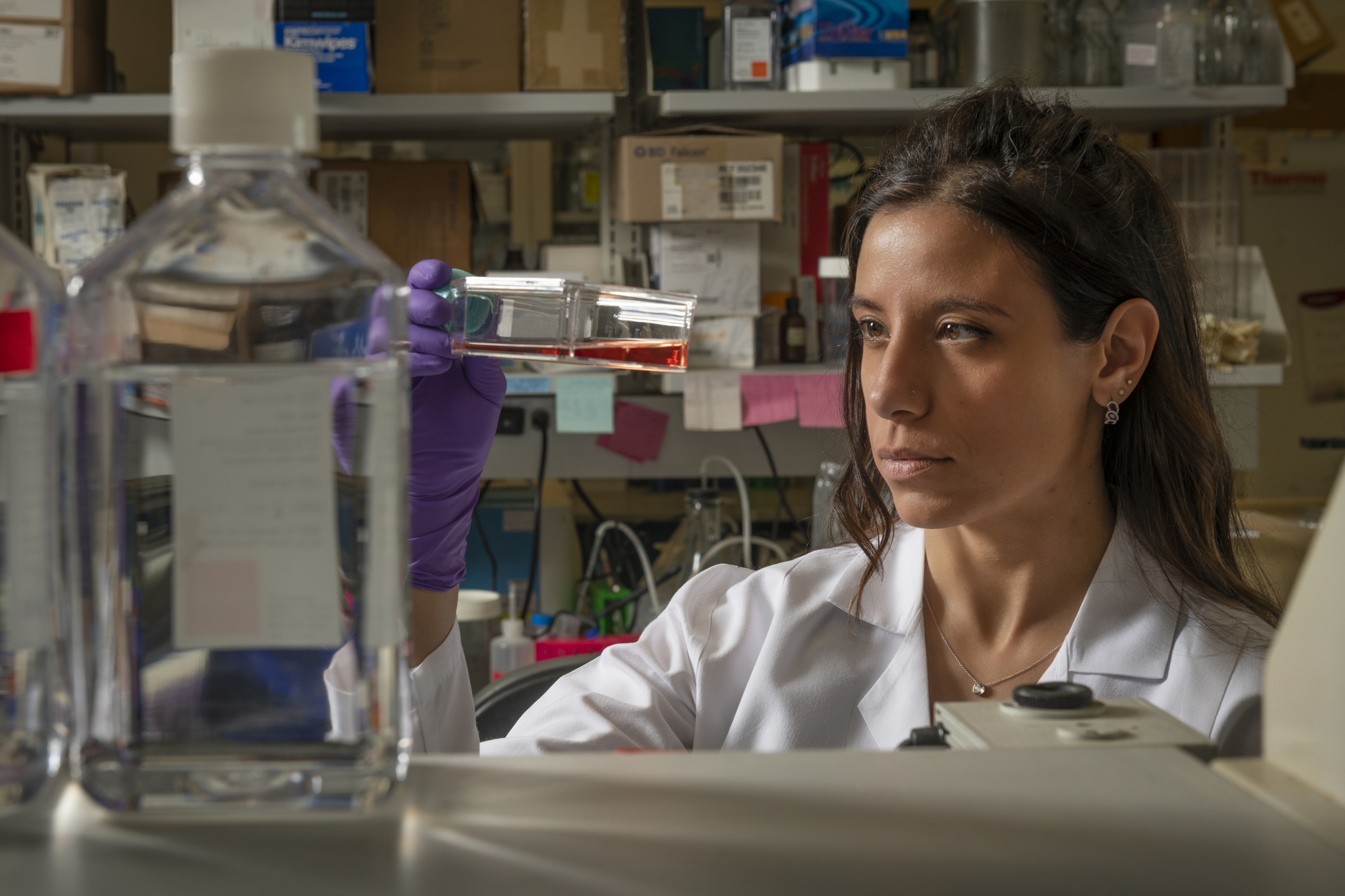
Sandra Misale is a 41-year-old woman born in Calabria who now heads a laboratory bearing her name at Johns Hopkins University in Baltimore. If today patients suffering from pancreatic or colorectal cancer, melanoma, or leukemia can hope for more effective and less invasive treatments, they also owe it in part to her work. On September 19th, in Montalcino, she will receive the “Casato Prime Donne Award”, presented by the all-female winery Casato Prime Donne, founded by Donatella Cinelli Colombini, who also chairs the jury composed of Rosy Bindi, Anselma Dell’Olio, Anna Pesenti, Stefania Rossini, Anna Scafuri, and Daniela Viglione. The jury also selected the winners of the journalism section: Francesca Ciancio, in “Io e Montalcino” - “Me and Montalcino” category, for her article “Montalcino oltre il Brunello” - “Montalcino beyond Brunello” published in Wine & Travel (Ciancio is also a contributor to WineNews, ed), and Andrea Cuomo, winner of the “Consorzio del Brunello Award” on the theme “Il Brunello e gli altri vini di Montalcino” - “Brunello and the other wines of Montalcino”, for his article “Brunello di Montalcino, l’annata 2021 è fragrante, definita e verticale” - “Brunello di Montalcino: the 2021 vintage is fragrant, defined, and vertical”, published in “Il Giornale”.
But, as mentioned, the 2026 “Prima Donna” Award, themed “Il sogno e/è la realtà” - “The dream and/is reality”, was awarded to Sandra Misale. Originally from Palmi on the Calabrian coast, she earned a degree in Molecular Biotechnology in Turin and subsequently worked at some of the world leading cancer research centers, from Harvard Medical School in Boston to Memorial Sloan Kettering Cancer Center in New York. Today, she is at Johns Hopkins University in Baltimore, where she heads her own laboratory, the Misale Lab.
“From the very beginning, she focused on a project that seemed impossible: blocking mutations of the Kras gene, which drives cancer cells to proliferate and metastasize. It appeared to be a career-ending choice because, until 13 years ago, no one had succeeded in targeting Kras mutations, which are present in about 30% of human cancers and particularly in some of the most aggressive forms, including pancreatic, lung, and colorectal cancers. But discoveries and results came quickly, and now the new drugs developed with her contribution are doubling the life expectancy of patients with pancreatic cancer”, underlines a note.
“My work, together with that of my team, has uncovered fundamental aspects of how these new drugs function, to the point of influencing clinical trials. Our research has made it possible to understand how to make these new therapies work better and for longer”, explains Sandra Misale.
Copyright © 2000/2026
Contatti: info@winenews.it
Seguici anche su Twitter: @WineNewsIt
Seguici anche su Facebook: @winenewsit
Questo articolo è tratto dall'archivio di WineNews - Tutti i diritti riservati - Copyright © 2000/2026