





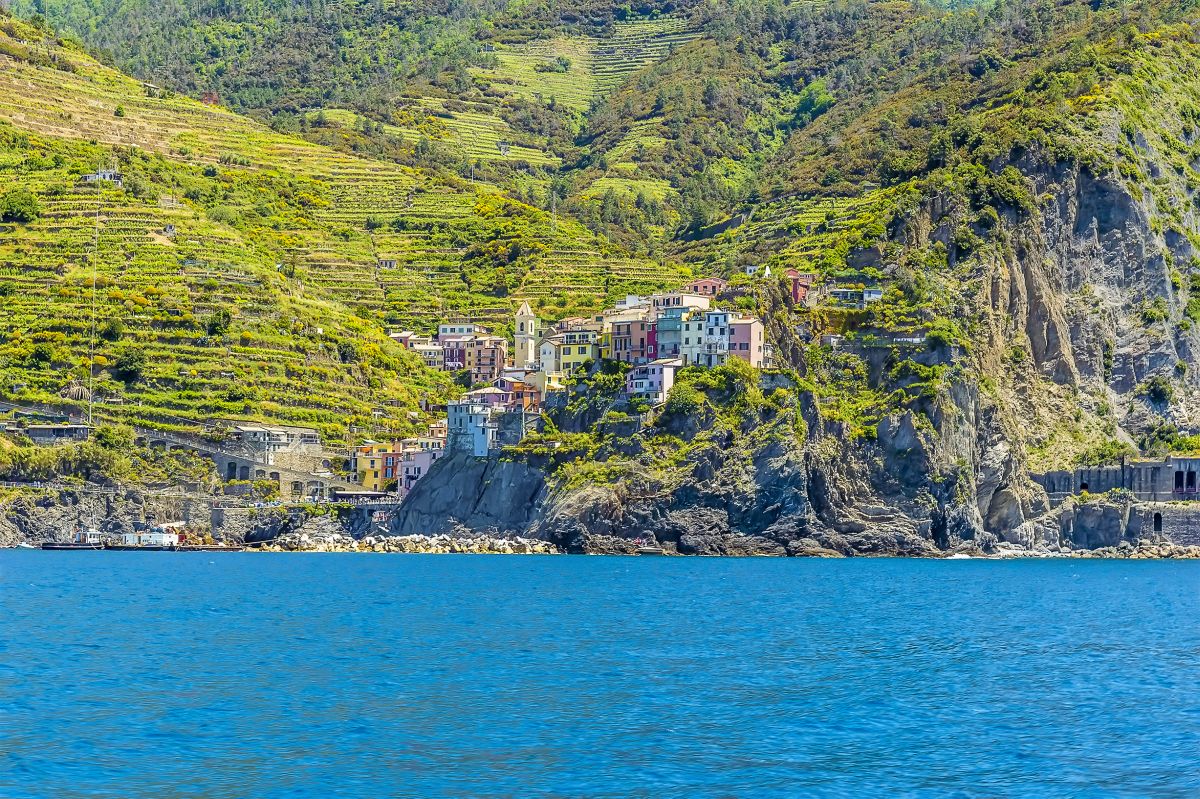
Visitor figures are on the rise compared to 2024, with 4.5 million more visitors expected in 2026, bringing the total to 18 million. A new summer trend is also emerging: Italian holidaymakers, passionate about food and wine but not only, are increasingly more choosing seaside destinations where wine is produced. The Cinque Terre and Salento are in fact the most sought-after wine tourism destinations, each selected by 20% of respondents, followed by Chianti (19%), the Amalfi Coast and Etna (both at 18%). Four of the top 5 destinations are therefore coastal areas or locations situated close to the sea. They are followed by Montepulciano (16%), Montalcino (15%), Langhe-Barolo, and Gallura, the latter also close to the sea, both at 14%. This is according to the new report, “Gli italiani e le esperienze enoturistiche” - “Italians and Wine Tourism Experiences”, prepared by Roberta Garibaldi in collaboration with Ascovilo-Association of Lombardy Wine Protection Consortia, and The Data Appeal Company, which portrays a growing demand which increasingly more integrates wine tourism with the sea, landscapes, gastronomy, and the discovery of local territories.
As the 2026 grape harvest season gets underway, significantly earlier this year due to climatic conditions, and while “Calici di Stelle” - “Goblets of Stars”, running until August 16th with its peak events taking place during the final week, brings tastings, meetings with producers, vineyard walks, and cultural events to wineries, villages, and town squares across Italy, the survey highlights how wine is no longer merely the motivation for a specialist holiday but has become a defining component of broader travel experiences: a winery visit, a tasting session, or a dinner among the vineyards can enrich a seaside holiday and encourage visitors to venture from the coast into the rural hinterland.
The preference for coastal destinations doesn’t appear to be coincidental. When choosing a wine tourism destination, the main factors considered by Italians are value for money (76%), the beauty of the rural landscape (75%), and geographic proximity (65%). Even more significant, however, is what drives the choice of an individual winery: the beauty of the rural landscape ranks first at 73%, followed by value for money at 72% and proximity at 63%. The quality and reputation of the wines themselves stand at 60%. In other words, wineries are increasingly more chosen as part of a wider landscape and territorial experience.
The integration of gastronomy represents one of the most significant transformations. Winery tastings involved 64% of Italian tourists, compared with 49% in 2024, an increase of 15 percentage points. Winery visits rose from 32% to 46%, gaining 14 percentage points. Alongside more traditional experiences, 24% of wine tourists visited wineries with on-site restaurants, while 19% enjoyed gourmet dishes paired with estate wines. According to the report, the winery visit is therefore evolving into a longer, more structured experience capable of distributing spending across wine, dining, and related services. Digital reputation also confirms the central role of food. Restaurants and dining venues account for 43.2% of the 4.6 million digital mentions recorded across the wine tourism destinations v in collaboration with The Data Appeal Company. The sector sentiment score reaches 86.6 out of 100, while the “food” theme achieves a Semantic Rating of 92 out of 100, placing it among the most highly appreciated aspects of the overall experience.
Alongside the geography of desired destinations, which is increasingly more oriented toward coastal areas, there is also a different map of digital satisfaction. In 2025, the sentiment ranking is led by Langhe-Barolo, with 89.7 points out of 100, followed by Chianti (89.5), Montalcino (89.3), Valdobbiadene (89.0), and Bolgheri (88.6). The comparison suggests two complementary dynamics, the study explains: coastal destinations have strong aspirational appeal and can attract new demand, while more established wine tourism territories maintain an advantage in perceived quality and in the reputation they have built over time. Overall, the 28 destinations analyzed generated 4.6 million digital mentions in 2025, 200,000 more than in 2024, while the volume referring to Italy as a whole decreased by 1.4 million. The average sentiment score of wine destinations reached 86.7 out of 100, compared with the national average of 86.2. This finding provides an important indication for the current season: sentiment tends to decline in August, making the busiest month of the year the real test of the resilience of hospitality, mobility, dining services, and overall visitor services.
“This data draws two complementary maps: the map of desire, which in the Italian summer increasingly looks toward the sea, and the map of reputation, still led by territories that have built a mature wine tourism system over time - comments Roberta Garibaldi, president of Aite-Italian Association of Food and Wine Tourism) - we should not choose between seaside tourism and wine tourism. Instead, we should use wine and gastronomy to enrich the holiday experience, distribute visitors between the coast and the inland areas, and increase the value generated by each visitor. The August data, however, remind us that attracting visitors is not enough. We need services capable of handling peak demand, diversified experiences, prices consistent with the quality offered, clear information, and easy booking systems, even while traveling. The winery must become a natural stop on an Italian holiday, not an experience that is difficult to find or purchase”. The formats offered by summer events are also capturing behaviors which are already becoming part of the habits of Italians. 18% have attended wine festivals or wine-related events, 16% have taken part in a sunset wine tasting in the vineyards, 10% have enjoyed a candlelit dinner among the vines, another 10% have purchased a romantic wine-themed experience, and 8% have attended a concert or musical event at a winery.
Wine harvest tourism, on the other hand, still shows significant untapped potential (in this area, Friuli-Venezia Giulia has developed an organized, destination-based approach through PromoturismoFVG and the Educational Wine Harvest Experience offered by several wineries across the region, from Collio to the Colli Orientali, ed). Only 9% of respondents say they have already participated in a day of vineyard work. Above all, 72% would not be willing to spend more than 40 euros for this experience: 48% would spend less than 20, 24% between 21 and 40 euros, and only 14% would accept a price range between 41 and 60 euros.
Summer demand is also becoming increasingly more mobile and closer to departure: the use of booking platforms while traveling increased from 15% to 24% in just one year, while 42% of respondents continue to report difficulties booking online. High prices are already the main barrier to visiting production sites, identified by 63% of tourists, followed by a lack of clear information on opening hours, costs, and the content of the experience (58%), restrictions to specific days and times (54%), and difficulties accessing destinations without a private car (52%). According to estimates, each food and wine tourism visitor generates 151.7 euros in added value, compared with 144 euros for the national average, 145 euros for cultural tourism, 140.7 euros for mountain tourism, and 128.2 euros for seaside tourism. The difference compared with seaside tourism is therefore 23.5 euros per visitor, equivalent to approximately 18% more. Indeed, food and wine tourism generates the highest added value thanks to its ability to simultaneously involve agriculture, hospitality, retail, craftsmanship, and service sectors.
At the same time, wineries that have invested in hospitality and food services have seen revenue growth of 27% between 2019 and 2024. Finally, a digital paradox remains: the approximately 1,800 wineries located in the main destinations analyzed achieve a very high average sentiment score of 94.7 out of 100, yet they generate only 0.4% of total digital mentions, despite accounting for 1.3% of points of interest. The visit is highly satisfying, but it is still being shared online far too little.
Copyright © 2000/2026
Contatti: info@winenews.it
Seguici anche su Twitter: @WineNewsIt
Seguici anche su Facebook: @winenewsit
Questo articolo è tratto dall'archivio di WineNews - Tutti i diritti riservati - Copyright © 2000/2026